FREE TRAFFIC TO YOUR SITE

FREE TRAFFIC TO YOUR SITE
free youtube traffic

Wednesday, 7 February 2018

The Great CPC Hoax: Why Cost Per Click Doesn’t Matter to Creating High-ROI Ad Campaigns

People always ask me the same question about AdWords:

“What’s a ‘good’ cost per click?”

And my response back to them is always the same:

“Why do you care?”

See, most people have AdWords wrong. They obsess over the costs.

They know that more and more competitors are advertising on the platform, which drives up prices.

So they’re zeroed-in on how much they’re going to have to spend.

But that’s the wrong approach. They shouldn’t be asking that question.

Instead, they should be concerned with what they’re going to get back in return.

I know this sounds counterintuitive. However, I almost never worry about the Cost Per Click for keywords.

In fact, I almost ignore them.

I’m going to show you why CPC’s don’t matter in many cases. I’ll show you how worrying about keyword costs can mislead you time and time again.

And then I’ll also unveil what you should be analyzing to make sure you’re not leaving tons of money on the table.

Why Cost Per Clicks don’t matter (and what you should analyze, instead)

Each year, companies analyze the most expensive keywords in the country.

These are typically competitive phrases in law or insurance. They might top $50 for just a single click.

The insane thing to remember is that almost none of those clicks will turn into customers immediately.

Instead, they’ll usually opt-into a form, first.

That means you might have to front the bill for 50 or 100 clicks before someone ever converts.

So already, we’re talking thousands of dollars for a single customer.

Almost all of these studies focus on AdWords’ Cost Per Click.

It makes sense when you think about it. That’s the primary unit of measurement they use.

It’s what ultimately determines how much you need to spend.

WordStream, for example, always releases an annual update on Cost Per Click benchmarks across industries.
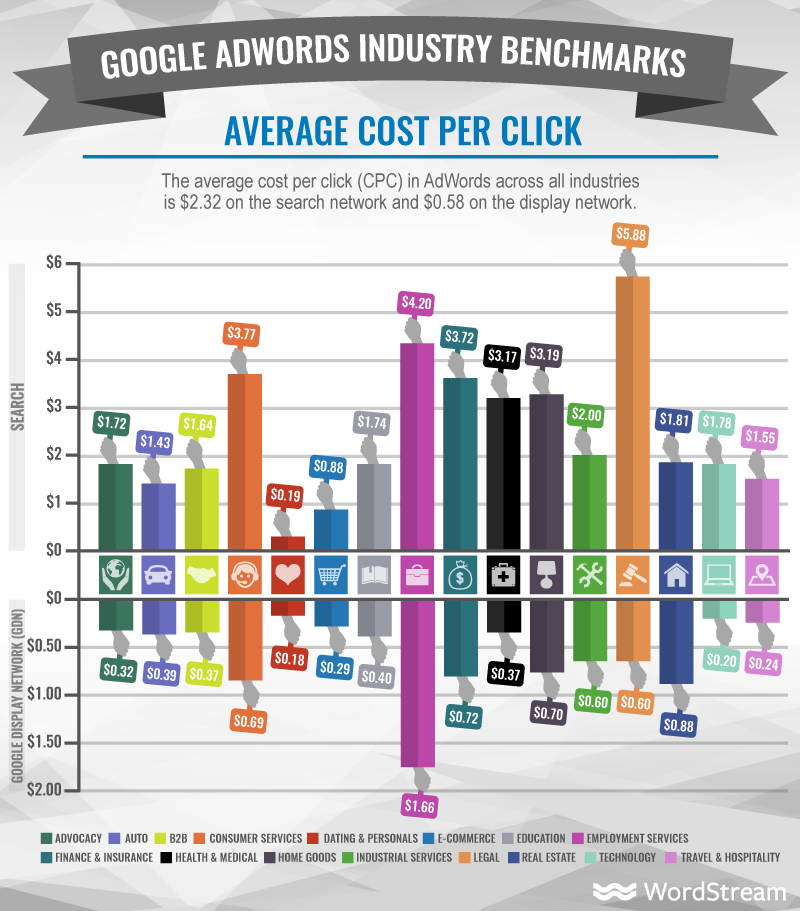
The businesses I own are all software-related. But we work with clients across different industries. So it’s always interesting to look at these cost breakdowns.

Average ecommerce CPC’s might only be around a dollar, while law might run up to around six dollars.

To be honest, though, I don’t obsess over costs, alone.

The first reason comes down to what the study says at the top: Averages.

Average CPCs don’t really mean all that much.

Popular, generic terms aren’t usually all that expensive.

Only a tiny percentage of the people who ever click on those will convert. Whereas, a more commercial long-tail keyword will be incredibly expensive.

Just compare the difference in costs between “tax” and “file back taxes”:

See? It’s not even close.

That makes it hard to use a standard, “industry average benchmark” for any in-depth analysis.

However, there’s another reason why I don’t like to just look at costs.

And the reason is because you’re often forgetting the other side of the equation.

Conversions can ultimately have a much bigger impact than costs.

Now, let’s check out those industry average conversions from the same study:

Ok, now we’re getting a little closer.

If you remember, the industry average CPC for ecommerce was only around a dollar. In fact, it was one of cheapest CPC’s on the entire list.

But if you now look at the average conversion rates, you’ll see why.

Their conversion rates are also among the lowest at only around a percent or two.

Already, you can see part of the issue.

What does it matter if CPCs are ‘inexpensive’ if the conversions are equally low?

That’s why you often want to look at the Cost Per Action (or Acquisition) when putting together advertising estimates.
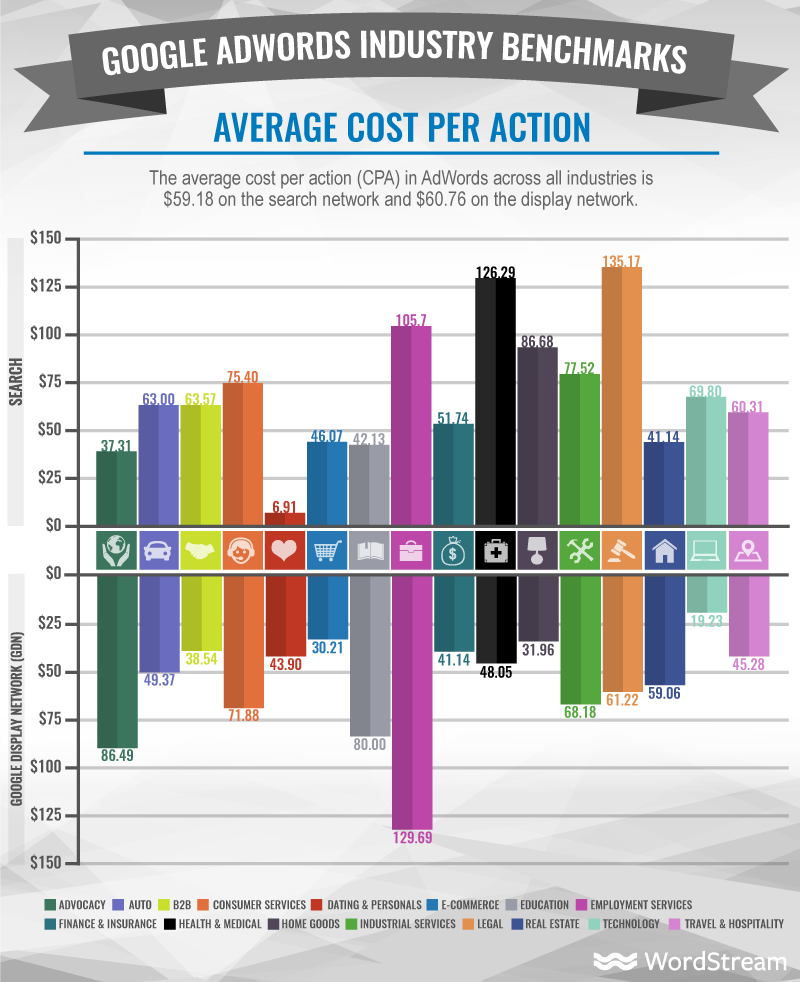
This is the effective price you pay to generate a lead, for instance.

It’s a performance ratio. It starts to take into account things like costs vs. conversions to help you determine a much better figure: ROI.

The industry average Cost Per Action for ecommerce lines up with education on the search network.

So from an ROI standpoint, there’s almost no difference.

This is why CPC becomes almost meaningless.

Yes, it’s important to a point because it drives things like your Cost Per Action.

However, what’s ultimately more important, is the revenue you can generate.

It doesn’t matter whether we’re talking about Google AdWords, Facebook, or even Twitter ads. The message is still the same.

Digital Marketer once ran a Twitter Lead Gen campaign, testing the effective Cost Per Action (or Lead).

One campaign was able to see a $7.81 cost per lead.
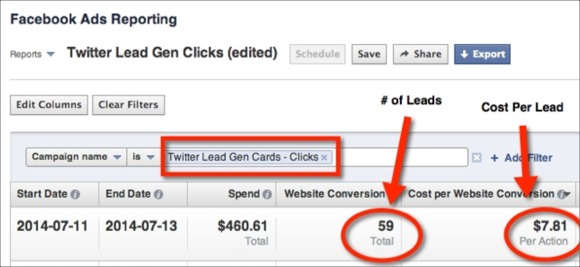
They then ran the same study with the same ad and audience targeting. But this time, they optimized the campaigns to increase conversions.

It generated a $1.38 Cost Per Lead, which came out to a five time lead increase on the same ad budget.
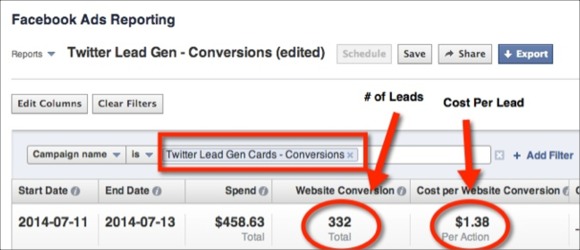
They were able to 5X conversions simply by focusing on conversions and Cost Per Lead. They didn’t even have to touch the CPC.

You can see this time and time again.

Jacob Baadsgaard of Disruptive Advertising confirms that the best PPC metrics are revenue-focused. They track lead data all the way through to closed sales.
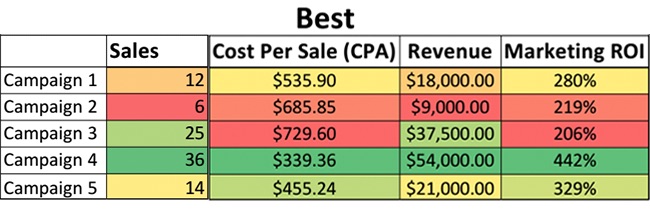
Then, and only then, will they make a decision about which ad campaign is best.

It’s not that costs don’t matter. They do, of course. But they only matter in context to how much revenue you can generate from it.

Here’s a very simple example to illustrate.

Let’s say you run two ad campaigns side-by-side.

The Cost Per Click for the second campaign is twice as much as the first. But because the conversion rate is 2% instead of 1%, you’re able to double revenue.
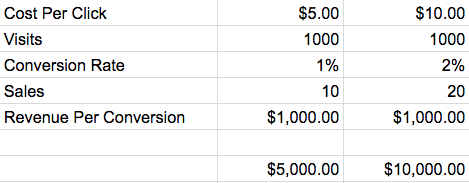
Would you pay twice as high a Cost Per Click to generate twice as much revenue? Of course you would!

And this is after reducing revenue by your ad costs. So it’s already accounting for the higher ad budget.

At the end of the day, you’re still doubling revenue. It’s totally worth it!

Obsessing over CPC doesn’t just leave money on the table. It can also make you waste a ton of what you’re already spending.

Here are a few examples.

Obsessing over CPCs can make you pull the plug too early (or too late)

There are many things that separate big companies from small ones.

But here’s one of the biggest:

Big companies spend more on advertising than small ones do.

Gartner Research study found that bigger companies spend around 13% of revenue on advertising and marketing, while smaller ones only spend around 10%.

Sarah Brady found that those numbers leap dramatically in some industries, like tech. Salesforce, the world’s biggest CRM company, spends up to 49% on marketing and advertising!

Crazy, right?

Not only do bigger companies spend a bigger percentage of revenue on ads. But that also amounts to a much bigger number at the end of the day.

The question is why?

Why don’t small companies spend more on advertising?

In my experience, I find that they’re often too risk averse.

They don’t have the same access to capital. So they tend to obsess over costs, as opposed to revenues.

The classic scenario is when a business owner spends a few hundred bucks on new Facebook ads, only to conclude that they “don’t work” five days later.

They see that ad spend number continue to rise. And they don’t see the number of leads start to flow to justify it.

So they pull the plug too early.

In almost all cases, they just need to let the campaigns run longer.

Jennifer Shaheen found that campaigns should run at least 45 days before stopping. And that makes sense when you think about it.

Look at it this way.

How many sales do you need to break even? Let’s hypothetically say two or three.

So what are the chances that those two or three sales land in the first few days?

Pretty slim!

It’s the law of averages at work. You need a big sample size before numbers start to meet projections.

It’s going to take a few weeks, at least, to get statistically significant numbers. Otherwise, you’re just guessing.
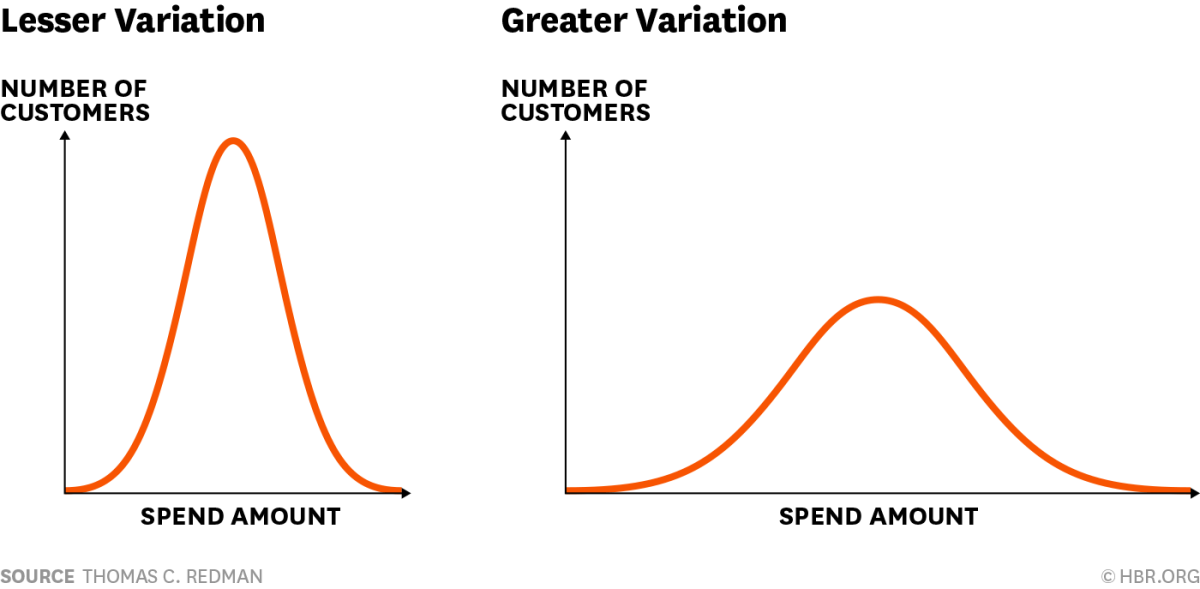
And all of this assumes that you know the ‘right’ ad campaign variables ahead of time. Which, in all likelihood, you don’t.

Not because you’re not smart. But because it takes awhile to figure these things out!

Here’s the other thing that’s happening.

Many times, they actually need to increase ad spend.

Yes, you heard me right.

Listen:

The only reason to advertise in the first place is to make money.

It’s not to save money on advertising.

That means you need to get to statistical significance as quickly as possible.

For example, go check out a few CPC ranges for keywords you’re about to bid on.

I like to use SpyFu to get a lot of this data:

The average CPC for “analytics software” is estimated to be around $11. Ok, not bad I guess.

Let’s use that as the upper limit. We can create automated rules in the Facebook Business Manager.

If you’re having a hard time hitting those numbers, you can set a rule to actually increase CPCs.

That will make sure I get better placement over the competition and as many conversions as possible.

Here’s how that might look inside AdEspresso:

But of course, this approach isn’t ideal.

Because you still might leave a lot of money on the table.

If your CPCs start edging up, the campaigns will back off or stop.

And then your lead flow will stop, too.

That’s why I like using CPAs as targets if possible, instead of CPCs.

Start by watching CPA instead of CPC

Cost Per Action is a better performance than Cost Per Click.

It’s not as good as Revenue, though. And therein lies the problem.

CPAs can still be subjective.

Is a ‘high’ CPA bad? Maybe, maybe not.

If your CPA is over $100 in ecommerce, that might be bad.

But almost every single campaign CPA will be over $100 in law, for example. So it’s not bad at all.

It still gives us a much better metric to control ad campaign performance, though.

You can still figure out an upper range that starts to make ad campaigns unprofitable. You’ll base this on your average sale per customer. (More on this later.)

For starters, you can set automated rules to increase or decrease the total budget based on your CPA.

Inside AdWords, you can go to “Bulk Actions” and create new “Rules” for these ranges:

Under “Change budgets,” you can set an automated rule to either increase or decrease budgets based on cost per conversion numbers.
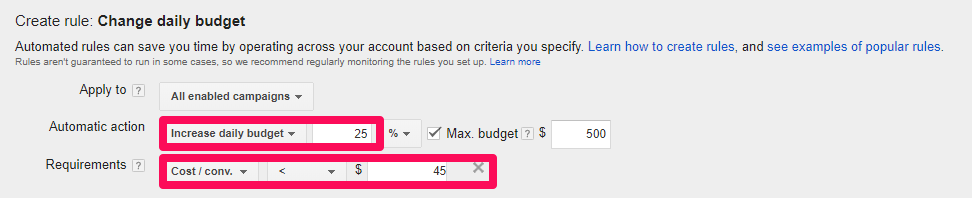
This is telling AdWords to automatically increase your daily budget 25% if the CPA is within a certain dollar range.

You can do this same exact strategy inside Facebook, too.

You’ll set a rule to increase, decrease, or stop a campaign if the CPA hits a certain threshold.
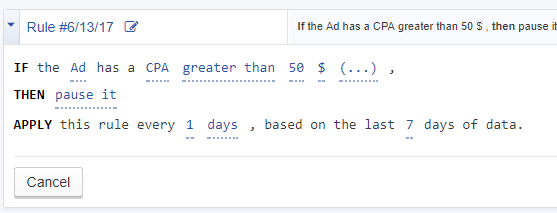
Managing ad campaigns by CPA can net you more customers and revenue.

But there’s still one big section we’re forgetting.

Keyword pricing or competitive pressure aren’t the only factors to worry about.

Many times, your customer base could be going through their own issues.

And you can’t often do anything directly to change it.

That’s why focusing on revenue is always the best approach.

Now, increase the revenue-side of the equation to overcome outside factors

Spearmint Love was one of my favorite success stories over the past year.

They went from a baby blog to growing revenue over 991% year over year.

And they did it almost exclusively through Facebook and Instagram ads.

The craziest part is that it almost didn’t happen.

They were growing like a weed, until… everything just stopped.

Results were declining across the board and they couldn’t figure out why.

Until, one day while on a walk, it dawned on one of the co-founders.

Parents will buy baby clothes until that baby grows up. In other words, their customers were kind of ‘moving on’ from the company.

The ad campaign decline had nothing to do with costs or his ad campaigns per se.

It had everything to do with their customer base.

How on Earth do you solve this problem?

By focusing on increasing revenue — not touching costs.

If the CPA is ‘too high’ to make your numbers work, start by increasing average order values.

Upsells are easy, for example, when you bundle similar products.

Think about the last time you flew somewhere. Chances are, you bought a travel sized product at a store before going through TSA.

That way, they wouldn’t throw your good stuff away at the Security line.

But that product probably only cost a few bucks, right?

Check out what Jack Black does here, bundling several travel products together.
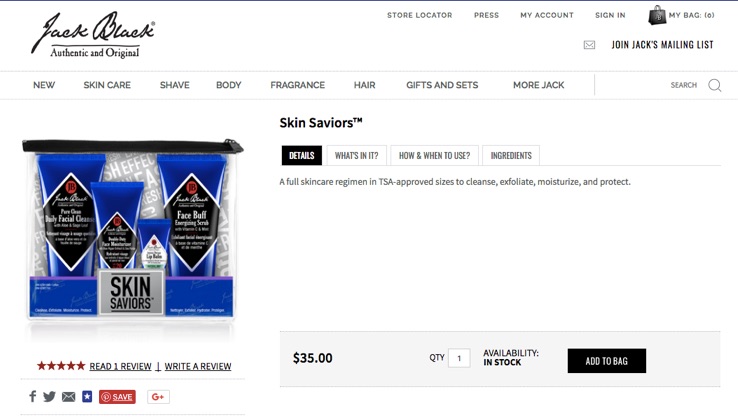
You arguably need all of these products if you’re flying somewhere.

But instead of only charging you a few bucks each, they’re charging you $35 for the whole pack!

Simply bundling similar products allows them to charge 10x more. Which means you can afford a much higher initial advertising cost now, too.

You can also cross-sell products to try and raise the average order value.

For example, right underneath this travel bundle, Jack Black offers a few related products to take with you:

One interesting thing to note is the price of all three items. They’re all slightly less than the initial $35 purchase.

Why?

They’re using price anchoring effect to make these additional products seem less expensive.

In Predictably Irrational, Dan Ariely showed how price anchoring can get people to pay more for similar products.

The Economist included a middle pricing tier for a print-only subscription. It was the same exact price as the ‘big’ plan for both the print and web editions.
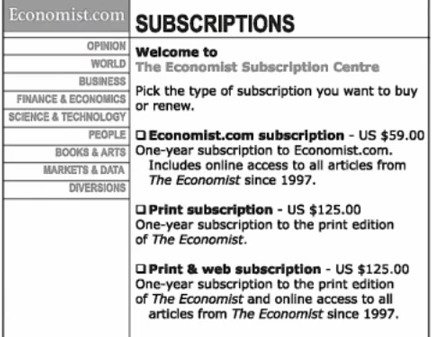
In this scenario, most people chose the combined third option because it seemed like the best deal.

Removing the middle plan on a subsequent test, however, led people to overwhelmingly pick the cheap option, instead.
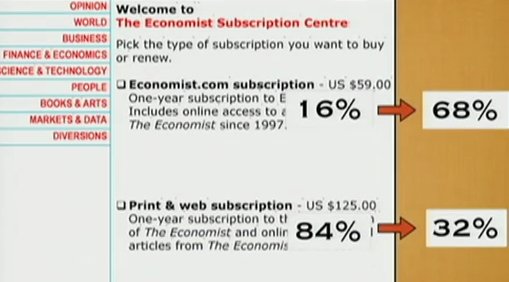
Price anchoring changes someone’s perception of cost vs. value.

That’s why you should lead with the more expensive option. Then, showcase a few related products to cross-sell that are slightly less expensive.

Spearmint Love also expanded their product line to increase average order values.

They came out with decor piece, like hundred-dollar baby lamps.

The age of a child mattered less in this type of purchase. So it kept the company relevant longer in their eyes of their customers.

After increasing average order values, you should increase the lifetime value of each customer.

One technique is a vintage analysis, which shows you which customer cohorts are worth the most already.
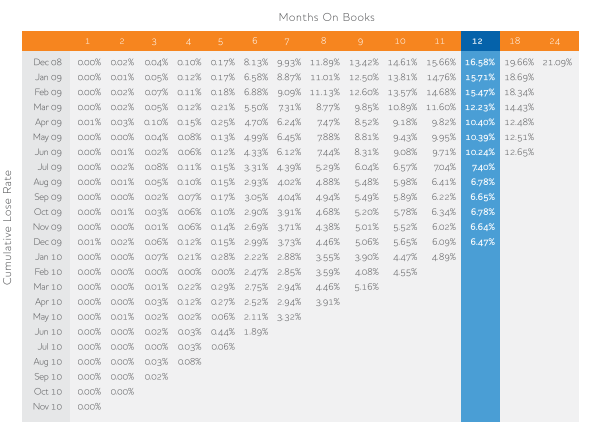
cohort for ecommerce store

This way, you can identify trends or patterns.

You can see what the most lucrative customers are doing. And then take those lessons to apply across everyone else.

Getting customers to repurchase down the line can have a massive impact on your ad campaigns.

Constantly acquiring new customers is expensive. You have to spend a lot more to get them to buy.

Increasing repurchases from your existing customers has a massive impact on your bottom line.

Let’s revisit that initial ad model to see why.

Keep in mind this is a simplistic example. But I think it still does a decent job showing how this works.
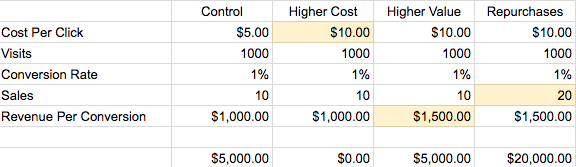
The first campaign has a higher initial cost. So you’re barely breaking even.

This is what most companies are scared of. They worry about spending more money on keywords.

And as a result, they put blinders on. They completely neglect optimizing conversions, average order values, or repurchases.

So yes, they might bring in a few sales. But the higher costs deplete their ad budget before long.

The end result is a wash.

The second campaign has a higher average order value.

In this case, you’re not even getting more conversions. All you’re doing is bundling a product, for example.

And already, you’re back in the black. Not bad.

However, the third campaign?

Not only are the average order values higher, but you’re getting more repeat purchases, too.

You’re basically generating more purchases from the same number of customers. Many times, you don’t even have to spend a single dollar to get them.

All you have to do is send out an email campaign. These loyal customers don’t take a lot of extra persuading.

More sales, without increasing ad costs, skyrockets revenue.

You make several times the other few campaigns.

And best of all, you didn’t sweat a single CPC. You willingly paid at the top-end of the budget range to maximize your opportunities.

Then, you doubled-down on the other side of the equation.

Increasing conversions and revenue spent can act like a lever to double or triple ad campaign ROI.

Conclusion

There’s only one reason to spend money on ads at the end of the day.

Your goal is to make money.

You want to bring in more money than you spend.

That changes everything.

Because you shouldn’t be out for the best deal. Chasing the keywords with the lowest CPC is a losing proposition.

If anything, you should be spending more money. You should actually search out the highest CPC’s there are in your industry.

Why?

Many times, they offer the most potential. You want to maximize the most sales per dollar spent.

So you know all those “industry benchmark CPC” numbers? Don’t worry about them.

Instead, start by focusing on the CPA. That’s the number it costs for you to acquire each new customer.

It’s not perfect by any stretch. But it’s a better number to optimize around than CPC.

From there, try to dig into revenue numbers.

Can you bundle a few products to raise the average order value? Can you cross-sell recommended products and use price anchoring to lower their perceived cost?

Then, figure out how you can keep customers around longer.

That might mean introducing new, related product lines. Or it might mean introducing ‘consumable’ products that people need to repurchase again and again and again.

The point is to drive up the lifetime value of each customer as high as possible.

Because if you can do that, almost any costs will do.

There will be so much revenue generated per customer that you can afford to spend almost anything to get them in the first place.

How have you boosted ad campaign performance by focusing on conversions instead of costs?

About the Author: Neil Patel is the cofounder of Neil Patel Digital.


from The Kissmetrics Marketing Blog http://ift.tt/2E7ud9f

You Can’t Buy a Beer with a Marketing Qualified LeadFeaturing Matt Heinz

Welcome to this edition of Modern Marketing Point of View. Today we hear from the one and only Matt Heinz, President of Heinz Marketing. He discusses what’s changing in demand generation and how your marketing team should be measuring success.

What’s Changing in Demand Generation?

As Matt cheekily notes, “you can’t buy a beer with a marketing qualified lead.” Leads aren’t the end game—sales and revenue are. That’s the rationale behind the shift he’s been noticing in demand gen: a shift towards quality and results over volume and activity.

What’s Working in Demand Generation?

If you’re aiming for quality and measurable results over quantity, Matt argues that the most effective tactic you should be using is simpleengaging your leads in conversation. Ask yourself: what are you doing to engage your prospects in a conversation, not necessarily about your product, but about the problem that they have?

In his opinion, the difference between successful and unsuccessful B2B marketers is that successful marketers are focusing on the conversation.

What’s Working in Sales and Marketing?

Matt’s number one recommendation is to educate your audience first and sell to them second. “What’s the insight you bring that they would’ve paid for?”—that’s the question he thinks marketers and salespeople should focus on. “Someone that can help make me better and educate me, I’m more willing to listen to,” he says.

Not to mention that customization is key. Spending a little time on your prospect’s bio and learning a bit more about their organization can go a long way.


We’d love to hear what’s working (or not working) for you when it comes to demand gen. Sound off in the comments below.

The post You Can’t Buy a Beer with a Marketing Qualified Lead<br>Featuring Matt Heinz appeared first on Vidyard.


from Vidyard http://ift.tt/2nQjppb
via IFTTT

Tuesday, 6 February 2018

Why Redesigns Sabotage Your SEO Rankings (And How to Avoid It)

It seems like most companies redesign their website every year or so.

New trends gain steam, so they want to be more ‘contemporary’ or ‘flat.’

Or new color schemes are en vogue. So every site you visit looks Asana-bright.

Everyone now wants to update their site on the same regular basis.

I love experimenting with new color schemes and trends, too.

Except for one tiny thing.

I hate redesigns.

Design updates are good. They allow you to incrementally make improvements to make sure your site is up-to-date.

But full-scale redesigns?

Where you completely overhaul the site architecture and page content?

You should avoid those like the plague.

I know that sounds surprising. But I’m going to share a few examples of how and where website redesigns go bad.

Especially when it comes to destroying all of the hard-earned SEO rankings you’ve built up over time.

Site architecture changes cause you to lose links.

There are hundreds of rankings factors for SEO.

But backlinks still reign supreme.

External links have been considered ‘votes’ since the beginning of (internet) time. Their quantity, diversity, and authority pass the most influence to raise your position in the SERPs.

Internal links don’t count for as much value. However, they do have a direct influence over someone’s website experience.

I’ll explain.

In 2011, Google Panda was released. It was one of the first reported cases where Google confirmed the use of qualitative factors.

They used a survey with questions like:

  • Would you trust information from this website?
  • Is this website written by experts?
  • Would you give this site your credit card details?
  • Do the pages on this site have obvious errors?
  • Does the website provide original content or info?
  • Would you recognize this site as an authority?
  • Does this website contain insightful analysis?
  • Would you consider bookmarking pages on this site?
  • Are there excessive adverts on this website?
  • Could pages from this site appear in print?

And they had people individually rate different websites.

Fast forward a few years, and Google also started taking user behavior into account.

They don’t just want to rank websites based on links or content length. They also want to look at the overall experience of that website.

They want to make sure that people find what they’re looking for.

So the better experience visitors have, the more credit the site will get.

What’s one way to ruin an otherwise nice experience?

Broken links that derail someone’s path through your site.

When most companies redesign websites, they start messing with the site architecture.

They create new pages and ditch old ones. Or they take content from one page and add it to another.

Then, they switch up their menus and navigation schemes.

It seems harmless on the surface. The new experience might even be superior to the old one.

But what they don’t realize is that they’re often creating a TON of problems for SEO.

For starters, site architecture changes can ruin hub pages you’ve worked hard to build.

These are like clusters of related pages on your site. And they can help increase your perceived authority on those topics.

Page-level changes also create broken internal links throughout the site.

You know the drill. You try to click on a new page to find related information, only to be met by a 404 error.

One or two isn’t a big issue. Redesigns, however, often create a ton of them all at one time.

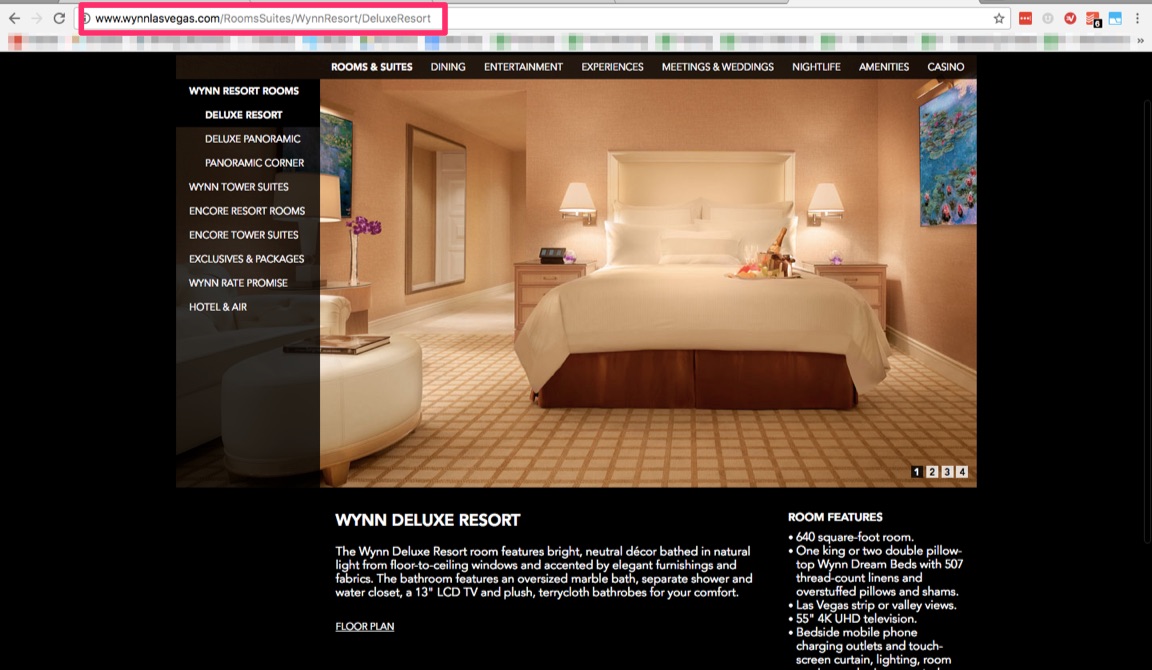
For example, let’s say you’re redesigning a hotel or ecommerce website.

Chances are, you’re using a detailed parent-child structure to organize pages.

That means you might have “Rooms” at the top, followed by the individual types of rooms underneath.

The problem is that these structures often changes over time.

Maybe you come out with new products or services. Maybe you migrate old rooms into new ones.

One seemingly small change can often create a ripple effect throughout your site.

It might make perfect sense to move your featured rooms up a level or two.

However, any changes to your URL structures doesn’t create one or two broken links.

It can literally create hundreds to thousands.

Take blogs for example.

Let’s say you’ve worked hard over the years to create hundreds or thousands of blog posts.

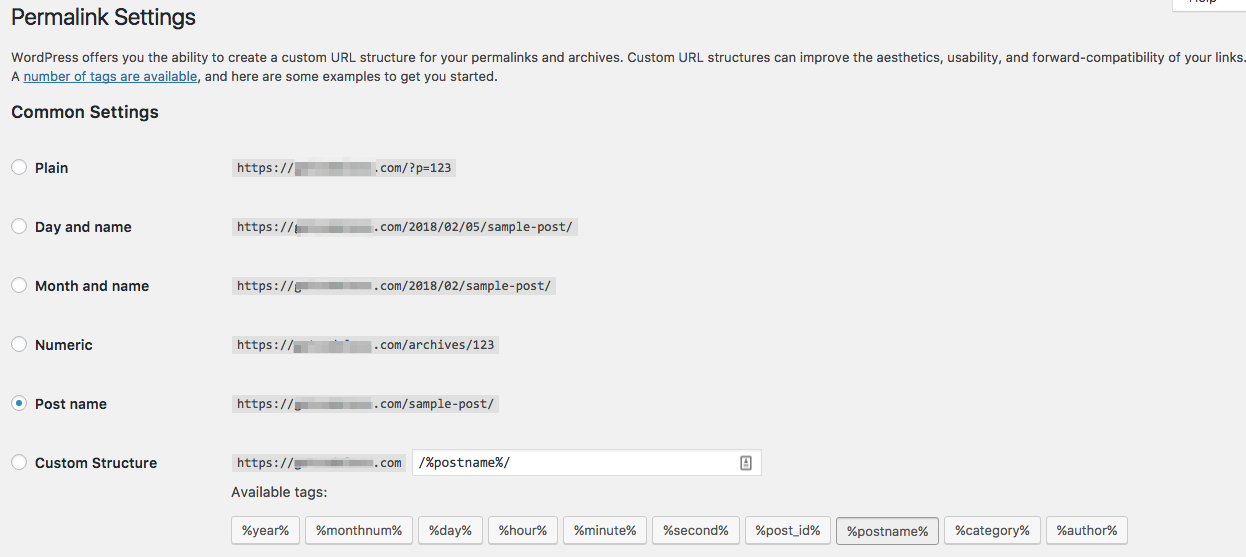
But when it comes time to move over to a new CMS during a site redesign, someone wants to remove the date strings from the URLs.

Heck, all it takes is literally a single click inside WordPress to update Permalink Settings.

So yes, it seems harmless.

I’ve actually seen this mistake time and time again.

Poor, unsuspecting business owners who have their entire websites practically break.

Tens of thousands of page URLs break overnight.

And you know what happens to their rankings?

They drop like a rock.

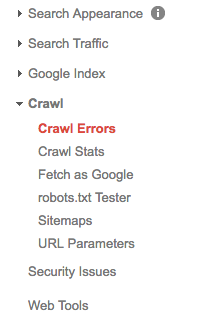
Fortunately, Google Search Console can help you spot broken links under the Crawl Report.

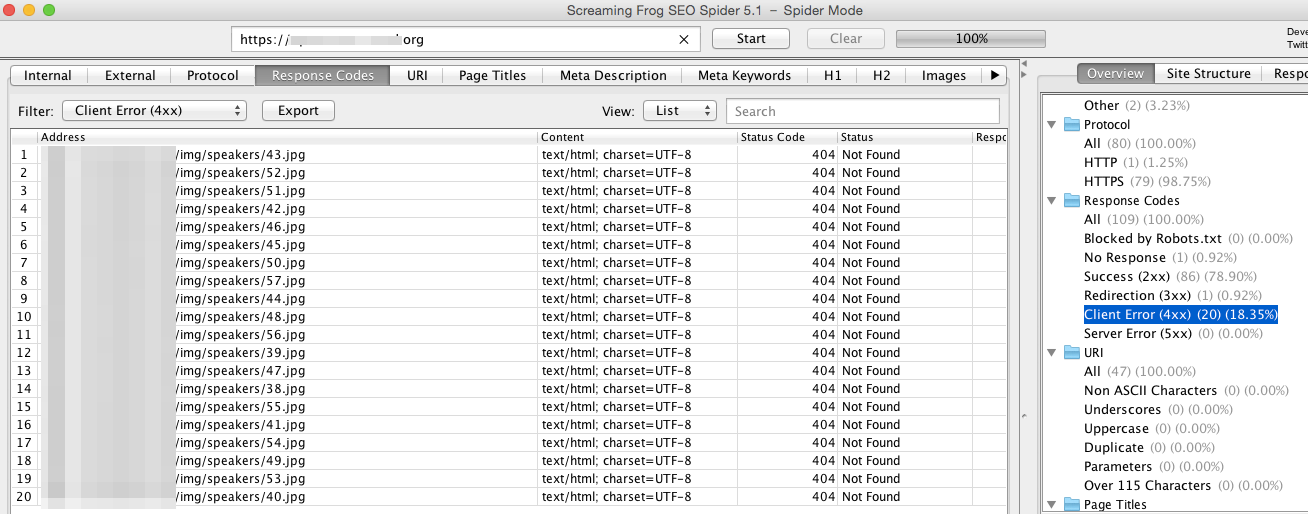
My favorite tool for technical SEO audits is Screaming Frog.

It will crawl every page on your site, uncovering tons of on-site SEO issues.

For example, you can start by looking for the “Client Error (4XX)” report under Response Codes.

Most of these will be 404 errors, when the status is reported as “Not Found.”

So far, we’ve been focusing almost exclusively on broken internal links.

But that’s not the only way redesign changes can affect your site links.

Think about it this way.

Older, high-authority pages or posts tend to acquire the most backlinks.

The highest value links are also the hardest to get. These include editorial links, for example, that come from journalists or other influencers.

That also means you can’t control them.

So when your page or post URL changes, you will lose all of those external links, too.

This, again, happens all the time.

Permalink updates, moving the blog from a subfolder to subdomain, or even just new product pages replacing old ones can force you to lose all those backlinks.

The best solution? Don’t change old page URLs!

At least, not if you can help it.

Otherwise, another way to side-step this problem is through setting up 301 redirects.

These are ‘permanent’ redirects, telling search engines that the new page has now replaced the old one.

The Quick Page/Post Redirect Plugin for WordPress is one of the most popular options.

It’s also incredibly easy to use. All you have to do is drop in the old “Request” URL and then direct it to the new “Destination” one. The only caveat is that redirects like these should be used sparingly.

What you don’t want to see, is something like this:

Loading up on too many 301 redirects can cause other unintended consequences.
And they’re usually a sign that there’s a bigger, underlying issue at play.

It means the site architecture has changed dramatically.

Here’s why too many redirects can also affect your SEO rankings.

Too many 301 redirects can cause slow page speeds.

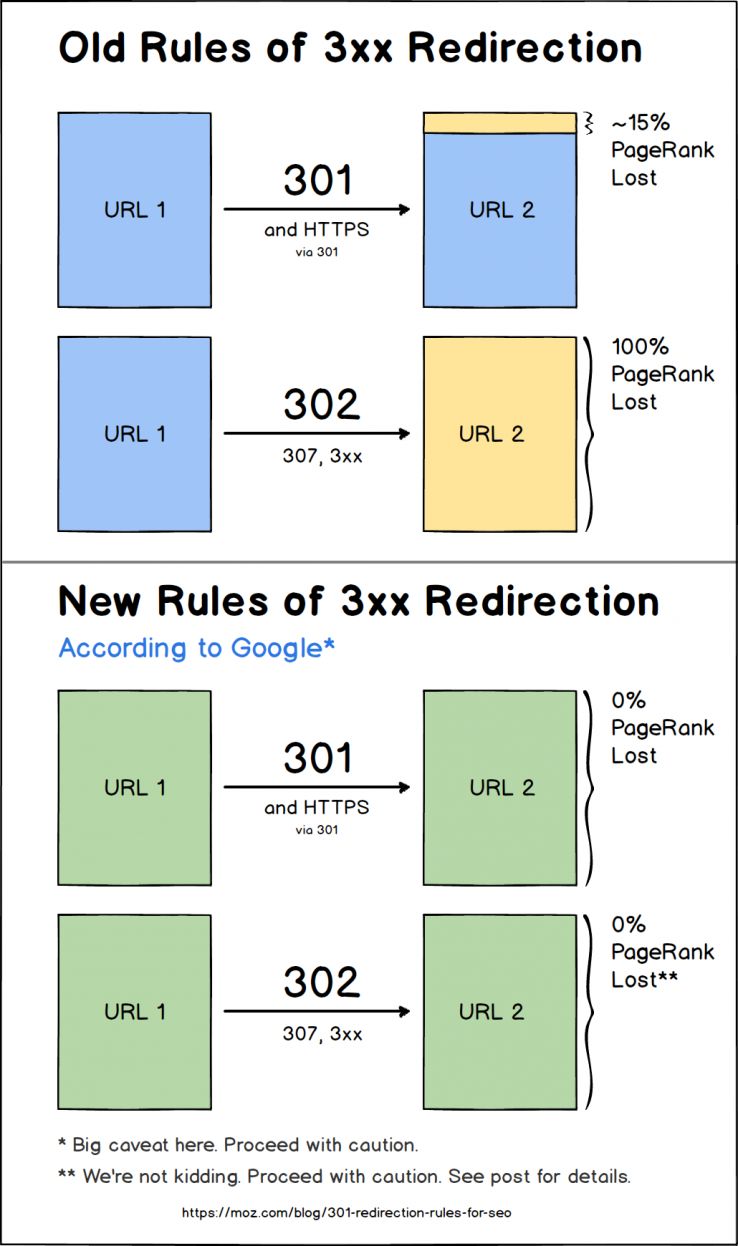
“301” redirects have long been considered the best for SEO.

They indicate a ‘permanent’ change, as opposed to a ‘temporary’ one like a 302 gives off.

Either way, SEOs still feared that redirects would somehow limit the amount of PageRank that flowed through to the site.

Even Google’s own Matt Cutts once indicated some loss.

But in 2016, Google webmaster analyst, Gary Illyes, confirmed that all 3XX links pass full value:

Another Googler, John Mueller, confirmed the same findings.

Why does this all matter?

Because redirects are often now used to update websites to HTTPS. So some SEOs think this is Google’s way to help make sure people adopt it.

Last year, Google Chrome users started seeing new security warnings.

Previously, up to 70% of users would ignore website security warnings. So Google rolled out new ‘Not Secure’ messages for sites that don’t set-up SSL certificates.

Moving from HTTP to HTTPS isn’t as simple as you might think, though.

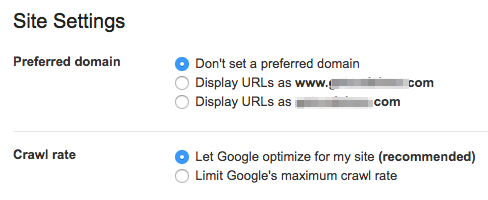
For example, you can just flip a switch inside Google Search Console to pick the ‘preferred domain’ of your site.

That way, you avoid potential canonicalization issues of your site recognized as two: a “www” and “non-www” option.

As discussed, any URL changes can cause you to lose links.

Architecture changes can break internal links. But you can also lose out on ‘link equity’ if sites link to HTTP and not the new HTTPS-version of your site.

Again, why are we harping on redirects?

Because too many can slow down your site’s performance.

And page speed has been officially confirmed as a ranking factor.

Kinsta ran a test on WordPress to see how redirects affect page speed.

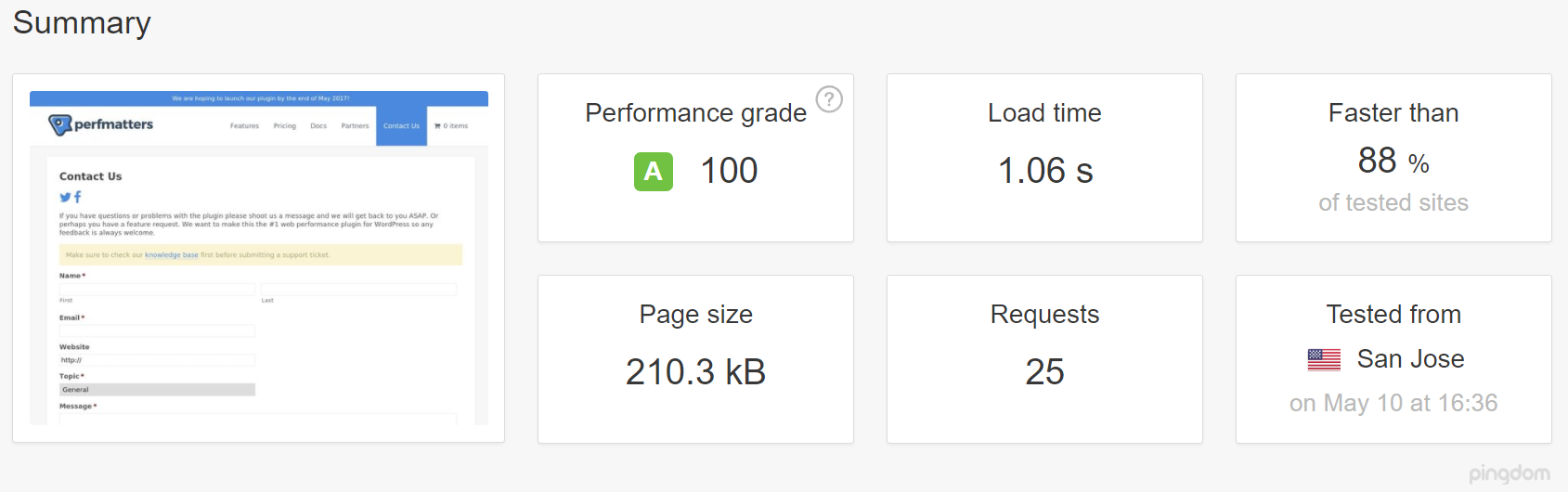
First, they used Pingdom to run a page speed report with no redirect.

The page loaded in around 1.06 seconds. That’s a good score!

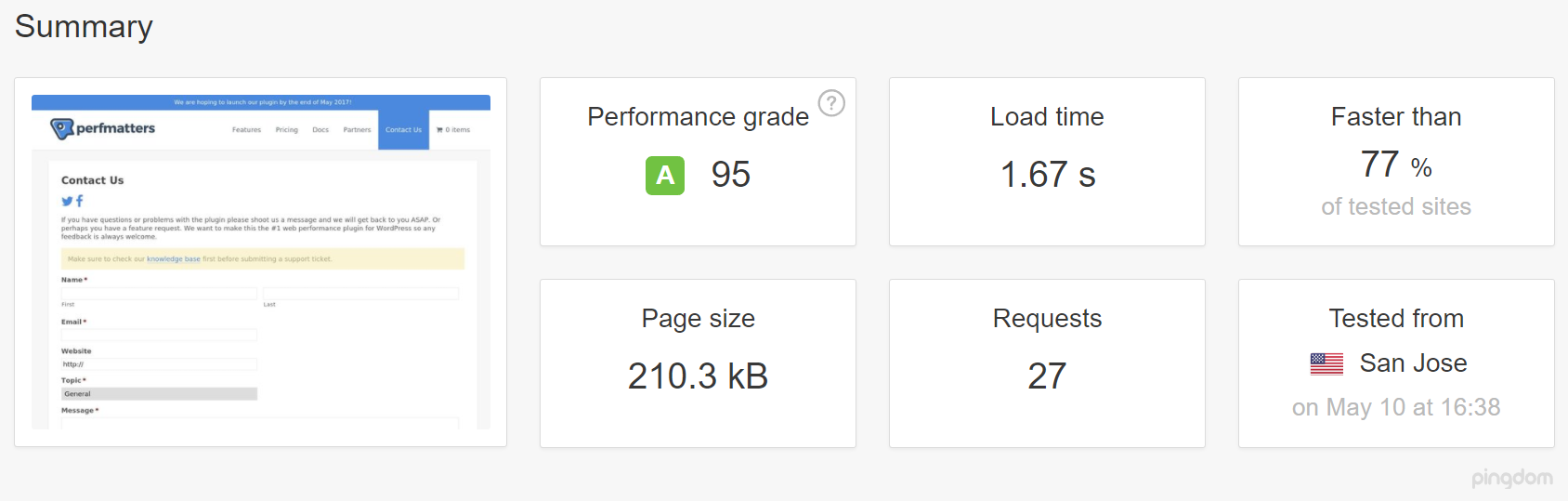
Next, they ran the test again. But this time, through a redirected URL.

And check out how it affected page load time:

Crazy, right?!

A redirect increased page load time by 58%.

That’s just a single page redirect, too.

Multiply this across dozens of redirects and you can see the problem.

Even worse, are when multiple redirects occur right after another.

This often happens if you’ve updated a page more than once. As in, multiple redesigns over the years.

One URL redirects to another, which redirects to another. And page speed slows to a crawl.

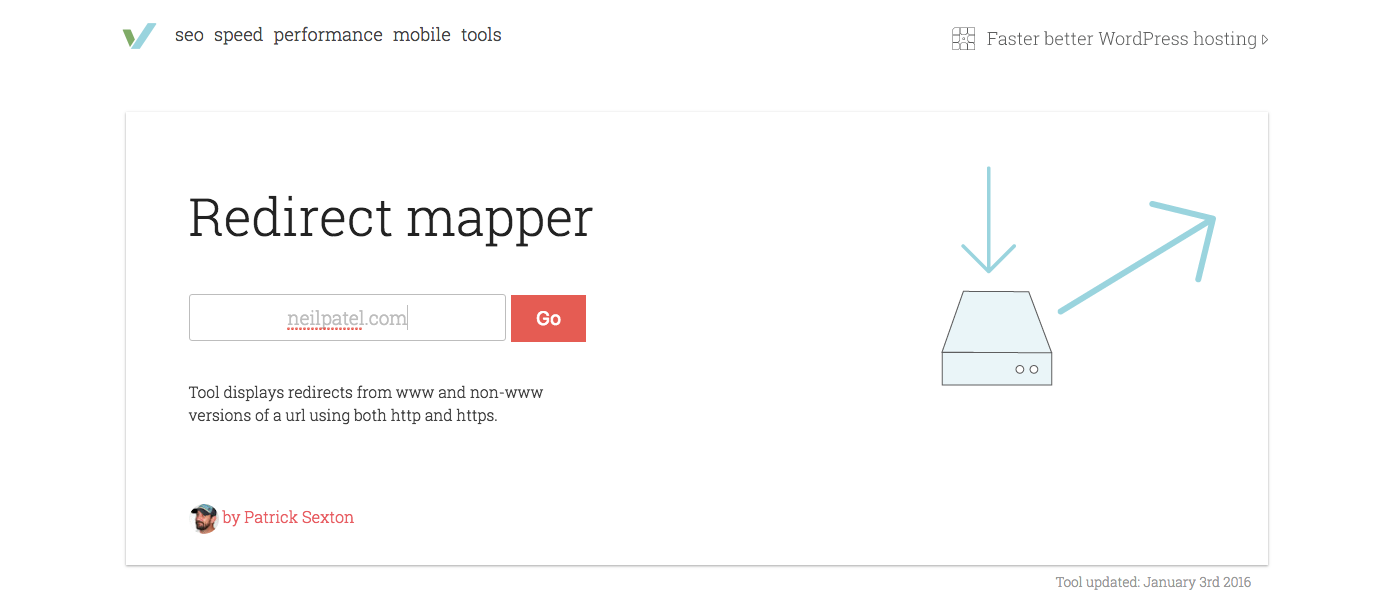
My favorite tool for diagnosing redirects is the redirect mapper tool from Patrick Sexton.

All you have to do is drop in your URL:

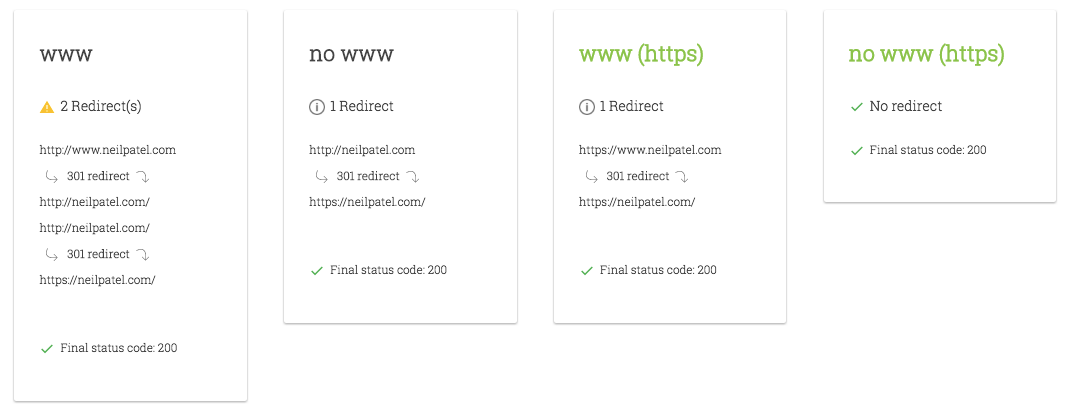
Hit “Go,” and you’ll instantly get feedback on different 301 redirects set up over the years:

Again, fewer is better. Google, themselves, literally says to eliminate as many as possible.

Which could be a problem if you’ve updated content during redesigns.

Here’s why.

Updated content messes with keyword targeting and page optimization.

Why would you ever setup two redirects for a single page?

That doesn’t make sense, right?

Of course not. At least, not intentionally.

Yet, it still happens all the time.

Here’s why.

Five years ago, you sold one product or service. Three years ago, it changed. And this year, it’s changing again.

In other words, the purpose behind the page evolves over time. So all of the content on the page changes, too.

It even happens with Skyscraper content. You take a lot of old posts that are underperforming, and redirect them to a new one.

Instead of relying too much on redirects, they should simply ‘refresh’ those old posts. Adding new content and images can boost SEO traffic by 111%.

Multiple redirects in a row cause performance issues.

However, continually changing page content also messes with your keyword targeting and on-site optimization.

Here’s how.

Let’s go back to a hotel example.

Initially, maybe they only have one two room types. But after a renovation, those are expanded.

The original website architecture might just list those first few rooms on the same page. But now, there’s too many.

So you change the “Rooms” page to a category page, that lists out ones underneath it.

The problem is that now your “Rooms” page also has zero content. It just serves as a drop-down now:

If that “Rooms” page was ranking previously, it isn’t anymore.

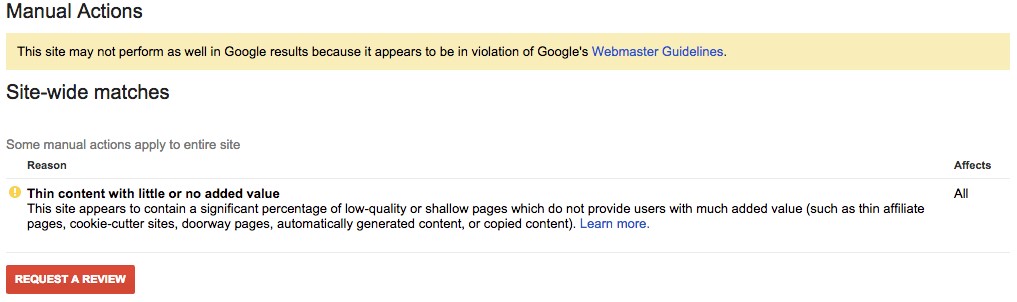
Now, you have thin content issues, for starters. This is when there’s less than ~300 words on individual pages of your site:

Page length matters because Backlinko’s analysis showed that “the average first-page result on Google contains 1,890 words.”

50% of search queries also contain four words. That means someone is typing in a long-tail keyword to find something specific on that page.

It’s hard to give people the information they’re craving if you’ve literally removed all (or most) of the content.

Content changes during site redesigns also wreck havoc on page metadata.

One of three things usually happens in this case:

  1. The page content has changed, so the old metadata is no longer relevant
  2. New metadata is copied and pasted from other sites
  3. Or the designers and developers completely neglected to add any metadata to updated pages

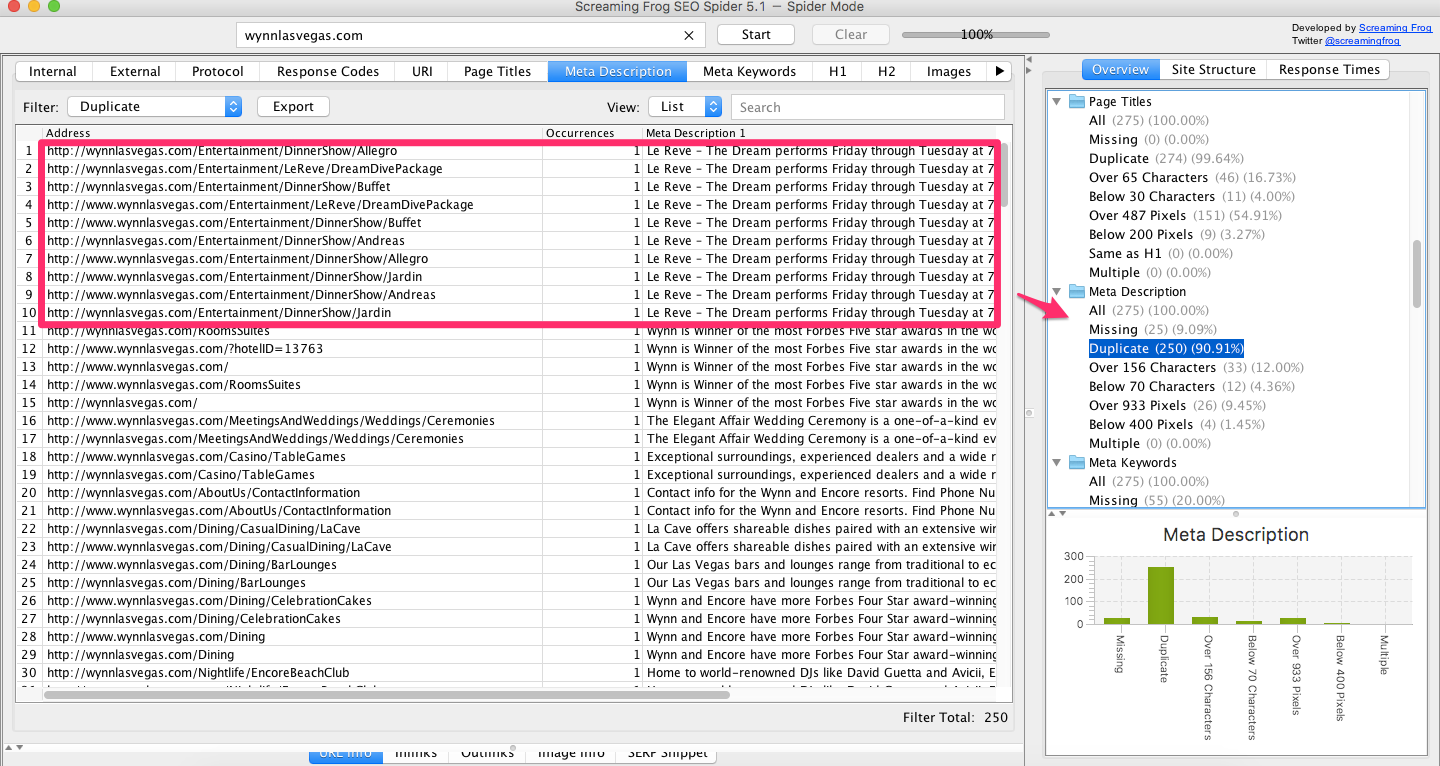
Once again, Screaming Frog can help you diagnose these issues.

Drop in your URL and search for the meta description option. I like to start here, because it usually indicates a bigger problem at play.

For example, check out the following example. I’ve blurred the site’s name to protect the innocent.

Two problems are happening here.
First, the same keyword is being repeated on multiple pages. This could lead to duplicate content issues and reduce their ability to get one main page to rank for that term.

Second, there’s a ton of pages missing a meta description entirely.

Meta descriptions technically don’t help you rank. They do, however, help you increase your SERP click-through rates (CTR). And new data suggests that CTR can often affect rankings directly.

If a page doesn’t have a meta description, search engines will often pull content directly from the page.

But in most cases, it’s random text that gets truncated because it exceeds length requirements.

So it’s not ideal. And people won’t click.

Here’s another common problem to look for:

We’re looking at different restaurante pages on one website. However, they all share the same exact meta description.

Once again, this is a red flag.

The duplicate metadata cannibalizes the chances of your primary page ranking well for this term.

And these inconsistencies typically indicate a larger problem at play.

Most firms that specialize in design will not touch the page’s metadata.

SEO isn’t a high priority for them. They might not have the specialists on staff.

So this is what happens. You get websites shipped that look fantastic, but don’t perform.

Pages have the same copied metadata. Or worse, title tags and descriptions are missing completely.

And at the end of the day, the only thing that matters is how your website performs — not how it looks.

Redesigns screw up ‘user flow’s that are already working.

My biggest problem with website redesigns is that they often screw up what’s already working.

If your business is up-and-running, chances are you already have purchases rolling in each day.

Redesigns that change site architecture or page content often screw this up.

You’re completely jeopardizing revenue.

And ultimately, your website’s ability to generate revenue is its most important aspect.

Changing all of that, without knowing if the new design is going to convert as well as the old design, is a huge gamble.

Results might increase. But you don’t know for sure. That’s exactly the problem.

Think about it this way.

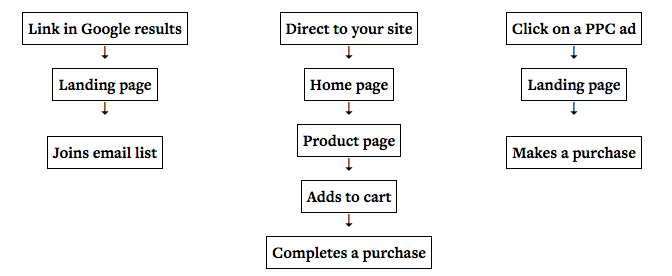
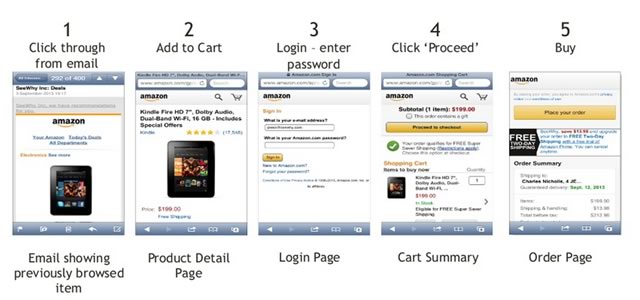
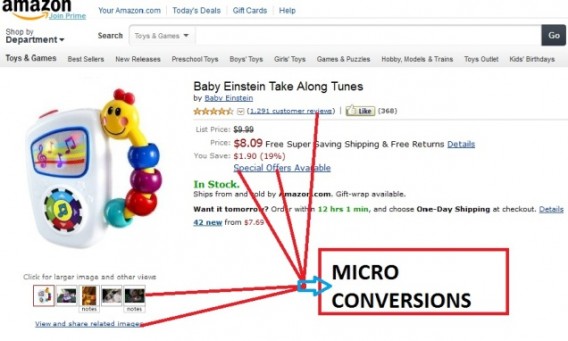
A website’s macro-conversion, like a purchase, is made up of micro-conversions.

To get a sale, you first have to get people to your site. Then get them to visit certain pages. Then possibly opt-into something before they had over payment.

These ‘user flows’ are already playing out across your website.

Changing the sequence of these steps can have massive ramifications on the end goal.

This is the point behind conversion optimization that most people miss.

They think ‘conversion optimization’ means to change a button color or headline.

But in reality, changing how people flow through your site can often have a bigger impact on purchases.

One study, for example, found that optimizing an ecommerce checkout flow could result in an additional $87,175/month. That ~3% conversion increase could add another 23.94% to their top line.

Micro-conversions also extend to the internal links on your pages. These are like the beginning to a new path through your site.

Changing these links doesn’t seem like that big of a deal. However, now you can see, that it could have a big impact on how people purchase your products or services.

How do you avoid this?

Again, updating your site design is a good thing. But do it incrementally so you can test the effects on each page.

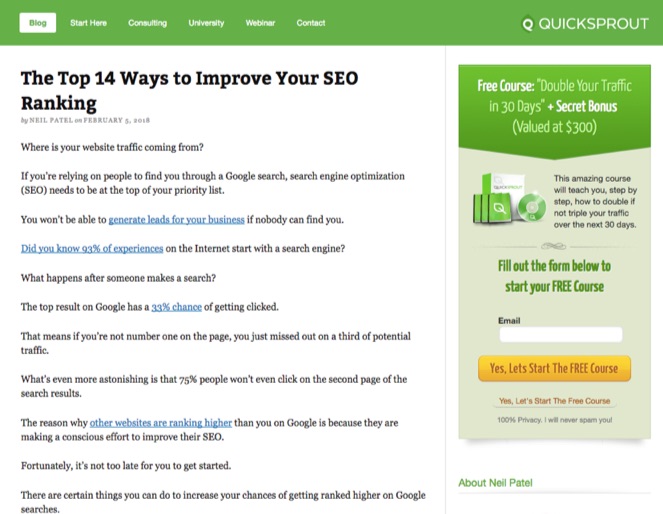
For example, here’s how my Quick Sprout blog looked a few days ago:

Now, compare that to how it looked a few years ago. You can do this yourself using the Wayback Machine.

Pretty similar, right?

Sure, it looks more ‘clean’ and ‘polished’ now. The design is still relevant for today.

However, I did not want to change what was already working. That’s how I like to run website redesigns. I’ll tweak element by element or page by page.

Then, I’ll use something like Crazy Egg to run tests after each change.

If numbers go down, I’ll revert back to the old design. Even if it seems a little ‘outdated.’

But if numbers go up, I’ll start carrying those new design updates over to my other pages.

That way, you should never, ever lose SEO rankings as a result of a website redesign.

Or, more importantly, you won’t lose revenue, either.

Conclusion

Website design updates should happen regularly.

Design trends change pretty frequently. And you want to make sure your website properly reflects your brand.

What you don’t want to do, however, is sabotaging everything else that’s working.

Large-scale site redesigns can often create tons of problems.

Site architecture changes can lead to performance issues. Content changes ruin your keyword targeting. And changing micro-conversions can drag down your macro-conversions.

The way your website looks is important. But only to a certain point.

The more important issue at play is whether revenue is increasing or decreasing.

Website redesigns can easily screw up your SEO. That causes rankings to fluctuate and traffic to decrease.

Declining traffic, then, brings down revenue with it.

Avoid this trickle-down issue by not changing what’s already working. If you’re going to update something, do it on small elements, first.

That way, you can test the impact in isolation. You can see if it’s going to increase or decrease results on a small scale.

Then, you can pull back to the old design if it’s not working without losing too much traffic or revenue.

And if it is working, you can start applying those proven updates to the rest of your site.

Websites aren’t just fashion statements. More often than not, functionality and performance should outweigh the appearance.

Have you ever experienced traffic drops right after a new website redesign?

About the Author: Neil Patel is the cofounder of Neil Patel Digital.


from The Kissmetrics Marketing Blog http://ift.tt/2BK7p1N

Get Your Pipe Right – Advice From Sales Bootcamp Lead Instructor Ryan Reisert

As we approach the start of Q3, we embark on a special time of year that has major implications for every member of growing organizations who have responsibilities for hitting revenue targets.  For those who have hit your numbers in Q1 and Q2, congratulations (for now) and for those of you who missed your numbers, it is important that you pay attention to the message we are about to share. While struggling reps, managers and leaders may start coming up with excuses as to why they are behind, and believe me the excuses will start coming, top 5% of sellers know exactly what they need to do NOW to ensure they still meet their Q3 and Q4 2017 targets.

We recently attended an AA-ISP event hosted by the Silicon Valley Chapter in San Mateo, CA that concluded with the exact same message we are about to share.

Sales organizations today are blessed with an arsenal of sales acceleration, enablement and training technologies/solutions. When these tools are used correctly, this can make a huge impact on a companies ability to scale quickly. However, even after making the investment in tools and training, managers and leaders fail to hit their targets. After completing all of your Q1 and Q2 win/loss analysis and determining that you need more opportunities, do not blame marketing, do not blame the lack of technologies you have available to you, take ownership and GET YOUR PIPE RIGHT.

If you are depending on someone else to bring you the opportunities you need to meet your sales targets, you deserve to miss your targets. Revenue is directly related to the number of opportunities YOU are working which is directly related to the number of opportunities YOU are creating, which is directly related to the number of sales conversations YOU are having on a daily basis. If you want to be a top 5% seller, stop making excuses and start putting in the work that that drives the results and get you that high six figure on target earnings salary you deserve!

So what do YOU need to do ——

Take a moment to develop your dream list of 100 accounts in your territory that need your product or service. Find the people who own the decision to purchase your product or service (hint, look at your previous closed won opportunities and who was involved in the decision-making process / signed the agreement). Finally, pick up the phone and call them. If you find that it is impossible to get through over the phone, then try other channels like email, social media, direct mail, events, etc. If you are not picking up the phone first, you are wasting time and losing out on opportunities.

Good luck starting off Q3 ,  We are looking forward to hearing from those of who have hit their numbers and those who are going to start picking up the phone to make sure they hit their 2017 number! The top 5% are already doing this.


This article originally appeared on the Sales Bootcamp Blog

The post Get Your Pipe Right – Advice From Sales Bootcamp Lead Instructor Ryan Reisert appeared first on Vidyard.


from Vidyard http://ift.tt/2C12bdD
via IFTTT