FREE TRAFFIC TO YOUR SITE

FREE TRAFFIC TO YOUR SITE
free youtube traffic

Wednesday, 11 July 2018

Cross-Team Collaboration: How to Include All Your Employees into Different Aspects of Digital Marketing

Your brand is delicate. It can be compared to rare lily, having to be coaxed carefully and softly into full bloom. What does that mean for your brand?

You have to very deliberately curate and grow it, avoiding the many pitfalls that even big brand often fall into. One single brand image problem and you could lose a chunk of your user base.

A good strategy for cultivating a strong brand from that tender little bloom is by getting the entire team on the same page.

Why Collaborate?

Stop, collaborate and listen… Vanilla Ice knew what he was talking about… sort of. The best brands collaborate as one entity, working as a team to make sure they have the best final product possible. Those brands aren’t insisting that marketing remains in Marketing or sales remain in Sales. The whole team is responsible for each part because in the end it all fits together.

Think of your brand as a chain. Do you want a weak link breaking off the rest just because that link wasn’t aware of what is being done day to day to market it? Alright, so the analogy falls apart in the middle, but you see my point. Everyone should be collaborating and participating in the marketing of your brand.

What you will get as a final product is an innovative brand that is plugged into the community in the now, ready to move into the future.

So, where do you start?

Engage Your Team in Your Social Marketing

Social media is where your team can really thrive and get the most direct results. Authenticity is important in driving brand popularity. Consumers want to know they can trust you and so they need to relate to you. Being a faceless entity just doesn’t cut it anymore. The modern day customer expects more.

Put together a digital packet that tells your team members about the tone and voice of your company. Discuss with them what is and isn’t appropriate to post. Then ask for their ideas. You will get a ton of fresh perspectives with unique ideas for how to market the company on social media.

Another reason this is a great idea is that it will look from the consumer side like these team members are being spontaneous, while you know that while the ideas came from them, it was tailored to fit into your social campaigns.

Featured tools and resources:

Make sure you have clear guidelines in place. You don’t want your team members to go too relaxed in their public style when talking on your behalf, plus you don’t want them to feel to limited either. There’s a fine balance there and this guide from Sprout Social will help you maintain one. It also contains some actual examples of social media posting guidelines from several brands to help you out:
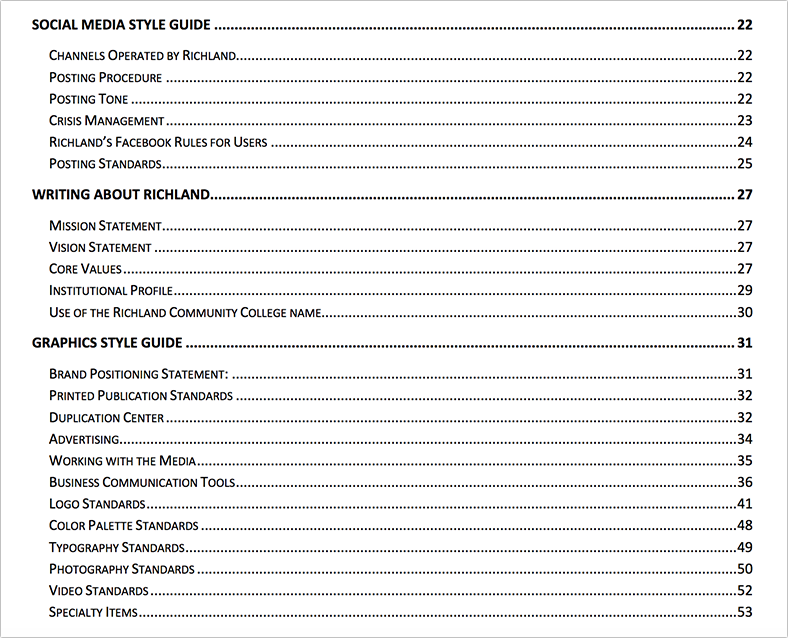
social media guidelines

Slack: Set up individual channels for different teams and purposes and that my team members can interact with one another. There’s a huge potential for automating here: For example, you can import your brand mentions into Slack to engage your team in talking to your brand promoters and let them support the positive sentiment or revert the negative one:
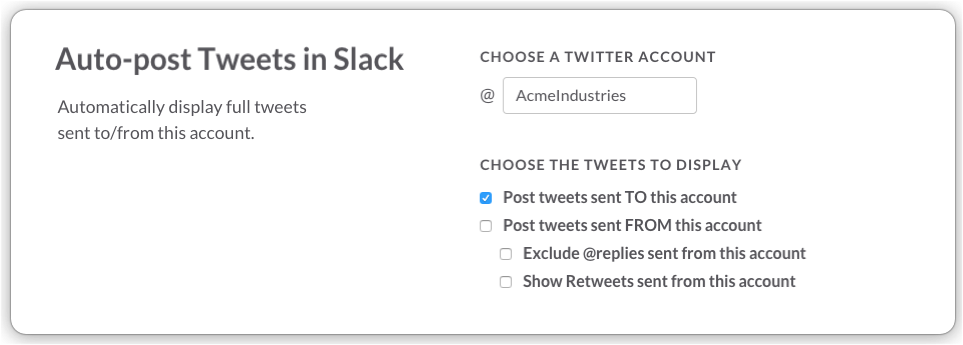
Twitter inti Slack

Brand Identity and Design Decisions

A big mistake many startup founders make is to hire people from outside to design their brand identity for them. Your brand is your unique, most important asset and your team is one of those integral parts of it that makes it so unique.

Your sales team, customer support team, and of course you as a founder – you all are going to be in the front line working with your customers and getting them to like and recognize your brand going forward.

Engage your team in forming your brand identity and you’ll turn them into believers right away.

Together you can come up with a new design and identity: The more people are involved, the better! All from different backgrounds, so bringing together multiple ideas and experiences in working with your future customer.

Featured tools and resources:

Canva has a powerful collaboration element as part of their PRO package allowing teams to work together to design consistent social media graphics, working on templates and brand kits together.

Create folders for different projects, let team members create mockups and more. It is all just as intuitive as using Canva as a single person and it is so user friendly that anyone can use it without much help.

Canva for Work

Duda is a web design platform with a very powerful collaboration component, empowering agency teams and client-side teams to contribute to website builds based on each stakeholder’s individual skill specialties:

  • Add team members and assign different permission levels for bloggers, designers, developers, marketers and more.
  • Automate workflow communications with clients using smart email templates that prompt them to populate content sections or to view weekly analytics reports.
  • Use the “Sections: module to assign and build custom blocks of page elements that can be saved to shared libraries for flowing in to multiple client projects, making it easier to customize designs at scale.
  • Make the workload you impose on your clients as light as possible by sending them forms for bulk uploads of assets that you can then easily flow into page designs.
  • Create your own widgets with third-party integrations and full CSS code control and use these across pages and websites.

If you want to have more control over the tools your team is using, for a lighter, more scalable project pipeline, Duda may be worth checking out.

Duda collaborate

Invision App allows you to work with your team by designing logos, websites and more on this collaboration app. Create multiple prototypes and view them on any device. It is simple, clean, easy to use and provides free feedback.

Invision App collaboration

Content

Content is probably the most integrated marketing area out there. It touches every aspect of marketing, from customer satisfaction to advertising. Hence, everyone, from marketing to sales to tech, should be involved in content marketing. That doesn’t mean everyone should be writing blog posts or creating drip campaigns.

Some people can contribute to blogs, some make videos, some can simply contribute ideas and share sources.

Getting your team involved in content is one of the easiest way to engage them in digital marketing and adapt your content to cross-channel marketing. How they choose to do so makes the end result all the more unique and impactful. What matters is to set up the culture to encourage collaboration and idea sharing.

Featured tools and resources:

Trello is a great tool for sharing and organizing ideas. You can set actionable columns (with due dates and responsible people) as well as generic dashboard where everyone can just drop ideas as they come:

Trello

Coschedule is a content editorial platform that has a very powerful collaboration component. You can manage all kinds of tasks lists for every content asset in your calendar including research, brainstorming, design, and then (social media) promotion. Use color-coding, to-do lists and comments to get as many engagement as you can:
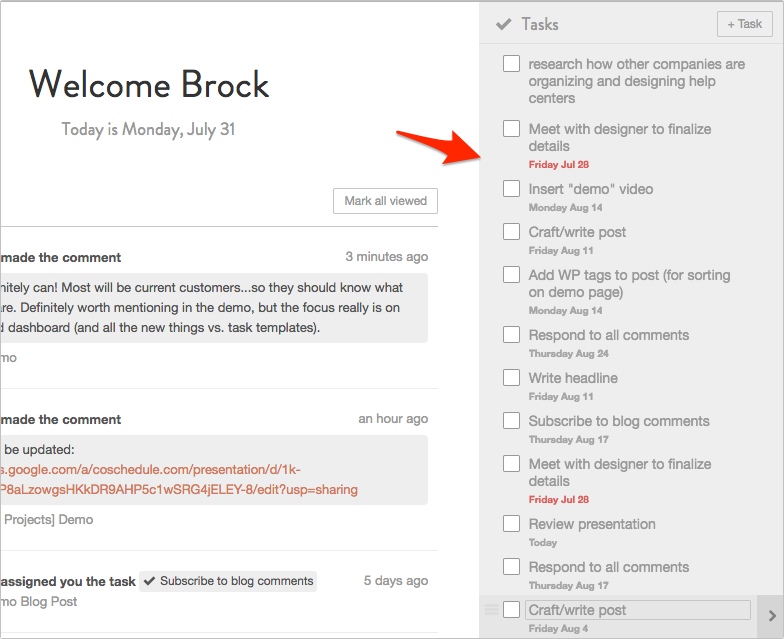
oschedule collaborate

Scribblar is a fun educational tool that is usually used by teachers and students. But it is also for teams who want a more visual way of brainstorming ideas. Many find it easier to scribble a concept down then use words to describe it.

Further reading: How to Collaborate: Examples, Tips & Tools for the Ultimate Influencer-Sourced Content Asset

Do you have an idea on how to get a team collaborating on digital marketing campaigns? Let us know in the comments.

The post Cross-Team Collaboration: How to Include All Your Employees into Different Aspects of Digital Marketing appeared first on Internet Marketing Ninjas Blog.


from Internet Marketing Ninjas Blog https://ift.tt/2L9zHni
via IFTTT

Tuesday, 10 July 2018

Writing Content That Is Too In-Depth Is Like Throwing Money Out the Window

money trash

You’ve heard people telling you that you need to write in-depth content because that’s what Google wants.

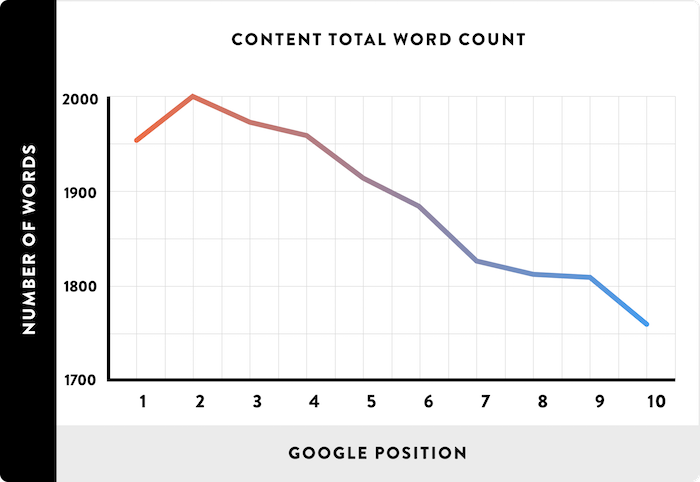
And it’s true… the average page that ranks on page 1 of Google contains 1,890 words.

word count

But you already know that.

The question is, should you be writing 2,000-word articles? 5,000? Or maybe even go crazy and create ultimate guides that are 30,000 words?

What’s funny is, I have done it all.

I’ve even tested out adding custom images and illustrations to these in-depth articles to see if that helps.

And of course, I tested if having one super long page with tens of thousands of words or having multiple pages with 4,000 or 5,000 words is better.

So, what do you think? How in-depth should your content be?

Well, let’s first look at my first marketing blog, Quick Sprout.

Short articles don’t rank well

With Quick Sprout, it started off just like any normal blog.

I would write 500 to 1,000-word blog posts and Google loved me.

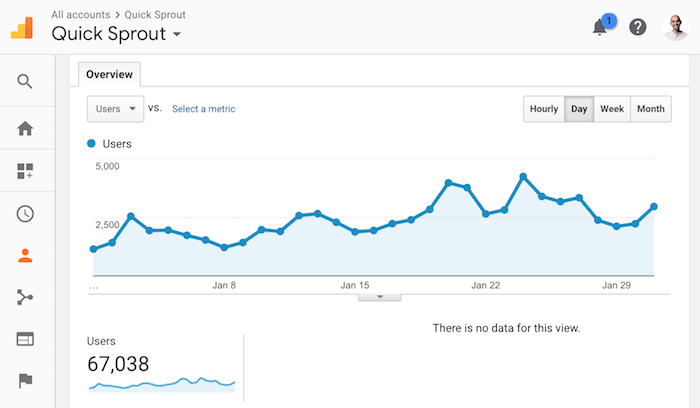
Just look at my traffic during January 2011.

quicksprout 2011

As you can see, I had a whopping 67,038 unique visitors. That’s not too bad.

Even with the content being short, it did fairly well on Google over the years.

But over time, more marketing blogs started to pop up, competition increased, and I had no choice but to write more detailed content.

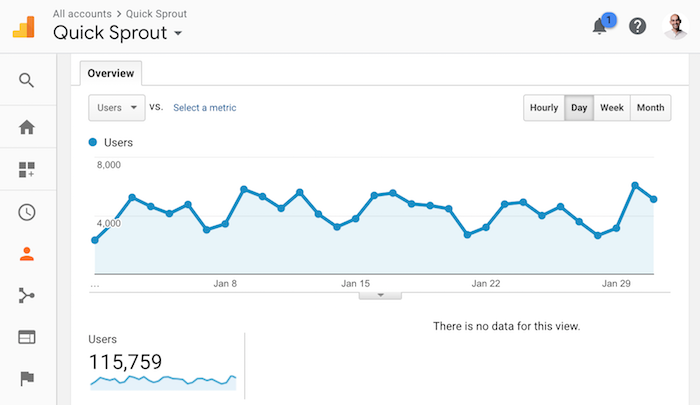
I started writing posts that were anywhere from 1,000 to a few thousand words. When I started to do that, I was able to rapidly grow my traffic from 67,038 to 115,759 in one year.

quicksprout 2012

That’s a 72.67% increase in traffic in just 1 year.

It was one of my best years, and all I had to do was write longer content.

So naturally, I kept up with the trend and continually focused on longer content.

But as the competition kept increasing, my traffic started to stagnate, even though I was producing in-depth content.

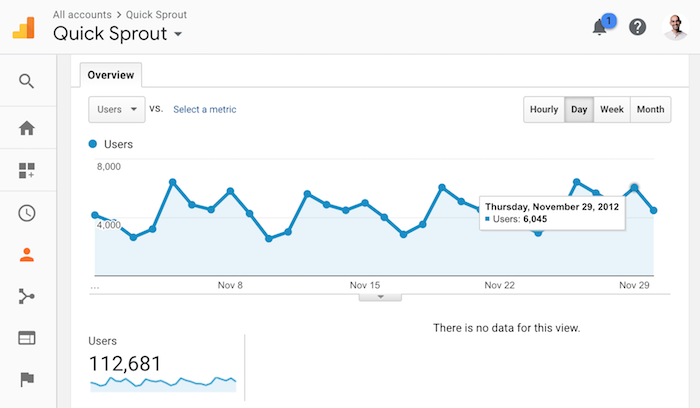
Here are my traffic stats for November 2012 on Quick Sprout.

quicksprout 2012

I understand that Thanksgiving takes place in November, hence traffic wasn’t as high as it could be. But still, there really wasn’t any growth from January to November of 2012.

In other words, writing in-depth content that was a few thousand words max wasn’t working out.

So what next?

Well, my traffic had plateaued. I had to figure something else out.

Writing longer, more in-depth content had helped me before… so I thought, why not try the 10x formula.

I decided to create content 10 times longer, better, and more in-depth than everyone else. I was going to the extreme because I knew it would reduce the chance of others copying me.

Plus, I was hoping that you would love it as a reader.

So, on January 24, 2013, I released my first in-depth guide.

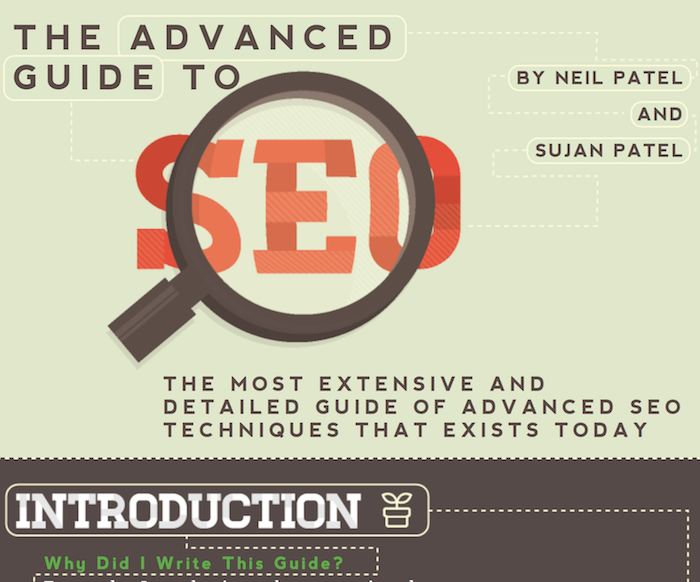
It was called The Advanced Guide to SEO.

advanced guide to seo

It was so in-depth that it could have been a book.

Literally!

Heck, some say it was even better than a book as I paid someone for custom illustration work.

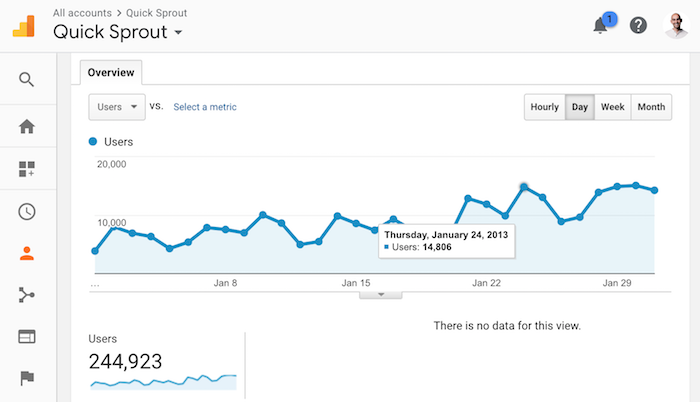
Now let’s look at the traffic stats for January 2013 when I published the guide.

quicksprout 2013

As you can see my traffic really started to climb again.

I went from 112,681 visitors in November to 244,923 visitors in January. Within 2 months I grew my traffic by 117%.

That’s crazy!!!!

The only difference: I was creating content that was so in-depth that no one else dared to copy to me (at that time).

Sure, some tried and a few were able to create some great content, but it wasn’t like hundreds of competing in-depth guides were coming out each year. Not even close!

Now, when I published the guide I broke it down into multiple chapters like a book because when I tested out making it one long page, it loaded so slow that the user experience was terrible.

Nonetheless, the strategy was effective.

So what did I do next?

I created 12 in-depth guides

I partnered up with other marketers and created over 280,000 words of marketing content. I picked every major subject… from online marketing to landing pages to growth hacking.

I did whatever I could to generate the most traffic within the digital marketing space.

It took a lot of time and money to create all 12 of these guides, but it was worth it.

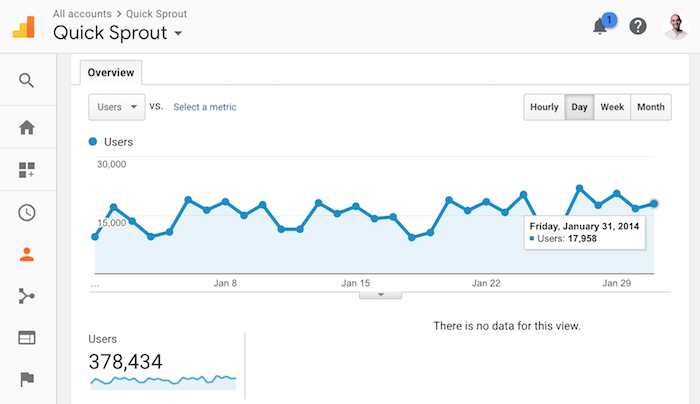
By January of 2014, my traffic had reached all-time highs.

quicksprout 2014

I was generating 378,434 visitors a month. That’s a lot for a personal blog on marketing.

Heck, that’s a lot for any blog.

In other words, writing 10x content that was super in-depth worked really well. Even when I stopped producing guides, my traffic, continually rose.

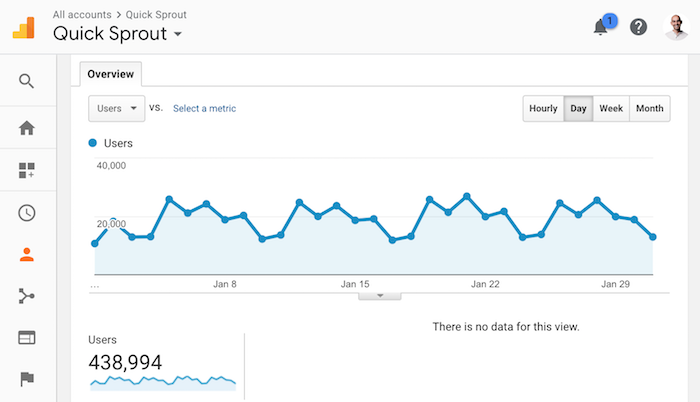
Here’s my traffic in January 2015:

quicksprout 2015

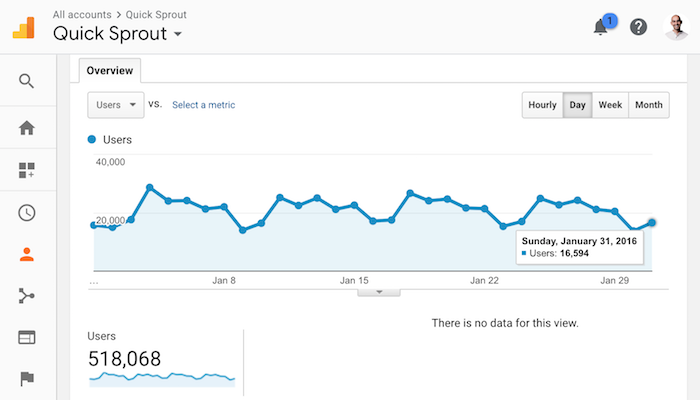
And here’s January 2016 for Quick Sprout:

quicksprout 2016

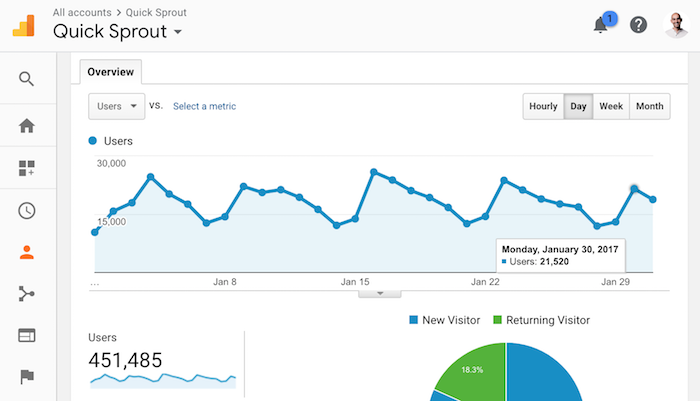
But over time something happened. My traffic didn’t keep growing. And it didn’t stay flat either… it started to drop.

quicksprout 2017

In 2017, my traffic dropped for the first time.

It went from 518,068 monthly visitors to 451,485. It wasn’t a huge drop, but it was a drop.

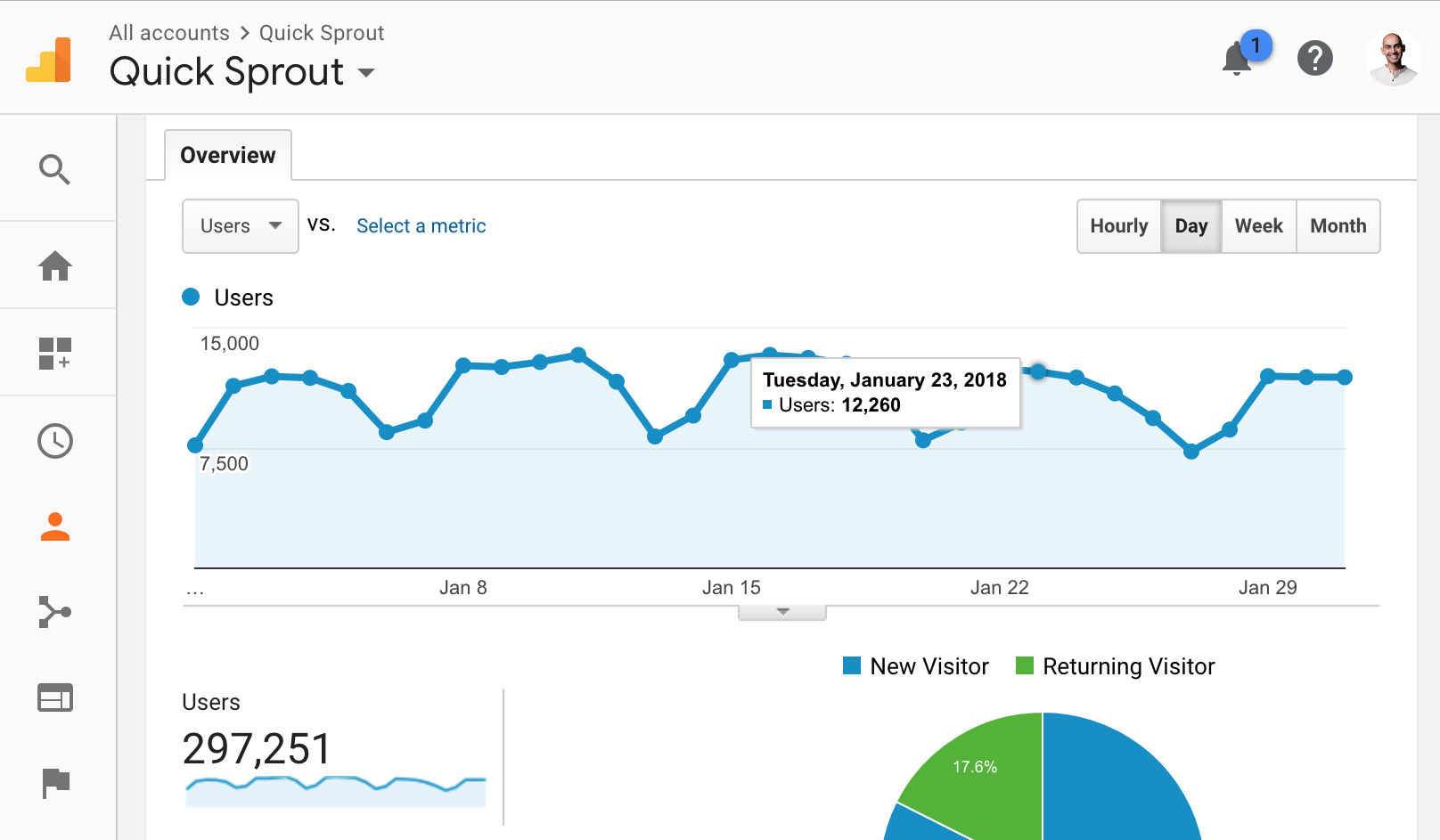
And in 2018 my traffic dropped even more:

quicksprout 2018

I saw a huge drop in 2018. Traffic went down to just 297,251 monthly visitors.

And sure, part of that is because I shifted my focus to NeilPatel.com, which has become the main place I blog now.

But it’s largely that I learned something new when building up NeilPatel.com.

Longer isn’t always better

Similar to Quick Sprout, I have in-depth guides on NeilPatel.com.

I have guides on online marketing, SEO, Google ads, Facebook ads, and the list goes on and on.

If you happened to click on any of the guides above you’ll notice that they are drastically different than the ones on Quick Sprout.

Here are the main differences:

  • No fancy design – I found with the Quick Sprout experience, people love the fancy designs, but over time content gets old and outdated. To update content when there are so many custom illustrations is tough, which means you probably won’t update it as often as you should. This causes traffic to go down over time because people want to read up-to-date and relevant information.
  • Shorter and to the point – I’ve found that you don’t need super in-depth content. The guides on NeilPatel.com rank in similar positions on Google and cap out at around 10,000 words. They are still in-depth, but I found that after 10,000 or so words there are diminishing returns.

Now let’s look at the stats.

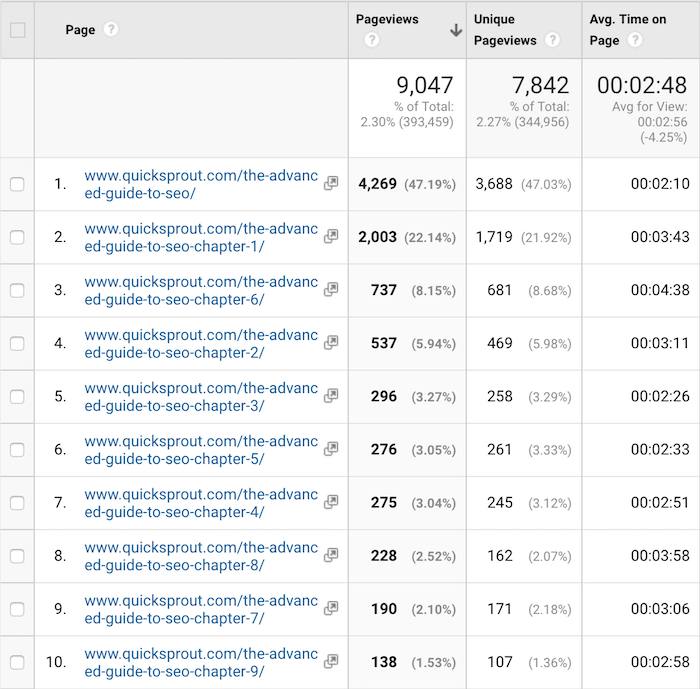
Here’s the traffic to the advanced SEO guide on Quick Sprout over the last 30 days:

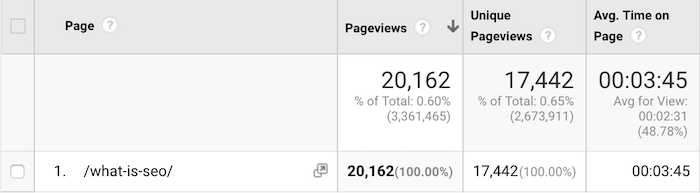
quicksprout seo guide

Over 7,842 unique pageviews. There are tons of chapters and as you can see people are going through all of them.

And now let’s look at the NeilPatel.com SEO guide:

neil patel seo guide

I spent a lot less time, energy, and money creating the guide on NeilPatel.com, yet it receives 17,442 unique pageviews per month, which is more than the Quick Sprout guide. That’s a 122% difference!

But how is that possible?

I know what you are thinking. Google wants people to create higher quality content that benefits people.

So how is it that the NeilPatel.com one ranks higher.

Is it because of backlinks?

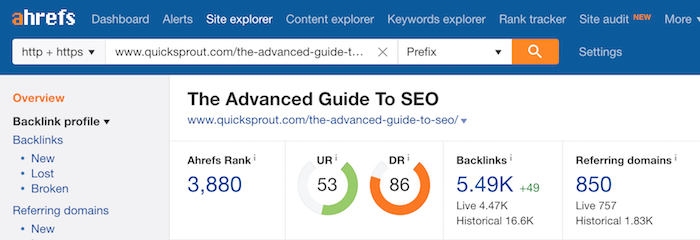
Well, the guide on Quick Sprout has 850 referring domains:

links quicksprout

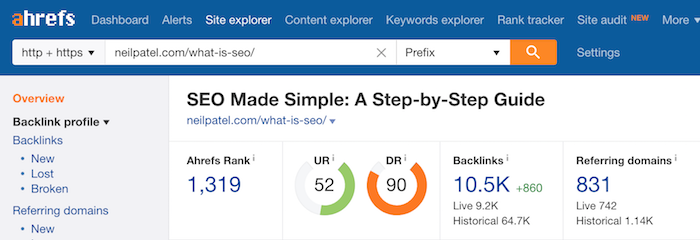
And the NeilPatel.com has 831 referring domains:

links neil patel

Plus, they have similar URL ratings and domain ratings according to Ahrefs so that can’t be it.

So, what gives?

Google is a machine. It doesn’t think with emotions, it uses logic. While we as a user look at the guide on Quick Sprout and think that it looks better and is more in-depth, Google focuses on the facts.

See, Google doesn’t determine if one article is better than another by asking people for their opinion. Instead, they look at the data.

For example, they can look at the following metrics:

  • Time on site – which content piece has a better time on site?
  • Bounce rate – which content piece has the lowest bounce rate?
  • Back button – does the article solve all of the visitors’ questions and concerns? So much so they visitor doesn’t have to hit the back button and go back to Google to find another web page?

And those are just a few things that Google looks at from their 200+ ranking factors.

Because of this, I took a different approach to NeilPatel.com, which is why my traffic has continually gone up over time.

Instead of using opinion and spending tons of energy creating content that I think is amazing, I decided to let Google guide me.

With NeilPatel.com, my articles range from 2,000 to 3,000 words. I’ve tried articles with 5,000+ words, but there is no guarantee that the more in-depth content will generate more traffic or that users will love it.

Now to clarify, I’m not trying to be lazy.

Instead, I’m trying to create amazing content while being short and to the point. I want to be efficient with both my time and your time while still delivering immense value.

Here’s the process I use to ensure I am not writing tons of content that people don’t want to read.

Be data driven

Because there is no guarantee that an article or blog post will do well, I focus on writing amazing content that is 2,000 to 3,000-words long.

I stick within that region because it is short enough where you will read it and long enough that I can go in-depth enough to provide value.

Once I release a handful of articles, I then look to see which ones you prefer based on social shares and search traffic.

Now that I have a list of articles that are doing somewhat well, I log into Google Search Console and find those URLs.

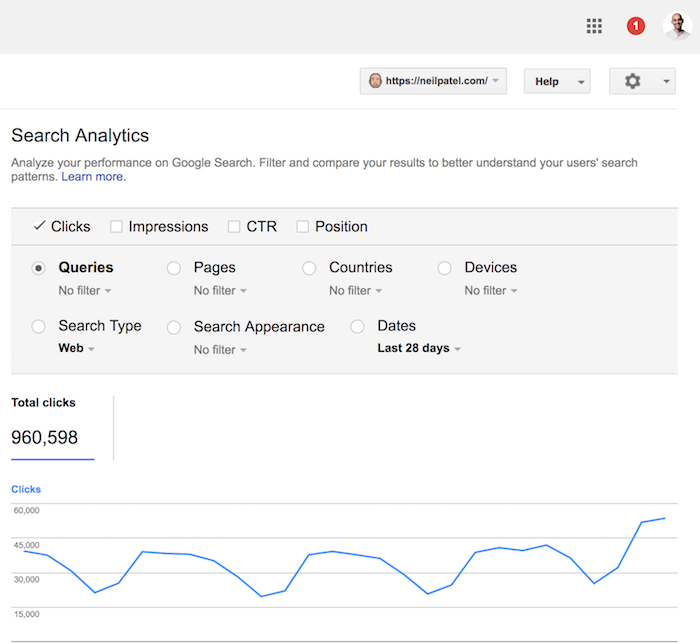
You can find a list of URLs within Google Search Console by clicking on “Search Traffic” and then “Search Analytics”.

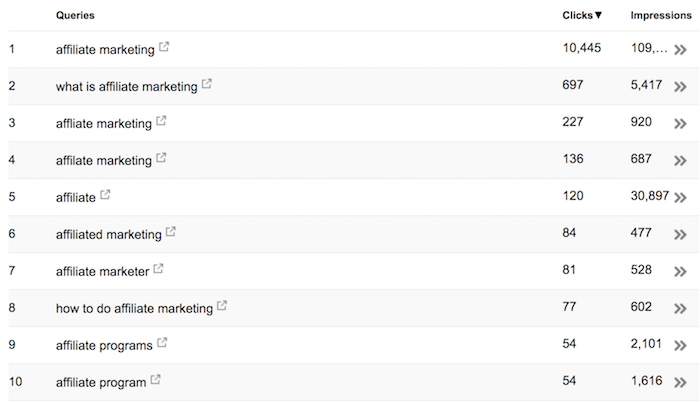
You’ll see a screen load that looks something like this:

search console queries

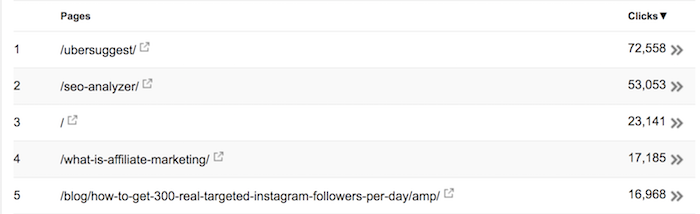
From there you’ll want to click on the “pages” button. You should be looking at a screen that looks similar to this:

search console pages

Find the pages that are gaining traction based on total search traffic and social shares and then click on them (you can input URLs into Shared Count to find out social sharing data).

Once you click on the URL, you’ll want to select the “Queries” icon to see which search terms people are finding that article from.

page queries

Now go back to your article and make it more in-depth.

And when I say in-depth, I am not talking about word count like I used to focus on at Quick Sprout.

Instead, I am talking depth… did the article cover everything that the user was looking for?

If you can cover everything in 3,000 words then you are good. If not, you’ll have to make it longer.

The way you do this is by seeing which search queries people are using to find your articles (like in the screenshot above). Keep in mind that people aren’t searching Google in a deliberate effort to land on your site… people use Google because they are looking for a solution to their problem.

Think of those queries that Google Search Console is showing you as “questions” people have.

If your article is in-depth enough to answer all of those questions, then you have done a good job.

If not, you’ll have to go more in-depth.

In essence, you are adding more words to your article, but you aren’t adding fluff.

You’re not keyword stuffing either. You are simply making sure to cover all aspects of the subject within your article.

This is how you write in-depth articles and not waste your time (or money) on word count.

And that’s how I grew NeilPatel.com without writing too many unnecessary words.

Conclusion

If you are writing 10,000-word articles you are wasting your time. Heck, even articles over 5,000 words could be wasting your time if you are only going after as many words as possible and adding tons of fluff along the way.

You don’t know what people want to read. You’re just taking a guess.

The best approach is to write content that is amazing and within the 2,000 word to 3,000-word range.

Once you publish the content, give it a few months and then look at search traffic as well as social sharing data to see what people love.

Take those articles and invest more resources into making them better and ultimately more in-depth (in terms of quality and information, not word count).

The last thing you want to do is write in-depth articles on subjects that very few people care about.

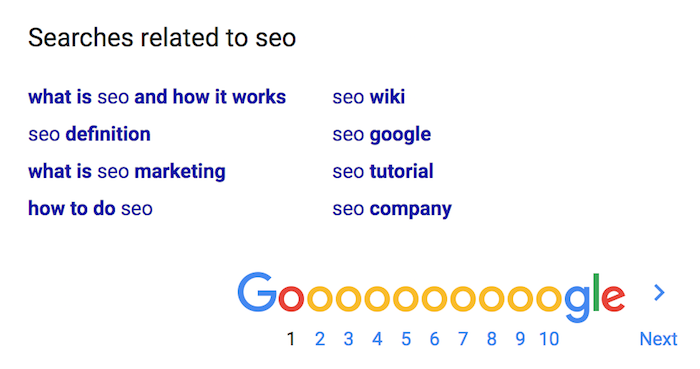
Just look at the Advanced Guide to SEO on Quick Sprout… I made an obvious mistake. I made it super in-depth on “advanced SEO”. But when you search Google for the term “SEO” and you scroll to the bottom to see related queries you see this…

seo related

People are looking for the basics of SEO, not advanced SEO information.

If I wrote a 2,000-word blog post instead of a 20,000-word guide, I could have caught this early on and adapted the article more to what people want versus what I thought they wanted.

That’s a major difference.

So how in-depth are you going to make your content?

The post Writing Content That Is Too In-Depth Is Like Throwing Money Out the Window appeared first on Neil Patel.


from Blog – Neil Patel https://ift.tt/2JcmMiL

Tuesday, 3 July 2018

The Most Vital SEO Strategy I Learned Came From a Google Employee

google

I don’t think I am the best SEO out there. And I am not the most well-known SEO.

But when you have been doing SEO as long as I have, eventually you meet most of the players in the space.

And over the years, I’ve met a lot of Google employees. Some of them were in high positions, while others were not.

Out of all of the Google employees I met, none of them told me anything that shouldn’t be made public. And I also never put anyone in a position that would compromise their job.

But what was crazy is that the SEO advice I got on August 4, 2015, from a Google employee changed my life.

And what’s even crazier is that the advice I got on that particular day, is probably known by almost every SEO out there, but I bet less than .1% of SEOs use this strategy.

In other words, a Google employee shared knowledge that was readily available on any major search blog, yet I was too lazy to implement what I already knew.

So what did I learn?

Well, before I go into what I learned, lets first share the results of this one SEO tactic. The reason I’m doing this is that if I just share the tactic with you, most of you are going to ignore it like I did.

But if I share the stats with you first, hopefully, you’ll be more open to implementing what I am about to teach you.

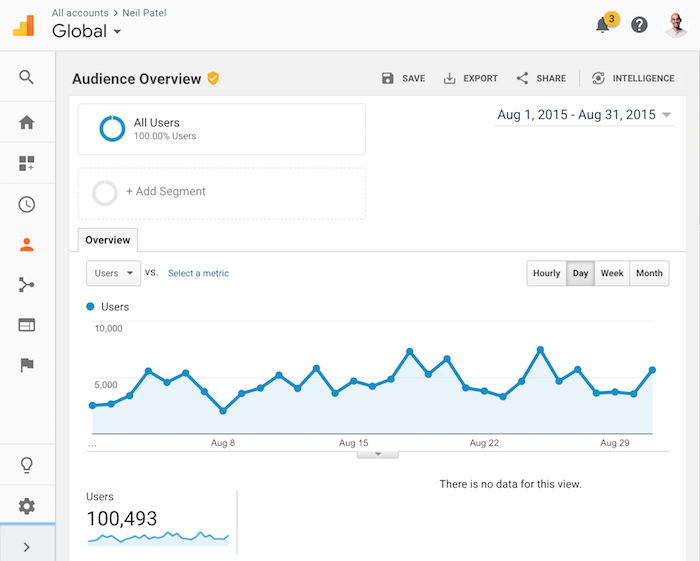
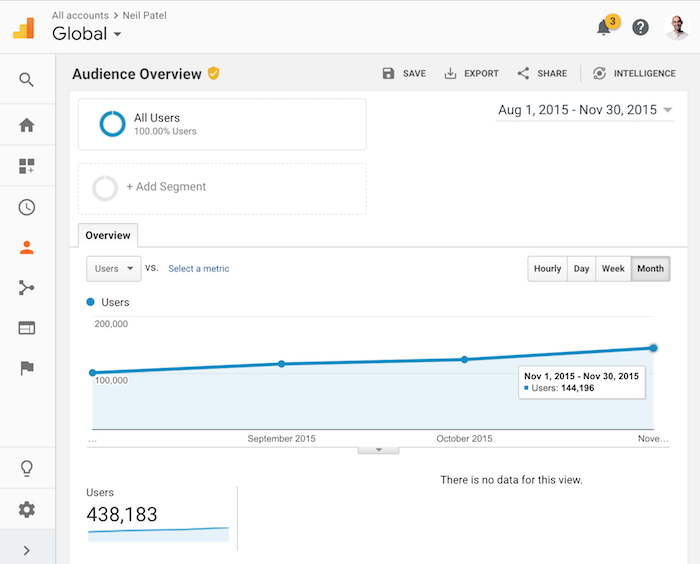
So here are my traffic stats from August 2015 for NeilPatel.com:

august 2015 traffic

And here are my traffic stats for the trailing few months after I had learned this new strategy:

traffic growth

As you can see from the image above my traffic was growing. I went from roughly 100,493 unique visitors a month to 144,196. Not too bad.

But here is the thing… my traffic was naturally growing from all of my other marketing efforts. And I didn’t even start implementing what I learned from Google until November 28, 2015.

And the results didn’t kick in right away. It took over a year before I really started seeing growth. But once I hit the 21-month mark, things really started to skyrocket.

So, what was the big lesson?

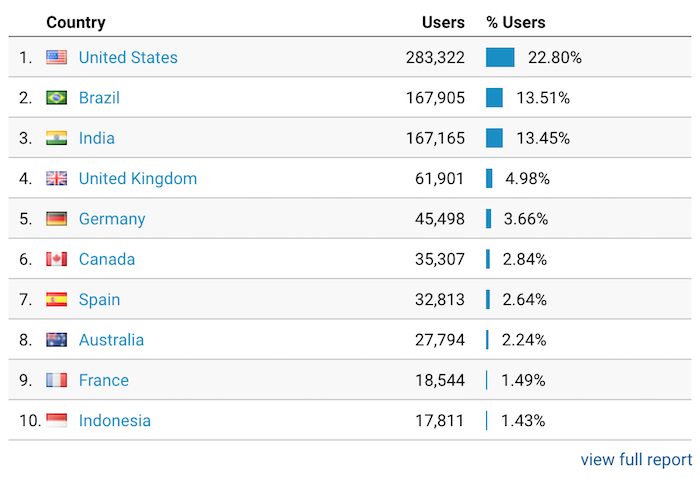
Well, maybe you’ll be able to figure it out by looking at the screenshots below. What’s the big difference in the screenshots below?

Here’s the first one from NeilPatel.com:

neil patel traffic regions

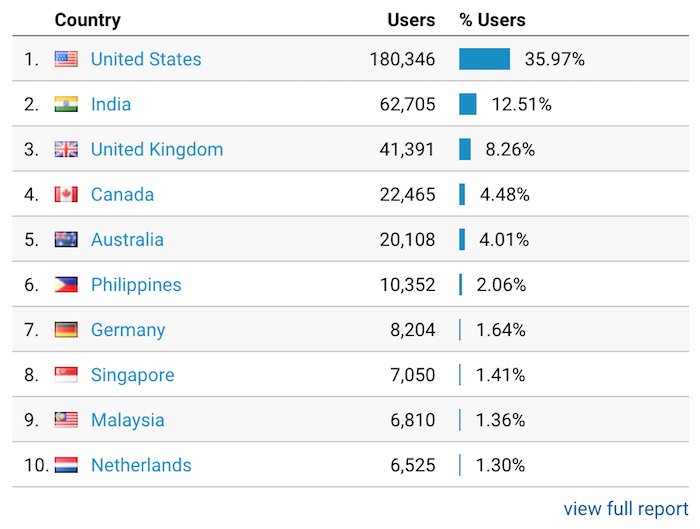
And here’s one from the KISSmetrics blog (which I now own – I’ll blog about this another day):

kissmetrics traffic regions

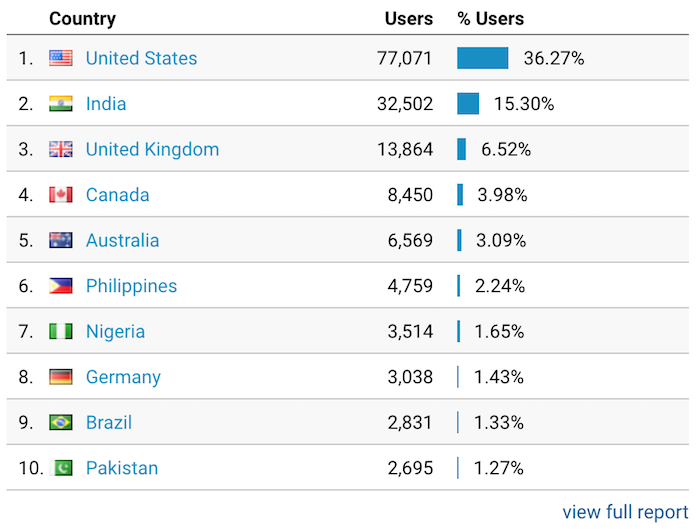
And here’s one from my older blog, Quick Sprout:

quick sprout traffic regions

What’s the big difference between them?

All three of the blogs are about marketing. The content is similar… so what’s the difference?

KISSmetrics and Quick Sprout generate their traffic from roughly the same regions. But NeilPatel.com, on the other hand, generates traffic from regions like Brazil, Spain, and Germany at a much higher percentage.

So why is this?

Google told me to go multi-lingual

It’s hard to rank on Google.

No matter how many blog posts I write about SEO, most of you won’t rank well because it takes a lot of time and countless hours of work (or money).

But as my friend at Google once told me…

There is already a lot of content in English but not enough in other languages even though the majority of the people in this world don’t speak English.

In other words, you need to translate your content.

On November 28, 2015, I published my first article in Portuguese (if you click the link there is a good chance it keeps you on the English site, so you may have to click the flag next to the Neil Patel logo and select Brazil after you click on the link).

Fast forward to today and I have 4,806 blog posts published on NeilPatel.com of which 1,265 are in Portuguese, 650 are in German, and 721 are in Spanish.

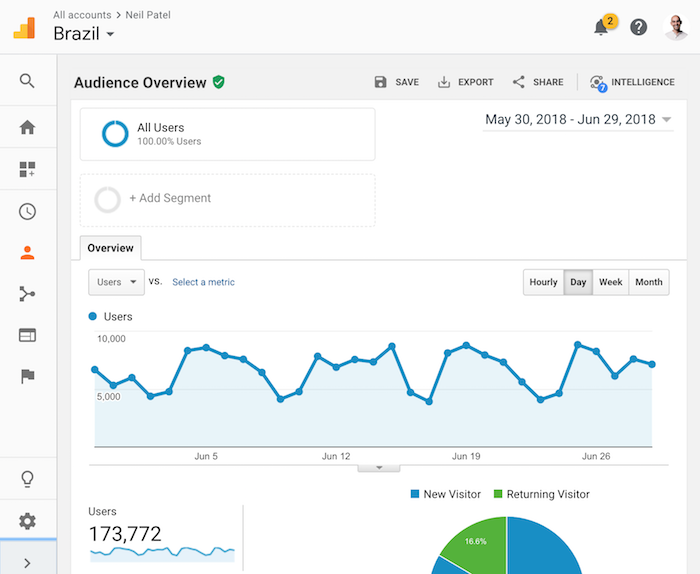
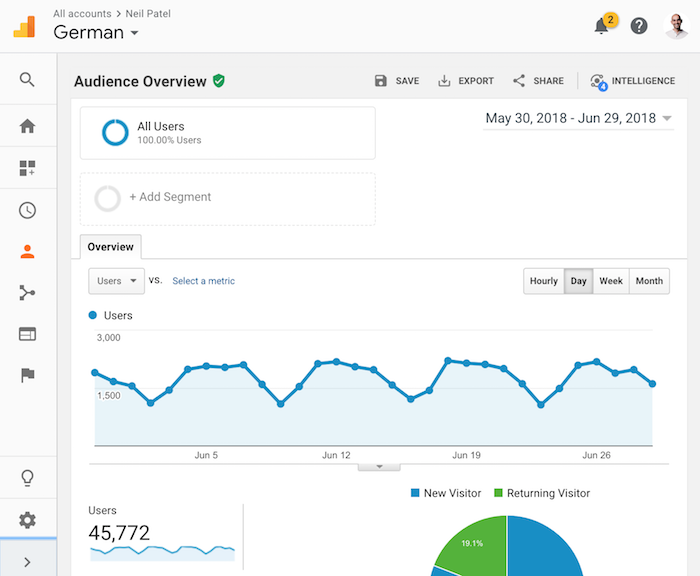
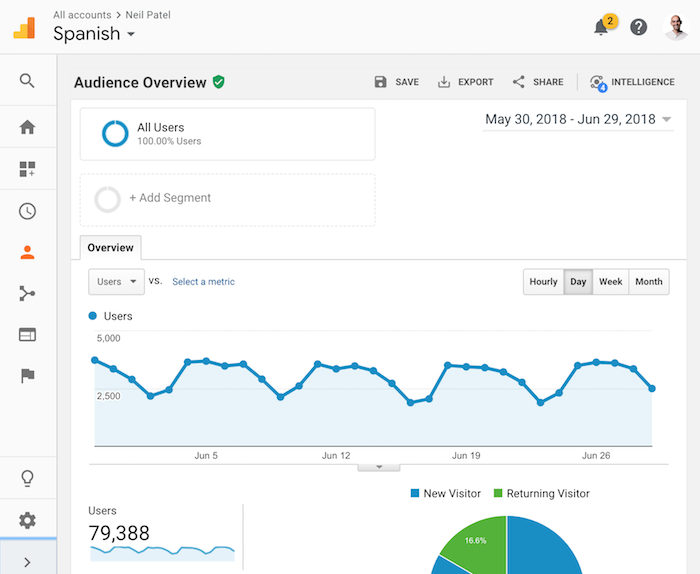
I slowly starting to go after more languages because the strategy is working. Here are my traffic stats in the last 31 days in Brazil:

neil patel brazil

And here are the stats for German:

neil patel germany

And Neil Patel Spanish:

neil patel spanish

It takes time to do well within each region when you localize the content, but it’s worth it because there is literally no competition.

Seriously, no competition!!!

And I know what you are thinking… people in many of these countries don’t have as much money, so the traffic is useless and won’t convert.

If that’s what you are thinking then let me be the first to tell you that you are way off!

You need to look beyond English!

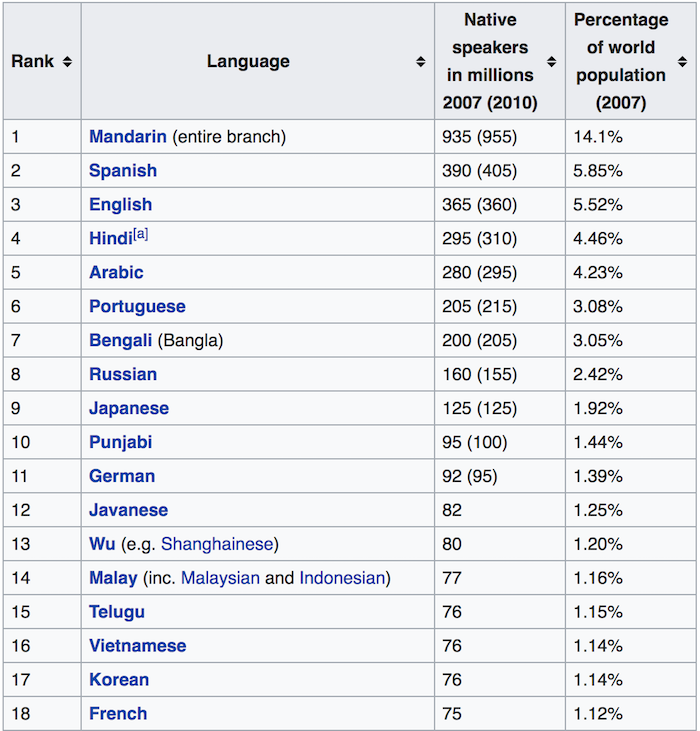
Let’s look at the most popular languages in the world:

languages

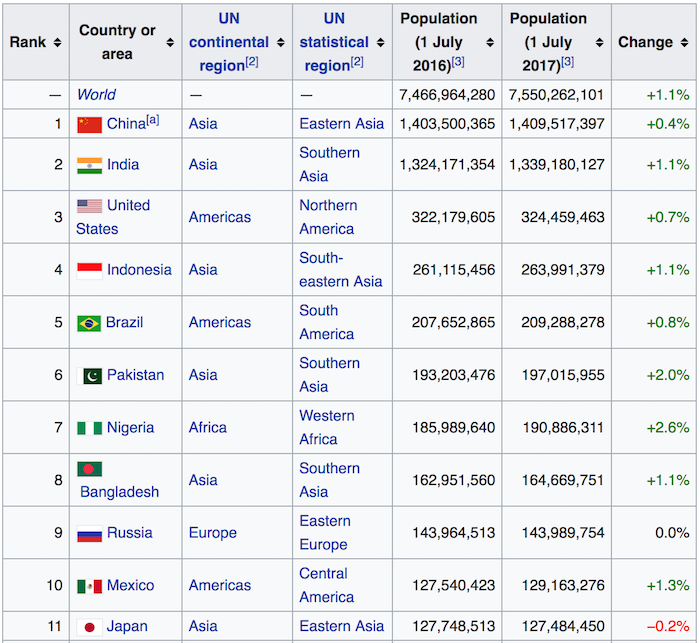
Now let’s look at the countries with the largest populations:

countries

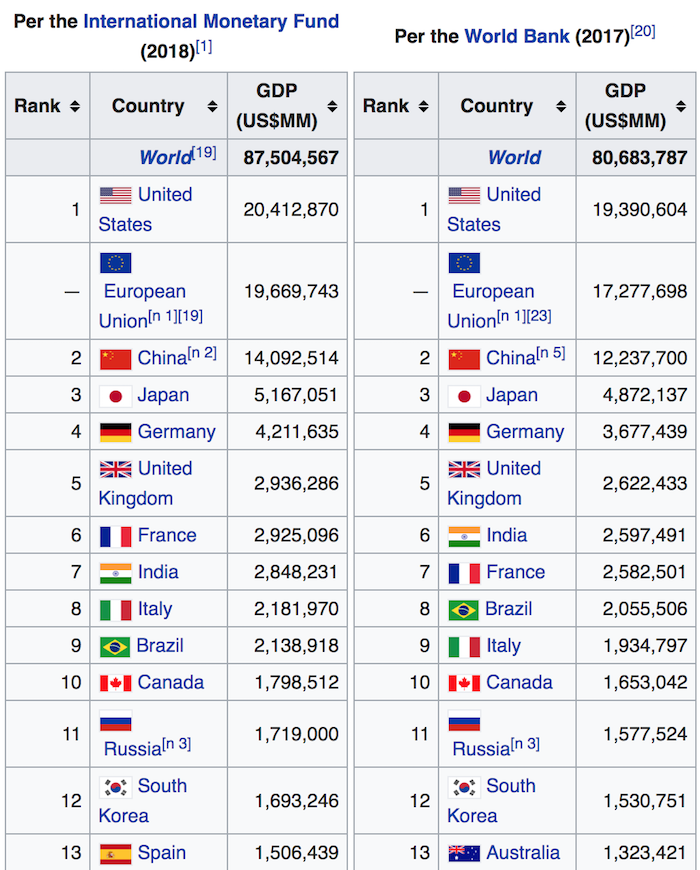
And lastly, let’s look at GDP per country:

gdp

The data shows the majority of the world doesn’t live in the United States, United Kingdom, Canada, or Australia.

There are so many other countries to focus on.

Not only is there a lot of people in regions like Brazil, but their GDP isn’t too bad. And yes, there isn’t as much money to be made in Brazil as there is to be made in the United States… but in the U.S. you have a lot of competitors.

While in Brazil, it’s much easier to dominate, which means you can probably make as much money in Brazil as you do in the U.S.

To give you an idea, when my ad agency expanded to Brazil, we generated over a million dollars in revenue in less than 12 months when I can’t even speak one word of Portuguese.

Well, technically that’s a lie. I know enough Portuguese to order a water and tell the waiter that I don’t want salt on my food 😉

Just think of it this way, we were able to grow when only 3% of Brazilians speak English. That means I had little to no involvement, yet we still do decently well.

And my efforts look minuscule when you compare them to companies like Amazon. They keep investing in regions like India even though it keeps losing them money. They even announced how they are going to pour in an additional 2 billion dollars.

If you want to grow fast like Amazon, you have to start thinking big.

And international expansion should be one of those big thoughts.

Even if you aren’t able to service some these regions, what’s the harm in spending money to first build up your company’s brand and traffic in those regions? You can then worry about monetization later on.

But you better hurry… time is running out.

It’s like the wild west

During one of my trips to Brazil, I had a meeting with Andre Esteves. The meeting was only supposed to be an hour, but it lasted almost 3, which is a very long time considering he’s worth $2 billion.

andre esteves

In that time, we talked shop, we shared stories from our personal life, he convinced me to stop investing in hedge funds, and to put all of my money back into the web… and best of all — he explained how regions like Brazil are the wild west.

But he didn’t mean that in a negative way. The opposite really.

Instead, he was just explaining how regions like Brazil have little to no competition and are growing fast. Those who are patient will make a lot of money in the long run.

He was spot on!

It’s why Google, Facebook, Apple, Amazon, and Microsoft focus heavily on internationalization. They all know you can’t build a gigantic business if you only focus on the English-speaking market.

To give you an idea on how much energy these companies spend on globalization, one of my Microsoft friends (who’s an executive), broke down why Microsoft is trying to stop piracy in China.

If everyone in China stopped pirating Microsoft products and paid for them instead, it would add roughly 138 billion dollars to their market cap (according to him).

That’s insane!

Now, of course, if they stopped privacy, not all of those people will pay for their products. But still, it just shows how much more money is to be made by Microsoft in China.

There is even a ton of money to be made overseas for you. You just have to be willing to make the bet.

You’ve already seen my traffic stats and you know I’m growing fast overseas. I’m not monetizing in enough of those regions and that will change as time goes on.

But I made the internationalization bet years ago, and I keep increasing the amount I spend each year.

Here’s how you expand internationally

I’ve done better in Brazil than Germany and all of the Spanish markets. It’s not because I started to go after Brazil first, it’s because I had people on the ground in Brazil from day one.

It took me too long before I started to add people from those regions to the team and expand.

If you don’t speak the language and you don’t understand the culture you won’t do well no matter how good you are at marketing.

This was my biggest lesson I learned, you need people on the ground!

The second lesson I learned is translating your content isn’t enough.

Even if you adapt the content to the region by adjusting everything, you still won’t be successful because people within each region maybe looking for something else.

For example, in the United States, companies are looking for me to write more advanced marketing content. In parts of Latin America, on the other hand, people are looking to learn the fundamentals of online marketing.

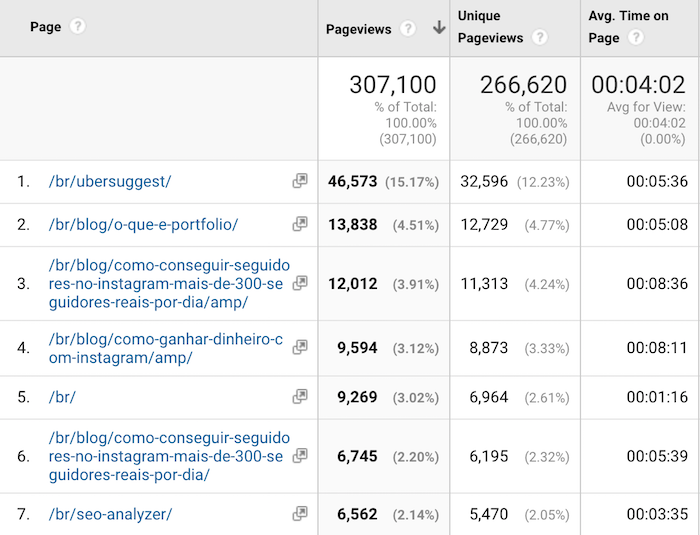
For that reason, my team had to start creating new content just for regions like Brazil. This helped tremendously.

brazil content

As you can see from the screenshot above, the most popular piece of content written for Brazil wasn’t a translation (it’s number 2 on the list, number 1 is a tool).

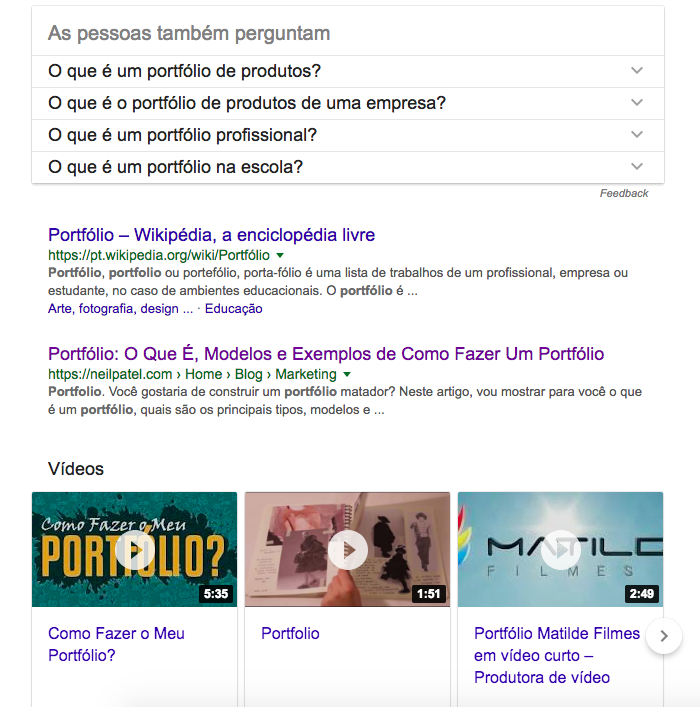
I rank #2 (behind Wikipedia) and before the YouTube results for the popular search term portfolio: 

portfolio

And that image above also gets me to my last point. You need to really build a brand in each region or else you won’t do well.

I speak at more conferences in Brazil than I do in Germany or any Spanish country.

Although people believe there isn’t much money to be made from Brazil, I get paid $25,000 to $50,000 for an hour speaking spot every time I fly out there.

Eventually, I learned better ways to grow my brand internationally than speaking (as that isn’t scalable).

I acquired the tool Ubersuggest for $120,000 as it has a lot of traffic from different parts of the world. Now I am improving the tool and expanding its functionality betting that in the long term it will bring me even more traffic and awareness.

Conclusion

I know the advice my Google friend gave me wasn’t rocket science, but hey, it worked really well.

We tend to forget and even ignore the things that are staring directly at us.

We all know the majority of the world doesn’t speak English, yet we all focus our marketing efforts on the English market.

If I were starting all over again, I wouldn’t create a website in English. Instead, I would pick a region in Europe, like France or Germany, where it isn’t as competitive and where their currency is worth more than the dollar.

Not only would I see results faster, but I would make more money because there wouldn’t be as much competition.

And yes, it did take me a while to see results, but since then I have run many more experiments and if I had to start over again I would:

  • Create separate sites per region – it’s easier to rank a localized site that is hosted within that country than it is to rank a global site. If you already have strong domain authority like me, don’t use subfolders, you are better off using sub-domains (I did this wrong). To give you an idea, when we create brand new sites with their own domain, focused on one region, we typically are able to climb to the top of page 1 within 3 to 4 months.
  • Use hreflang correctly – there are many ways to use hreflang tags. If you aren’t familiar with what they are, in essence, it tells Google which pages focus on which regions. What’s tricky about hreflang tags is that you can either focus on a specific region or language (or both). You have to make sure you pick the right one.
  • Buy instead of creating – if you really want to grow fast, just buy sites within that region that aren’t making much money and then fix them. This is the quickest way to grow.

And I will leave you with one final thought…

Google doesn’t penalize you for duplicate content. Translating your content and using hreflang won’t get you penalized.

Now, if you use an automatic translation software and your translations are done poorly, your user metrics will probably suffer and there is a higher chance you’ll suffer from a Google penalty. So translate your content manually.

Are you going to go global? Or are you going to stand on the sidelines and watch others pass you by?

The post The Most Vital SEO Strategy I Learned Came From a Google Employee appeared first on Neil Patel.


from Blog – Neil Patel https://ift.tt/2lUaodT