FREE TRAFFIC TO YOUR SITE

FREE TRAFFIC TO YOUR SITE
free youtube traffic

Tuesday, 24 July 2018

The Future of SEO: It’s Not What You’re Expecting

future of seo

What do you think the future of SEO is?

And no, I am not talking about what Google will look like 10 years from now… I’m talking about how you’ll be able to rank your site in the future.

You know, that one thing that’ll just skyrocket your rankings.

So, what do you think it is?

I can tell you this… it’s not link building and it’s not on-page SEO.

Sure, those things help, but they don’t skyrocket your rankings. When you build links, it can take months if not a year for them to kick in.

And everyone is doing on-page SEO, so there is nothing unique about it anymore.

So, what do you think it is? Shall I give you a hint?

The accidental SEO hack

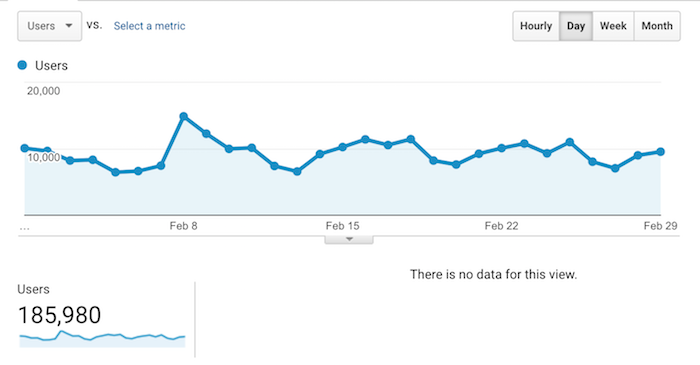
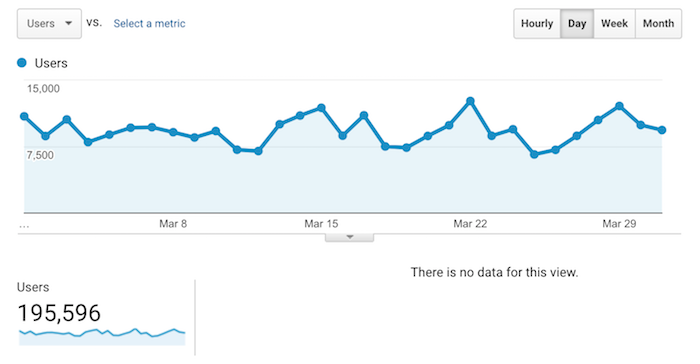
I stumbled on the “future” of SEO by accident. Back in March 2016, I was able to take my traffic from 185,980 visitors a month to 195,596 a month.

And it all happened within 30 days.

Here was my traffic in February 2016:
feb traffic

After I ran my accidental marketing experiment, my traffic grew by 9,616 visitors (to 195,596 monthly visitors in March).
mar 2016

I know what you are thinking… there are more days in March than February. And although that’s true, the majority of those additional 9,616 visitors came from search.

So what happened?

As I mentioned above, I accidentally stumbled upon this.

But once I noticed that the side effect of this marketing experiment was that it increased my search traffic, I ran it again.

And this time, on a much larger scale.

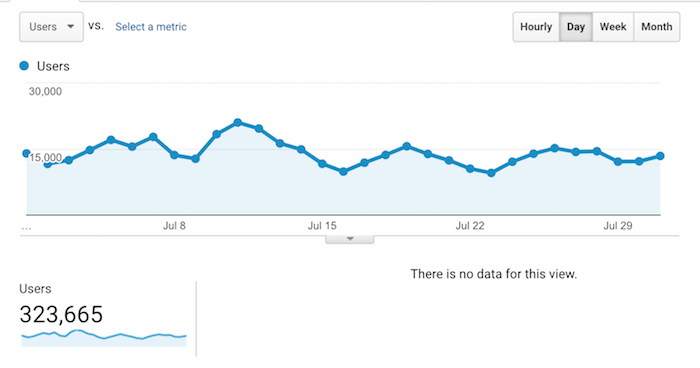
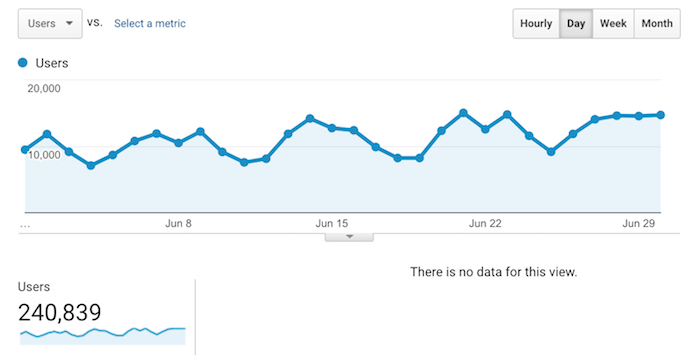
Let’s look at my traffic in June 2016:
june traffic

And now let’s look at July 2016:

july traffic

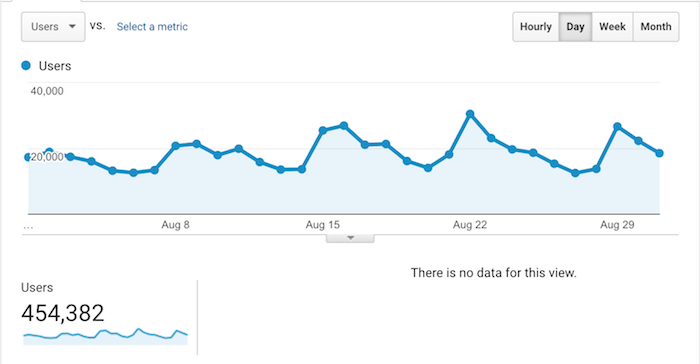
And now look at August 2016:

august traffic

That growth rate is ridiculous! I grew my traffic to 454,382 visitors a month in August from 240,839 in June!

See, during that time period, I wasn’t trying to figure out any cool SEO hacks that would boost my rankings… it just accidentally happened. And it happened because I was running a marketing experiment that wasn’t related to SEO, but funny enough, it impacted SEO (in a major way!).

As you can see from the graphs above, I was able to drastically boost my rankings and search traffic over time.

So, can you guess what it was?

Let me give you a hint…

How Google deals with the Internet cesspool

The EX-CEO of Google, Eric Schmidt, talked about how the Internet is becoming a place where false information is thriving. Essentially, the Internet is becoming a cesspool.

He went on to discuss how brands were becoming more important signals whether or not content can be trusted.

And in his words:

Brands are the solution, not the problem. Brands are how you sort out the cesspool.

In other words, if you want to do well in the long run, you have to build a brand.

When you look at Google you can see clearly that it’s dominated by big brands. From Huffington Post to Wikipedia to CNN… the list goes on and on.

Sure, these sites have a lot of content and backlinks, but they also have huge brands.

When my traffic grew from 185,980 visitors a month in February 2016 to 454,382 visitors in August, it was due to one thing.

My brand kept growing!

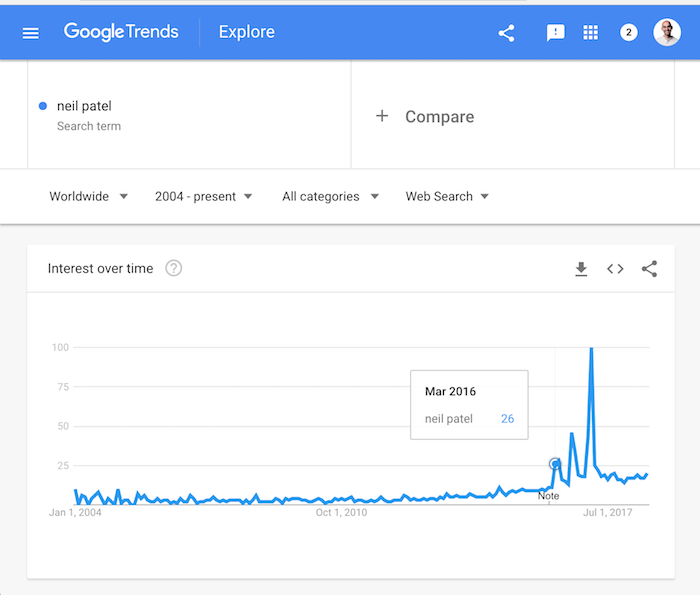
Just look at the brand queries for my name over time according to Google Trends:
google trends

Over time, my brand has grown in popularity. And as it’s grown, so has my traffic.

In the last 28 days, 40,412 people found my site by Googling variations of my name.
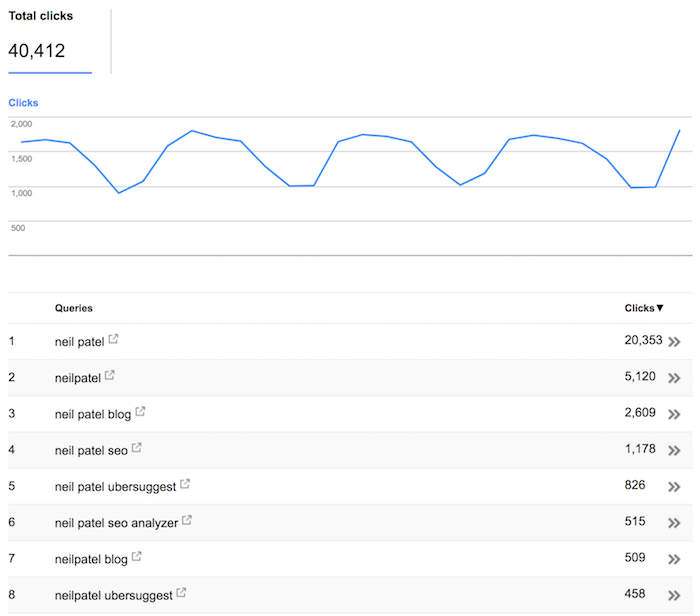
search console

That’s a lot of people!

But what’s cool is, the traffic increases didn’t mainly come from people Googling “Neil Patel.” It mainly came from an increase in rankings for non-branded terms like “online marketing.”

It’s so effective that I generate over a million visits from Google each month now:
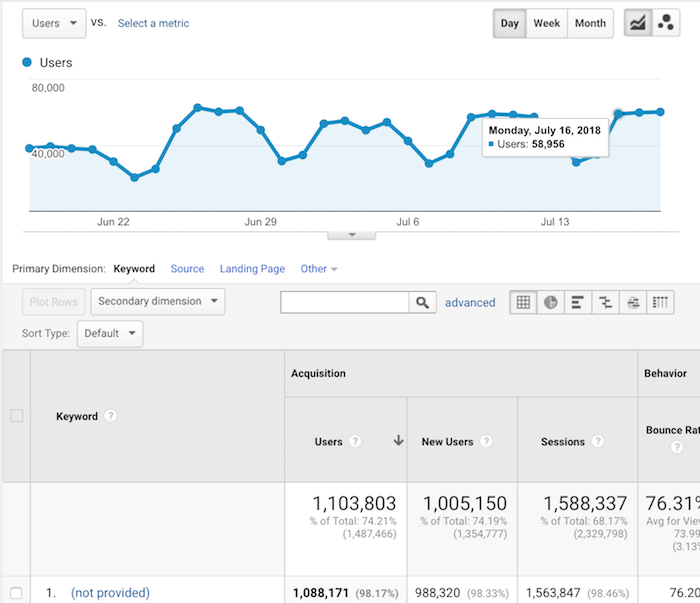
google traffic

To clarify, the way Google looks at brands is that if a website gets a higher amount of brand queries than their competition (the number of people searching for your website name each month), it tells Google that people prefer that one brand over another.

And when Google is determining where to rank a website for all of the terms they are optimizing for, they give more preference to the ones with the most popular brands because those are the sites that people prefer more.

So why does Google put so much emphasis on brands verus other search signals?

Why Google loves brands

Just think about it, it’s the hardest thing to manipulate.

You optimize your on-page code with very little effort these days.

Heck, if you have a WordPress blog you can just use the Yoast SEO plugin and it will do a lot of the work for you.

And when it comes to links, it is harder, but not impossible. You can do email outreach, guest posting, buying links, reciprocal link building, content marketing

Now, I am not saying you should leverage all of these link building tactics because Google frowns upon many of them and they are short-sided (always think long-term).

You get the point… it’s not that hard to build links these days if you know what you are doing.

But the one thing that is hard to build, no matter how good of a marketer you are, is a brand.

Even if you do massive PR stunts, which causes everyone to know your brand and search for your brand on Google (that’s how they measure it), it won’t help you in the long term.

And trust me, I’ve tried it all.

I even tried to get people to search for my name by having famous people hold up signs with my name as it causes others to wonder “who is Neil Patel” and perform a Google search. I also did that throughout the world in different languages.

I even had Larissa Manoela, a famous Brazilian actress, post this on her Instagram account for her 15+ million (million!!) followers.

who is neil patel

The concept behind this marketing stunt was that no matter what industry you are in, everyone follows celebrities (or at least knows about them). And if you can get these celebrities to talk about you, it will create buzz and get new people to learn who you are and potentially become an avid follower. Or at the very least, search for you in Google.

And if you can get a lot of celebrities (or social influencers) to talk about you during the same time, it will create even more buzz and potentially cause newspapers and news websites to talk about you as well.

Now I didn’t have enough money to pay A-list celebrities, so I took Internet celebrities (and a few big names in countries outside of the US) and got them to hold up signs with my name on both Facebook and Instagram.

This created buzz, which then caused more people to Google my name. This, in turn, increased my popularity over time. And the end result was that I increased my rankings for non-branded terms (like “online marketing” and “SEO”).

That’s how I got the big boost in traffic from February 2016 to August 2016.

Although that will help boost your search traffic in the short run, it won’t last long unless you continually build up your brand. Google is looking to see how many people are searching for your brand name on a daily basis… and ideally, they want to see this increase over time.

In other words, if you can’t maintain your brand’s popularity, your search traffic will die off if you use short-term strategies as I did. That’s why you see huge spikes in my brand when you look at the Google Trends image below.

google trends

But if your brand continues to grow in popularity, so will your search traffic for all of your non-brand related terms.

It’s hard to see it in the chart above, but before I focused on building my brand, I was only generating 18,304 brand queries per month, versus 40,412 that I am generating now.

So how do you build a brand?

As I mentioned above, you need people searching for your brand name on a consistent basis.

The only way to really do this is by creating value.

Just look at me… I blog on a regular basis, produces educational videos, I have a daily podcast, and I even speak at conferences.

All in all, it has caused my brand to grow over the years.

And this works even better for corporations. If you create an amazing product or service, people will love your brand and keep coming back.

I learned this from my Ubersuggest acquisition. When I bought the brand and merged it into my website, my number one search query become the term “Ubersuggest” and variations of it.
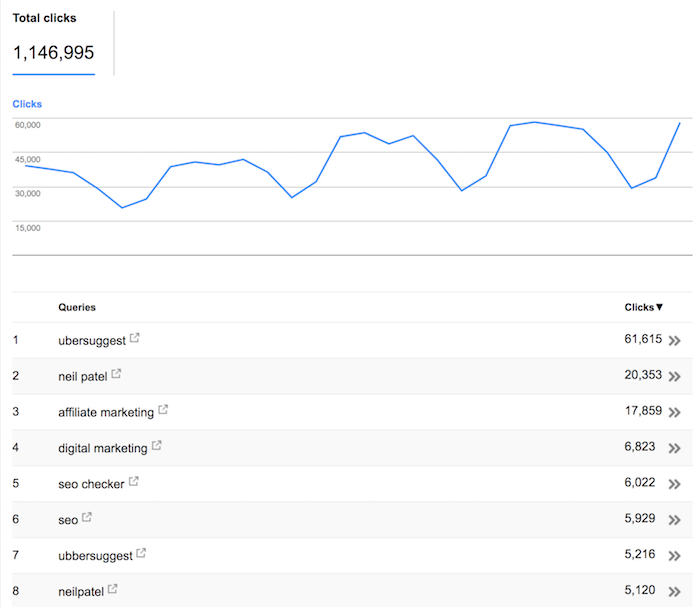
most popular term

People love the tool… so much so that they access it by Googling the brand name. Sure, the tool has more direct traffic, but people also go to sites using Google.

But to get back to the question of how you can build a brand?

Well, there are no very detailed strategies I can give you as it will range from business to business. I can give you an overview of strategies that have worked for me though, as well as some stats to go along with it:

Blog weekly

I’ve found that if you blog on a regular basis you get more brand queries.

When people are expecting content from you on a regular basis, they’ll Google your brand to come back to your blog and read your latest content.

When I blogged daily, I generated 11% more brand queries than when I blogged once a week. This is why sites like CNN, Huffington Post, Business Insider, and every other news site generates a lot of brand queries… they blog numerous times per day.

Create videos

You don’t have to copy my YouTube strategy, but you should create some sort of videos related to your product, service, or industry. Not because of Google or YouTube, but because of social networks like Facebook and LinkedIn love video content.

So much so that it’s easier to get eyeballs on Facebook and LinkedIn for video content than it is on YouTube.

This will cause more people to see your brand, and build a relationship with you or your company.

What I’ve found is that the more videos I create the more brand queries I get. Just look at the screenshot below:
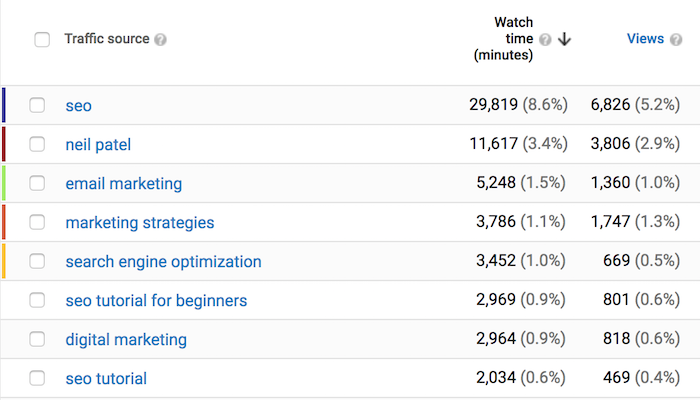
youtube brand queries

The screenshot shows how many views my videos received on YouTube over the last 28 days from people searching for my name. It’s 3,806 visitors to be exact.

I know YouTube brand queries doesn’t mean more brand queries on “Google.”

But if you can push out video content on YouTube, Facebook, and LinkedIn, it can’t hurt. It will cause more people to see your brand, and eventually, this should cause more people to Google you.

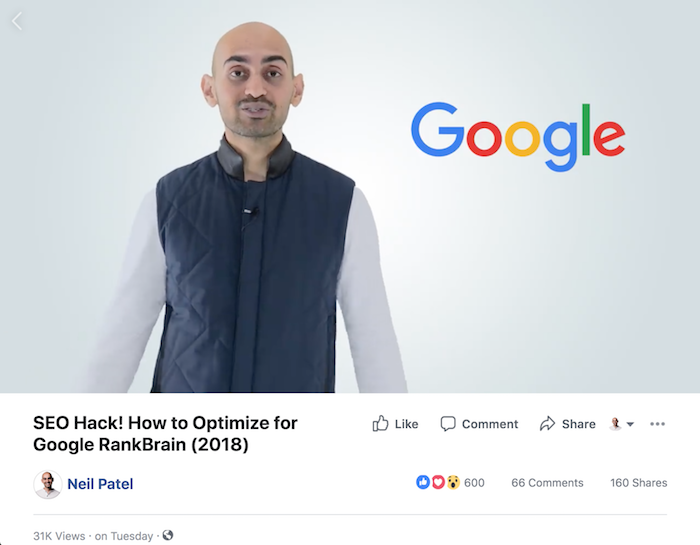
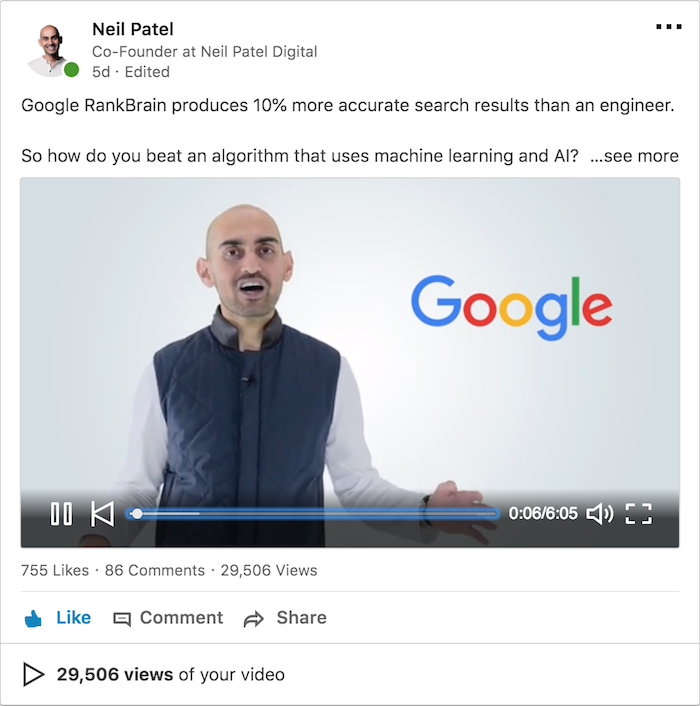
Now, the reason I am emphasizing LinkedIn and Facebook is that it is easier to generate views on those two social networks for video content. I know they count views differently, but there is a huge difference (and even if there weren’t, it’s extra views).

Just look at my YouTube views for my video on GoogleRank Brain, it has 10,010 views:
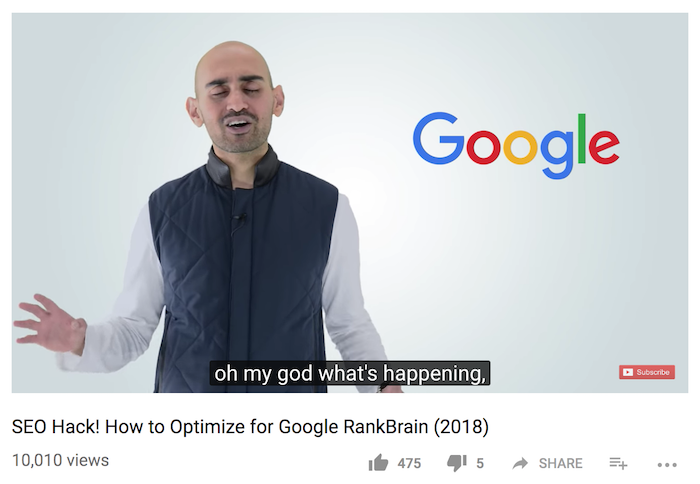
rankbrain youtube

And on Facebook it has 31,000 views:

facebook rankbrain

And on LinkedIn it has 29,506 views:

rankbrain views

So if YouTube is creating roughly 3,806 brand queries per month when it’s generating fewer views than Facebook and LinkedIn, just imagine what these videos are doing for my brand.

Sadly, Facebook and LinkedIn don’t share stats in the same way as YouTube, but you can come to the conclusion that it probably helps in a similar fashion.

That’s why you need to create videos in order to promote your personal or corporate brand on all social sites (you can use the same content, just upload it to each social network).

Speak at conferences

Every time I speak at conferences I see an influx of brand queries.

It’s harder for me to see these days as I already have a lot of brand queries, but I used to see big swings in my brand queries when I was starting out because of my participation at conferences.

Every time I spoke at a conference with at least 300 attendees (the number of people attending your speech, not the total number of people registered for the event), I would see an increase in brand searches within 24 to 48 hours of my talk.

Each speech would typically bring me 110 to 180 extra brand queries. Although that seems high, you have to keep in mind that reporters also sit in on speeches and are blogging about your speech. This creates more press related to you and your company, which helps with brand queries.

And if the conference you are speaking at uploads the video of your speech to YouTube (or even live streams the event on Facebook) you’ll see even more brand queries.

The larger the audience the better as it creates more potential searches. If you don’t know how to get speaking spots, check this out.

And if you don’t have the time to travel, you can speak at virtual events. They won’t have the same effect, but it is better than nothing.

Build an amazing product or service

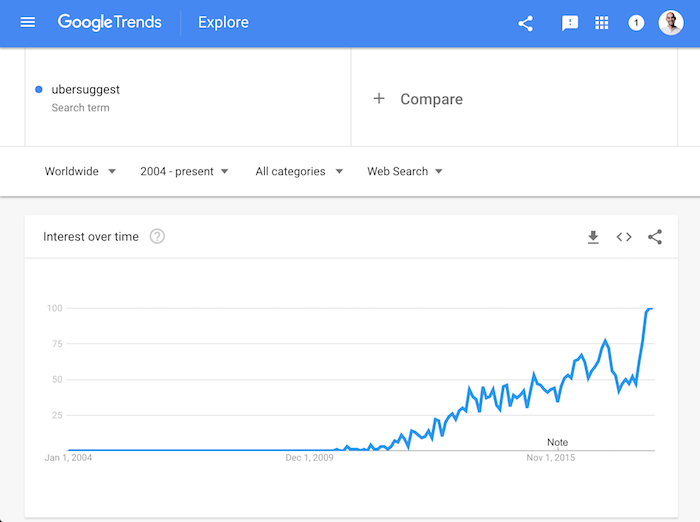
I learned this one from my Ubersuggest acquisition… if people love what you are building, your brand queries will really skyrocket. It’s so effective, that it has become my new SEO strategy.
ubersuggest google trends

As you can see, the better product you build, the more brand queries you’ll receive.

With Ubersuggest I took a simple approach, just take what my competitors are charging for and give it away for free.

And my brand queries don’t even compare to companies like Dropbox, Apple, Slack, and the loads of other companies that have built amazing products or service.

This strategy is easy to replicate and you’ll see the results fast as long as you take what your competition is charging for and give it away for free.

Just look at the chart above: it shows a huge spike in just 1 month. That was when I released more features for free.

Performance-based press

There are companies like PRserve that charge for performance-based press. If they get you press, you then pay. If not, you don’t pay a dime. It won’t cause tons of brand queries at first, but over time it will help.

If you want to do it yourself, here is an article I wrote breaking down how to get press. It takes longer and it’s harder than hiring someone, but as long as you are willing to put in the time, you will see results.

You can also check out sites like Help a Reporter Out, where journalists ask questions and people go to help them out. When you see a question related to your expertise or industry, you should respond and you can get free press.

Release a book

This works better for personal brands, but publishing a book is a great way to get more brand queries. There are even companies that can streamline the whole process for you.

When I released my book Hustle, I learned three important things:

  1. Don’t co-author a book – I love my co-authors, but I would have received much more of a brand boost if I self-authored the book.
  2. Write a book about your expertise – Hustle was a mainstream book that appealed to most people versus people who wanted to learn about marketing. If I wrote a book about marketing, which is where my expertise is, I believe my brand would have grown faster (even if fewer people purchased the book).
  3. Don’t focus on being a New York Times Bestselling author – I was on the list 3 weeks in a row, and I don’t think it did much for me. Focus on building a following within your space, versus just generating book sales from people who don’t care about your business.

Hopefully, the strategies above will give you a start on building your brand… it just takes time and a lot of elbow grease.

There is no quick solution and what worked for me may not work for you. So get your creative juices flowing and think outside the box.

Conclusion

Branding may seem like a waste of money, but it isn’t.

I used to think companies like Nike were wasting money with all of their TV ads when they could have focused on channels that produced a direct ROI like Google Ads.

But what’s funny is, when you think of shoes you naturally think of “Nike.” You don’t have to Google them, you just know about them because they’ve built a huge brand and are everywhere.

Same goes for Visa. When you think of credit cards, Visa comes to mind because they are accepted worldwide and run tons of ads.

The list keeps going on and on… from McDonald’s to Coca-Cola… the one thing you have to learn from these big companies is that you have to build an amazing brand. Not only will it create more brand searches, but it will help drive more revenue in the long-run.

Most of the companies I mentioned above don’t generate the majority of their sales from Google… they generate their sales from having a huge brand that people trust and love. The brand queries that they get on Google is just an added benefit.

And if that doesn’t convince you, here is an interesting stat. One of my friends works for one of the largest travel companies in the world. They are publicly traded and run television ads as well as spending millions on Google/Facebook ads each month.

When they run TV ads, their Google cost per click (CPC) goes down by roughly 20% because people are seeing their brand everywhere and are more willing to click on it. When they turn off the TV ads, they see the CPCs go back up.

They also own so many travel sites in the space, so they tested this out with a handful of them. Every time they saw similar results, no matter which travel site they tested it on.

More money spent on branding equals a cheaper CPC. When they don’t run TV ads, CPCs go up.

I know you probably don’t like the idea of branding because it isn’t something that is instant, and it is hard to manipulate. But that’s why creating a strong brand drastically increase your non-branded rankings.

So, what are you waiting for… are you going to focus on building a brand?

The post The Future of SEO: It’s Not What You’re Expecting appeared first on Neil Patel.


from Blog – Neil Patel https://ift.tt/2A86zvU

Tuesday, 17 July 2018

The Google Featured Snippet Optimization Tool by Ninjas.

Today, I’m happy to announce the launch of our first paid tool from the Internet Marketing Ninjas tool division, Ninja Tools: The Featured Snippet Optimization Tool.

Featured snippets have been exploding over the past few years: Last year, one study showed that about 30% of searches in Google were showing featured snippets at the top of the search results page. According to the data we’ve collected over the past two months, analyzing well more than 100,000 searches for more than 100 clients and beta testers, an average of 39% of the most valuable phrases for each site are showing featured snippets in the results.

Every SEO wants to rank #1, but many are missing the biggest opportunity out there today, the featured snippet, which is often called “position zero” because it ranks higher on the page than the top organic result. We’ve built a tool that helps people do just that.

After you enter a URL into our tool, we find the most valuable phrases for which you rank in the top 15 results in Google. We then analyze up to 2,000 of these phrases at a time and show which phrases return results that have featured snippets in the search results. For each result, you can see several data points that help you see which phrases you should target. The tool also comes with an editing function that can help you modify existing content on your page or create new content to add that can help you get more featured snippets.

You can also re-run the tool after you have edited your content (we recommend waiting about a month for this), and you can then see a summary of the changes, including new featured snippets obtained and the values of these phrases.

Our tool also gathers data from Google’s “people also ask” and “searches related to” functions, which can be used to optimize for additional featured snippets based on these questions and phrases.

I know of no other tool in the world that does what this tool does. If your competitor is using this tool and you’re not, you’ll be wondering why your traffic keeps going down, even if your organic rankings don’t change. It could very well be that your competitors are taking that featured snippet spot at position zero, hurting your traffic even if you rank #1.

To learn more about featured snippets and the Featured Snippet Optimization Tool, check out our Google Featured Snippets Education Center. And if you’re a journalist or conference speaker and you’d like to try out our new tool for yourself, contact us to apply for free access so you can take it for a spin.

Check out the Featured Snippet Optimization Tool Today !

The post The Google Featured Snippet Optimization Tool by Ninjas. appeared first on Internet Marketing Ninjas Blog.


from Internet Marketing Ninjas Blog https://ift.tt/2LqWTh8
via IFTTT

Monday, 16 July 2018

Why I Spent $500,000 Buying a Blog That Generates No Revenue

neil patel
(If you are wondering, the image of me above was taken when I used to work at KISSmetrics with Hiten Shah… I used to have hair)

In early January 2017, I purchased the KISSmetrics website for $500,000.

If you go to the site, you’ll notice that it forwards here to NeilPatel.com (which I will get into later in the post).

The $500,000 didn’t get me the company, KISSmetrics, or any of the revenue streams. The parent company, Space Pencil, is continually improving and developing the product.

And on top of that, there are restrictions. I can’t just pop up a competing company or any company on the KISSmetrics site.

So why did they sell me the domain? And why would I pay $500,000 for it?

I can’t fully answer why they sold it, but I do know a lot of their customers came from word of mouth, conferences, paid ads, and other forms of marketing that didn’t include SEO or content marketing.

For that reason, the domain probably wasn’t as valuable to them as it was to me. And of course, who wouldn’t want extra cash?

I’m assuming they are very calculated because they are an analytics company, so they probably ran the numbers on how much revenue the inbound traffic was generating them and came to the conclusion that the $500,000 price tag seemed worth it.

Now, before I get into why I spent $500,000 on the domain, let me first break down my thought process as I am buying out a lot of properties in the marketing space (more to be announced in the future).

Why am I buying sites that aren’t generating revenue?

This wasn’t the first or the last site that I’ll buy in the space.

I recently blogged about how I bought Ubersuggest. And it wasn’t generating a single dollar in revenue.

Well technically, there were ads on the site, but I quickly killed those off.

And eventually, I ported it over to NeilPatel.com.

When I am looking at sites to buy, I am only looking for 1 thing… traffic. And of course, the quality (and relevancy) of that traffic.

See, I already have a revenue stream, which is my ad agency, Neil Patel Digital.

So, my goal is to find as many sites that have a similar traffic profile to NeilPatel.com and leverage them to drive my agency more leads.

How do you know you won’t lose money?

I don’t!

This approach doesn’t guarantee I’ll make more money.

I look at the business as tons of tiny experiments. You don’t build a huge business through one simple marketing strategy or tactic.

You have to combine a lot of little things to get your desired outcome.

And sometimes you’ll make mistakes along the way that will cost you money, which is fine. You have to keep one thing in mind… without testing, you won’t be big.

With my ad agency, we tend to mainly have U.S. clients. Yes, we serve other regions as well… for example, we have an ad agency in Brazil.

neil patel brazil

But I myself mainly focus on driving traffic to the U.S. ad agency, and the other teams just replicate as I don’t speak Portuguese, German, or any of the required languages for the other regions we are in.

So, when I buy companies, I look for traffic that is ideally in the U.S.

Sure, the ad agency can work with companies in Australia, Canada, and even the United Kingdom, but it’s tough.

There’s a huge difference in currency between Australia and the U.S. and the same goes for Canada.

And with the U.K. there is a 5 to 8-hour time zone difference, which makes it a bit more difficult to communicate with clients.

That’s why when I buy a site, I’m ideally looking for U.S. traffic.

When I bought Ubersuggest it had very little U.S. traffic. Indonesia and India were the two most popular regions.

But I bought it because I knew I could build a much better tool and over time grow the U.S. traffic by doing a few email blasts, getting on Product Hunt, and by creating some press.

And I have…

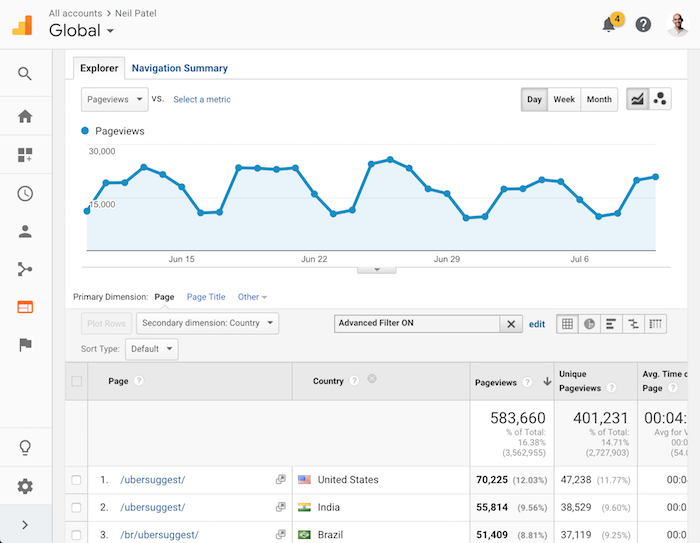
ubersuggest traffic

As you can see from the screenshot above, U.S. is the most popular region followed by India and Brazil.

Over time it shouldn’t be too difficult to 3 or even 4x that number as long as I release more features.

Now, my costs on Ubersuggest have gotten into the 6 figures per month, and I am not generating any income from it.

There is no guarantee that it will generate any revenue, but I have a pretty effective sales funnel, which I will share later in the post. Because of that sales funnel my risk with Ubersuggest is pretty low.

As long as I can grow the traffic enough, I should be able to monetize.

What about KISSmetrics?

As for KISSmetrics, I mainly bought the domain for the blog traffic.

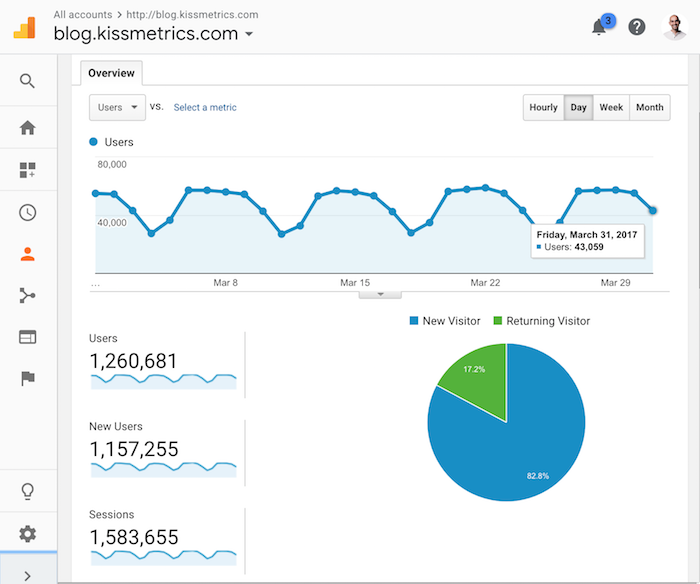
During its peak it was generating 1,260,681 unique visitors per month:

kissmetrics peak

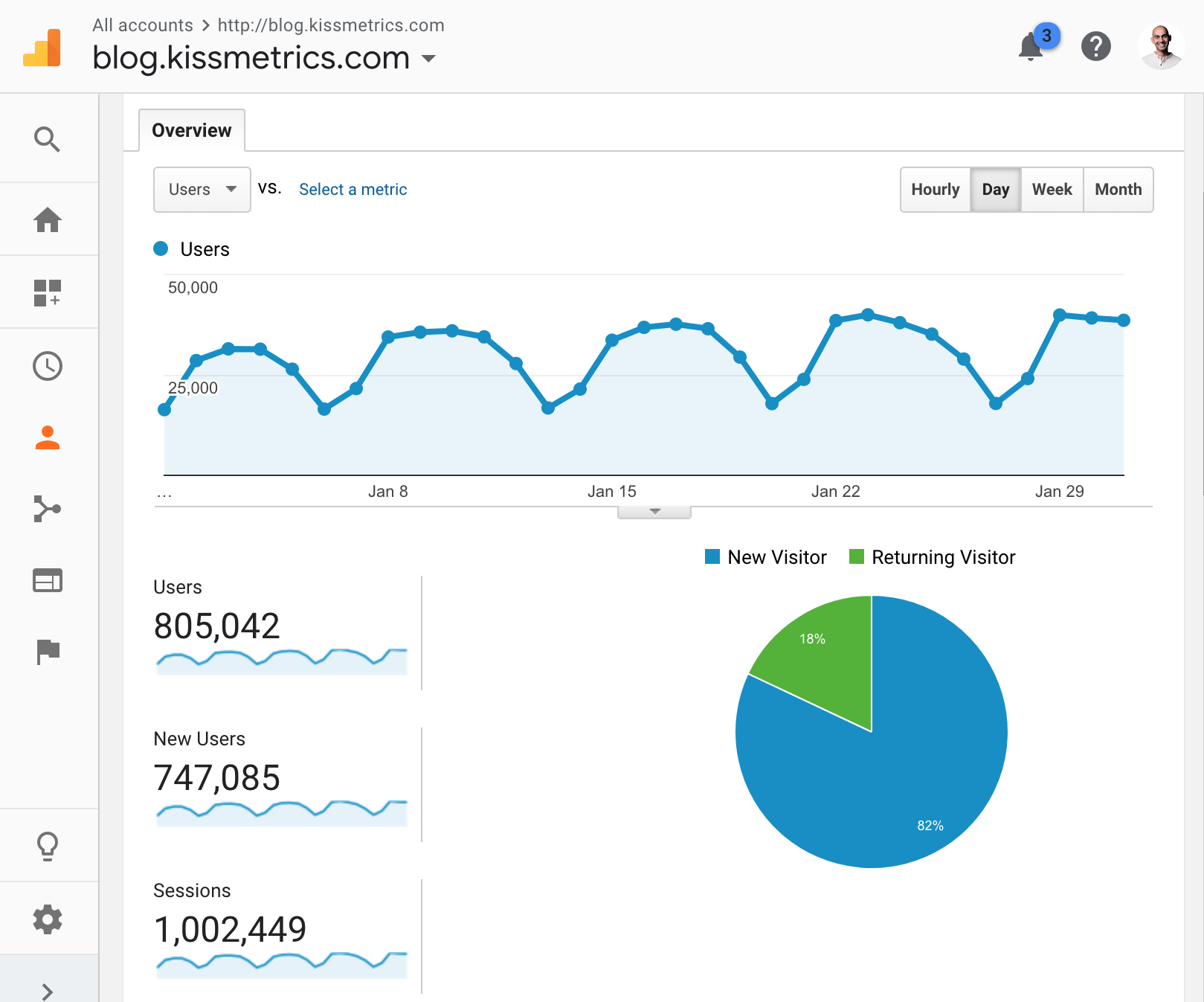
By the time I bought the blog, traffic had dropped to 805,042 unique visitors per month:

kissmetrics purchase

That’s a 36% drop in traffic. Ouch!

And then to make matters worse, I decided that I wanted to cut the traffic even more.

There were so many articles on KISSmetrics that were outdated and irrelevant, so I had no choice but to cut them.

For example, there were articles about Vine (which Twitter purchased and killed), Google Website Optimizer (no longer exists), Mob Wars (a Facebook game that no longer exists)… and the list goes on and on.

In addition to that, I knew that I could never monetize irrelevant traffic. Yes, more traffic is good, but only as long as it is relevant.

I instantly cut the KISSmetrics blog in half by “deleting” over 1,024 blog posts. Now, I didn’t just delete them, I made sure I added 301 redirects to the most relevant pages here on NeilPatel.com.

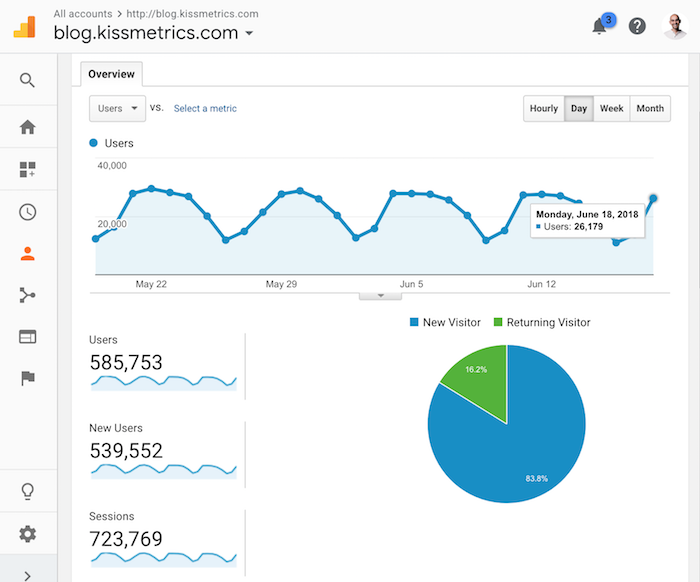
Once I did that, my traffic dropped again. I was now sitting at 585,783 unique visitors a month.

kissmetrics drop

It sucks, but it had to be done. The last thing I wanted to do was spend time and money maintaining old blog posts that would never drive a dollar in revenue.

I knew that if someone was going to come to my blog to research Vine, there was little to no chance that the person would convert into a 6-figure consulting contract.

After I pruned and cropped the KISSmetrics blog, I naturally followed the same path of Ubersuggest and merged it in to NeilPatel.com.

The merge

The KISSmetrics merge was a bit more complicated than Ubersuggest.

With Ubersuggest, I didn’t have a keyword research tool on NeilPatel.com, so all I had to do was slap on a new design, add a feature or two, and port it over.

With KISSmetrics, a lot of the content was similar to NeilPatel.com. For the ones that were similar, I kept the NeilPatel.com version considering this blog generates more traffic than the KISSmetrics one.

As for all of the content that was unique and different, I ended up moving it over and applying 301 redirects.

If I decided to skip the pruning and cropping stage that I described above, the KISSmetrics blog would have had more traffic. And when I merged it in with NeilPatel.com I would have done even better.

But in marketing you can can’t focus on vanity metrics like how many more unique visitors you are getting per month. You need to keep your eye on the prize.

And for me, that’s leads.

The more leads I generate for my ad agency, the more likely I’ll increase my revenue.

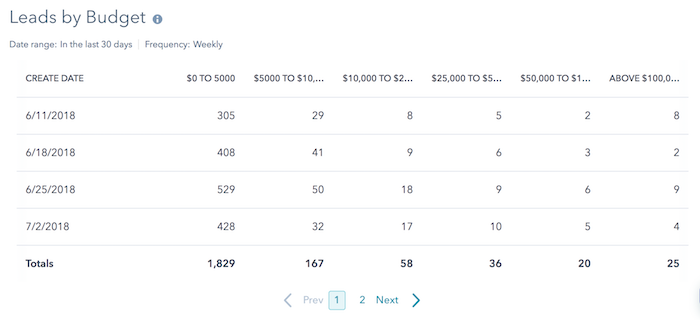
Here’s my lead count for the weeks prior to the KISSmetrics merge:

hubspot leads

When looking at the table above, keep in mind it shows leads from the U.S. only.

The KISSmetrics blog was merged on the 25th. When you add up all of the numbers from the previous week, there were 469 leads in total, of which 61 were marketing qualified leads.

That means there were 61 leads that the sales reps were able to contact as the vast majority of leads are companies that are too small for us to service.

When you look at the week of the 25th, there were a total of 621 leads. 92 where marketing qualified leads.

Just from that one acquisition, I was able to grow my marketing qualified leads by 50.8%. 🙂

I know what you are thinking though. The week after the 25th (7/2) the leads tanked again. Well, you have to keep in mind that the table only shows leads from the U.S. and during that week there was a national holiday, the 4th of July. So, leads were expected to be low.

But still, even with the holiday, we generated 496 leads, 68 of which where marketing qualified. We still generated more marketing qualified leads than when we didn’t have the KISSmetrics traffic.

The early results show that this is going to work out (or so I hope). If you ever want to consider buying up sites that aren’t generating revenue, you need to know your numbers like the back of your hand.

My sales funnel

Some of you are probably wondering how I promote my agency from this site. As I mentioned earlier, I will share my funnel and stats with you.

The way I monetize the traffic is by collecting leads (and my sales reps turn those leads into customers).

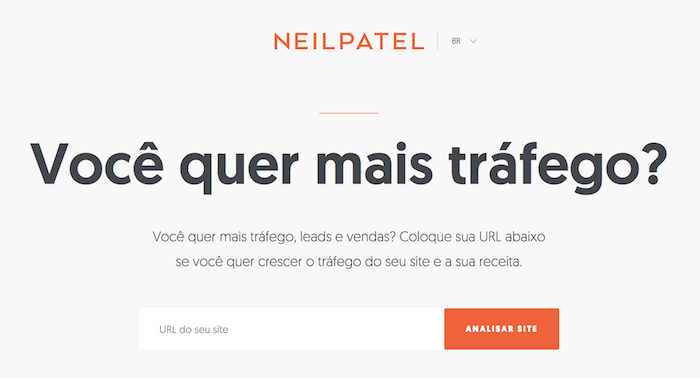
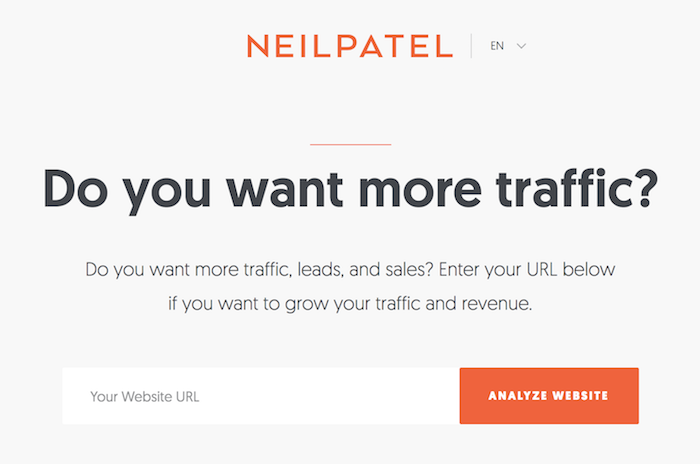
On the homepage, you will see a URL box.

neil patel homepage

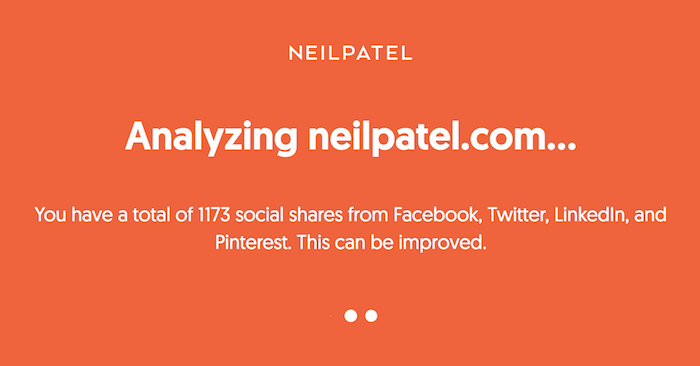
Once you enter a URL, we do a quick analysis (it’s not 100% accurate all of the time).

neil patel analysis

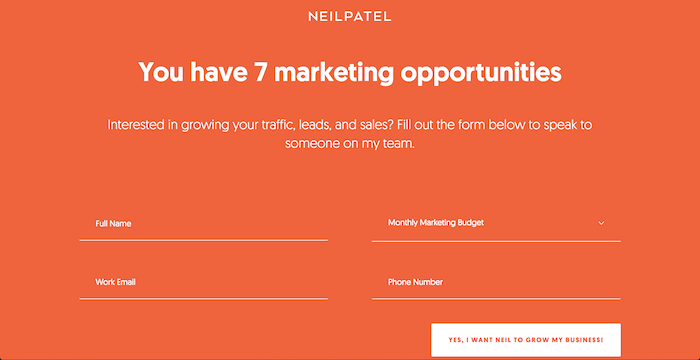
And then we show you how many technical SEO errors you have and collect your information (this is how you become a lead).

lead form

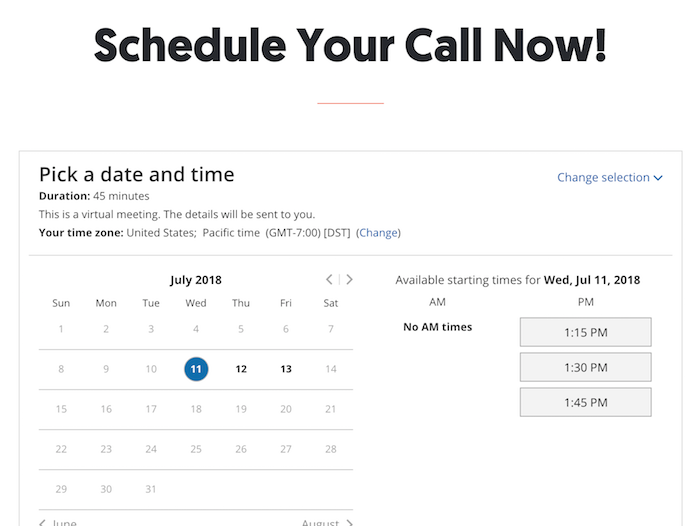
And assuming we think you are a good fit, you see a screen that allows you to schedule a call (less than 18% of the leads see this).

schedule call

From there someone on my team will do a discovery call with you. Assuming things go well, a few of us internally review everything to double check we can really help, we then create projections and a presentation, and then we pitch you for your money (in exchange for services of course).

That’s the funnel on NeilPatel.com in a nutshell… It’s pretty fine-tuned as well. For example, when someone books a call, we send them text reminders using Twilio to show up to the call as we know this increase the odds of you getting on the phone.

We even do subtle things like asking for your “work email” on the lead form. We know that 9 out 10 leads that give us a Gmail, Hotmail, AOL, or any other non-work email are typically not qualified.

And it doesn’t stop there… there are lead forms all over NeilPatel.com for this same funnel.

If you are reading a blog post like this, you’ll see a bar at the top that looks something like:

exit popup

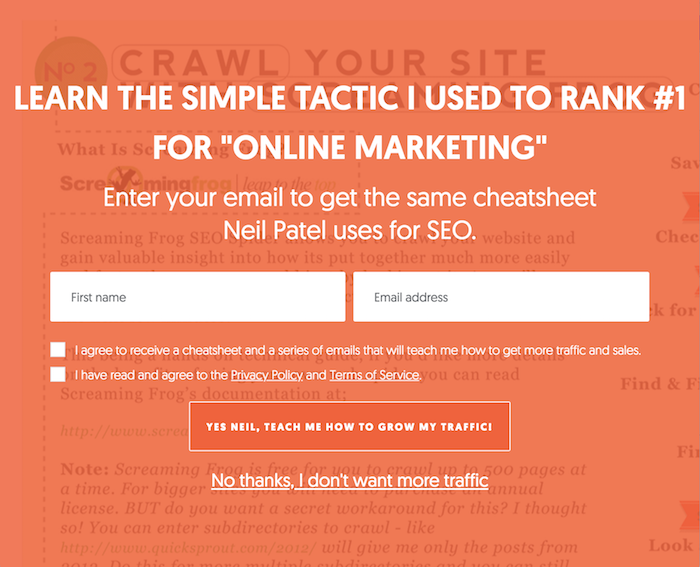
Or if you are about to exit, you will see an exit popup that looks like:

exit popup

You’ll even see a thank you page that promotes my ad agency once you opt-in:

video thanks

And if I don’t convince you to reach out to us for marketing help right then and there, you’ll also receive an email or two from me about my ad agency.

As you can see, I’ve fine-tuned my site for conversions. So much so, that every 1,000 unique visitors from the U.S. turns into 4.4 leads. And although that may not seem high, keep in mind that my goal isn’t to get as many leads as possible, I’m optimizing for quality over quantity as I don’t want to waste my sales reps time.

For example, I had 2 reps that had a closing ratio of 50% last month. That means for every 2 deals they pitched, 1 would sign up for a 6-figure contract, which is an extremely high closing ratio. Hence, I am trying to focus on quality so everyone in sales can get to 50%, as it makes the business more efficient and profitable.

The last thing you want to do is pay a sales rep tons of money to talk to 50 people to only find 1 qualified lead. That hurts both you and your sales reps.

Conclusion

The strategy I am using to buy websites may seem risky, but I know my numbers like the back of my hand. From an outsider’s perspective it may seem crazy, but to me, it is super logic.

And the reason I buy sites for their traffic is that I already have a working business model. So, buying sites based on their traffic is much cheaper than buying sites for their revenue. In addition to that, my return on investment is much larger.

For example, if I wanted to buy KISSmetrics (the whole business), I would have to spend millions and millions of dollars.

I’m looking for deals, it’s how you grow faster without having to raise venture capital.

When you use this strategy, there is no guarantee you will make a return on your investment, but if you spend time understanding the numbers you can reduce your risk.

I knew that going into this KISSmetrics deal that I will generate at least an extra $500,000 in profit from this one acquisition. Realistically it should be much more than that as the additional leads seem to be of the same quality, and the numbers are penciling out for it to add well into the millions in revenue per year.

But before you pull the trigger and buy up a few sites in your space, there are a few things you need to keep in mind:

  1. Don’t buy sites that rely on 1 traffic source – you don’t want to buy sites that only have Facebook traffic. Or even Google traffic. Ideally, any site you buy should have multiple traffic sources (other than paid ads) as it will reduce your risk in case they lose their traffic from a specific channel.
  2. Buy old sites – sites that are less than 3 years old are risky. Their numbers fluctuate more than older sites.
  3. Spend time understanding the audience – run surveys, dive deep into Google Analytics… do whatever you can to ensure that the site you are buying has an audience that is similar to your current business.
  4. Be patient and look for deals – I hit up hundreds of sites every month. Some people hate my emails and won’t give me the time of day. That’s ok. I’m a big believer and continually pushing forward until I find the right deal. I won’t spend money just because I am getting antsy.
  5. Get creative – a lot of people think their site is worth more than it really is. Try to explain to them what it is really worth using data. I also structure deals in unique ways, such as I gave KISSmetrics up to 6 months before they had to transition to a new domain (and to some extent they are still allowed to use the existing domain for their client login area). You can even work out payment plans, seller based financing, or equity deals… you just have to think outside the box.

So, what do you think about my acquisition strategy? Are you going to try it out?

The post Why I Spent $500,000 Buying a Blog That Generates No Revenue appeared first on Neil Patel.


from Blog – Neil Patel https://ift.tt/2NUuOk3