FREE TRAFFIC TO YOUR SITE

FREE TRAFFIC TO YOUR SITE
free youtube traffic

Wednesday, 10 April 2019

Three Tools to Monitor and Analyze User Engagement

The web audience is changing. With mobile and voice search, the shopping journeys are becoming more fragmented and harder to predict, the attention spans are getting even shorter and the content supply is often greater than demand.

Consequently, it is increasingly important to understand how your site users are interacting with the page elements, and what you can do to better engage them.

What is User Engagement?


Put simply an engagement is just about any sort of action a user performs on your page. This could be anything from clicking a link to scrolling to the end of your page…

In our era of information overload and on-the-go web surfing, we tend to be happy with any type of user engagement we are able to get.

In fact, we want to know how users engage with our pages to better understand what attracts their attention, what prompts them to convert and what pushes them to leave. Understandably, we want to build more engaging page elements and we want to get rid of anything that distracts or annoys them.

Any type of user engagement is important for us to understand how users interact with our web pages.

How to Analyze User Engagement: Tools


Google Analytics: Time on Page (And More)

Google Analytics has a lot of metrics (some of them are being very much misunderstood) that help you better understand user engagement with the page.

Bounce rate always comes to mind first, but let me note right there: A high bounce rate does not indicate poor engagement or low content quality. As a matter of fact, a high bounce rate may indicate that users were able to find what they were looking for right away (so they didn’t have to browse around). So I wouldn’t consider bounce rate an engagement tactic (unless it suddenly increased which may be a sign of something going on).

Time on Page can be a slight indication of a good page engagement (at least you can see people spend some time reading).

Based on HubSpot data, almost 60% of visitors spend 15 seconds or less on your page.

Tracking your site “Time on Page” metric using Google Analytics is very easy. To see page-by-page numbers, go to Behavior -> Site Content -> All pages:

Google Analytics Time on Page

Using Google Analytics Goals you can set up “Duration” goal to monitor sessions that lasts a specific amount of time or longer.

Other goals you can monitor using Google Analytics include:

  • Pages per session (when a user views a set number of pages)
  • Event (there can be a variety of events you may want to monitor – all of which indicate different types of engagement. These include form submit, video play, ad click, etc.)

Once you set up your goals inside Google Analytics, you get access to two more reports, called Funnel Visualization and Goal Flow. Both provide a visual representation of how your users interact with your on-page CTAs:

Funnel Visualization:

Funnel Visualization

Goal Flow:

Goal Flow

Hotjar: Mouse Moves and Page Scrolls (and more!)

While Google Analytics does a pretty good job monitoring your on-page clicks, heatmaps monitor other types of on-page engagement:

  • Scroll maps show how far into the page the users tend to scroll down
  • Move maps visualize mouse movements

(There’s also a click map too but we are focusing on non-click tracking here).

Hotjar lets you set up both types of tracking. It also offers a free account that lets you track 2,000 visits a day (you are unlikely to need more).

Move maps work great for identifying page elements that distract your site users from performing important actions on the page, e.g. you don’t want your readers to stare at an image instead of clicking your “Subscribe” button.

Move maps

Hotjar also allows you to visualize and compare user engagement on a desktop and a mobile device.

Finteza: CTA Clicks

While Google Analytics is very efficient at tracking your primary page goal, it’s not as easy to use for evaluating and comparing multiple CTAs.

The thing is, you probably have dozens of calls-to-action including sharing buttons, optin forms, links to your money-pages, etc. How to track and compare all of them?

Finteza is a free analytics suite that helps you monitor hundreds of events easily. Events can be added using Finteza dashboard or their WordPress plugin. Then you can easily build up your funnels to compare your multiple events and see what actually results in the final conversion:

Finteza

Finteza provides a much easier and clearer event tracking functionality than Google Analytics, so it’s something to look into.

And which tools are you using to monitor different types of user engagement? Please share in the comments!

The post Three Tools to Monitor and Analyze User Engagement appeared first on Internet Marketing Ninjas Blog.


from Internet Marketing Ninjas Blog http://bit.ly/2Uc6egc
via IFTTT

Tuesday, 9 April 2019

Why You Shouldn’t Try to Rank #1 on Google

google

Do you know what the number one email request I get is?

Come on, take a guess. What do you think it is?

Ok, its people asking me for money.

But, do you know what the second most common email request I get is?

Companies asking me to rank them number 1 on Google for a specific term.

And I have to say, it’s a big waste of time for you to focus all of your energy on ranking number 1 on Google for a specific term or even a handful of terms.

Just take a look at my site… here’s my Google traffic over the last 31 days:

search traffic

As you can see from the graph, I’m generating 2,375,455 organic visits from search engines each month.

And can you guess how many keywords I’m tracking when it comes to my rankings?

A big fat ZERO!

I’m not saying I don’t do SEO, I’m saying I don’t focus on rankings.

Can you increase your search traffic without tracking rankings?

The short answer is yes.

As you saw from the graph above, I’m getting over 2 million visits from organic search each month. If you look back a year, I was getting 970,459 visitors a month from search.

2018 search traffic

In other words, I was able to grow my organic search traffic by 144% in roughly 12 months. That’s not too shabby considering I don’t focus on any one particular keyword.

So why don’t I focus on specific keywords or track my rankings?

Number 1 doesn’t guarantee the most clicks

Ahrefs recently did a study where they showed how being number 1 doesn’t guarantee the greatest number of clicks.

ahrefs number 1

The number 1 listing gets the majority of the traffic only 49% of the time. Don’t get me wrong, I would rather be number 1 than number 2, but getting there doesn’t guarantee the most amount of traffic.

And over time it’s just going to get worse.

Just look at how SERP listing pages looked in 2014.

serp 2014

Now let’s look at how SERP listings look today.

2019 serp listing

What are the big differences that you see?

  1. Paid listings blend in – paid listings aren’t as clearly defined as they used to be. In other words, they blend in, which helps ads generate a higher percentage of the clicks.
  2. Localized listings can be ads – the first listing in the localized listing is also paid.
  3. The right side no longer has ads – most of the elements on the right side, when you click on them, drive you to perform another Google search.
  4. Less organic listings – the homepage only has 9 organic listings if you exclude the localized listings.
  5. Organic results are pushed down – not only do the paid and local listings show first, but news results are also in-between the organic results. This causes the 3rd, 4th, 5th… organic result to get fewer clicks.

The common trend is people are focusing on the paid ads more than the organic listings. And organic listings are no longer guaranteed to be as high up as they once were.

Just look at this eye tracking study of a Google SERPs result.

eye tracking

It clearly shows how the paid ads have the majority of the attention.

So, does this mean you should give up?

No, I am not trying to paint a picture of how you shouldn’t try to rank high on Google or that SEO is useless. Because although Google keeps adjusting the layout of their SERPs page, it’s still the most popular site in the world.

google similarweb

Commanding 57.34 billion visits a month means… you have no choice but to do SEO!

But you shouldn’t waste your time thinking about each and every change Google is making because it’s out of your control.

Just look at how many algorithm changes they made in the last 12 months. It’s too hard to keep up with each change or predict Google’s next move. That’s why I take a different approach to get ahead of Google’s upcoming algorithm changes.

I focus on user experience.

What should you do?

You aren’t going to be able to control your rankings for every single one of your keywords… especially if you are doing SEO the right way.

The majority of your traffic should be coming from long tail phrases. Just look at my blog, I rank for 477,000 keywords.

That’s far too many keywords to track on a regular basis.

I focus on 3 things:

  1. Create an amazing user experience – Google doesn’t want to rank sites at the top that are the “best optimized.” They want to rank the site that users love the most at the top. So, focus on providing that and, in the long run, you should rank higher.
  2. Overall organic traffic growth – keywords have trends and they change in popularity over time. Instead of focusing on a handful of keywords or even a few hundred, I just focus on increasing my overall organic traffic. As long as it keeps climbing quarter over quarter, I’m happy.
  3. Conversion rate – more traffic doesn’t guarantee more sales. I continually optimize my conversion rates so that each additional organic visitor I get has a higher chance to convert into a customer.

And I know I said I focus on 3 things, which is true… but every once in a while I focus on one more thing. It’s updating my old content.

If I had to add in a 4th, it would be updating my old content. Even though I know SEO fairly well, there is no guarantee the even my traffic keeps going up and to the right.

Just like you, my traffic drops every once in a while.

641 decline

It sucks when your traffic just drops 6.94% in a week and it is scary when that trend continues. But when it does happen, follow this and you can reverse the trend of your declining traffic.

Which strategy should you follow?

There are a few SEO strategies I use to get more traffic that still work well today. If you follow them, you should get more traffic over time:

  1. Globalization – search isn’t too competitive outside of English. That is changing fast though, so I would follow these globalization tips as soon as possible.
  2. Off-page SEO – it still impacts rankings significantly and you can’t ignore it. Here are 6 off-page strategies you should follow.
  3. Link building – here’s one of my favorite strategies for link building… it works really well. Even if you have a new site and no one knows who you are, you will be able to build links using it.
  4. Land and expand – you already rank for terms on Google. This strategy will allow you to turn one ranking into hundreds.
  5. Brand building – Google wants to rank brands higher than non-brands. Follow this as it will help you build a brand.

There are tons of other tactics and strategies that people are using, but the 5 main ones I mentioned above still work well in today’s competitive search landscape.

Conclusion

Yes, you want to continually improve your search traffic over time, but obsessing over whether or not a keyword is ranking number 1 doesn’t mean much.

SEO has moved to a long-tail strategy. The goal isn’t to rank for one keyword, or even a hundred or a thousand… the goal is to rank for hundreds of thousands if not millions of keywords over time.

And as long as that trend is continually going up and to the right, you’re fine.

One way to see if things are going directionally right is to use Ubersuggest. When you put in your domain, you’ll see a chart that looks something like this:

keyword rankings

You want the total number of keywords to increase over time and you want the small green bar to continually go up over time as that means a higher portion of your listings are moving up in Google.

So, are you going to continue focusing on rankings?

The post Why You Shouldn’t Try to Rank #1 on Google appeared first on Neil Patel.


from Blog – Neil Patel http://bit.ly/2uVjP1j

Tuesday, 2 April 2019

17 Charts That Show Where Social Media is Heading

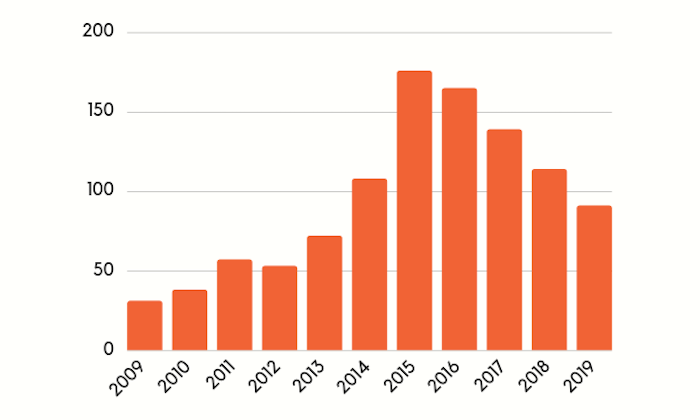
social shares

You already know it’s harder to get traffic from the social web unless you spend money ads.

There’s nothing new with that fact… just look at the graph above: It breaks down how the average number of social shares per blog post has been dying year over year.

But the reality is you can’t ignore platforms like Facebook, Twitter, LinkedIn, Instagram, YouTube or any other new contender that comes out and gains traction.

These social sites command so much traffic, that we have no choice but to be on them.

Just look at the Similar Web numbers for Facebook… they get an estimated 19.2 billion visits a month.

That’s ridiculous! And it’s not just Facebook either… according to Similar Web, all of the big platforms get tons of traffic:

  • LinkedIn – 917 million visitors a month
  • Twitter – 3.62 billion visitors a month
  • YouTube – 22.77 billion visitors a month
  • Instagram – 2.86 billion visitors a month

In other words, whether you like their algorithm tweaks or not, you have no choice but to be on these platforms as they attract so many eyeballs.

So, what should you do with your organic social reach? How should you combat their algorithms so you can generate a positive ROI as their ad prices keep going up?

Well, I surveyed 183 companies that generate at least 5 million dollars in revenue a year all the way up to $1.7 billion to show you where social media is headed and what you should do to succeed in the landscape.

Let’s dive into the data…

Expect less traffic from the social web, even if you pay for it

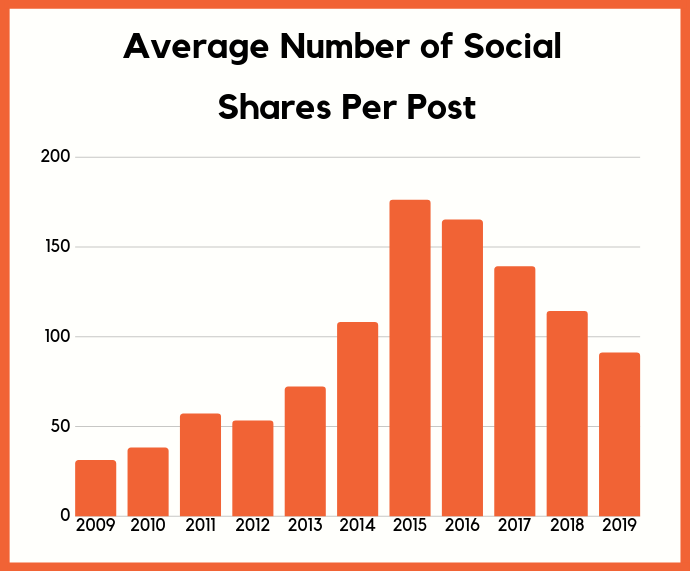
Look at the graph below. What do you see?
social shares per post

Since 2015, the amount of shares a blog post receives from the social web has been declining. One of the large reasons for social sites to clamp down on organic reach is that that makes it so you need to spend money to get the reach that you were once used to and relied upon to generate traffic.

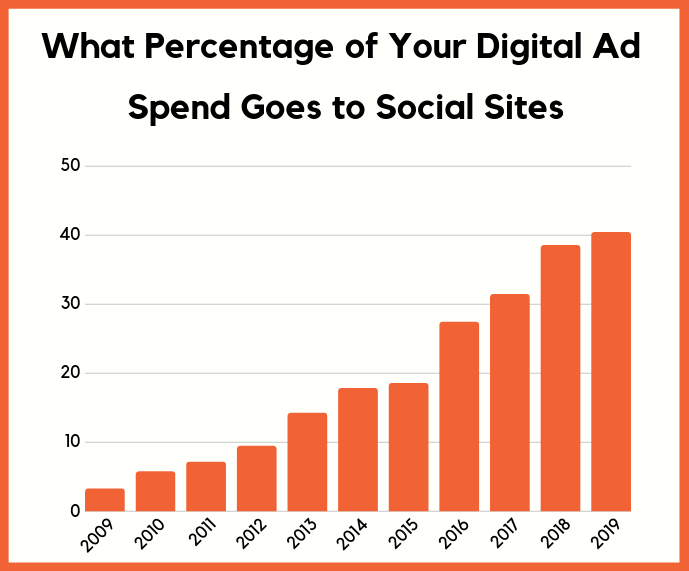
Now let’s look at the percentage of digital ad spend going towards social media sites.
ad spend

Over time it has increased, and you’ll notice that things really started to ramp up in 2016.

An interesting fact is that in the United States during mid-2017, Facebook had more advertisers than inventory. In other words, the demand was higher than the supply which caused CPM and CPC rates to increase.

But similar to the game of cat and mouse SEOs play with Google, marketers also play that game with social networks. In recent years, marketers have figured out how to reverse the trend of their dying organic reach.
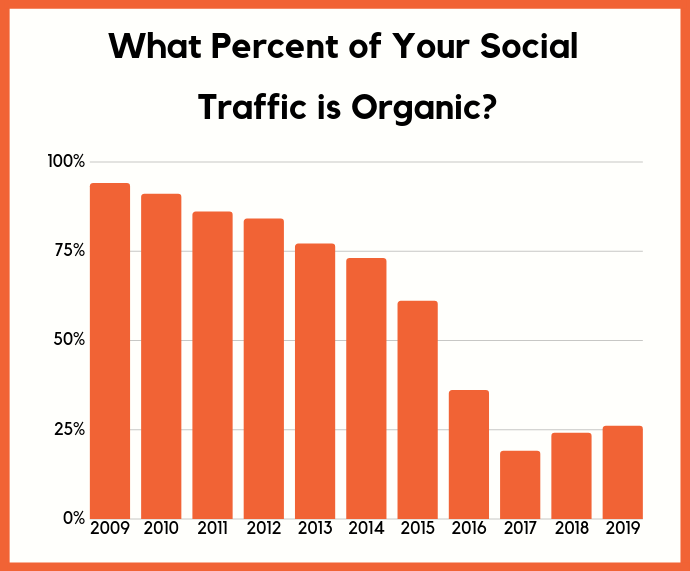
organic social traffic

2017 was a low point, but since then marketers have figured out a way to boost organic social traffic.

It won’t last forever… but can you guess how?

Don’t expect your employees to help

Well, it’s not by asking your employees to share your content.
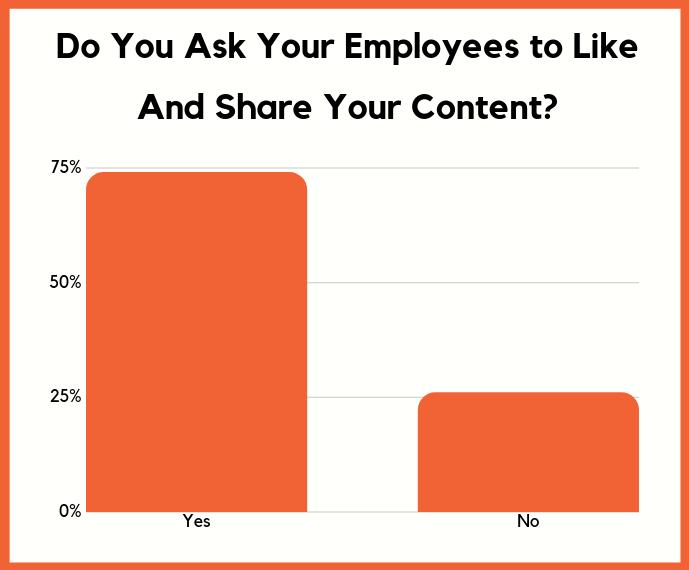
employees content share

Roughly 74% of the companies we surveyed asked their employees to share their content. Might as well get those extra likes and comments, right?

I know I used to do it.
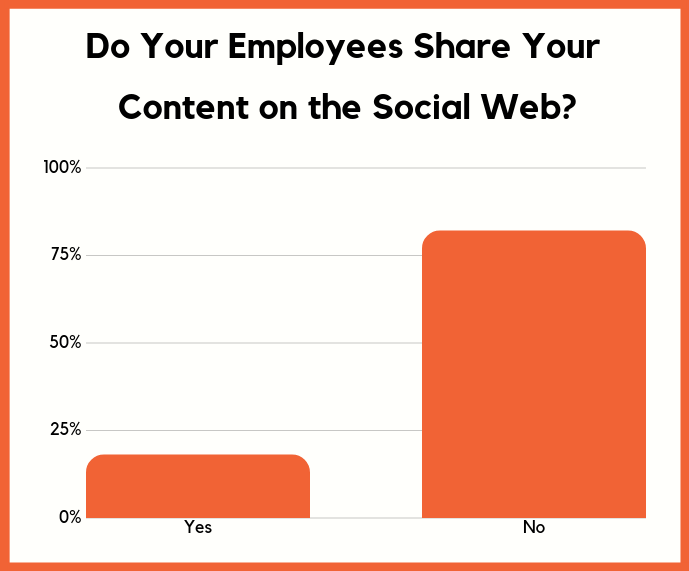
employees don't share

But then I stopped because the majority of my employees didn’t want to share the content. And it’s not just my companies, other companies experienced the same thing.

In other words, the first few times you ask your team members to share, they’ll do it. After a while, they’ll ignore you.

So how are marketers boosting their organic reach?

You have to use chatbots

Here’s how much time companies are spending on each form of social media content.
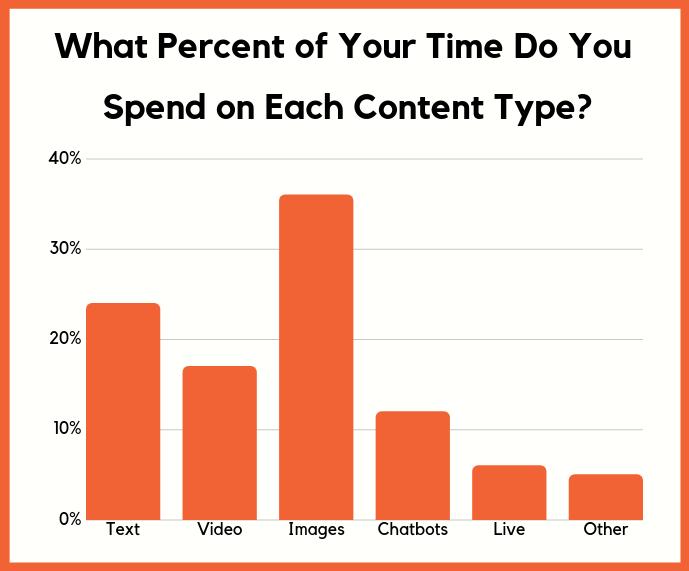
time spent on content

As you can see, everyone loves posting images and text-based updates because they are easy to post.

But they don’t produce the best engagement. It’s actually live video and other forms of video.
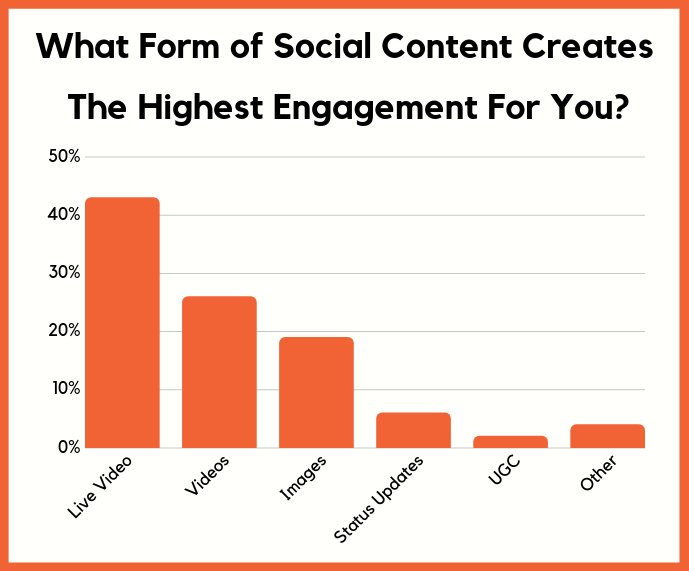
socialcontent

Social platforms are trying to compete with television networks and they are even competing with platforms like Netflix.

So, if you want the most engagement you have to feed into their goals. If you start producing live video or even recorded video, you’ll find that you can boost your engagement. What this will do is get more of your followers engaged so when you post other forms of content they’ll be a higher probability that the content will be seen.

The other reason videos work so well is because they keep people on these social platforms versus driving people back to your site.

But of course, you want your followers to go back to your site… and you can do that through chatbots.
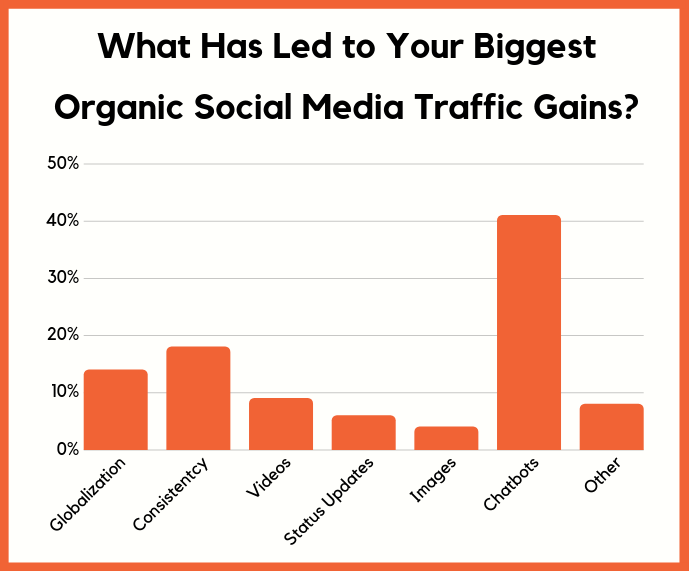
biggest social gains

As you can see, 41% of the companies reported that chatbots (also knowns as messenger bots for social sites) provided their biggest traffic gains.

In other words, if you want to drive people from social sites like Facebook, you’ll have to start using messenger bots like Mobile Monkey.

The chances are you aren’t using messenger bots yet, but they are super effective. Just follow this guide and it will walk you through setting them up.

Now, not every social network has messenger bots, but over time you’ll see this change.

You’ll have to start expanding globally

I’ve been blogging a lot about global expansion from an SEO perspective, but the same goes from a social media perspective as well.
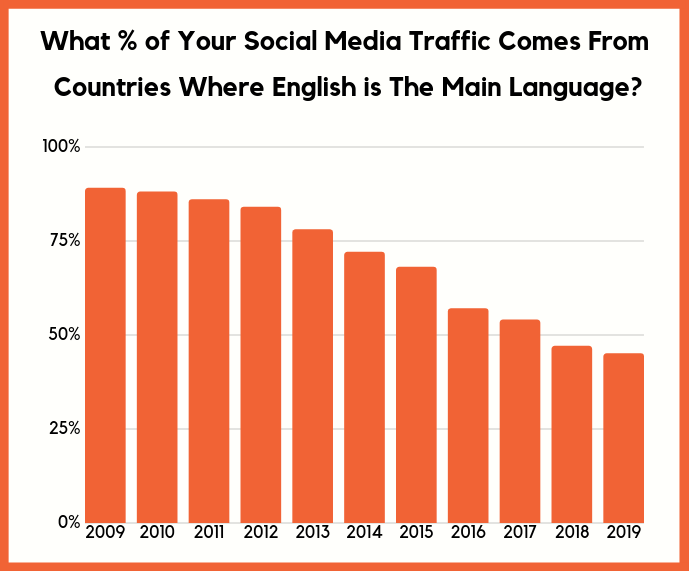
social traffic english

The chart above clearly shows how people are now getting traffic from regions where English wasn’t the native language.

And as companies noticed that trend, they also started posting their social content in multiple languages.
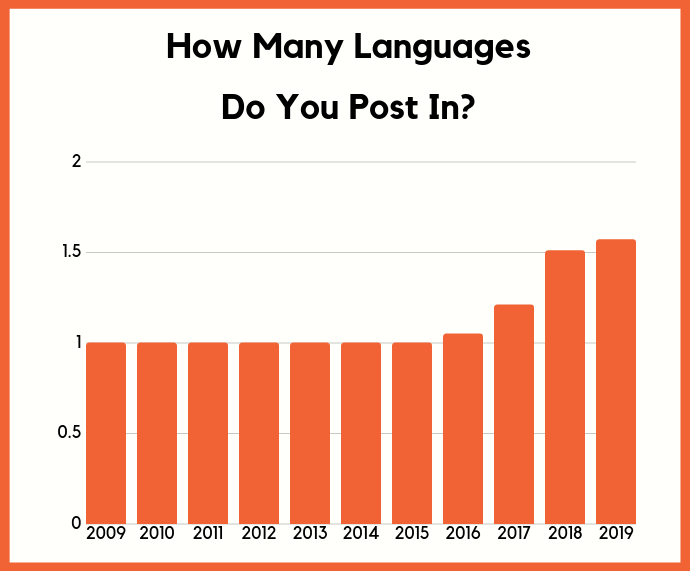
language post in

You’ll see a trend of this continuing over the next few years in which companies will be leveraging globalization as social marketing campaigns in non-English speaking countries in most cases is more profitable.

If you want the most out of your organic social traffic and paid ads you should consider posting content in multiple languages.

Some social networks like Facebook give great targeting options where you can pick which regions you want to show your content in.
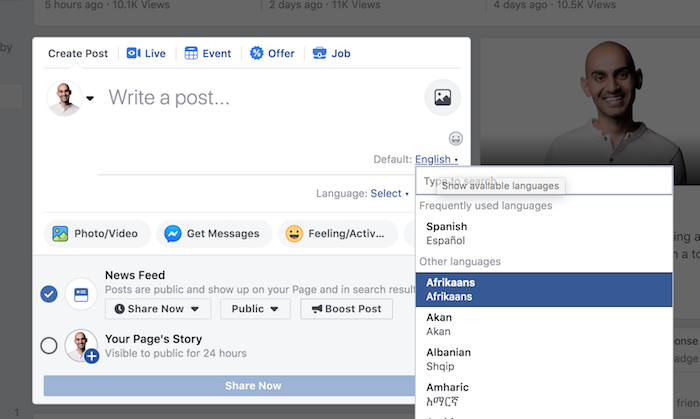
languages

For other platforms like Twitter and Instagram, this doesn’t exist yet.

When you also look at it from an advertising perspective, ads are expensive in regions like the United States, Japan, Canada, United Kingdom, Germany… but they aren’t as costly in most parts of Latin America and Asia.

Now let’s look at social media from a sales perspective.

Here’s how to maximize your social media revenue

Similar to content marketing, don’t expect social media visitors to convert right when they land on your site.

On average, a social media visitor will convert after 3 visits.
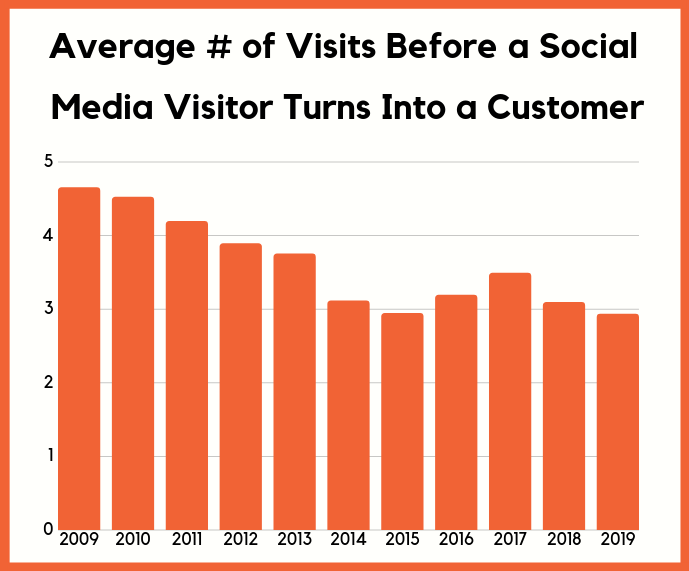
visit before customer

That means you are going to have to focus on getting people to continue to come back to your site if you want more sales.

In other words, you’ll have to play the long game.

The simplest way to do this is to remarket your social visitors. But there are other solutions as well that you aren’t currently using.
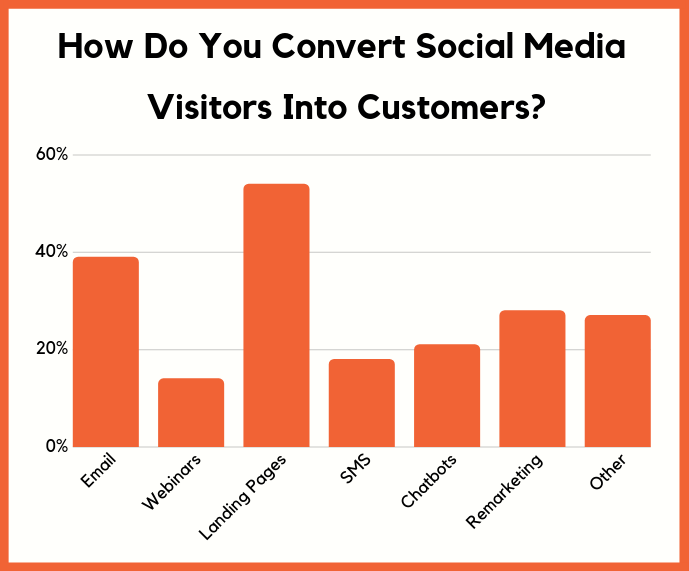
convert social customers

You can use a combination of the methods above. You’ll find that one won’t be enough and you’ll have to combine a handful of methods, including SMS.

You’re probably not using SMS marketing yet, but did you know that when I send SMS messages my response rates are 68%?!

That’s crazy high!

I’m not talking about opens, I am talking about responses!

For email, you can use tools like Hello Bar and for push notifications, you can use tools like Subscribers.

But there are multiple ways to boost your sales from social media, including focusing on specific content types.

Did you know that if you leverage chatbots (messenger bots) and post video-based content you’ll generate more sales on average than if you just posted status updates?
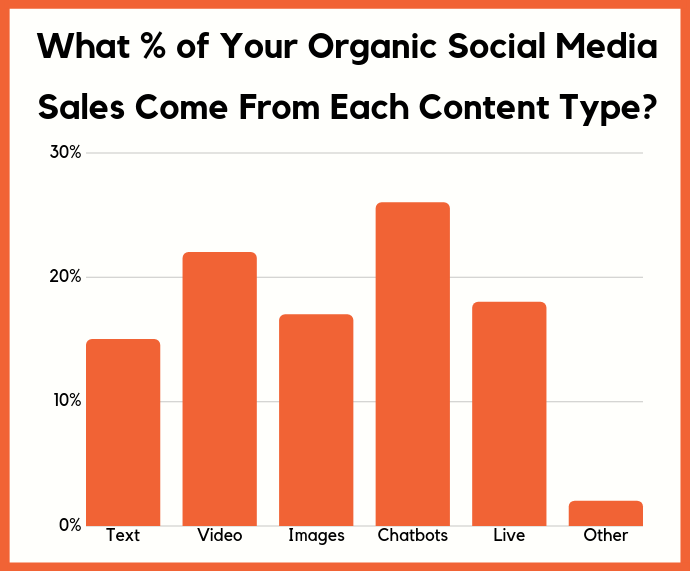
organic sales

I know that sounds counterintuitive as it is easier to drive people to your site using status updates than to create a video, but you have to consider that social algorithms favor video.

You can also optimize your sales by picking specific social networks

Sales is a complicated formula. There’s more to growing your revenue than just focusing on specific types of content social media sites love and optimizing your landing pages.

To get a full picture, you also have to look at the first touch and last touch sales.

First touch sales are the traffic source that people first found you from. They don’t necessarily convert right then and there, but it’s the way they first found you.
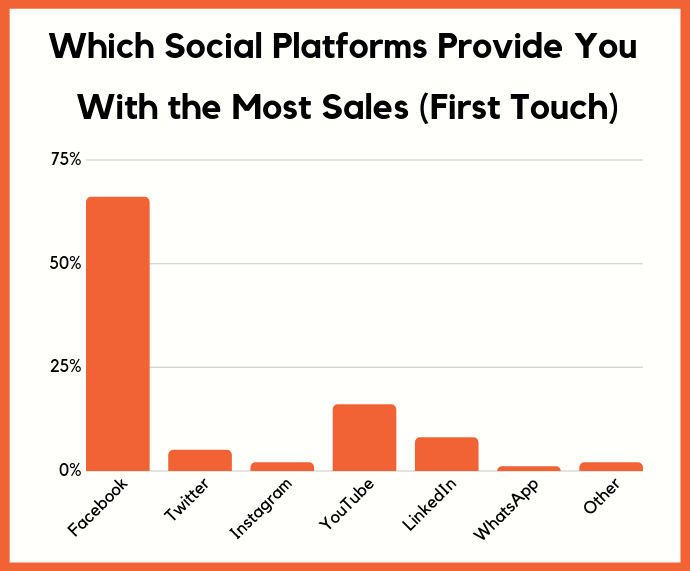
first touch sales

It’s no shocker, but Facebook is the leader when it comes to first touch sales.

Now let’s look at last touch sales, which is where a visitor comes from right before they convert. Remember, someone may have found your site from Facebook, but they may not convert right away.
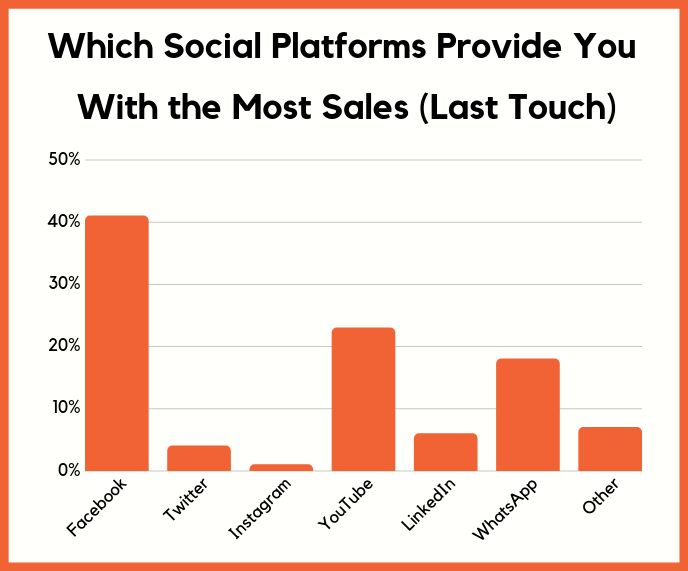
last touch

Sure, Facebook is still the winner, but YouTube is a close second and, shockingly, WhatsApp is in 3rd place.

It makes sense as texting has an extremely high open and click rate. I know you aren’t using WhatsApp for your business yet because that’s what the data shows, but you should check out their business API.
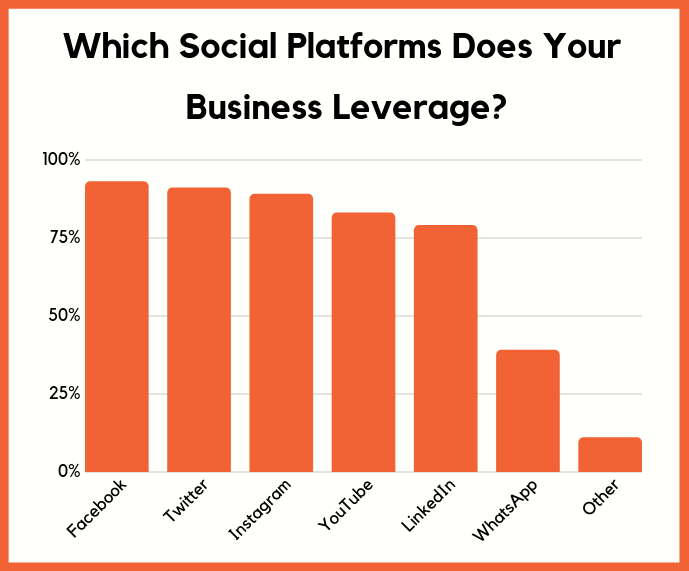
social platform

Conclusion

Over the upcoming years, you can assume social algorithms are going to get tougher from both an organic and paid perspective.

Social media companies are facing heavy governmental pressure due to fake news, privacy concerns, and issues related to political campaigns.

But that doesn’t mean you can ignore the social web or stop using it. It’s not dying and it is here to stay.
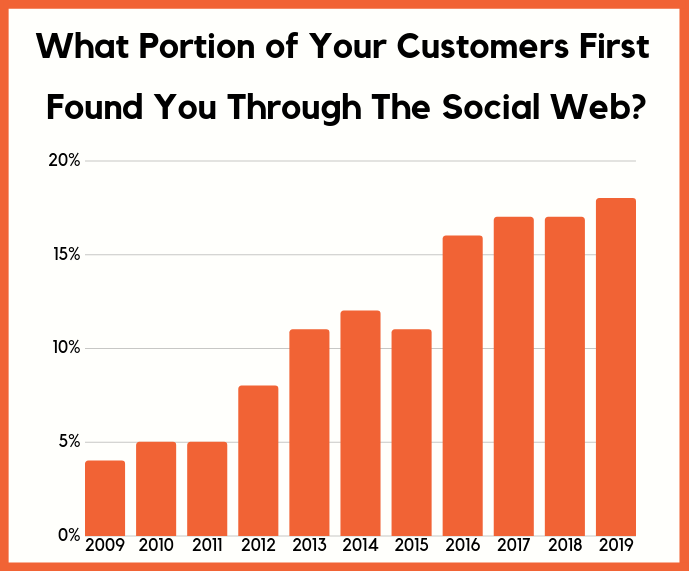
customers find you

The data shows social media is on the rise. Sure, these sites aren’t growing at a rapid pace anymore but that’s due to the majority of the world already being on one of these platforms if not a few of them.

They are effective because people trust what they see on these sites and that should continually increase as they fix issues like fake news.

As long as you follow the tips above, you’ll be able to maximize your social media traffic and revenue even when the algorithms change in ways that don’t favor you.

So how are you maximizing your social media traffic?

PS: If you want to know where content marketing is heading, check this out.

The post 17 Charts That Show Where Social Media is Heading appeared first on Neil Patel.


from Blog – Neil Patel https://ift.tt/2Uccrhd