FREE TRAFFIC TO YOUR SITE

FREE TRAFFIC TO YOUR SITE
free youtube traffic

Thursday, 3 February 2022

12 Ways to Have SEO Success With Google in 2022

19 Advanced SEO Techniques to Double Your Search Traffic

SEO is an ever-changing beast. Once you think you know exactly what Google is looking for, an algorithm update throws a wrench in your strategy.

So, what’s one to do?

While there will always be algorithm updates and improvements, some proven SEO tactics will always be in practice. By implementing these tactics on your site, you improve your odds of rankings while also future-proofing your website against Google’s inevitable changes.

There are two ways to affect change with SEO: on-page and technical. We will take a close look at both in this post. 

On-Page SEO Tips for 2022

If you’re new to SEO or you’re looking to make quick, impactful changes, focusing your efforts on on-page SEO tactics is a great place to start.

Here are some important SEO tips to keep in mind when preparing your strategy in 2022.

1. Target Longtail Keywords

Long-tail keywords are longer and more specific than the usual target keywords. They usually have lower search volume than shorter keywords, but they can be very useful. 

Long-tail keywords show you why users make a particular search and not just what they are looking for. They also now account for higher search volume now compared to shorter keywords.

A recent study found that 91.8 percent of all searches are for long-tail keywords. This is a big change from the early days of the internet. 
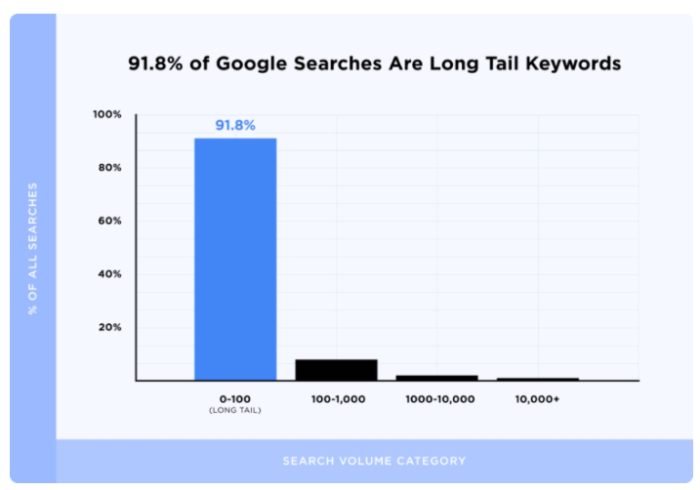
Dominate SEO with Google in 2022 using long-tail keywords

One reason to target long-tail keywords is they tend to have higher search intent. That is because they are more specific, so you can narrow the keywords down to those highly related to the actions you want users to take on your site.

An example of a long-tail keyword is “how to rank on Google.” This is opposed to a short-tail keyword such as “Google ranking.”

The intent behind both variations is very different. For “how to rank on Google”, you can see that the user is posing a question which means they are looking for a direct answer to it.

For “Google ranking”, we don’t really know what the user’s intent is. Maybe they are just trying to understand what it means.

While it’s not always the case, long-tail keywords tend to have lower search volume and, as a result, lower competition. Therefore, they can be easier to rank for.

How can you effectively leverage long-tail keywords in your content?

You don’t want to include a bunch of different long-tail terms in your current content, hoping it will work. This can have the exact opposite effect of what you’re looking for.

Tips for adding long-tail keywords to your content:

  • Determine the blog topics you want to cover.
  • Plug the most generic phrase/title of each topic into a keyword research tool like Ubersuggest.
  • Identify long-tail keywords related to your chosen topics with high search volume and low competition/CPC.
  • Narrow down your list of keywords to the ones with high search intent. For example, if you are a credit card company, and one of your topics is “opening a credit card”, a long-tail keyword you can target would be “how to open a credit card for the first time”.
  • Write relevant content that answers the user’s intent behind the chosen keyword.

2. Use Keywords in Alt Text for Images

Alt text, or alternative text, is a short description of an image. It remains an important Google ranking factor with MozCast saying it still has more than a 20 percent effect on results. 

Alt text has three main uses:

  1. Accessibility: Alt text is read out loud with the use of a screen reader to users who are visually impaired. Unfortunately for e-commerce sites, 55 percent of them fail to meet basic accessibility requirements.
  2. Context: When an image cannot load onto the page, the alt text appears as an alternative to provide context to users.
  3. Search engine optimization: Search engine crawlers use alt text to help them index an image properly. Google confirmed in 2021 that alt text is “still important for SEO.”
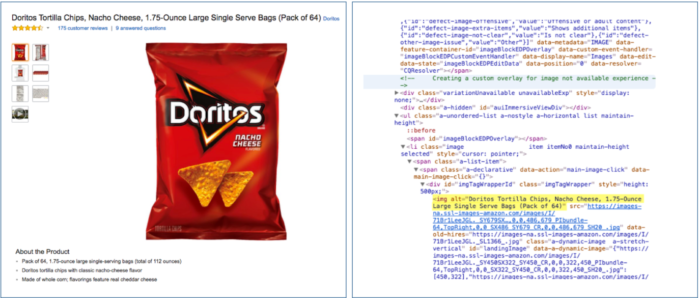
Dominate SEO with Google in 2022 by using alt text

As the internet becomes more accessible, so does Google’s algorithm. This means that accessible websites will be prioritized over their non-accessible counterparts. After all, the more accessible a site the more potential for traffic.

Tips for using keywords in alt text:

  • Think about the image first and write a description to match it.
  • Make sure your description gives a natural description of the image. Don’t be too complex.
  • Think of ways to incorporate your target or secondary keywords in the alt image text. For example, highlighting that an image is a screenshot of the process your content explained.

3. Use Keywords in Headers

When you place keywords in headers, you signal to search engines and users that your content satisfies the target intent behind those search terms. Just as a table of contents provides context to users, keywords placed in headers can do the same for search engine bots.

While 36 percent of SEO experts think headlines are important, this doesn’t mean forcing keywords to fit if they don’t make sense. 

Consider the user experience and Google recommendations before deciding where to place your target keywords or other variations. Keyword stuffing should be avoided at all costs. 
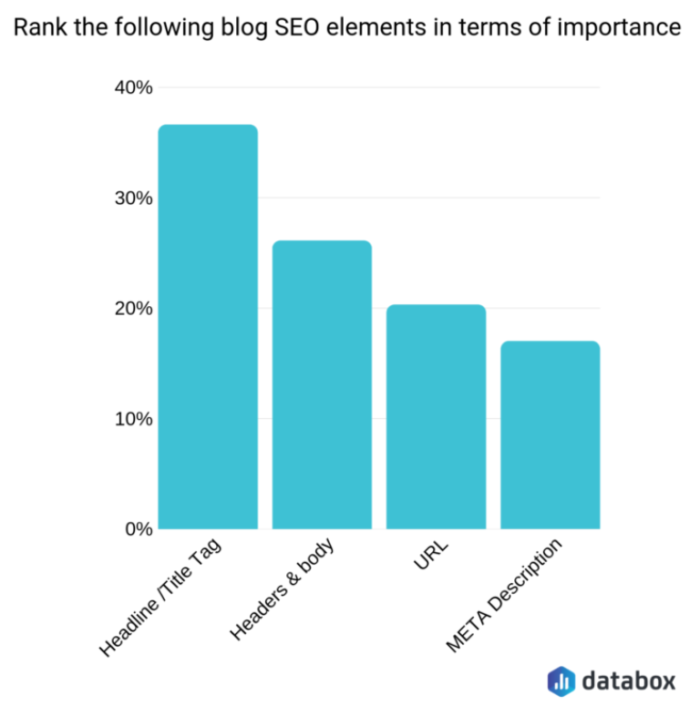
Dominate SEO with Google in 2022 by using keywords in headers

Tips for using keywords in headers:

  • Select the target keyword of your post to include in the headers.
  • Plug the keyword into a keyword research tool to find other variations of it.
  • Use the keyword and its variations in your headers as often as you can (aim for at least 40 percent of headers).

4. Focus on Great UX (User Experience)

Beyond keywords and content, you have to consider the experience your users have from start to finish.

Google takes many factors into account when ranking your website, one of them being the time spent on the page (or dwell time). If users are bouncing from your page within seconds of arriving, it signals to Google that it’s not the content their users are looking for.

One thing that will affect dwell time and bounce rates are how long it takes a page to load. An analysis of over 5 million desktop and mobile pages found that the average time it takes for a web page to fully load is 10.3 seconds on desktop and 27.3 seconds on mobile. 

The first 5 seconds of a page loading has the biggest impact on overall conversion rates. Each additional second it takes for a page to load drops conversion rates by an average of 4.42 percent each time. 
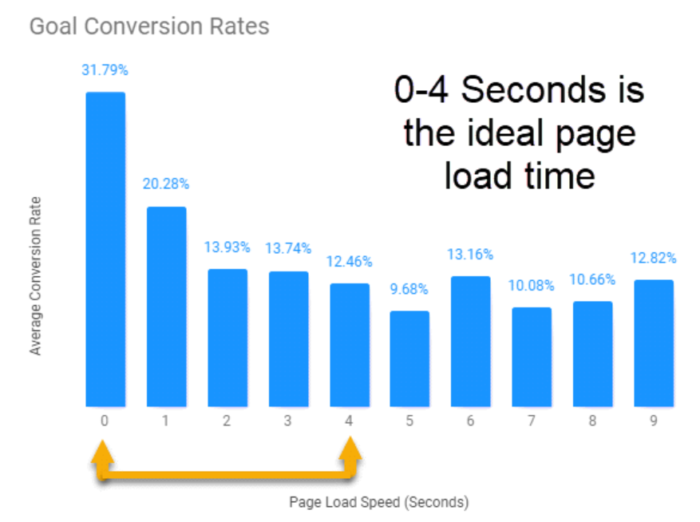
Dominate SEO with Google in 2022 with better UX

User experience has become a very important ranking factor for Google that they started rolling out their core Page Experience update in 2021.

Tips for creating great UX:

  • Make sure the content and images used satisfy the search intent for each keyword.
  • Include the most relevant information at the top of the page.
  • Reduce image sizes to improve loading times for each web page.
  • Make the content easy to navigate, particularly for longer content pieces. This could be including a table of content, having clear headlines, or using shorter paragraphs.
  • Clean up the clutter like redundant content and don’t use any distracting images or fonts.

5. Include Multiple Media Types

There are some things you can do that indirectly benefit your SERP rankings. One of those things is to use multiple media types across your blog.

Beyond images, media can also include audio files, videos, ebooks, and GIFs. These media types are meant to be engaged with and, as such, increase dwell time on your website as well as user experience.

According to Hubspot, videos are the #1 form of media used in most content strategies, overtaking blogs. 86 percent of businesses use video marketing as a tool to grow their business and, on the consumer side, 84 percent of people say that watching a brand’s video is what convinced them to buy a product or service.

Audio is also on the rise with the average consumer spending more time listening as well. 61 percent of businesses plan to increase digital audio advertising budgets as well. 
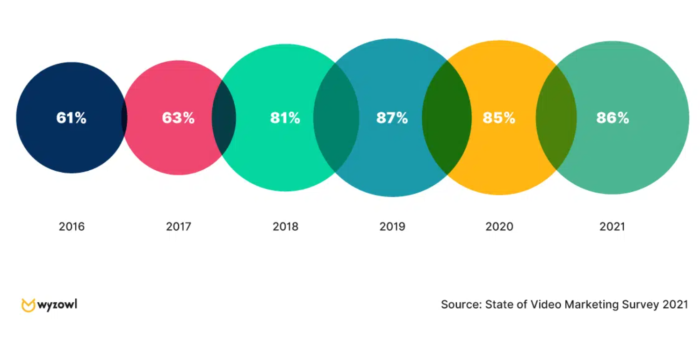
Dominate SEO with Google in 2022 with multiple media types

Finding ways to incorporate videos and audio on your blog can be a great way to improve the user experience and increase dwell times on your site. You can get started by including small audio recordings in blog posts or short video clips that simplify difficult concepts.

Tips for including more media types:

  • You don’t already, create a YouTube channel as another marketing avenue to build a following on.
  • Embed YouTube videos that cover similar topics in relevant blog posts. 
  • Include audio clips from relevant podcasts that fit your topic.
  • Present data and stats in more engaging ways such as with data visualizations and other custom graphics.

6. Use Internal Links

I mentioned above that Google considers time spent on page when ranking your website. A second similar metric is the time spent on your entire website. This is another key ranking factor for Google’s algorithm.

The longer a user stays on your website, the further into the funnel they are likely to go. Beyond that, it signals to search engines that your content is high quality and relevant.

More than 80 percent of SEOs believe that each blog post should include at least 2-5 internal links with most people spending equal amounts of time on their internal and external linking strategies.

The two key steps to increasing time spent on your site are:

  1. write engaging, in-depth content
  2. link to relevant internal content

When you link to internal content, you drive your users deeper into the site. This increases the odds of them having meaningful interactions with your content (e.g., leaving a comment on a blog post or sharing on social media), which in itself is beneficial to SERP rankings.

Tips for incorporating and leveraging internal links:

  • Choose pages with additional content that is relevant to the topic the user found you from.
  • Use anchor text that sounds natural and encourages users to click on to the next page.
  • Avoid using generic anchor texts such as “click here” or “read more”. More descriptive anchor text helps Google understand how to index your page.
  • As a rule of thumb, make sure the most important pages on your website are always three clicks or less away from the first page seen.

7. Focus on “Top of the Funnel” Keyword Phrases

The three main phases of the funnel are awareness, consideration, and decision.

When speaking about the top of the funnel, I mean the keyword phrases that grab the attention of prospective customers. In fact, 95 percent of marketers make sure to create content for their brand that targets top of funnel keywords. 

Content that targets these terms are meant to build “awareness” around the topic. They draw the reader in without expecting them to take an action. That’s what the rest of the funnel is for.

What do these keywords look like? Top of the funnel keywords tend to answer more general questions about the topic. There are many different examples on what they look like but here is one you can refer to that I have written about before:
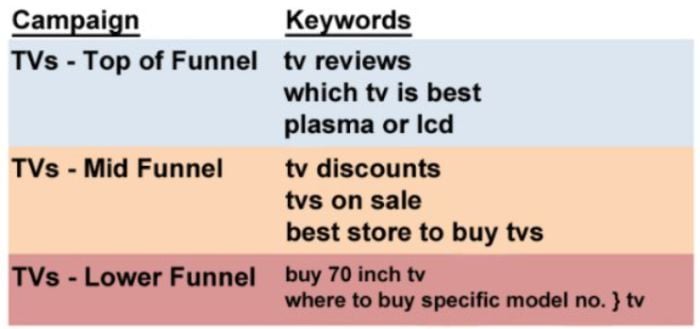
Dominate SEO with Google in 2022 with top of the funnel keywords

By focusing on these keywords, you’re doing two things:

  1. reaching a larger audience as these terms tend to have higher search volumes
  2. drawing in users earlier in their research process

Tips for choosing top of funnel keywords:

  • Choose terms with higher search volume and low SEO competition.
  • Create a list of additional keywords related to your chosen terms that would reflect other stages of the buyer’s journey. This will help you ensure traffic generated converts into leads or sales.
  • Create up to three “top of the funnel” customer personas. Based on these personas, you can make sure each search query matches the type of customer you want to sell to.

Technical/Offpage SEO Tips for 2022

Even though technical SEO is often forgotten when creating your strategy, it still remains a crucial part. It doesn’t look like Google will be changing this anytime soon.

Here are some key technical SEO tips to implement in 2022.

1. Eliminate Spammy Backlinks

It used to be that backlinks were the hidden treasure of SEO. It’s true that backlinks are still a major ranking factor for Google, but the quality of those backlinks is now more important than ever before.

In 2021, Google rolled out another algorithm update that targeted and devalued bad backlinks. While no sites were individually penalized in the process, it stopped counting a lot of backlinks that many sites had grown accustomed to which affected rankings.

There are still many sites out there that never get any organic traffic from Google, 91 percent of all pages in fact. This is because more than 50 percent of those pages don’t have a single backlink.

If you’re a website owner, you’ve probably received some requests for backlinks in the past. Sometimes they will offer to pay you to do so. In almost all cases, the requests come from website owners whose site has a lower domain authority score than yours or might be using shady SEO practices.

It is very important to vet all backlink requests, like you would with content sources, to make sure they won’t negatively impact your site. How can you know what sites are linking to you and how you compare to your competition? With my backlink checker tool. Simply enter the domain URL and receive a complete overview of your backlink profile:
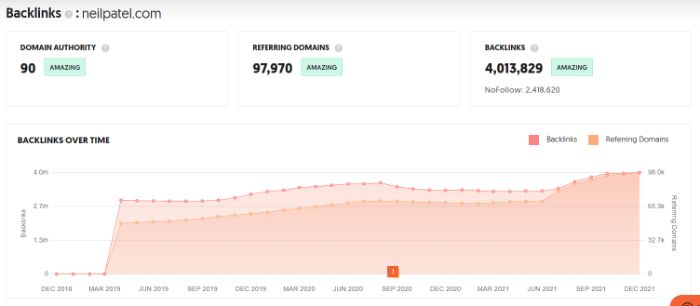
neil patel backlinks overview for seo with google

You can also get more granular and see each linking site, their domain authority, and anchor text they used to link to you:
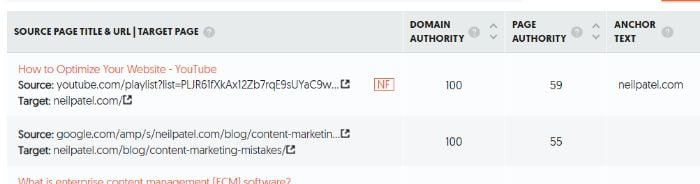
neil patel backlinks for seo with google

Tips to eliminate spammy backlinks:

  • Run an audit to see what backlinks your website is currently receiving.
  • Before you Disavow an undesirable backlink, try reaching out to the website and ask them to remove it.
  • Per Google, any websites that offer affiliate links to your site need to qualify the links – so be sure to ask any affiliates to add the correct HTML tag.

2. Build Your Brand

Since the late 2000s, Google has increasingly put an emphasis on brands. In particular, they look for brand signals as a way to weed out misinformation to provide more trustworthy results for each search. This makes it a critical ranking factor.

I, myself, saw a huge jump in traffic in 2016 thanks to one thing: the growth of my brand.
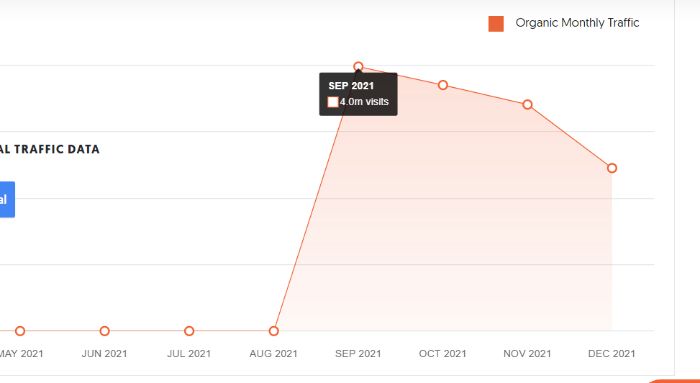
neilpatel.com monthly organic traffic for seo with google

When a brand is consistently represented across all of their platforms, revenue can increase by up to 23 percent. Branding also makes it easier to present your values and increase customer loyalty. 89 percent of customers are willing to stay loyal to brands who share their values.

With the establishment and growth of your brand, you will start receiving more traffic from non-branded terms as well as branded terms. That’s why I see millions of organic views each month!

Tips for building your brand:

  • Figure out what social platforms your target audience uses and tailor your strategy accordingly! 82 percent of Americans use social media, so you need to be comfortable using it to promote your brand.
  • Think about forming a partnership with a complementary brand. For example, Lego and IKEA formed a partnership that benefitted them both. Approach companies whose products or services complement your brand  and see if you can work together.
  • As you plan your brand awareness campaign, make sure to highlight your brand’s personality, story, and values. Talk about more than just what you sell. This will resonate with your target audience more!

3. Create Thought-Leadership and Strategic Content

Once you have solid, pillar content (i.e., content that targets relevant keywords) on your website, it’s time to think more strategically. You want to be more than just an information site, but an authoritative one. You can do so with thought-leadership and strategic content.

In fact, 54 percent of decision-makers say they spend more than one hour per week reading thought leadership content relevant to their business. At the same time, 71 percent say that less than half of what they read gives them valuable insights 

This means there is still a massive opportunity with this content. It requires you to look ahead and answer questions that aren’t even being asked yet. You want to speak directly with industry leaders and subject matter experts by getting ahead of the current state of things.

While this type of content takes more time and effort to create, it’s well worth it. When you create content that other brands look to, it builds your brand and increases your backlink portfolio.

Tips to create thought-leadership and more strategic content:

  • Look for trends on where your industry will be going in the next 5-10 years and make content that speaks to them.
  • Think about frequently asked questions in your industry that can be addressed with data. Identify topics where you have the capability and resources to provide relevant data points.
  • Do some internal or external research and create content that highlights your findings. This will help establish you as an industry leader which can lead to more backlink opportunities from other sites citing your content.
  • Set Google alerts to stay up-to-date on news and events that affect your industry. Be one of the first to write and present your views on the topic, backed by valuable insights.

4. Diversify Your Backlink Profile

What does it mean to diversify your backlink profile? In short, you want as many links as possible from as many websites as possible.

An Ahfrefs study that looked at more than 1 billion web pages found that 66.31 percent of them had zero referring domains and 26.29 percent of them only had one to three referring domains. Less than 0.1 percent of sites had more than 100 referring domains which is pretty eye-opening when you stop to think about it.

When getting backlinks, you want to make sure the type of anchor text copy used varies. Some examples on different variations to look out for include:

My backlink checker is an excellent way to get this information as I outlined in a previous section.
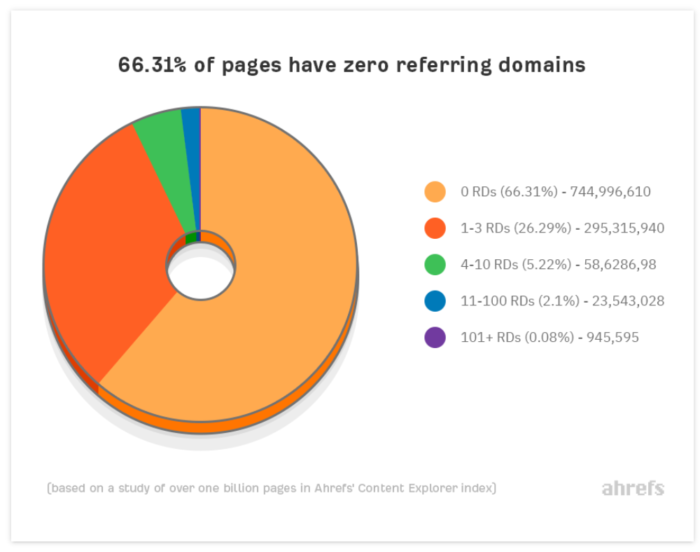
Dominate SEO with Google in 2022 with a better backlink profile

Tips to diversify your backlink profile

  • Try to get links from directories and other resource roundups as a way to diversify links.
  • Reach out to websites that would be a natural fit to your brand. Ask them to link to you and vice versa.
  • Run a backlink report on your competition and check where they get links from. Target those websites or similar ones to link back to you.

5. Use Subject Matter Experts to Increase Your EAT Score

EAT stands for expertise, authority, and trust.

An EAT score is one of the most important factors when determining page quality. While you don’t have to be an expert or authority on each topic you write about, you should be emulating those individuals to create content that gets a higher score.

47 percent of buyers will generally read three to five pieces of content before engaging with a sales representative. Connecting with subject matter experts or emulating their content increases the chances of a buyer engaging with your content before moving to the next stage.

Whether you’re creating thought-leadership content yet or not, you can still look to subject matter experts for help. While interviews with such people are best, they’re not the only way to “borrow” their authority.

You can also link to interviews done by other content creators, insert quotes from subject matter experts in your posts, or highlight other content forms the subject matter has done such as videos, podcasts, or infographics.

Tips on using subject matter experts to improve your EAT score:

  • Find subject matter experts through professional directories such as trade publications, searching on LinkedIn, and joining related Facebook groups.
  • Make sure your subject matter expert you focus on is the right fit for your targeting audience.
  • If your chosen subject matter expert doesn’t have a lot of time, be flexible with how you work with them. This could be by simply asking them to review your content for accuracy and then crediting them on the page.

Bad SEO Practices to Avoid in 2022

Now that we’ve gone through the most important ways you can dominate Google with better SEO strategies in 2022, let’s focus on some things you should avoid.

Not much has changed here, but all of these are still practices that can have a negative impact on your SERP rankings.

1. Keyword Stuffing

Keyword stuffing is the act of stuffing as many keywords, both direct and related, into a piece of content as possible. The idea is that the more keywords an article has, the more relevant the content will appear and the higher it’ll rank on SERPs. The exact opposite is true, though.

When a keyword appears too often on a page, the page will be flagged as spammy by Google’s crawl bots. This will negatively affect rankings.

The easiest way to avoid this is to keep keyword density to 2 percent. This goes for the main keyword but also related keywords on the topic.

2. Keyword Cannibalization

Keyword cannibalization occurs when two or more pages on your site are targeting the same main keyword. This is common on newer websites where the owner may think it’s better to split up larger pieces of content in order to create more pages.

For example, if the target keyword is “meringue” and they create one post on “How to Make the Perfect Meringue” and another post on “X Common Mistakes When Making Meringue.” To avoid cannibalization, a larger post should be created that includes both of those post titles as H2s. This is known as pillar content.

3. Duplicate Content

Somewhat related to keyword cannibalization is duplicate content.

Duplicate content is substantive blocks of content that match or are similar to other content elsewhere on the site or across the internet. The latter is also termed plagiarism.

To prevent Google from flagging content on your website as duplicate, use the following tips:

  • Create 301 redirects.
  • Keep a consistent URL structure.
  • Use top-level domains.
  • Use the noindex tag on syndicated content.

4. Exact Match Anchor Text

Similar to keyword stuffing, you don’t want exact match anchor text phrases to show up too often in your content. Why? It’s a clear signal to search engines that you’re trying to manipulate rankings.

To avoid this practice, you’ll first need to determine the current status (i.e. partial versus exact) of any and all links back to your site. You can do so with the Ahrefs’ Site Explorer:
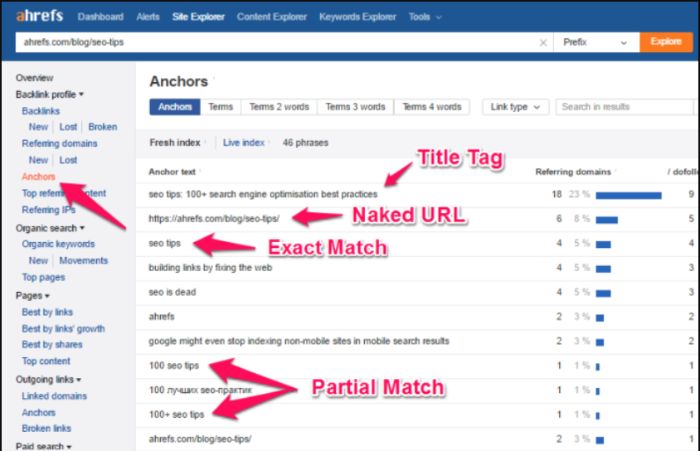
ahrefs anchors for seo with google

The goal is for only 10-20 percent of all referring domains to link exactly or partially.

If you’re not actively link-building, then it’s unlikely you’re in danger of this particular misstep. However, it’s good to keep a pulse on your backlink portfolio at all times.

5. Spammy Link Building

While we already covered this to some degree, it is still worth repeating. There is a right way to go about getting backlinks and a wrong way.

There are some obvious offenders, like link directories, blog comments, paid links, and link schemes. You should also reevaluate the relationship you have with any referring domains. Do they have good linking practices? Do they use only white hat SEO tactics? The answers to these two questions will go a long way in informing you of whether the continued relationship will be beneficial or detrimental to your backlink profile.

Frequently Asked Questions About SEO With Google

Is SEO free on Google?

Search listings are free on Google. Search rankings are based on Google’s algorithm and no one can pay for a better ranking.

How long does it take to optimize my website for Google?

Assuming you are using the most common practices as outlined above in the article, it can take some time to implement all optimizations on your website. How long will depend on the size of your site and manpower. As for how long it takes to start seeing organic results, the consensus is four to six months.

How can I dominate the SERPs in 2022 through SEO?

The key to any successful SEO strategy is to focus on white hat techniques that have been proven to work. These are all outlined above.

Are there major Google algorithm updates expected in 2022?

Google releases thousands of algorithm updates every year. As for major updates, one to look out for at the beginning of 2022 is the intention to add page ranking signals to desktop search. This is expected to be completed by March 2022.

Conclusion: Dominating SEO With Google

As much as things change when it comes to Google’s algorithm and SEO, one thing remains constant: relevant, high-quality content is always a solid place to start.

By implementing the 12 on-page and technical SEO practices above, though, you can be sure to dominate SEO with Google in 2022. Why? Because these techniques help you to improve your content for both users and crawl bots to ensure a clean, engaging experience.

Which of the techniques above will you implement on your website first?


from Blog – Neil Patel https://ift.tt/JYyVRP4Ox

Wednesday, 2 February 2022

Featured Results and Google’s De-duplication might be lowering your click through rate in the SERPS.

De-duplication refers to Google’s practice of removing an organic result if the same page appears in other sections of SERPs, like featured snippets and top stories.

De-duplication started with featured snippets when Google decided it was a bad user experience for their searchers to see the same page twice per a single search engine result page.

More recently Google implemented the same practice for their “Top stories” section. From now on, if your page appears in the Top Stories, it would lose its first-page organic position.

Jim Boykin, CEO of Internet Marketing Ninjas, and Ann Smarty, IMN’s analyst, get together to explain de-duplication and why it is not good news for SEO


De-duplication wasn’t met with enthusiasm in the publishing community for obvious reasons: We don’t know how many people would click on the links within those extra sections of search. By default, organic results are those that most people are likely to be searching and clicking.

The featured snippet, for example, traditionally serves as “quick answer” to a query. In many cases, it removed the need to click. In other cases, featured snippets are designed the way it is not easy to find where to click to get to the page.

There is no control over this

So far website owners don’t have any control over Google’s de-duplication. There’s no way to opt out and tell Google not to remove your page from organic position and put it in other extra sections of SERPs.

Google suggested using nosnippet meta tag to instruct Google you don’t want them to put your page in the featured box but that meta tag removes any snippets, including organic snippets, so that’s not a solution at all.

So far we can wait and hope Google will once give website owners a way to opt out of those newer sections of search engine result pages. As of now, we can just keep an eye on our click-through and diagnose whether the deduplication could have had an impact on any our organic traffic.

Hire us and we will keep an eye for you!

The post Featured Results and Google’s De-duplication might be lowering your click through rate in the SERPS. appeared first on Internet Marketing Ninjas Blog.


from Internet Marketing Ninjas Blog https://ift.tt/KGyO9Wjoq
via IFTTT

Tuesday, 1 February 2022

The Best Website Builders (In-Depth Review)

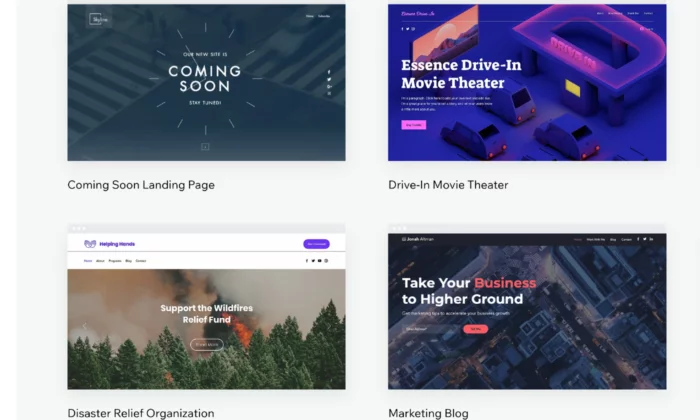
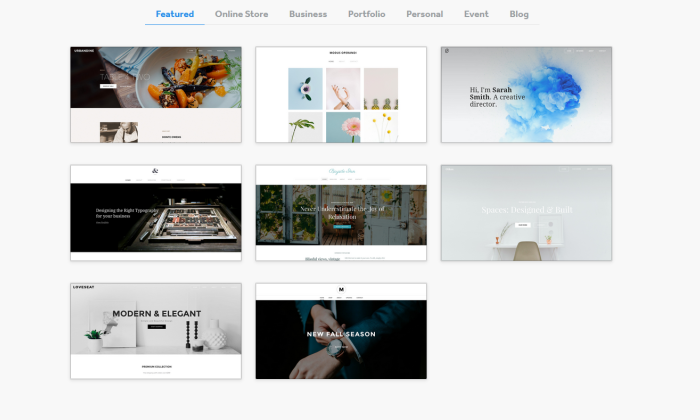
Wix templates for Best Website Builders

Disclosure: This content is reader-supported, which means if you click on some of our links that we may earn a commission.

I’ve been building websites for years. It’s way easier now than it used to be. You can go simple or take your site to the next level–no programming or design experience necessary.

There are a handful of popular options that will get you to where you want to go. However, the best website builders have different strengths and limitations.

I use WordPress because I can do exactly what I want and support millions of visitors to my blog each month. It might work for you, but some of my other top picks could work better, depending on what you are trying to do.

Here are the six best website builders you can start using today. I’ve included in-depth reviews to help you get a sense of why each product is so good.

Take control and manage every detail of your site. Or, use my number one pick to have the website build itself. Your call.

#1 – Wix Review — The Best for General Use 

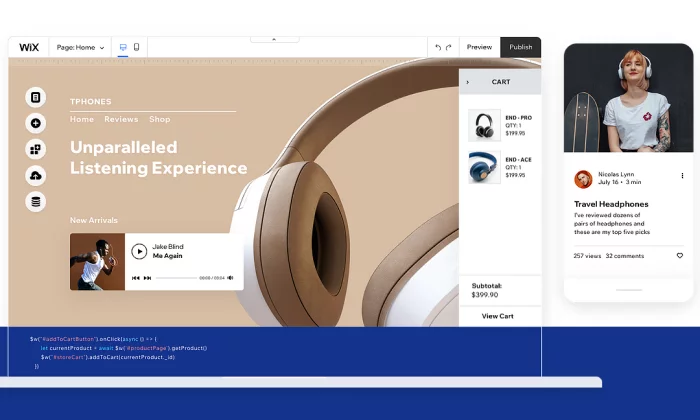
Wix splash page for Best Website Builders

Wix is a really easy website builder that can help you create just what you want. Start with one of its many, many templates and customize from there.

You don’t need any web design experience to put together a sharp website, whether your goal is a blog, company page, or online store. Wix is a real Swiss Army knife solution and it’s easy for anyone to use, to boot.

In fact, it’s so easy that you can sit back and let Wix build your site for you. If you don’t feel like dragging and dropping site elements into place, simply answer a few questions and Wix’s Artificial Design Intelligence (ADI) will whip up what you need in just a couple clicks.

Wix really goes the extra mile to enable anyone to build an effective website and offers a lot of extras to help them gain traffic.

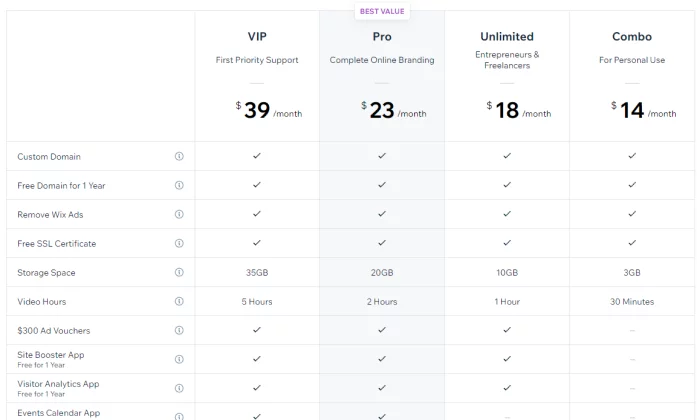
Most of the Wix paid plans give you $300 in free digital ad vouchers so you can market your new blog or ecommerce store with no extra spending on your part.

Plus, there’s a lot more marketing you can do for free to reach the first page of Google through employing my SEO strategies for Wix sites.

On top of all of that, Wix’s paid plans are quite competitively priced:

Wix pricing for Best Website Builders

Pros of Wix 

Here are the best things about Wix:

  • Powerful app market – Wix has an enormous amount of add on features that you can access through their app market. Want to book meetings directly on your site? They have got you covered. Want a live chat pop up box? Simply click and install it on your site.
  • Covers every need – Wix covers most of the needs of people looking to set up a website. This includes setting up an ecommerce store, blog, or even just a simple information website.
  • Lots of templates – Wix has a wide variety of templates that you can choose from to get your website up and running quickly. Their templates are well designed and take the user experience into consideration. 
Wix templates for Best Website Builders

Cons of Wix 

Here are the weaker parts about Wix:

  • No migration – A huge downside with Wix is that you’re locked in, so you cannot take the code of your website somewhere else later on. This can cause problems if you quickly need to scale your business. 
  • Jack of all trades, master of none – Wix’s main strength is also its weakness. Although it has many features, it cannot compete with the quality of niche website builders.

Who should use Wix?

  • Small businesses –If you are offering a service such as legal advice or marketing, Wix is a solid website builder that will handle all of your needs. If your focus is selling products online, avoid Wix. 
  • Freelancers and professionals – In a similar manner, Wix is great for professionals who want to showcase their personal brand. It will allow you to cover all the potential bases of highlighting your portfolio, such as taking meetings and even blogging.

Try Wix for free today.

#2 – Zyro Review — The Best for Multipurpose Business Sites

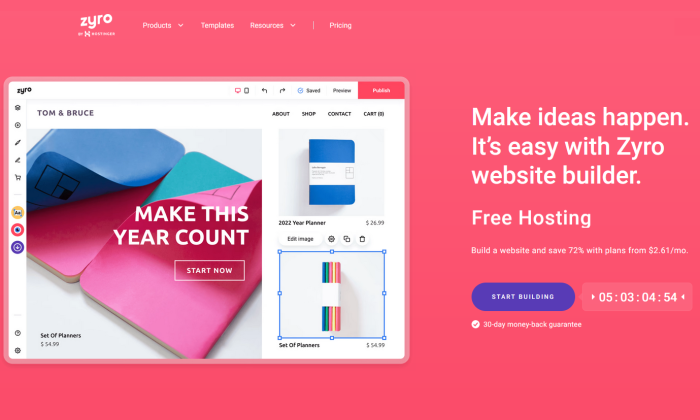
Zyro main homepage for Best Website Builders

For many businesses, building a useful website isn’t as simple as committing to a web store or a simple one-pager with contact information. It can be frustrating to have to commit to a site builder that has separate plans for standard pages and ecommerce.

Zyro makes it easy to take your business website in any direction you need.

And “easy” is the operative word for the overall experience of building a site on Zyro.

After signup, you can choose to build your website from scratch, work from one of 140 templates, or use their AI-powered site builder.

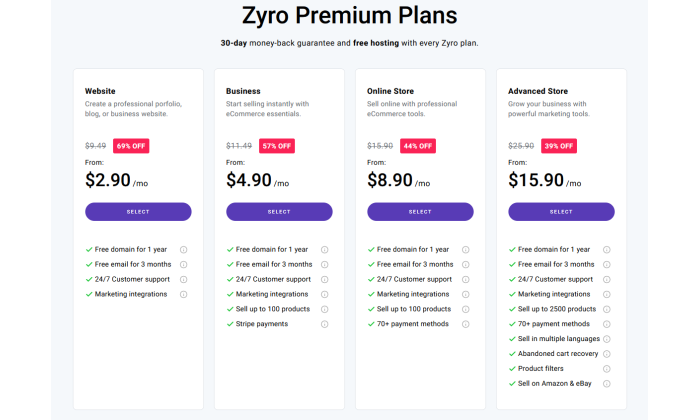
Once your site is built, Zyro’s pricing plans encompass all of the features you could need. From the basics, like blogging tools and email service, to specialties like ecommerce, live chat, inventory management, and remarketing, you can get it all in one package from Zyro.

If you need something basic with room to grow, you can start on the cheapest plan.

Or, if you want your business website to handle content marketing, online sales, and customer service right out of the box, opt for Zyro’s higher-octane plans, which still come at a price that is near or better that of the other big names in ecommerce builders.

Plus, if you sign up using this link, you’ll get an even better deal to start with.

Zyro pricing page for Best Website Builders

Pros of Zyro

  • Great for novices or those in a rush – With Zyro’s site building options, you can have AI whip up a site for you in minutes with just a few inputs on your end. Or, start from a beautiful template and make easy tweaks to have it match your brand identity. Plus, you’ll have the benefit of Zyro’s 24/7 support if you ever get stuck.
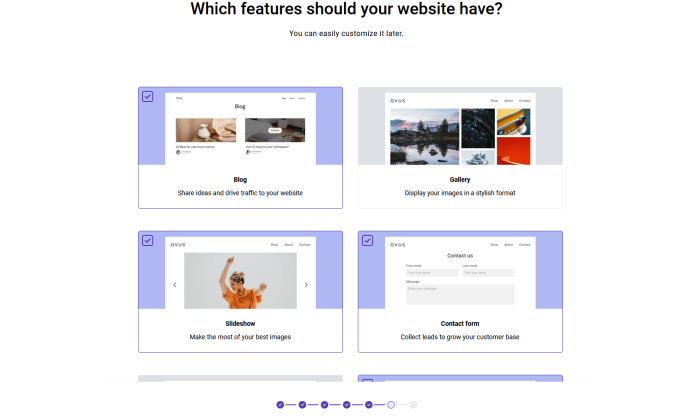
Zyro page builder features for Best Website Builders
  • Free hosting on every plan – Zyro is a subsidiary of Hostinger, one of the best web hosts available today. So, not only do you get hosting taking care of on every plan, but you get the reliability and performance that Hostinger is known for at no extra cost.
  • Constant improvements to the platform – It’s reassuring when you choose a website builder that cares enough to keep adding new features and improving the overall user experience. Some excellent features that Zyro has recently rolled out include scheduling blog posts to publish later, email linked to your domain, support for multiple authors on a blog post, and improved formatting.
  • Helpful growth and customer relationship features – On any of Zyro’s four plans, you can wield Facebook and WhatsApp messaging embedded on your site, create remarketing lists for failed conversions, collect visitor information via Facebook Pixel and Google Analytics and Tag Manager, and integrate apps with ease, such as calendars for appointment scheduling.

Cons of Zyro

  • No free forever plan – Unlike some other site builders, Zyro doesn’t have a completely free package to offer. You can build and test your site completely for free with a Zyro account, but in order to publish it to the web and have it available to visitors, you’ll need to pay for a plan. You do get a 30-day money-back guarantee, though.
  • Limited products – Other ecommerce site builders offer you a generous or unlimited number of products you can sell. Three Zyro plans support listing products on your site, but two of them cap your allotted number at just 100.

Who should use Zyro?

  • Businesses who need more than a web store or contact page – If your company wants an all-in-one solution for blogging, ecommerce, and customer service without breaking the bank, Zyro offers affordable plans that tick all the boxes.

Get started on a Zyro plan today.

#3 – Weebly Review — The Best for Beginners 

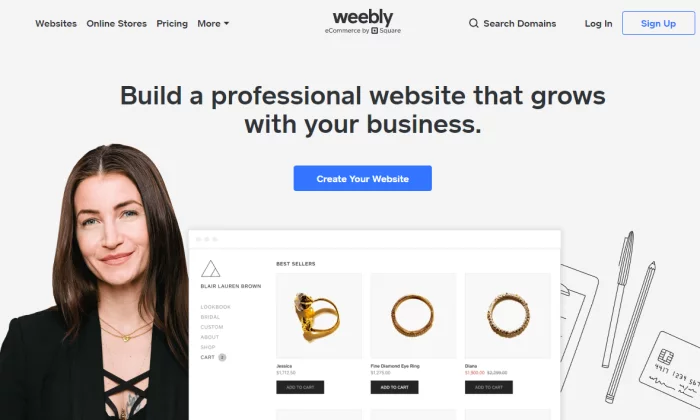
Weebly splash page for Best Website Builders

Not far behind Wix is Weebly, which is a drag-and-drop site builder that prides itself on its ease of use.

Weebly delivers site building with a simple user experience and short learning curve. It doesn’t bombard you with features or a complicated interface, making it fantastic for anyone building a webpage for the first time.

Despite being so beginner-friendly, Weebly does not skimp on features. Bolstered by being acquired by Square in 2018, all Weebly plans allow you to add ecommerce features to your website with the same level of ease.

Even its free plan lets you add a shopping cart and unlimited products to your Weebly site. It’s fantastic for local stores, because you can also utilize inventory management and in-store pickup on all site builder plans.

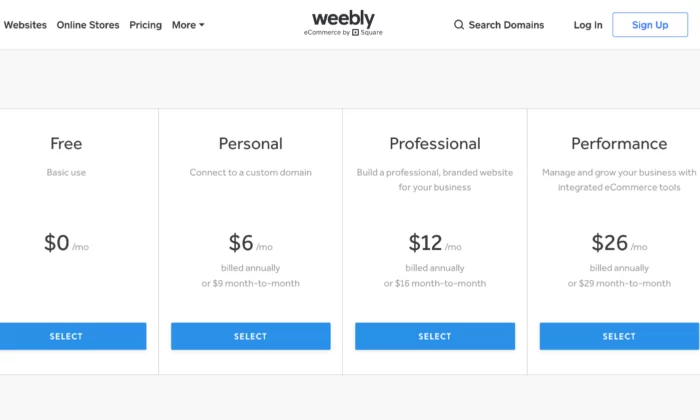
Weebly pricing for Best Website Builders

Pros of Weebly

Here are the best things about Weebly:

  • Simple and easy to use – Weebly has a simple interface with drag and drop mechanics that just work. Everything feels natural and intuitive. It also helps that they have an onboarding mechanic with email and popup explanations when you get started.
  • Migration – If you decide you want to host your own website, Weebly makes it easy for you to take your site off their platform. 
  • Affordable – Compared to other generalist website builders, Weebly has one of the most affordable pricing structures, including a feature-rich free forever version. 
  • Great customer support – Weebly has a powerful customer support team who are active every day of the week. They typically reply within 1 day by email or even quicker via their live chat or phone lines.
  • Online store capability – Weebly allows you to set up a web store powered by Square. If you’re already using Square as a payment processor, Weebly allows a cheap and easy way to start selling products online.
Weebly themes for Best Website Builders

Cons 

Here are the weaker parts about Weebly

  • Lacks diversity of function – The tradeoff of using Weebly is that it is not as powerful as Wix. For example, there are fewer features. In addition, some features such as their content management system and analytic tools are much weaker than competitors. 
  • Limited customization – As Weebly uses a drop and drop interface and themes, the customization can be quite limited. Wix also has this problem, but they have more tools at their disposal to solve this issue.
  • Scaling problems – Weebly is simply not a great platform if you have plans to grow your website in a significant way: it is just a simple website builder for day to day users. 

Who should use Weebly?

  • People who need simple websites – As a rule, you should use Weebly if you are not very tech-savvy and want to set up a simple website quickly. One category of users would be associations or clubs who want to set up an information site about their group.

Try Weebly for free today.

#4 – Web.com Review — The Best for Building Landing Pages

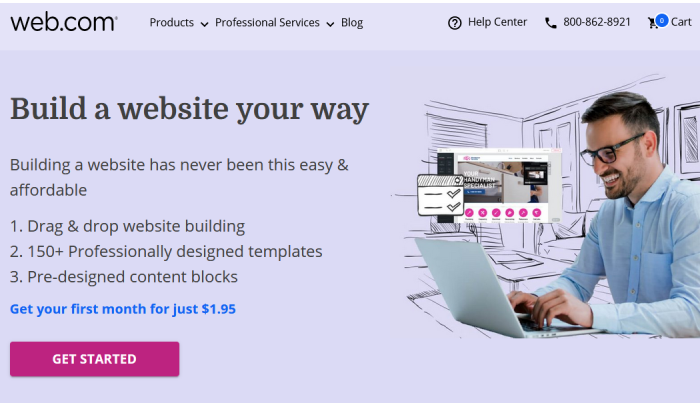
Web.com site splash for Best Website Builders

Web.com is a lot like Weebly—it’s fantastically easy to use, with an intuitive drag-and-drop editor that lets you mold any available template to your needs. And it comes at a great price and with great support.

But I think Web.com’s website builder shines brightest for a particular need: setting up landing pages and single-page sites in a snap.

Seriously, it’s so easy with Web.com—start from one of their 126 templates, then just tweak the colors, swap out some imagery, replace the copy, and add a custom form. Voila, you have a gorgeous landing page, done in about 15 to 20 minutes.

You can build a ton of unique landing pages in one sitting or make simple or temporary websites with ease. And at a competitive price, too.

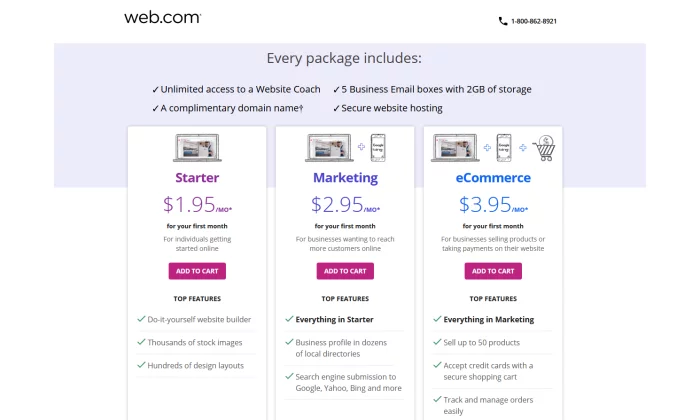
Web.com pricing for Best Website Builders

Pros of Web.com

  • Email accounts – Web.com gives you five email accounts to match your domain. That’s a boon for folks building landing pages with Web.com—not only can you get multiple sites up in a flash, but each can have separate associated email addresses for doing split testing or for collecting contest entries in a place where they won’t overwhelm someone else’s inbox.
  • Free domain for one year – Web.com will throw in one year of an available domain for free when your purchase one of their website builder plans.
  • Very affordable – Everything I mentioned above is in the Starter plan, which starts at $1.95 for your first month and then is $10 per month after that. You can save big, though, if just go for a full year at checkout—that’s just $50 for the whole 12 months, a savings of over $60.

Cons of Web.com

  • No building from scratch – You are somewhat penned in by the templates available to start from. It’s easy enough to customize them far away from the original look, but some elements are permanent or at least inflexible, which can make it harder to quickly build the exact site you had in your mind.
  • Limited eCommerece features – Web.com also has Marketing and eCommerce plans for their website building service. They’re a little more expensive and more appropriate for standalone business sites, especially for local and small businesses. But more advanced selling features are missing overall.

Who should use Web.com?

  • Salespeople and marketers working on multiple campaigns – If you want to knock out landing pages in no time flat and get the useful benefits of email and domain included, go with Web.com and enjoy every bit of value you get from their Starter package.

Get started with Web.com today.

#5 – Shopify Review — The Best for Ecommerce

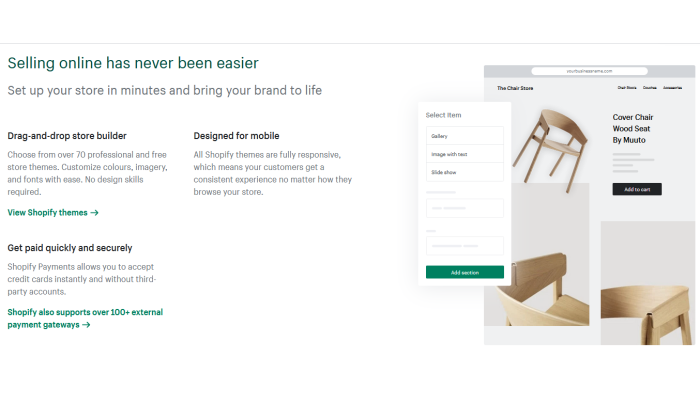
Shopify sell online splash page for Best Website Builder

If you plan on selling any type of product online – from jewelry to electric scooters – then your best bet will be to use a dedicated ecommerce platform and website builder. 

Without a doubt, the number one in this category is Shopify. The platform powers over 1 million merchants in 175 different countries, and is the third-largest online retailer in the US, trailing behind only Amazon and eBay. 

The Shopify software represents a complete end to end platform that allows you to set up, manage, and promote a store online. You can easily list your goods for sale, take payments, and fulfill orders – all under one roof. 

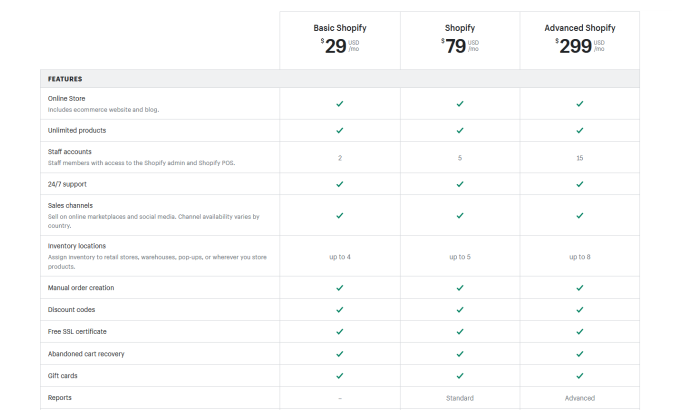
Shopify pricing for Best Website Builders

Pros 

Here are the best things about Shopify:

  • Ecommerce specialty – The main draw of Shopify is that it is a niche website builder focused on setting up an ecommerce store. This means that all their features and processes are geared toward that end, resulting in a powerful platform that can help maximize sales. 
  • Security – If you are going to be handling transactions, you need ways to keep your site safe and customer data secure. Shopify stores have strong cybersecurity measures in place which a self-hosted website would typically lack. 
  • Integrated sales channels – Shopify has strong integrations with other platforms, such as Facebook and Amazon. This allows you to streamline your sales by managing your catalog on each platform under one roof. 

Cons 

Here are the weaker aspects of Shopify:

  • Niche focus on ecommerce – Because the focus is on ecommerce, Shopify lacks some of the features and finesse of other website builders. For instance, their content management system is very limited compared to WordPress.
  • Transaction fees + monthly fees – With each sale you make on Shopify, there is a transaction fee that ranges from 2.4% – 2.6%. Combined with payment provider fees, this can eat into your margin. 

Who should use Shopify?

  • Brick and mortar stores – If you have an in-person store and are looking to sell your products online, Shopify will offer you a solid footing into the digital world.
  • Ecommerce startups – Entrepreneurs that are starting new brands or drop shipping will also benefit from the quick end to end set up that Shopify offers.

#6 – WordPress Review — The Best for Content Management

One of the oldest and most reliable website builders is WordPress. The platform has come a long way since it launched in 2003 and is the most popular content management system on the web today.

In fact, WordPress powers a whopping 37.6% of all websites. 

As WordPress was around during the earlier days of the web, its focus revolved around content, which was the most prominent form of website at the time. 

It maintains that focus to this day, with WordPress having arguably the best content management system out of all the different website builders.

An important caveat is that WordPress is divided into platforms:

  • WordPress.org – This is the open-source (free version) of WordPress that comes with greater flexibility, but is harder for non-technical users.
  • WordPress.com – This is the paid version. You can get help with the installation of themes and management but is generally less customizable.
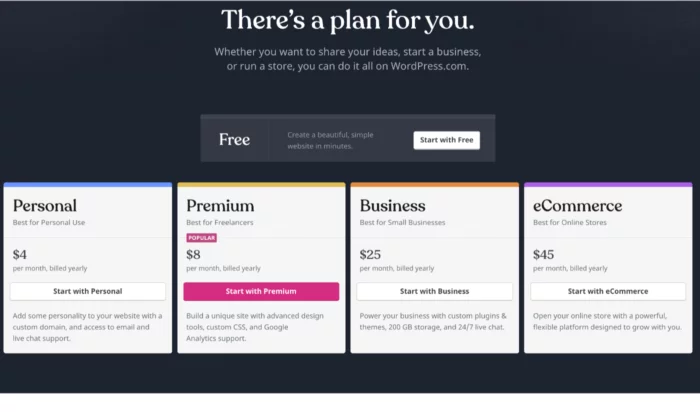
Wordpress.com pricing for Best Website Builders

Pros 

Here are the best things about WordPress:

  • You have full control – Unlike other website builders, WordPress is fully customizable as the site is developed directly with code, as opposed to drag and drop interfaces. This means that you have much more flexibility in terms of design and function.
  • Robust blogging and CMS – WordPress is built front the ground up with content in mind. It has some of the best tools for publishing and managing content including team management, advanced scheduling, and categorizations. 
  • Lots of plugins – There are over 52,000 plugins available for WordPress. You can measure and boost your SEO with plugins such as YoastSEO, or you could even add a new function such as a shopping cart. 

Cons 

Here are the weaker aspects of WordPress:

  • You may need help – As your WordPress site is developed with code, you will likely need help to install and update your WordPress theme. This can come with a hefty cost, particularly if you want ongoing changes.
  • Learning curve – If you want to manage and update your site yourself, it can take some time to learn how to do so. Managing and scheduling posts are relatively easy, but updating how your site looks or installing a plugin is much more difficult.
  • Security issues – As your WordPress site is self-hosted, you are more vulnerable to cybersecurity issues. Some of the plugins for WordPress also can act as a risk as well. 

Who should use it

  • Bloggers – If writing is your main focus, then WordPress is a great choice. The platform is designed for bloggers, optimizing content management, and SEO. WordPress will allow you to scale and get the most out of your content.
  • Content centric businesses – Likewise, if you are building a business that is content-heavy, such as a new website, WordPress will help you to manage the operational side of content production much easier. 

What I Looked at to Find the Best Website Builder

Now it is time to take a closer look at some of the specific features to consider when evaluating a website builder.

Remember that although some website builders may fall into the same category, each may suit your needs differently.

For instance, you may be setting up an online shop and your primary consideration may be a low learning curve, whereas somebody else may be thinking about a platform that can allow them to scale easily. 

Here are some features you should consider.

Ease of use 

Things to consider:

  • Intuitiveness – Some website builders are easy to use and have simple interfaces with drag and drop functionality. This is useful as you won’t have to Google changes you want to make with the tool.
  • Learning curve – If you are not great with technology, it is unlikely you will want to spend hours learning how to set up a website. Some website builders are much easier than others.
  • Setup time – Similarly, you may want to get your site up and running immediately, particularly if it is an event you want to promote. 
  • Ongoing management – Needing external help to manage your site defeats the purpose of a website builder. It must be easy to manage in terms of updates. 

If you are new to setting up online or are time-constrained, how easy it is to get started will likely be your primary concern. 

Scalability 

Things to consider:

  • Custom code – Website builders use standardized code, which are the building blocks of a website. These allow you to easily create a site with various features. In some cases, however, you may need your own custom features and the ability to write your own code.
  • Migration – At some point, you may want to host your website yourself. However, not all website builders allow you to easily make this move. In some cases, you may have to redevelop your site from scratch.
  • Integrations – You will probably create new goals as your website grows, such as running ads or embedding social feeds. Some website builders are more compatible with other platforms and are easier to integrate.

You should think strongly about scalability if you are already an established business looking to create an online presence. This is particularly true if you are already selling products at scale in the real world. 

Startups in the fundraising process and are looking to scale fast or even change core features of their product should also take caution here. 

Support 

Things to consider: 

  • Support channels – You will need to consider the different ways you can get in touch with support teams such as live chat, email, and phone. In-depth FAQ’s (frequently asked questions) are also important.
  • Responsiveness – If your site breaks at 5 PM eastern time, but their support only works European hours, then you are in trouble. Some teams may also respond much quicker than others. 
  • Engagement – Unfortunately, some support teams are useless. Maybe they are being paid very little so they do not care, or they are overworked. Either way, you need support that can actually solve your problems.

If you plan on running a site with a lot of visitors and it happens to go down, the last thing you want is an unresponsive support team. This is especially true if you plan on driving a lot of traffic at a given time.

A website builder with a strong support team is also useful if you are just getting started online, considering you may still get stuck, even with simple interfaces. 

Price 

Things to consider: 

  • Cost – Some website builders can be more costly, with some reaching upwards of $299 a month (for landing pages, for instance). Others are permanently free with the option to upgrade for a small monthly fee. 
  • Trial – Before you commit, it can be useful to take advantage of a trial offer to play around with the tools. You will likely find that some are a better fit than others.
  • Hosting & domain – Most website builders will host your website on the web, which is typically included in the price. Some may also offer a domain as part of the package. Otherwise, you would have to purchase these yourself. 

If you plan on making money from your website, either by selling products directly or to capture leads, then price should not be a key consideration for you. Make an investment in the best service for your needs. 

However, if you just want to set up a small information site, then you could do with the cheapest options. 

Generally, website builders that have feature depth are typically more expensive as they solve more specific problems. 

Features 

Things to consider: 

  • Ecommerce shop – If you plan to sell things online, you need a website builder that allows you to do so. Consider sub-features such as payment processing and product catalogs.
  • SEO – Some website builders have tools that allow you to rank better in Google searches.
  • Marketing tools – You may also need other marketing tools, such as forms, pop-ups, and chat boxes.  
  • Community – In some cases, you may want to expand your website into a community where people can communicate and network (otherwise known as a forum).
  • Analytic tools – Website builders may also offer analytic tools that help track traffic on your website or at least integrate with other tools that do.
  • Niche features – Perhaps there are some special features you are looking for such as the ability to set up a crowdfunding campaign in addition to having a standard website.

The features of a website builder are the main thing to consider when deciding which route to follow. This is because they will have the most impact on your specific goals.

For instance, if you want to set up a landing page for a specific product, trying to optimize with a generic site builder will be a pain. It will probably lack the in-depth analytic tools that a dedicated landing page builder would have. 

Also keep in mind that there are some features that you may not need now, but you could need in the future, such as if you plan on running paid ads to your blog posts. 

Design 

Things to consider: 

  • Themes and templates – Website builders allow you to start with a predesigned website that is customizable to various extents. Some themes serve different purposes in terms of branding and utility. 
  • Mobile-friendliness – You will need to ensure that your website builder automatically makes your website easy for mobile users, typically with responsive design.
  • Customization – It is likely you will want to make some changes to your template. You will need to consider the various customization tools available. 

Regardless of your goal, you should always be concerned with providing a great user experience to the people who are visiting your site. It simply makes logical sense – if your site is hard to navigate, people won’t get the most out of it.

The actual design and branding are important too. For instance, some designs are more corporate while others are more welcoming. There may be a design template that really suits your particular brand.

And if you are selling something, you need to ensure that the design is optimized to increase conversions.

Now that you have a good understanding of the types of website builders and the features to look out for, it is time to take a look at some of the best website builders on the market. 

Conclusion

An important thing to keep in mind is that the website builders listed above can serve multiple functions. Now that you have a solid overview, it’s time to look into the details of each platform.

Use my recommendations as a guide a guide to get started:

  1. Wix — Best for general use
  2. Zyro — Best for multipurpose business websites
  3. Weebly  — Best for beginners
  4. Web.com — Best for building landing pages
  5. Shopify — Best for ecommerce
  6. WordPress — Best for content management

Follow the links to further explore each option. The best choice for you will come down to both your needs at the moment and where you plan on taking your website in the future. 

After reading reviews like this one, make sure you take a step back and put your particular needs at the forefront of the decision before you commit. 


from Blog – Neil Patel https://ift.tt/HSsgneBRU

How to Improve Your Conversion Rate By 50% in One Day

How to Improve Your Conversion Rate By 50% in One Day

Conversion rates are the lifeblood of any online marketing campaign.

Whether you are an experienced digital marketer or new to the field, understanding, tracking, and increasing conversion rates all play a big role in the success of your website.

In order to hit target sales, you need to draw in audiences—and then convert them. But what’s the average conversion rate across the board? What goals should you be aiming for with your advertisement or content strategy?

It all depends on your niche, the marketing platforms you use, and your relationship with your customers. Typically, 2-5 percent is considered an average conversion rate.

WordStream found the standard median conversion rate is 2.35 percent.

The data also shows the top 25 percent of websites in an industry convert at 5.31 percent or higher. If you want to be in the top 10 percent in your niche, aim for a conversion rate of 11.45 percent.

Why Do Conversion Rates Matter?

Conversion rates are easily one of the most important things to track to ensure the success of your marketing campaigns—and stop you from wasting your budget.

You run a marketing campaign to get people to do something like sign up for your services, buy your product, fill out a lead gen form, give you their email, or follow through on some other CTA.

Essentially, you market in the hopes that people will do what you want them to do and eventually produce profitable revenue for your company.

How will you know if your strategy is working?

Conversion rates!

A good campaign will get a lot of people to take action and convert. An ineffective campaign won’t.

If your conversion rate is seriously low, you’ll know it’s time to re-evaluate your marketing plan. Similarly, if your conversion rate is in the average to high range, you’ll have a better idea of what’s working.

Unfortunately, if you think tracking your conversion rates to find ways to increase them is too much work, you’ll end up wasting your time and money on the wrong campaigns.

If you never take the time to see what makes your users convert and where they bounce, it’ll be harder or even impossible to make your marketing campaigns more effective.

Your conversion rate matters.

1. Add More Social Proof to Your Site

Your audience won’t always blindly believe what you say. So, if you’re claiming something, you better back it up with proof.

Research shows adding social proof to your site will rapidly improve customer trust and eventually increase your conversion rate. In fact, 97 percent of consumers look at reviews before making a purchase and 83 percent of people are more likely to trust a review instead of an ad.

WikiJob was able to increase their conversions by 34 percent just by adding prominently-displayed testimonials to their site.

Here’s how you can add social proof:

  • Add customer reviews: Every e-commerce site has a customer reviews section because 93 percent of customers read online reviews before buying a product.
  • Include case studies: Case studies in the form of stories or blog posts can help position you as a genuine business making a real difference in the world.
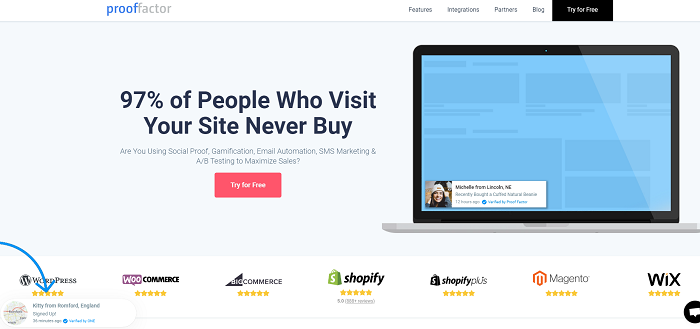
  • Use social proof pop-ups: Add pop-up notifications to your sales page to show user activity. For instance, here’s an image from Proof Factor (a social proof popup app) to show what these popups can look like.
How to Increase Your Conversion Rates - Add More Social Proof to Your Site

2. Shorten Your Forms to Increase Conversions

Imagine you find an interesting e-commerce store with great products at affordable prices. The only problem? It requires long forms for you to sign up or get more information.

Long forms can help you learn important details about your customers. However, think about how annoying it might be for users to spend a lot of time filling so many fields when all they want is the information or to buy the product fast.

To reduce this frustration, and lower bounce rates, consider shortening your forms to only collect the most essential information. Whether it’s a newsletter signup or access to a special offer, keep your form short and sweet.

According to a test completed by Marketo, their conversion rate with longer 9-field form was 10 percent. The same form’s conversion rate jumped to 13.4 percent when the number of fields was reduced to 5.

Here’s how you can shorten your forms:

  • Only collect essential fields first: Focus on the essentials when starting your relationship and ask for any other information via email, surveys, or follow-up calls.
  • Collect information via a third-party account: If you can, add the option to sign up through an account like Google so they don’t have to enter their information each time. This way, you make it easier for users to find what they need, making them more likely to buy from you.

3. Keep It Super Simple (KISS)

Shortening your forms is not the only thing you can do to make the buying process easier for potential customers.

You can simplify the whole user experience to increase your conversion rate.

People have much shorter attention spans today than they did just 10 years ago. Etsy did an experiment on user experience where they added 160kb hidden images to intentionally slow down some of their mobile pages. They saw a 12 percent increase in bounce rates.

Keeping the process simple goes beyond just UX design and load speeds. 67 percent of users will abandon a form if they encounter any complications when completing it.

Here are some ways to keep things super simple:

  • Offer clear instructions: Where should they click? What information should they enter? How do they find the right color/size?
  • Make your CTA obvious: Have properly positioned buttons. The shopping cart should be easy to find and edit. The next step in the buying process should be obvious even to the most new-to-tech user.
  • Don’t offer too many options: It’s tempting to offer a lot of choices, but sometimes this can work against you. Don’t confuse the users. Keep it simple. Add filters to help them navigate through the choices.

4. Don’t Require a Login

Have you heard of the famous $300 million button story?

In a nutshell, it says customers don’t want to spend a lot of time registering and logging in to websites when they just want to buy a product.

As one customer in the study said, “I’m not here to enter into a relationship. I just want to buy something.”

This is true for most e-commerce sites.

If you require customers to log in before they make a purchase, there’s a chance they’ll leave.

In fact, a study by Baymard Institute found that 37 percent of users will abandon their checkout altogether if they are forced to create an account. The same study showed that 38 percent of the e-commerce sites looked at didn’t even offer users the chance to create a temporary account before finishing their order.

Why risk the lower conversion rate for something so simple?

Here’s how to avoid requiring a login:

  • Guest shopping: Let your customers shop as a guest without creating an account.
  • Include clear instructions: Make it clear to users that they do not need to create an account to shop with you by including a clear, clickable “Checkout as Guest” button.
  • Make fields optional: Mark login or sign-up fields as “optional” so it’s clear users have the option of making purchases as a guest.

5. Meet Customer Expectations

Having a good product to sell isn’t always enough. If you want to increase your conversion rate, think about how you can meet your customers’ expectations.

In PwC’s future of CX report where they surveyed 15,000 customers, they found that 1 in 3 would leave a brand they lover forever after only one bad experience. The same report found that 92 percent would forget the company after two or three negative interactions.

Some reports even show that as much as 66 percent of customers can’t remember the last time a brand exceed their expectations.

Here are some tips to continually meet (and exceed) customer expectations:

  • Run experiments: Experiment with user testing tools to see what customers like and dislike before making big changes.
  • Ask for feedback: Offer an incentive to some of your customers to give you feedback on their experience.
  • User testing platforms: Invest in user testing platforms like TrymyUI, Userlytics, Maze, etc. You can use heatmaps to find what appeals to first-time or repeat visitors and which areas are glossed over.

Once you have this information, edit your website to match user expectations.

Make the user experience as satisfying as you can so you can increase your chances of converting the visitor.

6. Look Past Initial Testing Results

A/B testing is the cornerstone of most effective marketing campaigns. That’s not all though.

According Business Insider, the market demand for A/B testing software is expected to exceed $1 billion by 2025.

To increase your conversion rate, you need to look past initial testing results. For example, one change might lower your conversion rate on the surface, but it might make the converting users spend more money. In this case, the change is good even if it has lowered your conversion rate.

Similarly, some changes might improve your conversion rate but make you less money. If this happens, undo the change or try something else.

The more you experiment, the more you’ll find what works and doesn’t work for your business. 77 percent of marketers conduct A/B tests across their sites regularly, with 60 percent of those tests being on landing pages.

Keep tweaking your website based on your data to see conversion rate increases over time.

Here’s how to know which testing results are important, and which to ignore:

  • Pay attention to your revenue: Keep a close eye on how your tests affect your bottom line and revenue, not just conversions.
  • Take a holistic approach: Think about your testing results holistically.
  • Run tests in a good sample size: Make sure you run your test for a decent sample size in order to make sure the results you see can be trusted.

7. Make Data-Backed Decisions to Increase Conversions

You know you need to make changes, but what kind of changes? Whether you’re A/B testing, or just trying a new user experience to increase your conversion rate, it’s important to make data-backed decisions.

The demand for more data-driven decisions is growing. 91 percent of companies say that data-driven decisions are important to the future growth of their business and businesses that use big data experienced a 8-10 percent increase in profit along with a 10 percent reduction in cost.

It can be tempting to copy what others are doing or make additions based on what you think is trending. Don’t do that. Rather, use a tool like Ubersuggest to see what’s working for your site.

For example, you can use Ubersuggest’s Keyword Tool to find relevant keywords to target in your industry.

You can also use the Ubersuggest SEO Analyzer Tool to find gaps in your site’s optimization.

Here’s what else you can do to make better business decisions using data:

  • Look at trends with your data: Don’t get too observed in just the numbers and make sure to take a look at trends in your industry or area that might have influenced results.
  • Don’t look at everything: It can be easy to get distracted by every data point that relates to your website but only focus the metrics that drive your business.
  • Get input from other departments: Before making big changes on your own, connect with other departments to see if what you propose makes sense to them.

8. Perform an SEO Audit

You can have the best user experience in the world, but if your website is slow or you aren’t getting indexed by google, users won’t even find you.

The more traffic and views your website gets, the higher your conversion rate will be. On average, the first ranked webpage on Google has a CTR of 31.7 percent. At the same time, only 25 percent of users even make it to the second page of Google which doesn’t even include any clicks that might occur beyond the first page.

If you want to get more clicks and rank higher on Google—and get more conversions along the way—you should improve your SEO.

Fixing this is fairly easy. Perform an SEO audit.

This will help you find what’s preventing your site from ranking higher. Then you can fix the issues one by one to boost your organic traffic and increase conversion rate.

Not sure how to perform an SEO audit? Worry not! Here’s how:

9. Localize or Personalize Content

Who doesn’t love content tailored just for them?

Data by Accenture shows 91 percent of consumers say they are more likely to shop with brands that provide relevant offers and recommendations.

Research by SmarterHQ shows 72 percent of consumers say they only engage with personalized messaging.

These stats prove the power of localized, personalized content and that they shouldn’t be taken for granted.

Here’s how to offer localized and/or personalized content:

  • Relevant content: Make sure you share relevant content content with users that connect with where they are in their buyer’s journey.
  • Personalize offers: Personalize offers and give unique discounts to each person based on their location, customer behavior, or how they interact with your site.
  • Local SEO optimization: Make sure that you optimization your website and content for local SEO to reach more people in your location.

Actions like these can increase customer trust, boost the number of recurring visits and eventually increase your conversion rate.

10. Add a Live Chat to Drive Conversions

Say a visitor loves your product. They really want to buy it, but they just have one question. It’s the only thing holding them back from converting right away.

How do you help them?

Add a live chat option to your website.

Studies show live chat can increases conversions by as much as 20 percent. Research also shows that 38 percent of people made a purchase right after a positive exchange with a live chat agent and that chatters in general spend 60 percent more per purchase than non-chatters.

Today, with the abundance of free and paid tools available in the market, setting up a live chat feature is pretty easy.

Live chats can be used for answering common customer questions, resolving complaints, or even tracking orders. You’re only limited by your creativity.

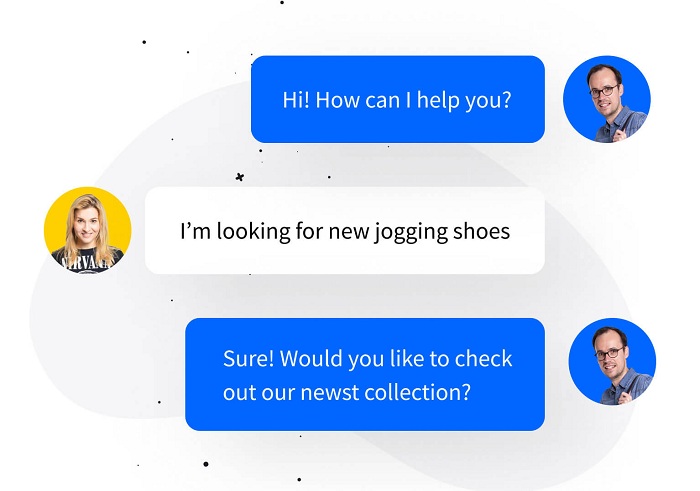
Here’s an example of a live chatbot by livechat.com:

How to Increase Your Conversion Rates - Add a Live Chat

The best part? You don’t even need to hire people for this option. You can use bots to answer recurring questions and program the feature to offer other resources if a question can’t be answered directly.

This way you’re saving money and also ensuring the customer is satisfied. What happens when a customer is satisfied? They’re more likely to convert!

Here are tips for setting up live chat:

  • Invest in a chat tool: Use a tool like ZenDesk to create custom scripts that will answer most user questions.
  • Determine how your site will use live chat: Is it to provide better customer service? To make it easier for customers to purchase products? To answer frequently asked questions? Consider testing the chat in different ways to see what has the most significant impact on conversions.

Increase Conversion Rate Frequently Asked Questions

What is a good conversion rate?

Conversion rates above three percent are typically considered good. However, the top 10 percent of sites in industries have conversion rates above 10 percent. So if you want to rank higher, aim for a 10 percent conversion rate or more.

What is the top change I can do to increase conversion rates?

Some of the best ways to increase your conversion rate include shortening your forms, performing SEO audits, adding social proof to your websites, enabling a live chat option, and other strategies discussed in this article.

Do conversion rates really matter in 2022?

Conversion rates play a critical role in helping you understand the effectiveness of your marketing campaign. They offer immediate feedback about what is and isn’t working, so it’s important to track and increase your conversion rates in 2022.

What is a good freemium conversion rate?

Freemium conversion rates vary based on your industry and the type of product you offer. Typically conversion rates between two to five percent are considered average. However, big players like Spotify and Slack have conversion rates above 25 percent.

Conclusion: Increase Your Conversion Rate

Increasing conversion rates can improve the effectiveness of your marketing plans.

Today there are dozens of free and paid tips, tricks, and tools to help you improve your website’s user experience, simplify the user journey, and increase the chances that a visitor will convert.

You don’t have to try all of this at once.

Pick one or two strategies to try, conduct A/B tests, see what works and tweak accordingly. Eventually, you’ll get a better idea of what works well with your target users and how you can increase conversion rates without spending a lot of money.

Which strategy will you try today to increase your conversion rate?


from Blog – Neil Patel https://ift.tt/B98CeaZpY

Title Tags and SEO: What Has Changed? What’s Best for SEO?

A title tag is an HTML element that aims at describing the web page the way users and search engines immediately recognize what it is about.

Traditionally titles have been the most important ranking signal because Google would use it to generate a search snippet.

Titles and Google: What Has Changed?

Just like with meta keywords and meta descriptions, Google has been slowly decreasing the impact of titles tags on how they create search snippets.

Last year Google announced that they were not going to always use on-page titles to generate search snippets. This change has had two main reasons:

  • Titles are often over-optimized (keywords are repeated several times)
  • Google has found that people were more confident engaging with the page if they saw the same text they saw when clicking the search snippets. So Google would often grab more visible text from the target page (often those are H1 headings)

That makes sense, and knowing Google, this must be supported by some testing and usability data they have been collecting for years.

There’s a neat tool on SEOWL called the Free Google Title Rewrite Checker which offers a great way to view how Google is changing the title tags on your website.

Jim Boykin, CEO of Internet Marketing Ninjas, and Ann Smarty, IMN’s analyst, discuss competitive backlink research and how to interpret it these days.


Keeping all the algorithm changes in mind, should we still care about optimizing our titles?

We sure should.

Titles are still important relevancy factors.

Title tags help Google understand what the page is about. Google is just not using titles in that straightforward way it used to.

So what to do now?

Pay Extra Attention to Your H1 Tags

Google would often grab H1 tags to create the search snippet, so make sure your H1 tags are descriptive and include keywords.

It is not to say that Google will grab your H1 tag, but keeping them descriptive, clickable and keyword-focused is a good idea which will probably help the users as well as they will be able to immediately see what that page is about.

Should I Change My Title Tags if Google Changes It?

Probably not.

Keep your title tags keyword-driven as Google may still use them as ranking signals (i.e. to understand what the page is about).

Google puts their users first, so crafting genuinely useful and helpful titles is the best way to have Google keep it the way you write it within your search snippets. Keep your keywords in mind and monitor your search snippets!

The post Title Tags and SEO: What Has Changed? What’s Best for SEO? appeared first on Internet Marketing Ninjas Blog.


from Internet Marketing Ninjas Blog https://ift.tt/qQklUfFA1
via IFTTT