FREE TRAFFIC TO YOUR SITE

FREE TRAFFIC TO YOUR SITE
free youtube traffic

Tuesday, 5 March 2019

How I Grew My Declining Google Traffic

jan 19 traffic

When you look at the chart above, what do you see?

A site that gets a ton of traffic, right?

I am a marketer, so I should be somewhat decent at getting traffic… or so you would hope.

But here is the thing, just because I am decent at marketing doesn’t mean my Google traffic keeps climbing up and to the right.

Just like you, I face challenges.

I have ups and downs, I can also get penalized, and I have to continually battle algorithm updates.

When you are doing SEO, nothing is ever going to be perfect and it won’t always go the way you want.

My overall traffic growth

Let’s look at my overall Google traffic. Here’s my organic search traffic in January of 2018.

jan seo 2018

I had a whopping 743,744 visitors during that month. 550,607 of those visitors were unique.

Now if you fast forward to January 2019, my organic search traffic increased to 2,035,321 visitors. Of those visitors, 1,495,372 were unique.

jan 2019 seo traffic

That’s a 173% increase in search traffic in just 12 months.

Now you may think that it was easy for me to achieve those results because I’m a decent marketer. But just like you, it’s a constant fight to maintain and grow my traffic.

And in many cases, it goes down.

My decline in search traffic

Yes, you saw my search traffic from January to January, but let’s look at the dips as well.

Here’s my search traffic in October of 2018.

oct seo

As you can see, I had 1,941,994 visits from Google of which 1,417,994 were unique.

Now when you fast forward to November, my search traffic went down to 1,799,837 visitors of which 1,347,775 were unique.

nov seo

That’s a 7.3% decline in search traffic.

Sure, November had one less day than October and there was a holiday in the United States in November… but my traffic is global and NeilPatel.com is currently in 10 different languages.

In other words, there are holidays everywhere in the world every single month. Plus, the United States only makes up 23% of my total traffic.

And, of course, in December it got much worse, but I expected that as that happens each year.

dec seo

As you can see from the graph, the last few weeks are really slow, but that is because of Christmas and New Years.

So, how do you know when your traffic is dropping?

If you don’t, you should start looking at your Google Analytics daily.

The one report I look at to make sure everything is going right is a week over week comparison.

The reason you want to look at a week over week comparison is that your traffic is going to fluctuate day by day. For example, Tuesdays are typically my highest days and Saturdays are typically my lowest days.

The last thing you want to do is compare a Saturday with a Monday.

week over week

As you can see in early November, my search traffic started to drop. In the first week, I saw a 4% dip.

And on Tuesday I saw a 6.94% drop in search traffic.

6.94 seo

In the following weeks, the traffic didn’t bounce back. That’s when I knew something was off.

Now when you start to see traffic drops you shouldn’t panic. The first thing you should do is head over to this site.

It will tell you if there is a holiday somewhere around the world that could be negatively impacting your traffic.

The second thing you should do is check out Search Engine Roundtable, as they tend to cover more algorithm updates than anywhere else. They’ll even break down what people are experiencing and potential solutions.

Assuming your traffic did drop and it didn’t bounce up within a week or two, you need to start making changes.

The longer you wait the harder it is to recover your decreasing search traffic.

How do you increase your search traffic when Google keeps reducing your rankings?

9 out of 10 times when your traffic drops it’s related to your content. Whether it’s content on one page or content on your whole site it typically is content related.

The moment you see drops you need to login into Google Search Console and see if there are any messages.

Chances are, there won’t be any messages. 🙁

The next thing I want you to do is to click on “Performance.”

You should see a screen that looks something like this:

goolge search console

Now click on the date button above the graph. It should say “Date: Last 3 Months.”

Then click on compare…

date

Then enter the dates you want to compare on start versus end date. Make sure you select a 7-day period so you get the full picture.

You should now see a report that looks something like this…

comparison

I want you to unclick “Impressions.”

Then, I want you to click “Pages” and sort by “Difference” (the arrow should be pointing up).

pages

This will show you all of the pages that dropped in traffic. These are the pages that lost the most significant rankings and, ultimately, your drop in traffic.

Next, I want you to click on a URL. You should start from top to bottom (you’re going to have to repeat this process for each URL with a massive drop).

Then click on queries and again sort by Difference.

keywords

Now before you do anything, scroll back up and click on “Position” in the graph. This will adjust your table and show you if your rankings dropped for any of those terms.

position

Assuming it did drop, I want you to do a Google search for that term and look at all of the sites that rank in the top 10 and compare your content with those that are ranking on page 1.

I know there are companies that offer software solutions that break down all of the keywords your competitors use on their page and it tells you what you are missing. I spent over $60,000 doing this in 2017 and it didn’t help boost (or even recover!) any of my rankings.

Instead, I want you to ignore all of the SEO software out there and just put yourself in the user’s shoes.

What do you honestly think of your competitors’ pages? Is their content better than yours? Is their design more user-friendly? Does their site load so much faster that it creates a better experience for you?

When you put yourself in the searcher’s shoes, it will give you an idea of what you need to fix.

I know I am making it oversimplified, but it really comes down to doing what’s best for the user. In most cases, that might be adding better images or improving your content because it isn’t up to date.

It’s not about keyword stuffing or having more words than anyone else. Heck, I rank higher than my old blog Quick Sprout for the same terms, with content that contains fewer words.

Just look at the term SEO. I’m on page 1 of Google for it:

rankings

Now let’s look at my SEO guide. It contains 10,244 words.

The Quick Sprout guide on SEO has 9 chapters and is a bit shy of 30,000 words.

Can you guess where the Quick Sprout guide ranks?

Middle of page 2.

The point is, it’s about quality.

That’s why most sites lose their rankings. Because other sites come out with content that is better for users. It doesn’t matter that it doesn’t have as many backlinks or that the word count is lower. In the end, Google focuses on user metrics.

Things like backlinks can help boost your rankings temporarily, but if the user metrics show that people hate your content once you are at the top, your rankings will drop.

This can’t be the case, my content is better and my rankings keep dropping

You might look at the steps above and believe your content is better but your rankings keep dropping. You might even talk to users and they agree and give you the same feedback. They think it’s better. So what’s going on?

The chances are your rankings dropped because of age.

Do you remember how my traffic dropped from October to November? Well, in November, I hired a few contractors to help fix my old content.

A lot of it wasn’t outdated and through surveying, we found people were happy with it. However, it just wasn’t ranking.

I had more backlinks than my competition and even more brand queries.

So, I embarked on a journey where I had a few people update my older content pieces. Sometimes they only adjust a few sentences and sometimes they rewrote entire paragraphs or sections.

That one thing grew my search traffic to 2,199,658 visitors over the last 31 days:

last 31 days

With over a billion blogs on the web, Google truly has its choice of deciding who to rank. There’s too much content to rank on the web, so when picking between 2 sites that are almost identical in SEO metrics, they are going to pick the fresh site versus one that hasn’t been updated in years.

Conclusion

No matter how good you are at SEO, you are going to see traffic drops. The key to seeing consistent growth year over year is to focus on the process I outlined above.

I know people still talk about backlinks and on-page SEO. But that is something everyone already does and you should be as well.

To truly stand out in the crowd, you need to put yourself in the searcher’s shoes and create the best experience for them.

And a simple thing like updating your old content will usually solve the problem and boost your traffic. 😉

So, how often do you update your old content?

The post How I Grew My Declining Google Traffic appeared first on Neil Patel.


from Blog – Neil Patel https://ift.tt/2EznTc0

Tuesday, 26 February 2019

Social Media Content Calendar: Your Key to Successful Social Media Marketing Strategy

Social media marketing planning is key to successful content marketing. It makes your team more productive and allows you to catch all the seasonal trends and trending hashtags. Furthermore, it streamlines content planning and helps you focus more on community building aspects and other long-term goals of social media marketing.

One of the best ways to plan your social media marketing campaigns, is to create a year-long content roundup including all big holidays, related awareness weeks and trends and other seasonal trends.

Why Planning Early Is Crucial

Holidays and seasonal trends are an opportunity for savvy marketers to take advantage of a mass feeling of goodwill, positivity and cheerfulness, and make it work for them. Why else would the biggest brands in the world spend the biggest bulk of their annual budgets making holiday-specific advertisements, or running massive campaigns on social media pages? It doesn’t just work for giant corporations that are doing direct sales. It works for everyone.

Best of all, holiday posts have the three most important elements of popular social posts: they capitalize on an emotional response, they are time-specific and so generate a lot of shares and engagement, and they are ridiculously easy to produce.

The sooner you get the prepared, the better off you are going to be. So here are some tips on how to start planning your social posts today.

How to Create a Social Media Content Calendar

So how to create your social media calendar?

  • Make a list of holidays, awareness days and seasonal trends you want to catch
  • Come up with the list of hashtags, questions, visual marketing ideas and time-sensitive lead magnets
  • Put together everything using a calendar

ContentCal is a great way to create an actionable social media content calendar your whole team can collaborate on. Start with its “Campaigns” feature: Put your holidays and ideas there, specify start and end dates and create a detailed campaign brief including all the keywords and hashtags you have identified.

Once a campaign is created, it will show up as a ribbon on your social media content calendar view:

ContentCal social media content calendar

Clicking the ribbon will take you (and your team) to your campaign brief where you can see (and add) related hashtags and angles around the trend.

From there your whole team can add social media updates to your shared “Pinboard” for you (or your moderators) to review and put on the specified days.

Collaborative social media content calendar

This is a great way to involve your whole team into social media content planning for more and better results

A Note of Planning

Not all seasonal trends are obvious. I suggest running your core topics and keyword through Google Trends to get a better idea on how to time your social media content better:

Google trends for social media content planning

Stand Out

No one is saying that you have to produce a John Lewis Christmas ad for your social media pages. That would be an insane amount of effort, and holiday posts should be simple and fairly easy to produce and share. But that doesn’t mean you can’t look at what others have done, and follow suit.

REI Coop had a brilliant holiday campaign that tried to get their followers away from stores and into nature. Their Twitter used the hashtag #OptOutside, encouraging people to comment with pictures or stories about what they were doing with loved ones in the great outdoors, instead of spending hours of their life in malls buying expensive gifts. It was a roaring success, and it produced opportunities for user made content, email newsletters, and a lot of shareable moments. Without adequate planning they never would have been able to make such an impact.

Look At What Others Have Done

Run a Contest

Contests are always huge draws for your audience, and the holidays are the perfect time to host them. With a couple weeks of promotion and planning you can automate the majority of the contest, and just manage it in the weeks leading up to each holiday of your choice. People are already in a festive mood, and more likely to take part.

Don’t just do a drawing or giveaway. Make it something create, fun challenging, and otherwise interesting. This is also a great idea because it works and is easily adaptable for any platform that you happen to be active on. So you can customize it to most appeal to your audience.

Proceed here for some useful resources: How to Host a Successful Social Media Contest: Your Ultimate List of Tools & Resources

Get Visual

Holidays are ripe for visual content. Creating a simple, but beautiful graphic is easy, since so much imagery is already in popular culture for you to draw on. You don’t have to struggle to find things to connect with your audience; a snowman, sparkling lights, snowy mountains… they are all non-culturally specific visuals that you can use, which still immediately cause your viewers to relate. That is one of the best things about holiday posts.

Canva always offers lots of timely holiday themes for holidays

Canva

If you have the expertise or access, also consider holiday specific videos. These are passed around like hotcakes, and are a great addition to your campaign. It doesn’t have to be anything too fancy.

Wave is any easy way to put together festive videos and they have a few awesome holiday themes too. And they also have a handy calendar listing big and small holidays for you to prepare for:

Wave social media content calendar

Get People Spending Money With Special Coupons

Why does your social media profile exist? Branding and promotion, engagement and interaction, but mostly to improve profits in the end. Everything you do is with that end goal in mind. If you sell direct products you can vastly boost your sales over the coming months by offering coupons good only during specific time blocks until the end of the holidays.

Now, when I say specific time blocks, I don’t mean coupon codes that are good for the entire month. I am talking time sensitive super deals that last hours, maybe a day, and where you can only find them through links on social media. Amazon has a version of this, where they have deals which are good for a day that they advertise on a single page, and then post about.

Do you have any tips for creating a social media content calendar well before the holiday comes about? Let us know in the comments below!

The post Social Media Content Calendar: Your Key to Successful Social Media Marketing Strategy appeared first on Internet Marketing Ninjas Blog.


from Internet Marketing Ninjas Blog https://ift.tt/2VnIyqo
via IFTTT

If I Had to Start All Over Again, I Would…

I started young. At the ripe age of 15 and a half, I started my first online business.

Can you guess what it was?

It was a job board. I created it because I couldn’t find a high paying job at that young of an age. Heck, I struggled to find even a low paying job!

As you probably can guess, it failed and, eventually, I went on to do other stuff.

From creating an ad agency to a few software companies… the list goes on and on.

But if I had to start all over again, what do you think I would do?

Well, before I get into that, let’s first talk about what I learned a bit too late…

What I learned too late in my career

I’m really good at one thing and one thing only.

It’s driving traffic to a site.

It doesn’t matter what industry a site is in, I can drive traffic to it and make it popular. And best of all, I can do it without ads.

But because I can do one thing well, it doesn’t mean I can create a successful business. I still need amazing people around me.

For example, when I started working with Mike Kamo, my business started to take off.

mike kamo

He’s the CEO of my ad agency, and typically the CEO of whatever I want to do. And if he doesn’t have the time, he finds someone who does.

See, Mike doesn’t have a college degree and he’s not your typical CEO. But he is really good at building teams and hiring the right people. And best of all, he can do so on a budget.

That is his best skill!

And working with him I realized that no matter how smart you are, you’ll never build a big company unless you have a talented team.

Sure, you can get to millions on your own, but it’s hard to get to 9 figures or even 8 figures a year in revenue without an amazing team.

People help you scale and grow fast. With more brain power, assuming you are picking good people, you’ll solve your problems faster and see revenue roll in.

So what would I do if you started over again?

Well, the lesson above is one of the hardest lessons I had to learn. And I learned it too late in my career.

It’s obvious, but when you start out as an entrepreneur at too young of an age, you make mistakes (sometimes huge ones) that you more likely wouldn’t have made if you had started your entrepreneurial journey a bit later.

So, what would I do?

Well, I would spend the first 9 years of my entrepreneurial journey in the workforce.

The first 3 years I would spend my time at a startup. And ideally, one that doesn’t have too much venture funding and isn’t taking off like a rocket ship.

The reason I wouldn’t pick a fast-growing startup is that the hardest part is making a company work and then growing it. By working at a company that has amazing traction because of timing or luck, or something that they couldn’t control… it teaches you to be creative, scrappy, and how to fight to win.

You’ll learn a lot from the startup life.

After my first 3 years in a startup, I would then spend the next 2 years working at a mid-size startup that has raised at least 10 million dollars and is growing up and to the right like a hockey stick.
This will help you understand what a fast-growing company looks like. And let me be the first to tell you, it’s not sexy… it’s very messy.

So many things go wrong and keep breaking because you are growing so fast. You’ll end up finding things like your economics may not be great, or you may be working with mediocre people because you just need to hire for the sake of filling in empty positions.

And after those 2 years are done, I would spend 2 years working at a mid-sized company. One that generates at least a hundred million a year in revenue, but less than a billion.

The struggles that mid-size companies face are different than startups and large corporations. But by being in the mix at one of these companies for a few years you’ll learn everything from dealing with politics, to how to make a slow-moving company grow, to even thinking about the big picture. Such as how bigger companies look for huge markets because they know that it is easier to own 5% of a multi-billion-dollar industry than it is to own 50% of a multi-million-dollar industry.

Last, but not least, I would spend my last 2 years at a large corporation. When I mean large, I’m talking about a company that is worth over 10 billion dollars and potentially even publicly traded.

What would you do after your 9 years as an employee?

The whole purpose of working for others is to get the right mentors and to learn how the real world works.

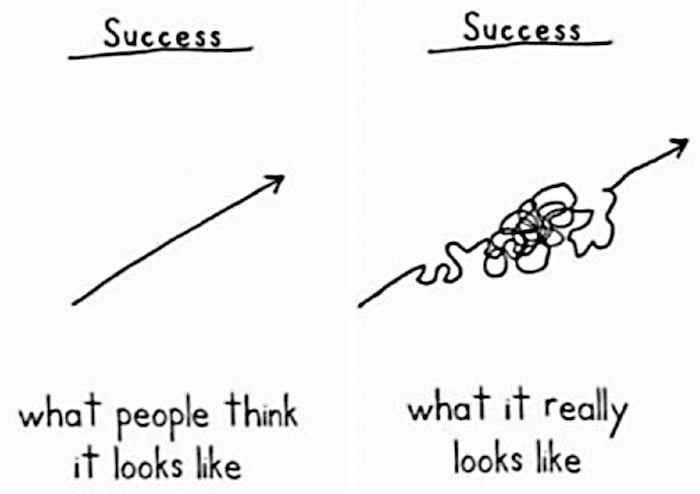
Entrepreneurship isn’t as glamorous as most people think. Success isn’t easily achieved and it doesn’t look like what you might think considering what so many “successful” influencers might sell you on social media.

success

By working with others, you’ll learn what works and, more importantly, what doesn’t work.

No matter how smart you are, you will make mistakes. Just look at people like Elon Musk and Mark Zuckerberg, no one is perfect. Even the billionaires make mistakes.

But once you’ve worked for a handful of companies that are all different sizes, you’ll have a good understanding of what it takes to succeed.

You’ll have a much better understanding of common mistakes people make, such as how to avoid hiring bad people, and if you do hire them, how you need to fire them fast.

In essence, you will have learned what you should do for 9 years straight, which means if you skip all of that, it will be harder for you to be in a position to succeed for lack of experience in the real world. Sure, there is always the possibility of success without all of the experience, but it is much more difficult to become a reality.

Conclusion

Entrepreneurship looks great and is amazing. I wouldn’t trade it for the world. But before you go off and become an entrepreneur, learn from companies of all sizes.

It’s not an easy road and the last thing you want to do is fail on someone else’s dime because your reputation is all you have.

By putting in 9 hard years into other people’s companies, you’ll increase your odds of succeeding.

And when you are ready to go out on your own, hopefully, you would have met a few amazing co-founders along your journey because it takes too much time and capital to do it all by yourself.

So what would you do if you were starting all over again?

The post If I Had to Start All Over Again, I Would… appeared first on Neil Patel.


from Blog – Neil Patel https://ift.tt/2UatfRs

Tuesday, 19 February 2019

How to Think About SEO

seo

Don’t you hate how it takes forever to get results when it comes to SEO?

Everyone says it takes 6 months to a year and even in some cases many years to see results.

Well, I have some bad news and some good news for you.

Let’s start with the bad news…

SEO is a long-term strategy. It’s not about doing it for a few months and forgetting about it. And if you stop focusing on it eventually your competitors will outrank you.

And now let’s get on to the good news.

You can get results in the short run. You may not get all of the results you want right away, and you may not rank for your ideal keywords, but that doesn’t mean you can’t get results within 90, 60, and even potentially 30 days.

So how do you get results within a few months?

Well first, let’s rewire your brain so you think about SEO in the correct way.

SEO isn’t just content and links

If you want to rank number 1 on Google, what do you need?

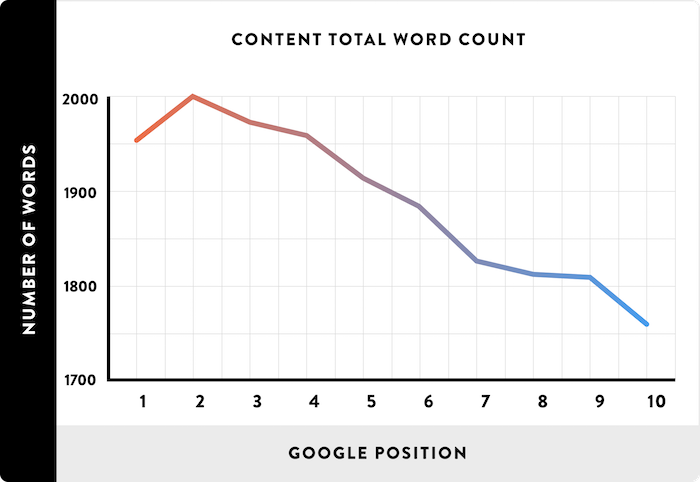
Well, the data shows you need to write lengthy content. Because the average web page that ranks on page 1 of Google contains 1,890 words.

word count

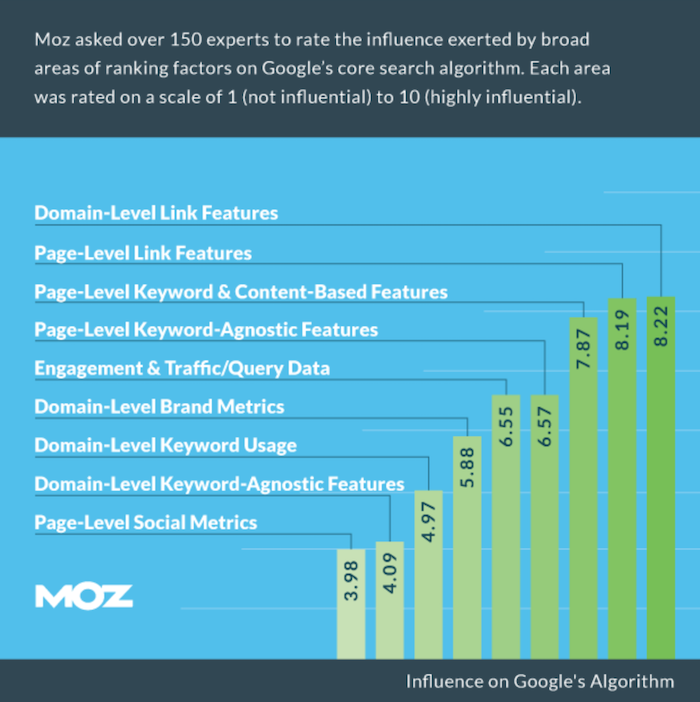
And of course, what’s content without links? Because the 2 most important factors that affect rankings according to the SEO industry are domain level links and page level links.

moz links

But here is the thing: SEO isn’t what it used to be. Until 2010, you used to be able to add keywords in your meta tags and you would get rankings within a few months.

And as the web got more crowded, you could then get results by doing the same old thing but you also had to build a few links. That worked really well between 2010 and 2013.

As more businesses popped up, everyone started focusing on content marketing. That was the hot thing. From 2013 to 2017, if you created tons of text-based content, got a few social shares, and picked up a few natural backlinks you could dominate Google.

But now, there are over a billion blogs if you include WordPress.com, Medium, and Tumblr.

That means Google has their choice when it comes to determining what sites to rank at the top.

In other words, just because you write lengthy content or build backlinks it doesn’t mean you are going to ranks. Millions of other sites do that as well.

And even if you got in early and your site is 10 years old, it’s no longer that easy to dominate the web.

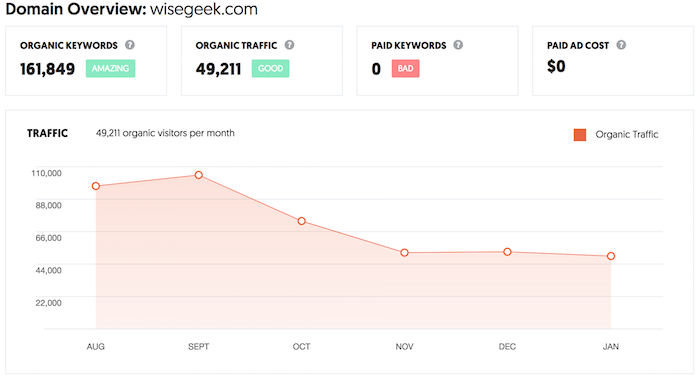
Just look at sites like Wisegeek. They used to dominate the web as it’s a site with thousands of informative articles.

And now look at their traffic…

wisegeek

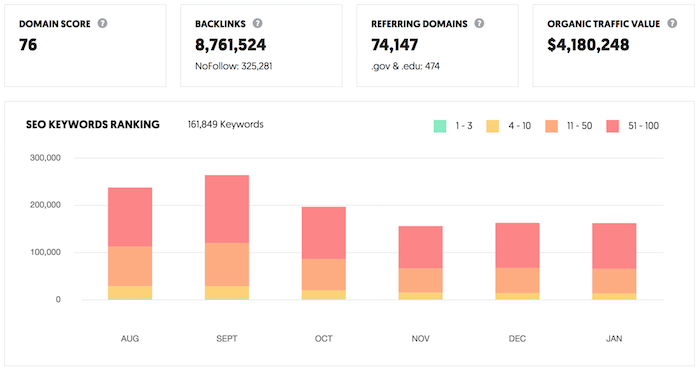
According to Ubersuggest, they get roughly 49,211 visitors a month from Google within the United States. It may seem like a lot, but their traffic is continually going down.

When I met the founder years ago it was in the millions… but not anymore.

It doesn’t even matter that the site has 8,761,524 backlinks from 74,147 referring domains.

wisegeek links

Now you may make the argument that Wisegeek doesn’t have the best content. But I have tons of examples of sites with amazing content that have the same issues.

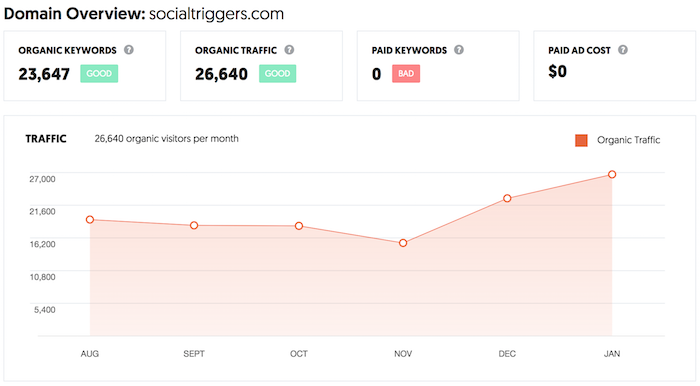
For example, Derek Halpern from Social Triggers creates great content. Just go check out some of his blog posts if you don’t believe me.

But let’s dive into his traffic stats…

social triggers

According to Ubersuggest, he gets roughly 26,640 visitors a month from Google in the United States and he has 993,790 backlinks from 5,678 referring domains.

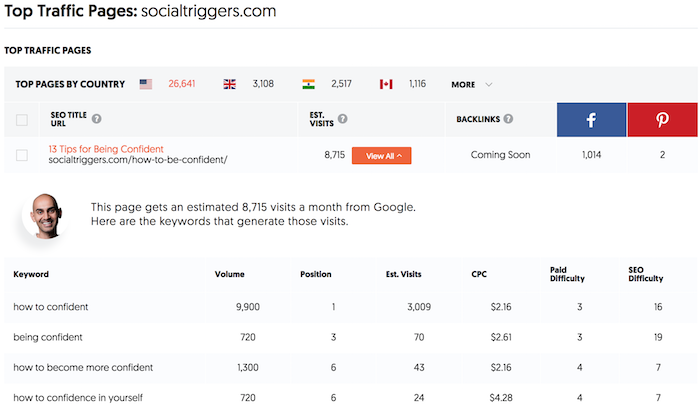
And he ranks for some great terms. Just look at the top pages he is ranking for with terms like “how to become more confident.”

social triggers top pages

But even Social Triggers has struggled to keep their traffic over time. It’s nothing to do with Derek, he’s a smart entrepreneur, but he decided to quit and focus on his new venture Truvani, which has been doing well.

In other words, content and links don’t guarantee success.

So, what’s the best way to get rankings these days?

You have to go after low hanging fruit.

Sure, you need content, you need links, and you need to optimize for the other 198 factors Google keeps track of the optimal amount of traffic. 

But it’s UNREALISTIC for you to do everything. Even if you hire an SEO agency to help you out.

And there is no way you can wait 12 months to get results from an SEO campaign.

Which means your only solution is going after the low hanging fruit.

Now I wish I could tell you the exact low hanging fruit to go after, but it varies for every site. What I can do is show some of the simple tactics that have worked for me and are easy to implement.

Strategy #1: Don’t put dates in your URL

I used to have dates in my URL because it was a default option from WordPress. I didn’t think twice about it. But the moment I removed the dates from my posts, my search traffic went up by 58%.

Best of all, it only took 30 days to get the boost in traffic. 🙂

Strategy #2: Link to the most popular posts in your sidebar

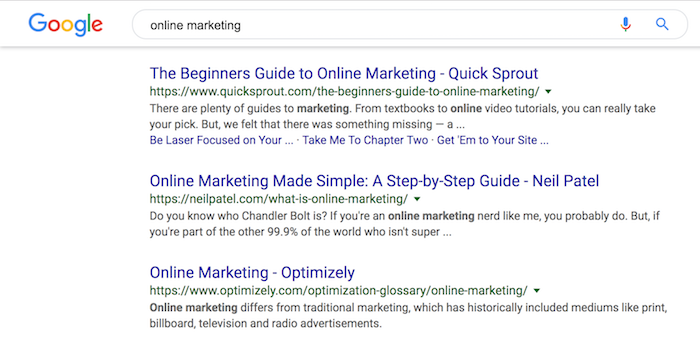
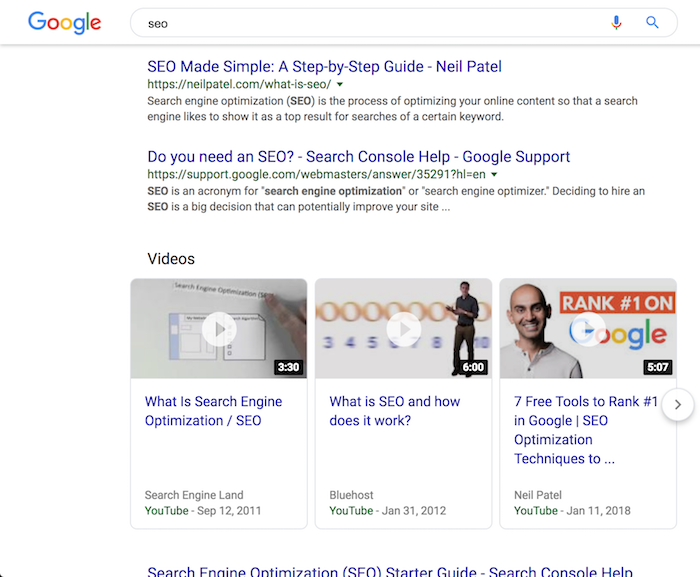
Have you noticed that I rank for terms like “online marketing” and “SEO”?

I’m currently number 2 for the term online marketing:

online marketing rankings

And number 5 for the term SEO:

seo rankings

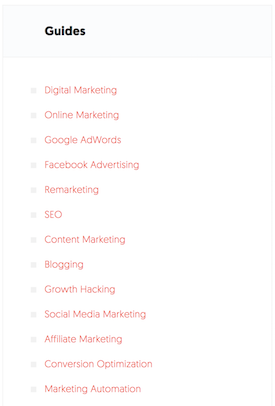
Do you want to know a hack that helped me rank higher for those terms? Well, I’ll give you a hint… you’ll find it in my sidebar.

sidebar links

As you can see, I’ve linked to all of my major guides in my sidebar. It helps give them the juice they need so they can rank higher for terms like SEO and online marketing.

If you haven’t done this, you should consider trying it out as it will provide a quick win.

You won’t see the results in 30 days, but within a few months, you’ll notice that those pages will climb in the ranks.

Strategy #3: Land and expand

I’ve talked about this one a lot in the past, but only because it works really, really, really, well.

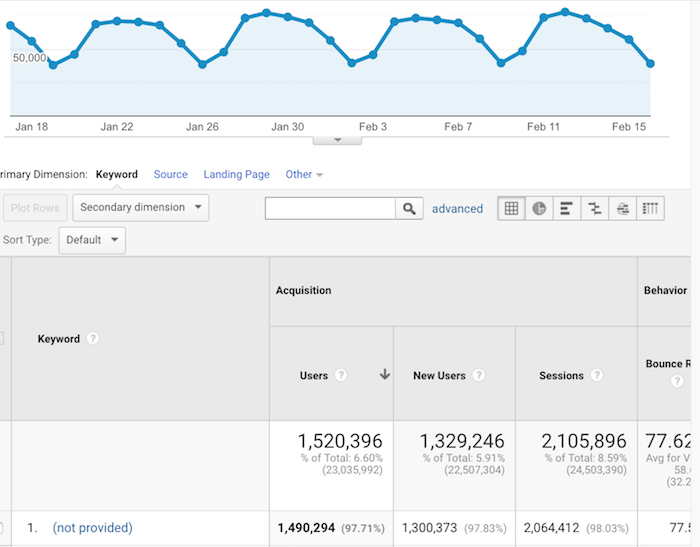
It’s also one of the main reasons I’ve made Ubersuggest into a robust SEO tool. Not just for you, but also because I use it for the land and expand strategy to grow my search traffic.

It’s how I get 2,105,896 visitors a month from just Google…

search traffic

So, what’s this land and expand SEO strategy I use?

You need to first log into Google Search Console.

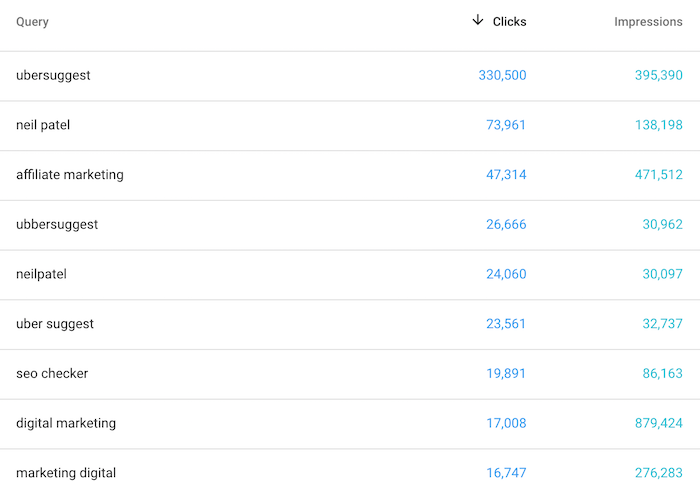
Once you are logged in, click the “performance” link and you’ll see a list of keywords you are currently ranking for.

search console

Then click on the most popular term you rank for. Make sure that keyword isn’t your brand name.

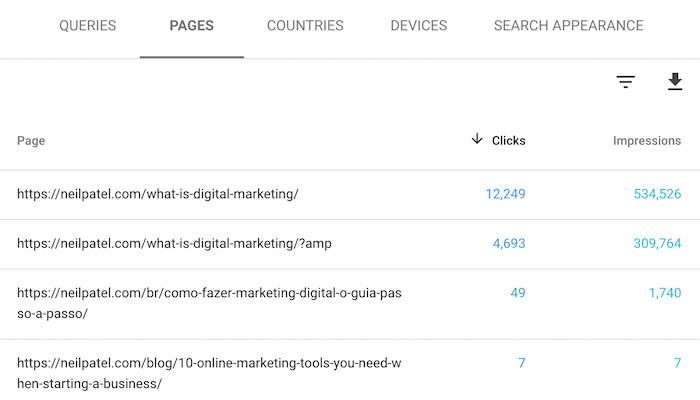
Then click on “pages.” You’ll see the page that is ranking for that keyword.

search console pages

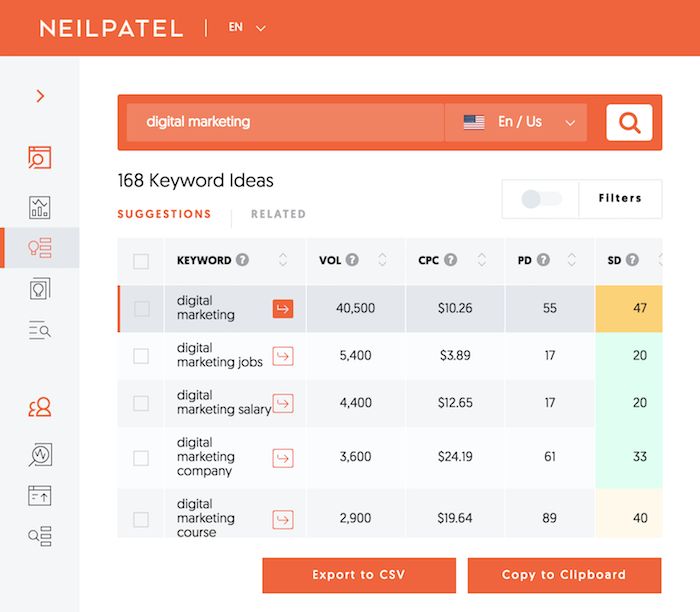
I want you to then head over to Ubersuggest and type in that keyword. Once the report loads click on “keyword ideas” in the sidebar. You’ll see a report that looks something like this:

ubersuggest keywords

You’ll see a long list of keywords that are variations of the main keyword that you already rank for. Most of those terms are pulled from Google Suggest.

If you take the popular phrases that are related to the main term you already rank for and integrate them into that page, you’ll notice within 30 to 60 days your search traffic will shoot up.

But when leveraging this strategy you need to make sure you adjust your content. You can’t just shove in more keywords, you have to rework your content so it makes sense and it flows naturally.

The reason this SEO strategy is my favorite tactic of all time is that content marketing is a hit or miss. Just because you write content and build links, it doesn’t guarantee success. But if you expand the pages that Google already loves, there is a high chance that you’ll get more traffic.

Strategy #4: Expand internationally

In many of my companies, I generate more revenue from outside of the United States than I do within the United States.

For that reason, plus it was a piece of advice I got from a Google employee, I’ve translated my site into multiple languages.

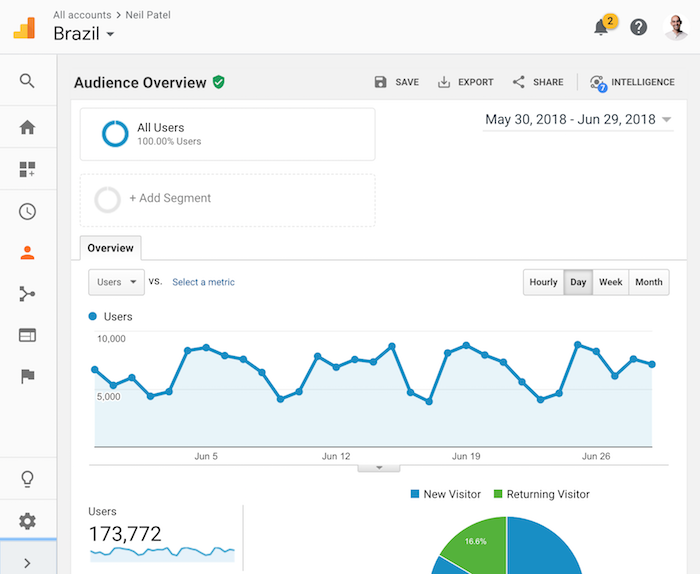
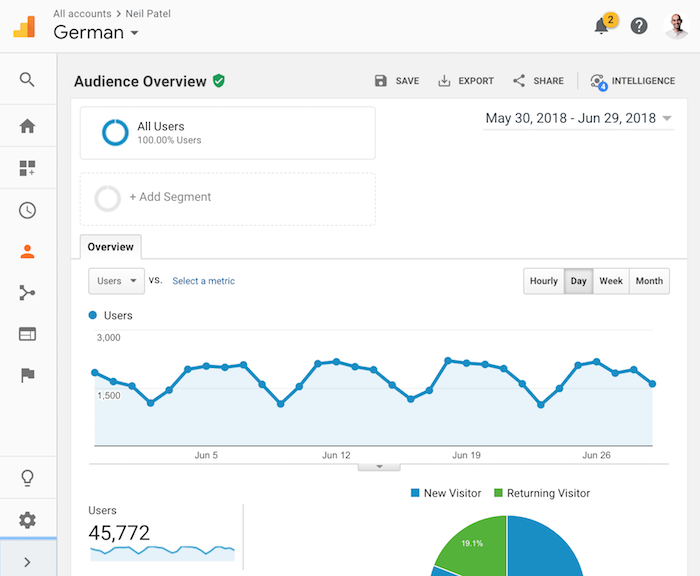
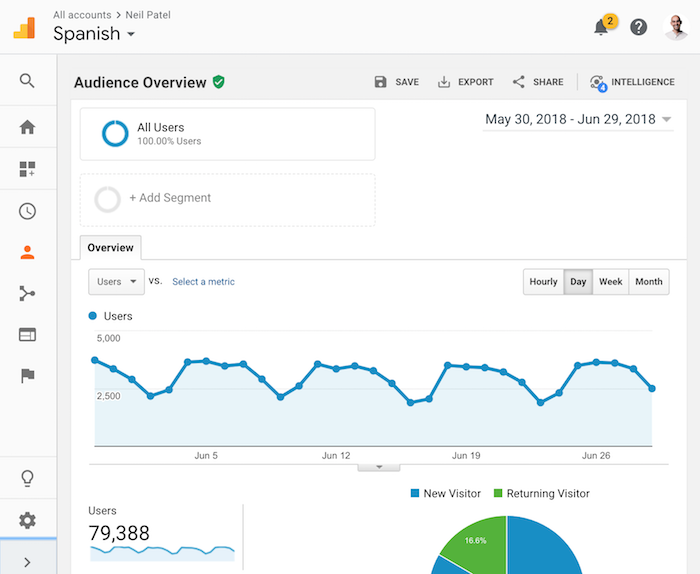
Just look at my traffic from Brazil…

brazil

And here is my traffic from Germany…

german

And the Spanish market…

spanish

What I learned from a Google employee is that they lack content in regions where English isn’t their primary language. So if you focus on these regions, you’ll quickly notice a quick traffic boost and your conversion rate from visitor to customer within those regions should also go up.

Strategy #5: 5-minute brand hack

Google loves brands. It really is the future of SEO. In addition, brands are more defensible.

As the EX-CEO of Google said:

Brands are the solution, not the problem. Brands are how you sort out the cesspool.

In other words, if more people search for your brand name on Google, you’ll notice that your rankings will go up.

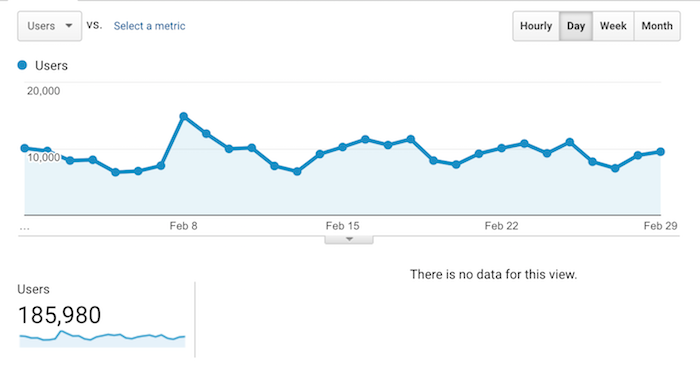
As more people typed in “Neil Patel” within Google, my traffic went from 185,980 a month:

feb traffic

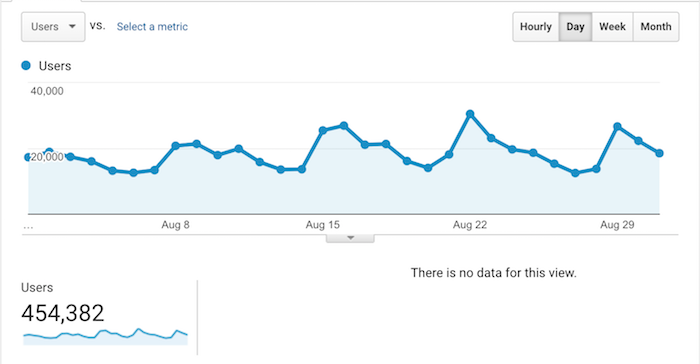
to 454,382 visitors a month:

august traffic

That’s a huge increase considering I saw the increase in a 6-month time frame. And even though I pulled that off back in 2016, it works even better today.

Building a brand isn’t easy and it is a long-term approach. But I am going to give you a head start… one that only takes 5 minutes.

Before I break it down, it follows the rule of 7. Someone needs to see your brand 7 times before they build up loyalty to it. In other words, if you can keep getting people to come back to your site in the short run, you’ll start building a brand and you’ll find your brand queries increase in the long run.

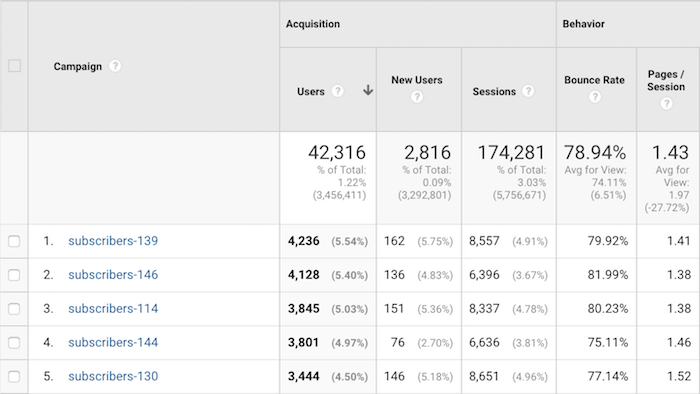
Now here’s a screenshot of my stats so you can see it in the works:

push traffic

So far, I’ve gotten 42,316 people back to my site 174,281 times. That’s roughly 4 times, which means I have 3 more to go according to the rule of 7.

How did I do this?

I used a tool called Subscribers.

In which I send out a push notification every time I release a new blog post:

neil subscribers

Plus, it allows me to generate 4,000 plus visitors for every push I send. 🙂

subscriber stats

Strategy #6: Optimize your click-through-rate

You don’t have to write new content or build links to boost your rankings.

You can do something as simple as optimizing your click-through-rate.

Just think of it this way, if 1,000 people performed a Google search and everyone clicked on the second listing instead of the first listing, what does that tell Google?

It tells Google that the second listing should, in theory, be the first listing. And that’s what Google does… they take the listings people are clicking on and move it up to the top and move down the ones people don’t click on.

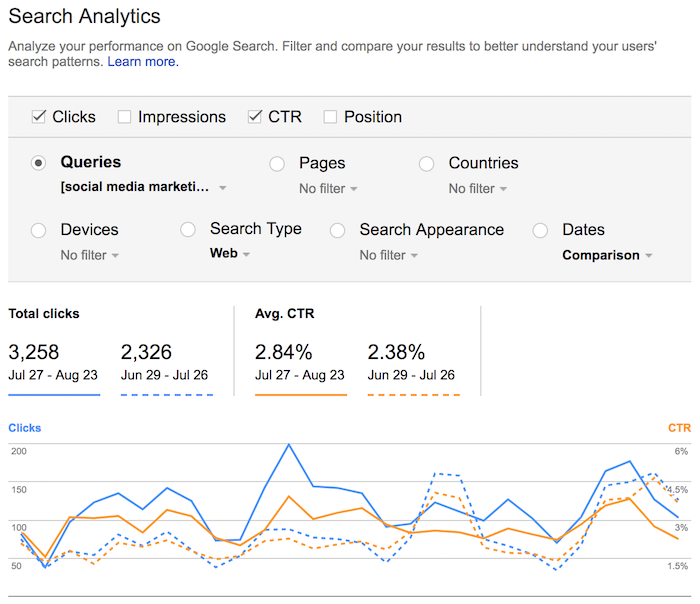
If you want step-by-step instructions to increasing your click-through-rate, follow hack #1.

It works really well and fast too. It’s how I boosted my search traffic for one of my main keywords by 1,289 visitors in 30 days.

social media marketing

Strategy 7: Update your old content

SEO and paid ads have something in common, in which if you stop doing it your traffic goes down.

Paid ads are a bit worse in which once you stop paying your traffic goes back down to where it was.

With SEO, once you stop you’ll see a slow decline over time.

Now, this strategy is so effective that I employ a full-time person to help me out with it and this is all they do.

Remember how I talked about there being over a billion blogs on the web now?

Well, I have one full-time person updating my old content to ensure it doesn’t get out of date.

Because Google has so many options to choose from when it comes to ranking sites for any keyword out there, they are going to rank sites that are fresher.

By updating your old content, not only do you ensure that you’ll maintain your traffic, but you’ll also get more traffic.

There isn’t any real strategy to this other than to go through your old pieces of content that get traffic and make sure they are up to date.

Sometimes you won’t have to make any changes, other times you may have to change a few sentences or links, and hopefully, not too often will you have to re-write a whole article.

And every blue moon you’ll need to delete a page or a post because it is irrelevant. For example, I’ve deleted my older blog posts that discuss social networks like MySpace that no one uses.

Conclusion

Yes, SEO does take time if you think about it the same way everyone else does.

But if you think about it from a strategical perspective, you’ll find new opportunities that can provide quick results.

You may not get all of the traffic you want tomorrow but going after the low hanging fruit will give the quickest results.

If you want help finding the low hanging fruit with your SEO campaign, you can always reach out to my ad agency and someone will help out. Or you can leave a comment below.

So, are you going to stop thinking of SEO as just link building and content and start thinking of ways to get quick wins?

The post How to Think About SEO appeared first on Neil Patel.


from Blog – Neil Patel http://bit.ly/2DSDDXp