FREE TRAFFIC TO YOUR SITE

FREE TRAFFIC TO YOUR SITE
free youtube traffic

Tuesday, 7 January 2020

Do High DA Backlinks From Blog Comments Help Rankings?

If you have ever left a comment on NeilPatel.com, you’ll notice that there is no URL field.

Why?

Well, a few years ago, blog commenting exploded. I was literally getting thousands of spam comments a day from people just leaving a comment for the purpose of link building instead of providing value to the community.

Sure, there are spam plugins like Akismet, but it doesn’t catch everything.

Now, most blog comments contain the nofollow attribute in which they tell Google not to follow the link or drive any “SEO value” to that URL.

But still, people still leave blog comments for the purpose of link building.

So, over the past 7 months, I’ve been running an interesting experiment to answer the age-old question…

Do backlinks from blog comments actually help rankings?

Experiment rules

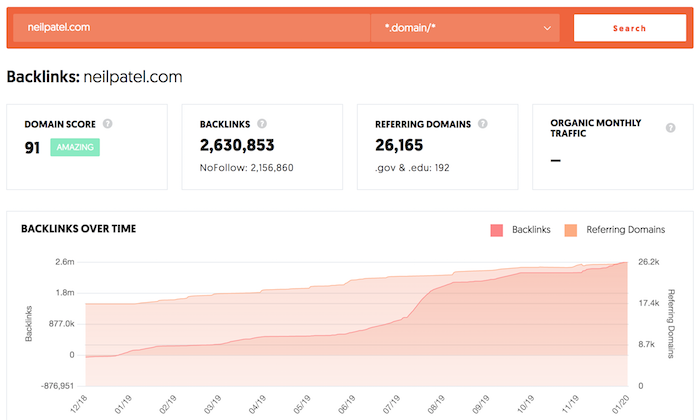
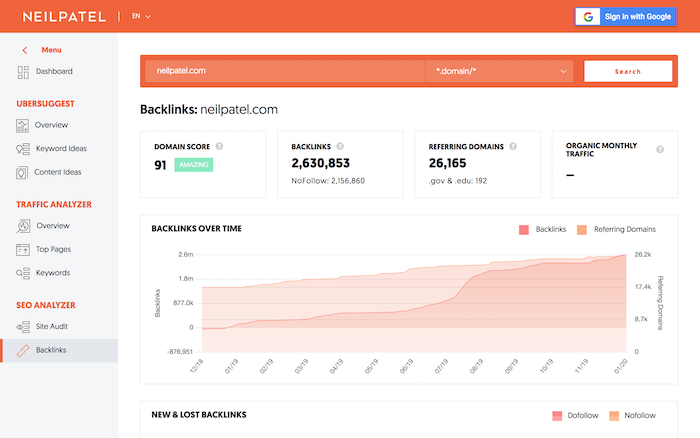
First off, for this experiment, we used “domain score,” which is similar to domain authority.

If you want to know your domain score, the backlinks report in Ubersuggest will tell you what it is.
With this experiment, I sent out an email to a part of my list looking for participants and had 794 websites apply.

From there, I set the following criteria:

  1. English-only sites – It’s easier to rank on many of Google’s international search engines even without building links. I removed non-English speaking sites as I didn’t want to skew the results.
  2. Low-authority sites – I removed any website with a domain score greater than 20 and any site with more than 20 backlinks. The reason being is when a site has a lot of authority, they tend to rank easily for new keywords, even if they don’t build any new links.
  3. No subdomains – I didn’t want a WordPress.com site, a Blogspot site, or even a Tumblr site. Again, this would skew the results so I removed them.

After eliminating the sites that didn’t meet the above criteria, I was left with 314 sites.

Of those 314 sites, many dropped off because they didn’t complete the required work on their part (which was to write a blog post), so I was left with 183 sites at the end that participated.

How the experiment worked

Similar to my previous link building experiment and my on-page SEO experiment,  I had these websites write a 1,800 to 2,000-word blog post on whatever subject that was relevant to their site.

The websites had 2 weeks to publish their content and then after 30 days, I looked up their URL in Ubersuggest to see how many keywords each URL ranked for in the top 100 spots, top 50, spots, and top 10 spots.

As I have mentioned in the past, Ubersuggest has a big database of keywords. We are currently tracking 1,459,103,429 keywords.

Now, most of these keywords are barely searched but a decent amount of them get hundreds, if not thousands, of searches per month. A much smaller percentage of keywords generate hundreds of thousands or even millions of searches per month.

In other words, the majority of the keywords people are searching for are long-tail phrases.

We then spent a month building links and then waited another 3 months to see what happened to each site’s rankings.

But here’s the thing: We didn’t build the same type of links to all sites. Instead, we broke the 183 sites into 4 groups (roughly 46 sites per group).

Here were the groups:

  1. Control – we didn’t build any links to these sites, we just wanted to see what happened to their rankings over time with no focus on link building.
  2. Nofollow high domain score blog comment links – with this group, we built 10 links through blog comments. The links pointed to the newly written post and they were from blogs that had a domain score of 50 or higher and they all contained a nofollow attribute.
  3. Dofollow high domain score blog comment links – with this group, we built 5 links through blog comments. The links pointed to the new post and were dofollow from blogs with a domain score of 40 or higher. (I reduced the domain score criteria for this category and the link quantity as we struggled to find a large number of high authority blogs that pass link juice in the comment section.)
  4. Dofollow low domain score blog comment links – with this group, we built 10 links through blog comments. Each link pointed back to the article and it was from a blog that contains a domain score of at least 20 but no higher than 39. (I was able to build more links here as there are many more low domain score blogs than high domain score ones.)

Keep in mind with the link building for groups 2, 3 and 4, there was no specific anchor text agenda. Because the links were built through blog comments, it was too hard to control the anchor text as we didn’t want to be spammy.

And each comment left on the blog contained at least 75 words as we wanted to ensure that each comment provided value and the core purpose wasn’t just link building.

Alright, so let’s dive into the results.

Control group

Do you really need links to rank on Google? Well, the chart below says a lot…
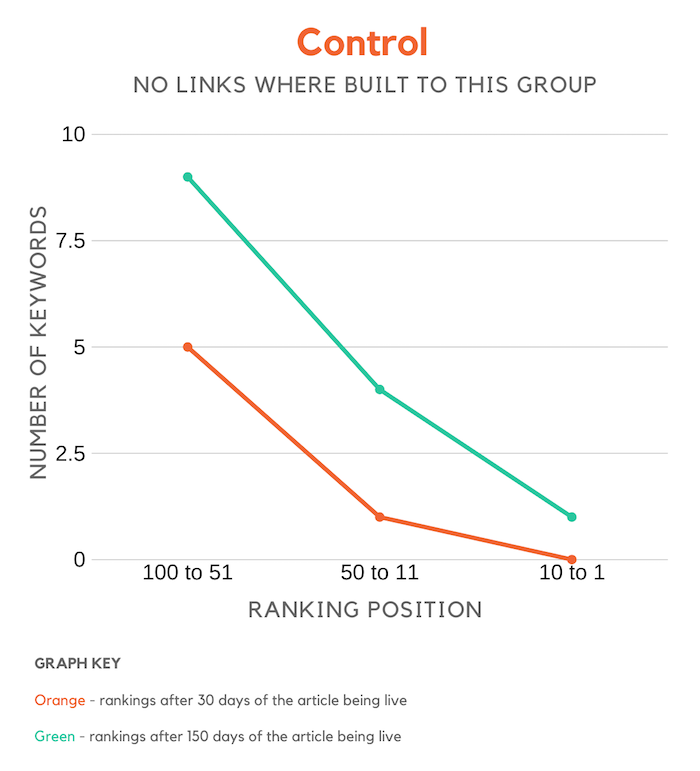
As you can see over time, you will naturally grow your search rankings even if you don’t build any links.

Of course, if your content is amazing and you do on-page SEO, you’ll rank higher, but still not growing your link count doesn’t mean you will rank for anything out there… instead, you will still rank for long-tail terms that aren’t too competitive.

Nofollow high domain score blog comment links

Now the results from this group were interesting…
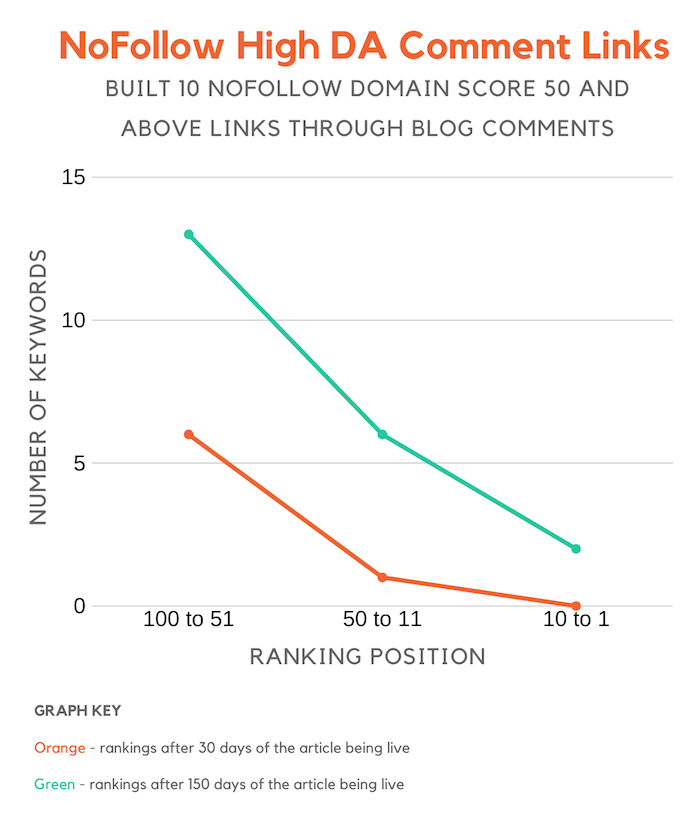
As you can see, the sites in this group had better results than the control group even though the links were nofollowed.

Keep in mind, though, that it could be many variables that caused this, such as the content quality may have been better.

Overall, the sites did perform better than the control group but not by a substantial amount.

Dofollow high domain score blog comment links

Google is sophisticated, they are able to know if a link is from user-generated content (such as blog comments), so I assumed even though the links where dofollow they still wouldn’t have much (if any) impact.

But, shockingly, sites in this group had the largest gains.
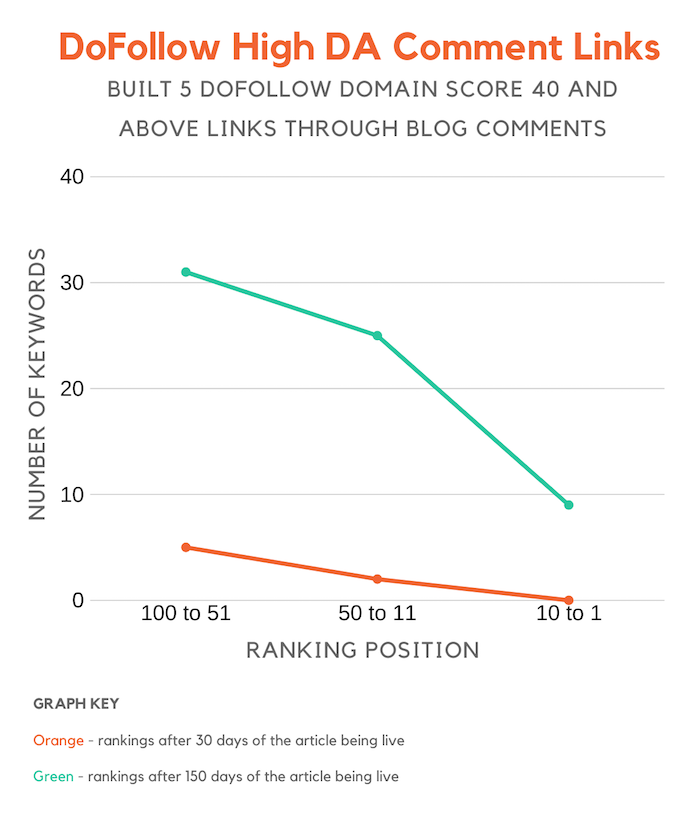
As you can see from the chart above, links from high authority sites, even if it is through user-generated content, help with rankings. They just have to be dofollow.

Dofollow low domain score blog comment links

With this last group, we were able to build more dofollow links because we focused on sites with lower authority.
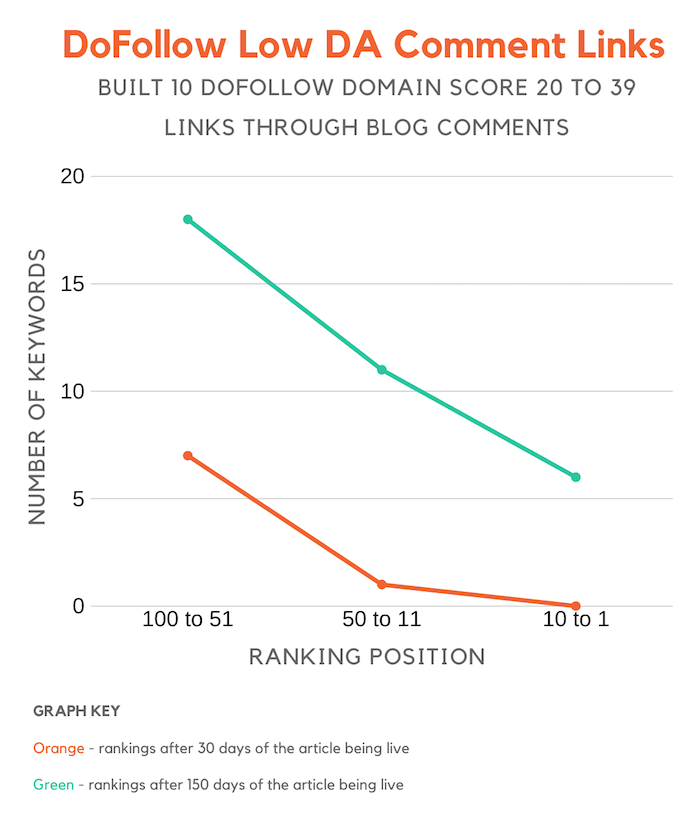
And as you can see from the chart above, it did help with rankings more than building nofollow links but it didn’t help nearly as much as getting links from blogs with higher domain scores.

We built 10 links instead of 5, but the quantity didn’t help as much as having high domain score links. This group increased their rankings by 337% versus 828% that group 3 experienced even though they had half the links.

Again, we still saw gains, just not as large as the previous group.

Conclusion

Who would have thought that building links through blog comments still helps?

Now, if you are going to use this tactic, you’ll want to focus on blogs that have dofollow comments.

If you aren’t sure how to find them, you can perform a Google search for the following:

  • “title=”CommentLuv Enabled”” KEYPHRASE – this will showcase blogs that have CommentLuv enabled which means they pass link juice.
  • “dofollow blogs” – you find a lot of blog articles listing out blogs that have dofollow links. Some of them look like this but you will have to double-check each site as many are nofollow even though bloggers claim they are dofollow.
  • Followlist – this is a directory of blogs that have dollow links.

When building links, focus on higher domain scores as it has a bigger impact on rankings.

In addition to that, you’ll only want to leave a comment if you can provide value. Don’t stress the anchor text, focus on the quality of your comment as you don’t want to be a spammer.

Posting spammy links will just cause your comment to be removed.

Lastly, don’t just leave a valuable comment for the sake of generating a link. Make sure it is on relevant blogs as well. And if that means the blog doesn’t have as high of a domain score that’s fine because the data above shows that even low domain score links still help (just not as much).

So, have you thought about leaving more comments on other blogs? It’s a great way to get your brand out there, generate referral traffic, and boost your rankings.

The post Do High DA Backlinks From Blog Comments Help Rankings? appeared first on Neil Patel.


from Blog – Neil Patel https://ift.tt/2QygQHP

Wednesday, 18 December 2019

How to Grow Your Email List

Grow email listNever underestimate the value of an email. Email marketing has proven itself again and again to be the one marketing avenue that consistently brings in the highest conversions for companies all over the world.
There is a reason they are always pushing to get customer email addresses.

No matter the size of your enterprise, you can benefit from building an email marketing list. The faster you do it, the sooner you will start seeing the results.

Marketing emails mean click-through traffic, greater sales, brand visibility, and direct customer engagement. Even social media doesn’t manage to bring in the ROI of emails.

Consider some email marketing stats:

  • 40% of B2B marketers say email newsletters are most critical to their content marketing success (source).
  • 80% of retail professionals in the US said email marketing drives customer acquisition and retention
  • On average, companies are attributing 23% of their total sales to the email marketing channel, compared to 18% in 2013. This equates to a proportionate rise of 28% in just one year.

email marketing stats

Did you know? Companies are attributing 23% of their total sales to the email marketing channelClick To Tweet

Not only is that a significant increase for such a short period of time, but it proves that those who claim email is dead are dead wrong. It is a more powerful tool than ever.

There are many different ways that will help you rapidly build up an email list. These are some of the most effective.

1. Build An Effective Landing Page


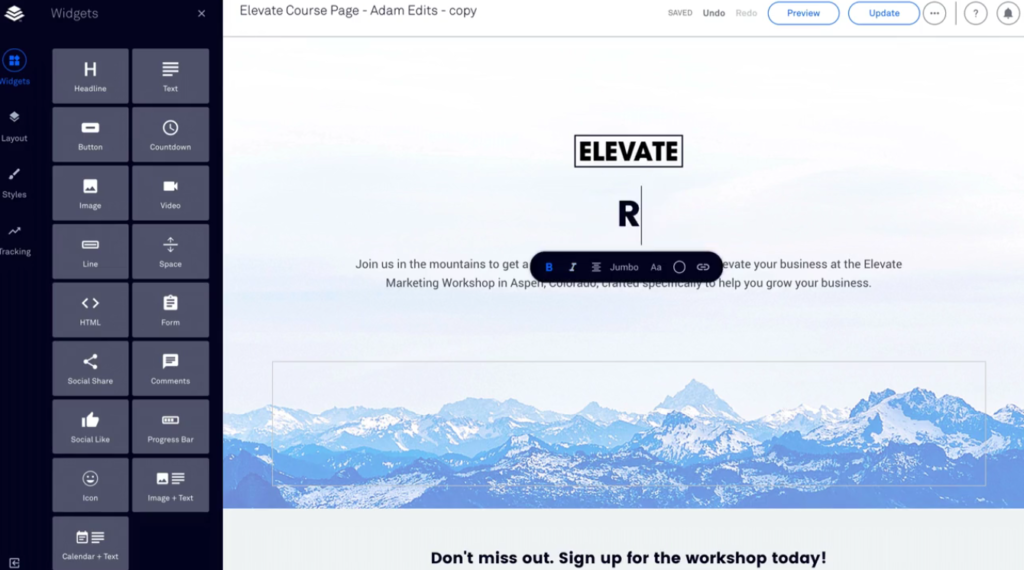
If you have a website or product launching, you can create a simple landing page to begin building hype. Get customers early by putting up an email form for people to be alerted the moment you launch, and so be the first to know.

Services like LeadPages exist to help you do this more quickly. You could have a page up in minutes, and begin gathering those sign ups as soon as it is live.

The most important thing about a landing page many businesses miss: It should be fast! I can’t believe how many leads are lost just because the page doesn’t load.

2. Personalize Your Landing Page


3. Host A Webinar


Webinars are becoming more popular by the day, and it is no wonder. They give people all the benefits of going to a conference lecture without ever having to leave their home. It is convenient and a lot cheaper without the hotel and airfare.

Host a live webinar, and then put the recording on your website for people to see in their own time. Not only is this a great content strategy, but it gives you an opportunity to create a sign up form that includes both email addresses and other important data.

Tools like GoToMeeting and ClickMeeting makes it very easy to host, customize, record and invite people to webinars:

webinar

A single webinar can bring in thousands of emails.

4. Offer Premium Content


Let’s say you are reading this post, and you want more information. You get to the end and you find out there is a much more thorough, instructive version available. All you have to do is provide your email, then follow the confirmation link to this premium content.

This is another great strategy for both content marketing and email acquisition. Usually referred to as content upgrading, it is guaranteed to get your reader’s attention, and their info.

Check out IMN Marketing Resources page for a solid example of premium content we are offering:

Marketing Resources

4. Offer Emailed Incentives


When Google first released Google Plus, they took a handful of invites and gave them to early adopters as they anticipated the launch. Then those users gave out invites to their friends that wanted to try it.

The sheer number of invites that were sent out this way was incredible, and all done through email. It created a powerful force that made the G+ launch a busy and highly anticipated one. While they were not able to engage those users well enough to sustain the growth, it has worked very well for creating the initial buzz.

Offer users the ability to send special offers to their friends if they provide their email. The friend gets the offer, then provides their own email address, and passes it on.

Mailshake is a great tool to help creating that initial buzz. You can use it to reach out to niche influencers and invite them to your platform. Mailshake handles emailing and following-up and gives you a nice dashboard to monitor your progress:

Mailshake

5. Publish eBooks

eBooks are a great way to spread your content, increase authority, and gain traction in your marketing campaign. Offer your ebooks free for an email signup, and you will see your email marketing list grow very quickly.

Just make sure you are creating valuable and well written ebooks. Don’t sacrifice quality for a quick product that only exist to build your marketing list. That should be a plus, not the singular goal.

Conclusion

Building an email list is important, and will lead to greater conversions than any other method available. These are some of the most effective ways of gathering them. The sooner you put them into practice, the sooner you will start reaping the benefits.

The post How to Grow Your Email List appeared first on Internet Marketing Ninjas Blog.


from Internet Marketing Ninjas Blog https://ift.tt/2r5Hzlb
via IFTTT

Tuesday, 17 December 2019

Ubersuggest 7.0: The Ultimate Keyword Research Tool

Believe it or not, I’ve been working on Ubersuggest for almost 3 years now.

I bought it on February 13, 2017, for $120,000 dollars as a test to see if I could get more traffic from a tool than traditional content marketing or SEO.

Since then the tool has come a long way, in which I’ve added tons of features that competitors charge $100 a month or even more for.

But I’ve finally got Ubersuggest to a point where I can start releasing features that my competition don’t even have.

So before, you head on over to Ubersuggest to work on your SEO, make sure you read everything below because I’ve just changed up how you are going do keyword research (in a good way).

On top of that, I’ve also released a few other features as well related to link data and traffic estimations.

Here’s what’s new:

More keyword data

The biggest problem I had with keyword research was how to find the right keyword.

Sure, there are metrics like CPC data, SEO difficulty, or even search volume, but assuming you find keywords with a high CPC, low SEO difficulty, and high search volume, it still doesn’t mean it is a good keyword to go after.

And there are a few reasons why…

  • Mobile searches aren’t worth as much – first off, if the keyword mainly gets searched from on mobile devices the conversion rate will be lower. It doesn’t mean mobile traffic is useless, it just typically means the keyword won’t be as valuable.
  • High search volume doesn’t guarantee lots of organic clicks – what happens if the keyword gets a ton of searches but no clicks? This sounds crazy, but it actually happens a lot. For example, when people search for “weather” in the United States, roughly 60% of the people don’t click any results.
  • Not all searchers are worth the same – some keywords get searched heavily by teenagers. Some keywords get searched heavily by people who are in their 30s or 40s. If the majority of the searches for a given keyword happen by a really young audience, chances are they won’t have a credit card and they won’t convert into a customer.

Because of all of this, I decided to change how the industry does keyword research.

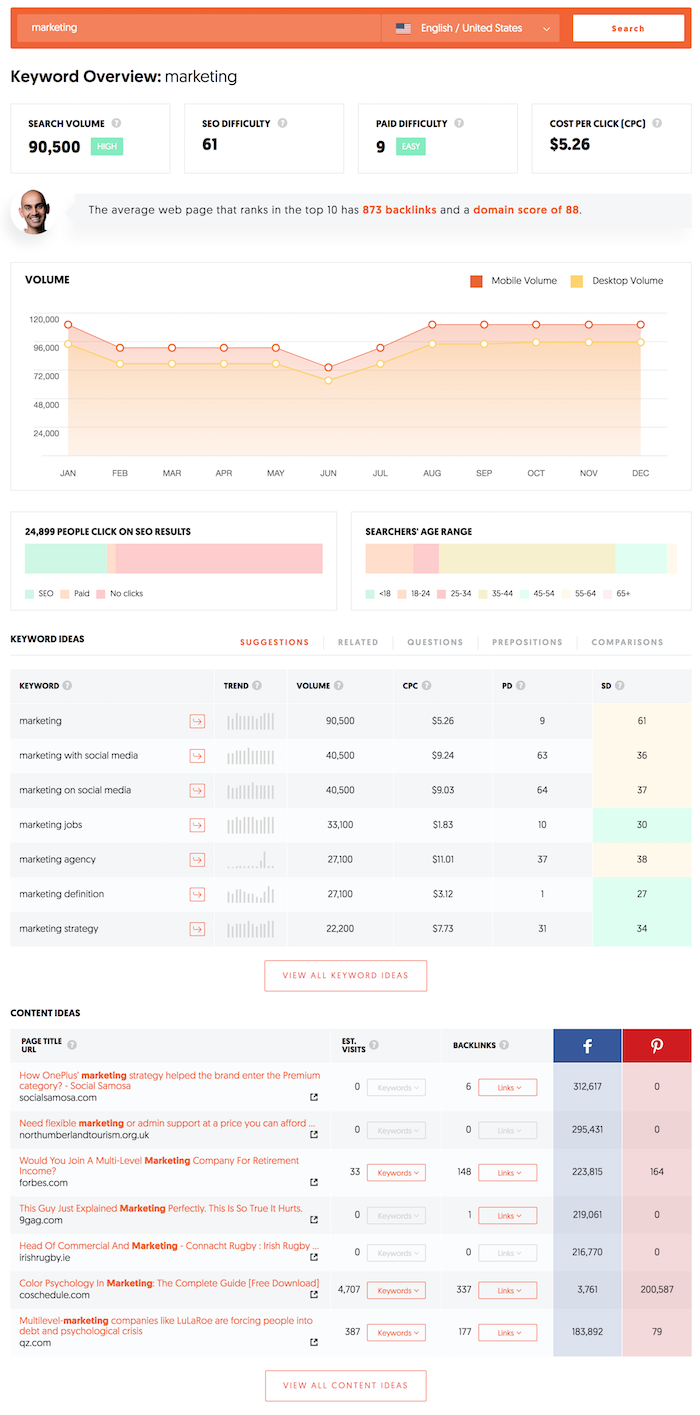
Now when you type in a keyword like “marketing” into Ubersuggest, you’ll see this:

If you have been using Ubersuggest for the last year or so you may notice some differences… but if you haven’t let me break down what’s new.

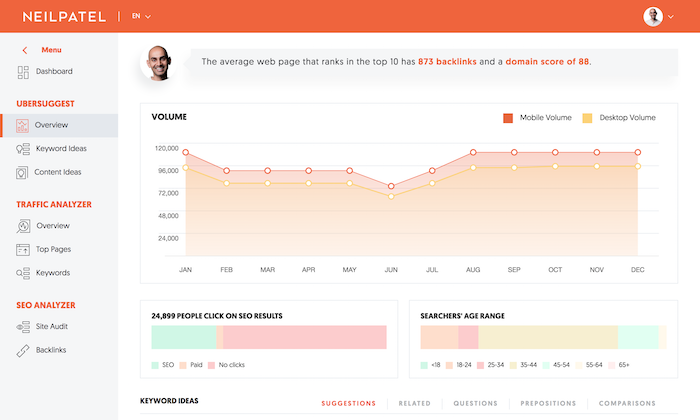
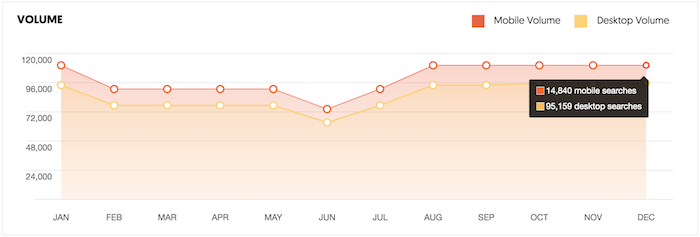
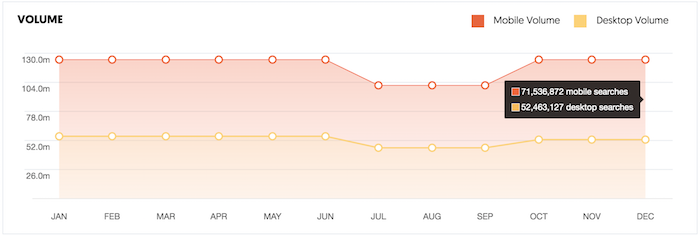
First off, for any given keyword you will see what percentage of the searches are taking place from mobile devices or desktop devices.

For example, with the term “marketing” you can see that the majority of the searches are coming from desktop devices.

On the flip side, if you use Ubersuggest to look at the term “weather” you’ll notice that the majority of the searches happen on mobile devices.

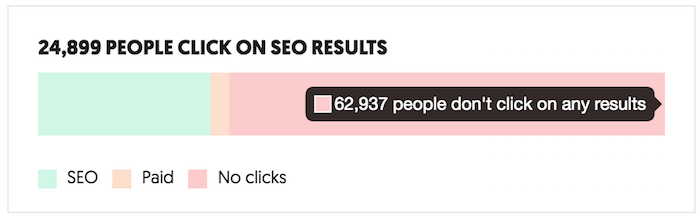
And with any given keyword you can also see what percentage of the people even click on the SEO or paid results.

I love this bar chart because it tells me if I should even go after a specific keyword. Just because a term has tons of searches doesn’t mean you are going to get tons of clicks, even if you rank at the number 1 spot.

If you leverage paid ads, this bar chart is also helpful because it will give you a sense of how many people click on the paid ads as well.

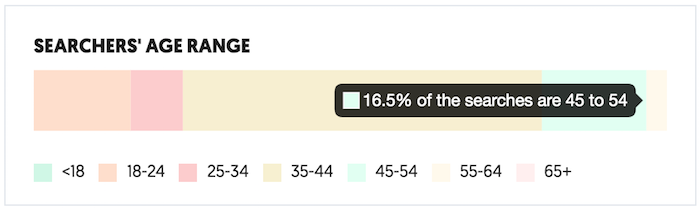
Another chart that I’ve added is one that breaks down the age range of each searcher.

As you can see from the above image, Ubersuggest now shows what percentage of the searches take place between each age range.

This is really important if you know the persona of your ideal customer, as you only want to target keywords that your ideal buyer is searching for.

What’s also cool is this data is available for all countries within Ubersuggest and for almost all of the keywords within our database.

Now before you head off to Ubersuggest and test it out, there are a few more features that I’ve just released.

More backlink data

Over the last few months, I’ve gotten feedback that our link database isn’t as big as you would like, so we have been working on fixing this.

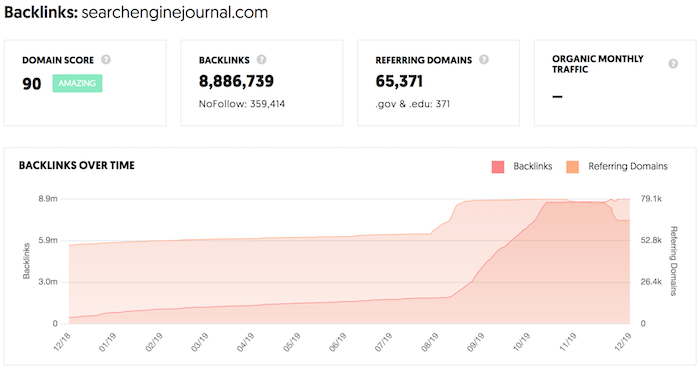
First off, whenever you do a backlink search in Ubersuggest, you’ll start seeing stats on historical backlink data.

This chart will quickly show you if a site is growing in backlink and referring domain count over time or if they are declining.

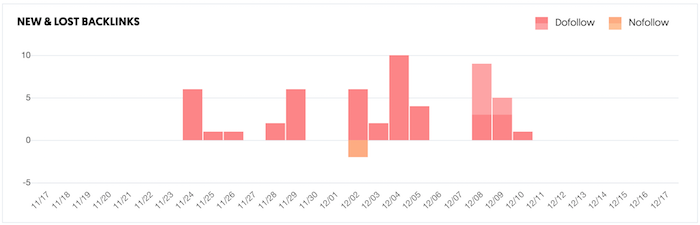
On top of that, we are even showing the daily new and lost link count for a given site.

I know the new and lost link count chart looks a bit off, but keep in mind we started having Ubersuggest crawl more pages around the web faster and more frequently. Hence you are seeing a big spike in new and lost links.

But over the next 4 weeks, it should normalize, and you’ll see an accurate representation of new and lost links.

This will help you identify new link opportunities more easily. Especially because you can now clearly see where your competitors are focusing their link building efforts.

Better traffic estimations

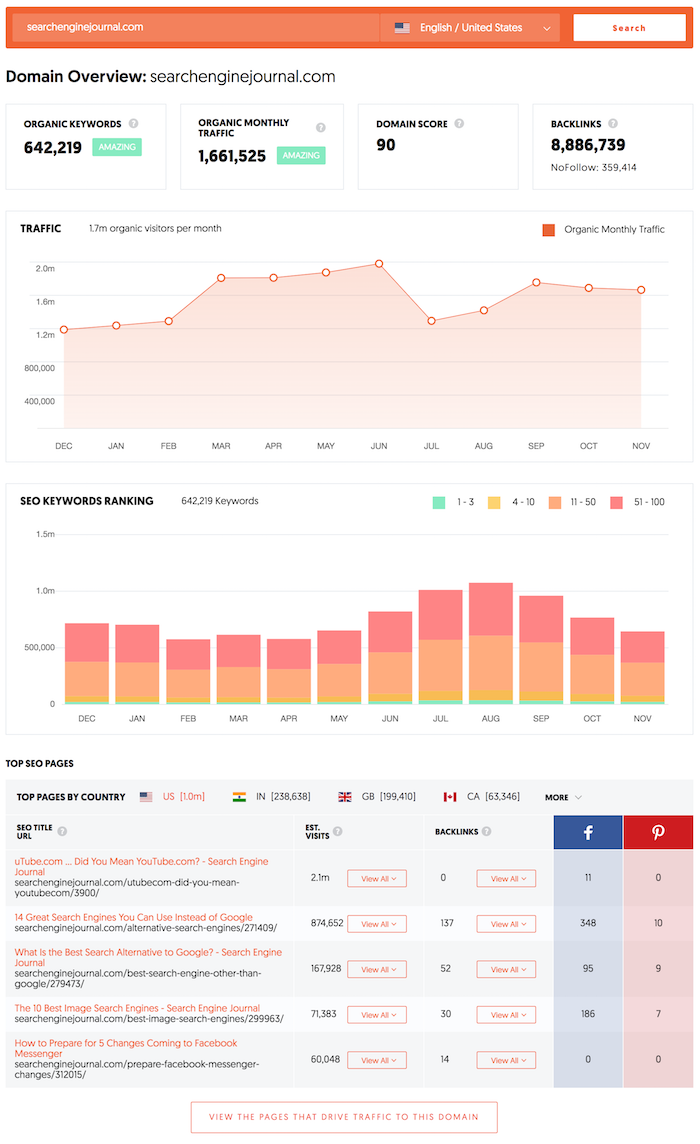
Lastly in Ubersuggest, you can also enter in a URL and get data on any given domain.

From its estimated monthly search traffic to the number of keywords a domain ranks for to even its top pages based on link and traffic count.

We haven’t fully finished creating our new algorithm when it comes to traffic estimations, but the chart you’ll see now is much more accurate than the older one.

Even though this is a big improvement from our older charts, give it another 3 months and it should be extremely accurate.

When you are using the traffic analyzer report in Ubersuggest, keep in mind that this will give you a directional guide on how you are doing versus your competition.

Conclusion

I hope you enjoy the new changes to Ubersuggest.

I’ve made them in order to give you a leg up on your competition as the data in the tool is now something that most of you have never seen before.

And over the next two months, you’ll see some big launches in Ubersuggest. From a chrome extension to even more accurate traffic estimations to even an Alert system that will notify you when things are wrong with your site.

So, go to Ubersuggest and try out the new keyword features as well as traffic estimation and backlink features.

What do you think about the new features?

The post Ubersuggest 7.0: The Ultimate Keyword Research Tool appeared first on Neil Patel.


from Blog – Neil Patel https://ift.tt/2PRMRcg

Thursday, 12 December 2019

The Ultimate Guide to Proper Youtube Video Tagging

According to YouTube, tagging is one of the most important ways to rank your video in YouTube search results:

Tags help users find your video when they search the site. When users type keywords related to your tags your video will appear in their search results.

YouTube does consider user engagement as well (like number of views, views in common and user “retention”) but tagging is the *first* step to ranking your video in YouTube search results (and thus getting a good chance to get ranked in Universal Results as well).

A most scientific (but still useful to start brainstorming) approach to classifying YouTube tags (pdf) groups all the tags as follows:

  1. Generic relationship between tag and video content:
    1. Tag identifies what the video is of at its most primary and objective level – no subject specific knowledge is needed to make this distinction (e.g. a video of a cat, tagged as ‘cat’ or ‘animal’)
    2. General YouTube defined Category or Genre (e.g. Comedy, Entertainment, Music)
  2. Specific relationship between tag and video content:
    1. Tag identifies what video is of. Familiarity or some existing knowledge is needed to make this connection (this may be about names, locations, venues, etc).
  3. Tag only useful to a minority of users, specific individual or group
    1. Refining tag (Tag which cannot stand alone – only useful when looked at as part of the larger tag set (e.g., episodes of a series of videos specified by a number)
    2. Self-reference tagging (e.g. “my dog”),
  4. Irrelevant/Non Useful Tags (those may vary from attention-grabbing and misspelled tags to conjunctions and prepositions).

Obviously, the top three classes of tags should all be considered for ranking for various types of search queries  (navigational search queries, generic search, category search, etc).


Brainstorming the Tags

Most YouTube pros suggest including as many relevant tags as you can (of course, that doesn’t mean you need hundreds of them but dropping the dozen of most essential ones is very important for your rankings). YouTube doesn’t restrict the number of tags as well which is good sign.

I do agree that we need to use quite a few tags, but the focus is on “smart” or “educated” tagging:

1) Include Your Brand-Specific Tags

This one comes first because it’s so often neglected!

  • You *want* to rank for your own brand name in YouTube search results;
  • You do want your own videos to appear in Google’s universal results!

So what you never want to forget is to “self-reference” your video:

  • With your own name (the one the world knows you by);
  • Your brand name: preferably in a couple of variations, like: [brand name], [brandname] and [brandname.com]

2) Use YouTube Auto-Suggest

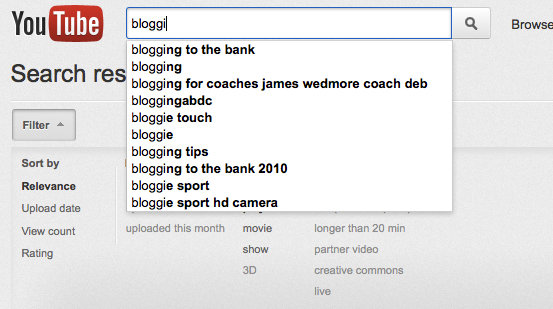
What you do next is playing with YouTube search results a bit. Two things we want to do here:

  • See what YouTube suggests typing in when searching (you want to rank for all of those words);
  • Identifying a few videos that tend to pop up now and then for important search queries (especially in default “by Relevance” tab)

So what you are going to do next is trying a few random keyword-based searches in a row taking a note of the two things I’ve mentioned above:

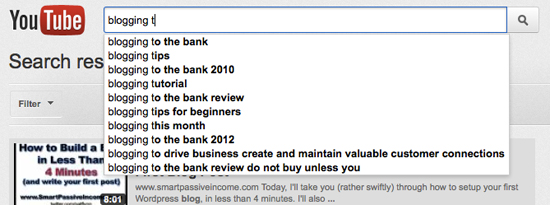
Youtube Auto-suggest

Gotta love Auto-Suggest: each new letter you add brings up more and more suggestions:

Youtube Auto-Suggest

3) Use YouTube Tool

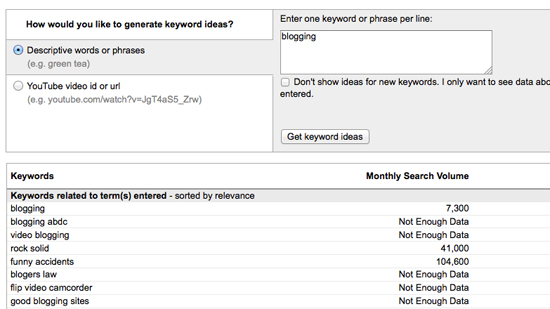
The aforementioned YouTube keyword suggestion tool can be used to both extract keywords from your competitors’ videos and to generate suggestions based on your core term (just like Google’s Adsense external tool), so you may want to play further for even more bright ideas:

youtube-tagging-01


Adding the Tags

Now that you have thoroughly collected all the relevant tags, throw them into an Excel spreadsheet and use all sorts of sorting and conditional formatting to identify your best “core” words you want to include into your tags.

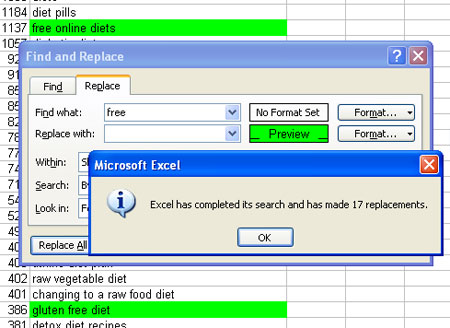
For example, you can use “Find and Replace” feature to highlight all the cells that have “free” in yellow (read more about organizing your keyword modifiers <- “oldie but goodie”):

Youtube tagging

Again, while you are free to play with the above tools to generate lots of keyword ideas, the main point of this step is to identify your most important core terms to build upon. After all, you don’t want hundreds of tags added. Instead, you want to add the best ones.

For this:

  • Omit “stop” words (especially articles “a” / “the”);
  • Go with plural variant of the similar phrases (this is usually your best bet);
  • Mind what YouTube suggests you using (it probably knows its stuff).

Further Steps

Before tagging your videos, be sure to read this old but great guide on optimizing your YouTube tags.

Also, the quick research you are invited to run in this article for each of the videos you upload will give you lots of data to find a great title for your video as well. Remember, while tags are important, the video title is what attracts clicks in many cases (and, per my experience, it influences rankings as well).

****So be sure to match your tags with title using the tag research tools listed above.

Any more tips on YouTube video rankings? Please share them in the comments!

Oh and don’t forget to subscribe to our YouTube channel to get notified of new SEO videos we upload!

The post The Ultimate Guide to Proper Youtube Video Tagging appeared first on Internet Marketing Ninjas Blog.


from Internet Marketing Ninjas Blog https://ift.tt/2nAMp3u
via IFTTT