FREE TRAFFIC TO YOUR SITE

FREE TRAFFIC TO YOUR SITE
free youtube traffic

Tuesday, 14 April 2020

Do Headings Really Impact Rankings?

They say in SEO you need to use headings.

Those can be H1, H2, or even H3 tags.

But do they really impact your rankings?

Sure, a lot of CMS systems put headings on each of your web pages by default. They do this with the title of the page (or blog post) and sometimes to sections within a page.

But again, the real question is, do they help with rankings?

I decided to run a fun experiment to find out if they really help.

How the experiment worked

Similar to past experiments I ran, I reached out to a portion of my email list to ask if they would like to participate. Just like how I did with the one on blog comment links and this one on link building.

4,104 of you responded wanting to participate. But unlike previous experiments, we only ran this one on websites that generated at least 100,000 visitors a month from organic search.

We picked larger sites because you can easily tell if a change had an impact on traffic. With smaller sites, external factors can more easily skew results, especially if a site only gets 100 visitors a month. One simple thing like a PR push could cause double the visitors in that case.

We also removed sites with seasonality and sites that weren’t at least 3 years old. Again, we just wanted to decrease anything skewing the results.

For example, with young sites, they tend to grow faster in organic traffic versus established sites… even when they do less SEO work because they are starting from a smaller base.

In the end, 61 sites met our requirements. It wasn’t a big number, but each site on average has 426 pages.

Now with a traditional A/B test, you would show 50% of your visitors one version and the other half a different version. But when it comes to SEO, you have to make a change and once Google indexes the change you have to compare the results to the previous 30 days.

So, with each site, we ran numerous tests at the same time to see the impact of headings. With each site, we took their web pages and split them up in 4 groups:

  • Control group – we left these pages unmodified. Whether they used headings or not, we wanted to see what happened to their organic traffic over time as it would give us another baseline to compare the results.
  • Headings – with this group, we used H1 tags for the title of the page, H2 tags for the subsections of the page, and even H3 and H4 tags if the subsections had subsections.
  • Using normal <p> text – with all of the pages in this group, we made sure they were not using headings. In addition to that, we made sure all of the font sizes were the same size.
  • Using normal <p> text and adjusting font sizes – with this group, we didn’t use headings. Instead, we made sure different parts of the text were in different font sizes. For example, the title of the page was the largest font size.

Before we dive into the results, the last thing to note is the experiment ran for 90 days. Even though we were comparing results of the pages we made the changes to using data from 30 days prior and 30 days after, keep in mind Google has to index the change, so you have to account for that as well.

Control group

The control group saw an increase in traffic of 2.89%.
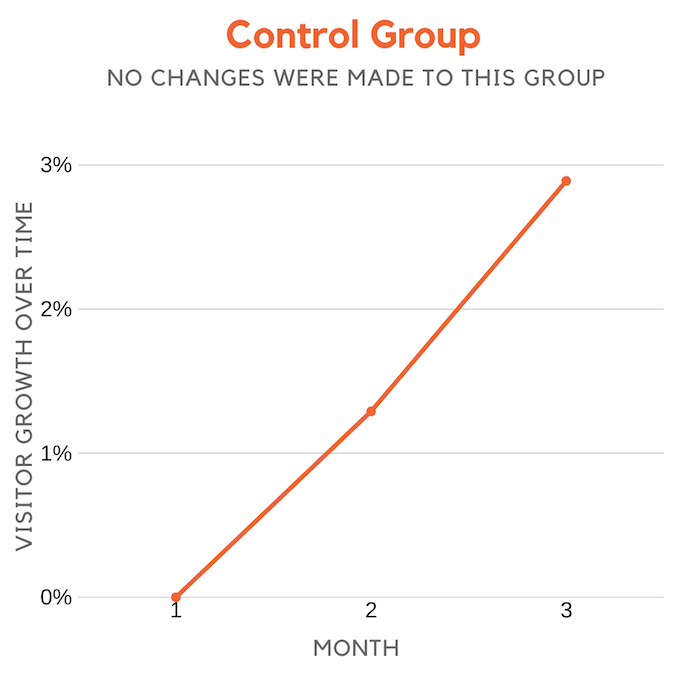
As I mentioned above, no changes were made to the control group. But it shows that they naturally grew in their rankings and search traffic over time.

This wasn’t much of a shocker either as 2.89% isn’t a large jump.

Headings

Now when I saw the results of the group that was using headings, the results were pretty much what I expected…
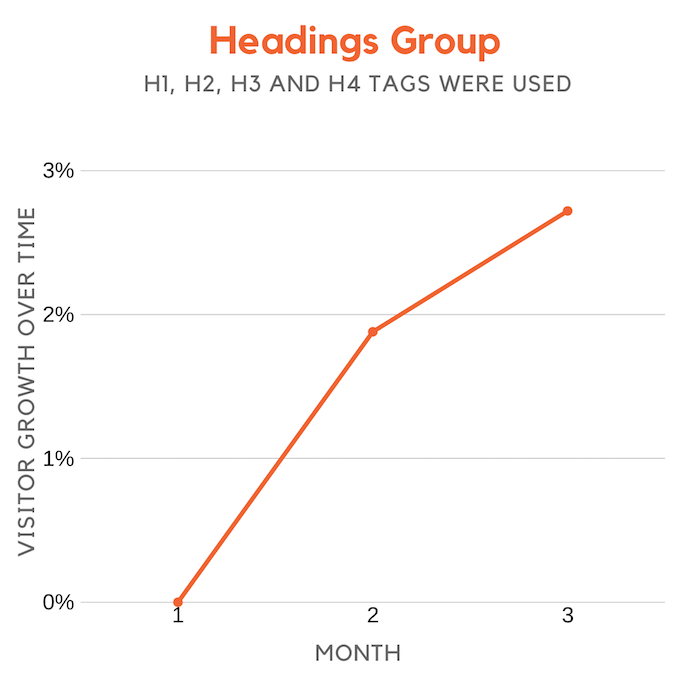
As you can see from the graph above, the before and after results weren’t much of a change when you compare it to the control group. Instead of a 2.89% gain, they had a 2.72% gain.

Keep in mind some of the pages in the control group were naturally using headings and some weren’t. Again, in that group, we made no changes.

But now as we dive into the next two experiments, you’ll see that the data gets interesting.

Using normal <p> text

What was interesting about this group is that no headings were used. And on top of that, we made sure all of the font sizes on these pages were exactly the same size.

What we saw was a decrease in traffic of 3.53%.

That doesn’t seem like a big swing, but when you compare it to the control group that’s a difference of 6.42%.

Now I wanted to see if the drop in traffic was due to the use of headings or usability. Because you have to keep in mind that when you make all of the text on the page the same size it impacts usability as well.

It makes the page less readable. And we saw that as the average time on page dropped by 12%. As for the bounce rate, we didn’t see much of a change.

Using normal <p> text and adjusting font sizes

This group didn’t use any headings but they did use different font sizes on the page to keep the pages usable (readable).

The graph shows that this group saw an increase in traffic of 2.85%.

Although headings may not be the biggest SEO factor, it does seem usability is.

When font sizes on a page are larger, it helps tell users and potentially search engines what part of a page and even which keywords are more important.

Conclusion

When you compare all 4 groups, the control had the largest gains. But it was insignificant, and you have to keep in mind that a lot of the pages in the control group also use headings. That group just had no changes.

From what the data shows, it doesn’t look like headings have a big impact on rankings.

Maybe if I ran the experiment longer the data would have shown otherwise, but my hunch tells me the data would be similar.

One thing we didn’t try was removing headings from all pages of a site or adding headings to all pages of a site that didn’t have any in the first place. If I were to re-run the experiment I would add in these 2 tests.

From what the data shows, Google does care about usability. Having different font sizes on a page helps tell the reader which elements are more important than others. It also makes the page easier to read.

Whether you make certain elements or words on the page stand out through large font sizes or headings, it’s clear that it is a good practice.

Now if I were you, I would still use headings because it can be useful for accessibility software that helps users navigate a page. Plus, it can potentially help with other search engines like Bing.

Plus with SEO, you aren’t going to see massive gains from one single tactic like you used to be able to. It’s about doing every little thing right. That’s why I recommend you run your site through this audit and fix every error.

So, do you use headings on your site?

The post Do Headings Really Impact Rankings? appeared first on Neil Patel.


from Blog – Neil Patel https://ift.tt/2xhYa8x

Tuesday, 7 April 2020

How to Adapt Your Marketing During the Coronavirus (COVID-19)

It’s been roughly a month now since the Coronavirus started to flip our lives upside down.

From having to practice social distancing and getting used to life without the outdoors to continually washing our hands and wearing masks and seeing loved ones and friends getting sick, the Coronavirus is something none of us expected.

Even our businesses our suffering. Just look at the Coronavirus marketing stats I shared a few weeks ago. The results are devastating.

It’s why I decided to change Ubersuggest and make it more free to help small businesses out.

Since then a lot has changed and there are new opportunities that have come around when it comes to your online business and marketing activities.

Opportunity #1: Help others selflessly

My ad agency has thousands of clients around the world. We lost a ton, but we still have enough to see trends in what’s happening.

When I saw businesses starting to lose a ton of money, I decided to give more of Ubersuggest’s premium featurs for free. That means it would take me much longer to break even, but hey that’s life.

Just look at the image below… you’ll see something interesting.

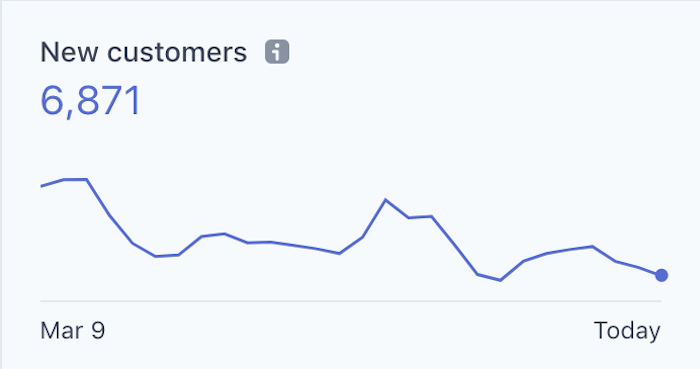
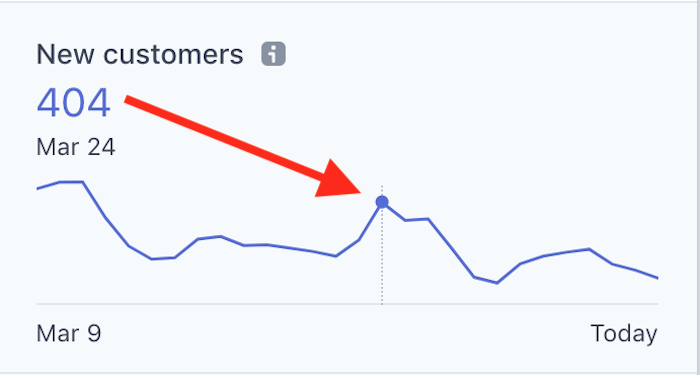
The chart breaks down how many free-trial signups Ubersuggest has received throughout the month.

Keep in mind, new customers means free trials… a large portion of free-trial users doesn’t convert into paying customers but still, the more trials you get in theory, the more paid customers you will eventually get.

As you can see, the chart is declining. That’s because I opened up more of Ubersuggest’s paid features and made them free.

What’s interesting is you (and other community members) helped support me.

The moment I blogged about more features being opened up for free, many of you decided to purchase a paid subscription.

I received dozens of emails from the marketing community thanking me and letting me know that they appreciate everything that I was doing AND they purchased a paid plan to help me out.

Now granted, in general signups are down, but that’s what happens when you decide to give away more for free. I didn’t do it because I am trying to leverage Coronavirus or look good, instead, I am just trying to help people out like I’ve been lucky enough to have people help me out during my time of need.

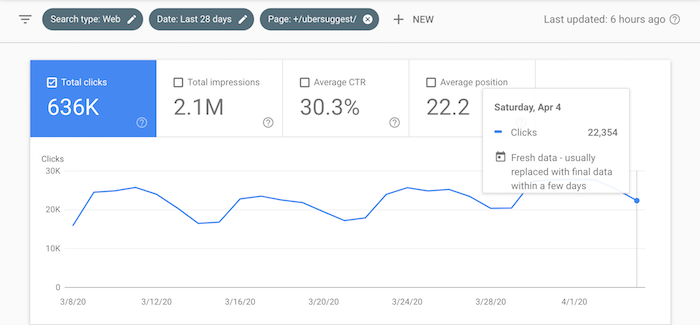
But here is what’s interesting… my traffic started to go up on Ubersuggest the moment I told everyone that I am giving more away for free.

I’m not the only one who experienced this.

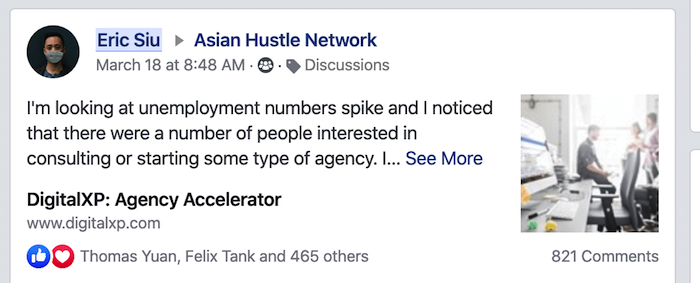
Eric Siu decided to give away a course that teaches people how to start a marketing agency for free (he normally charges $1,497) and a bit more than 250 people have taken Eric up on his offer. If you want it, you can get it here for free.

This has led Eric to gain more social media fans and it’s given him an opportunity to do a webinar about his product/services to a new audience of 50,000 people.

Similar to me, Eric wasn’t trying to do this to gain anything, he is just trying to help people out.

I also know someone in the health space who did something similar and one person in the employment space.

They all saw the indirect benefits of helping people out.

In all cases that I have seen, the result is more traffic.

With your website and business, consider what you can give away for free. Anything you can do to help people out is appreciated, especially during this difficult time. You’ll also find that it will drive you more visitors, which is a nice indirect benefit.

Opportunity #2: Paid ads are really, really cheap

The latest trend we are seeing is that paid ads are becoming cheaper.

It makes sense because the way these big ad networks make money is through an auction system. They need small businesses to drive up the cost per click (CPC) for ads so that way the big, billion-dollar corporations have to spend more money on ads.

If you don’t have as many small businesses advertising (like we are experiencing now) there isn’t as much competition for the inventory, so the cost per click decrease.

But the virus has been causing us to spend more time online, so much so that companies like Netflix have had to reduce their streaming quality to help.

In other words, traffic on the web is up and there are fewer advertisers. This means ads are cheaper.

Now we are also seeing conversions rates dropping in certain industries, but nowhere near at the same rate as the CPCs.

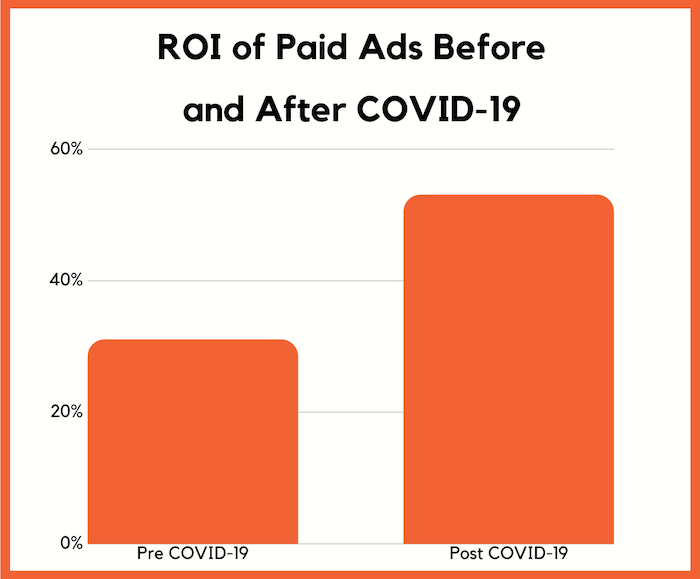
When we average things out per industry and globally, we are seeing paid ads producing a much higher ROI than before the Coronavirus hit. Just look at the chart below.

Our clients, in general, have seen their ROI go from 31% to 53%. That’s a 71% increase in ROI.

If you haven’t tried paid ads yet, you should consider it. If you do, consider ramping up as there is more excess inventory than there has been in years.

Opportunity #3: Conversions are down, but there’s a solution

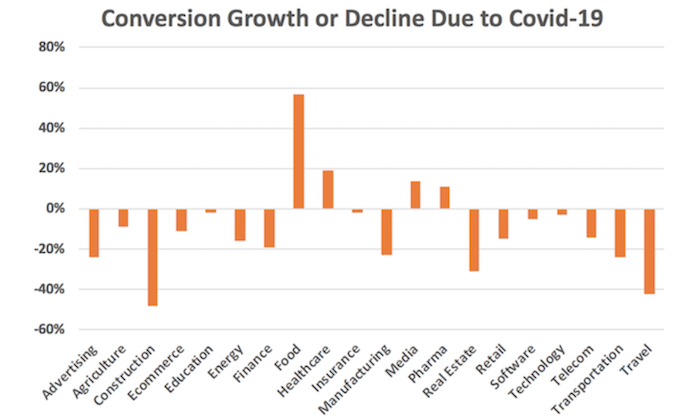
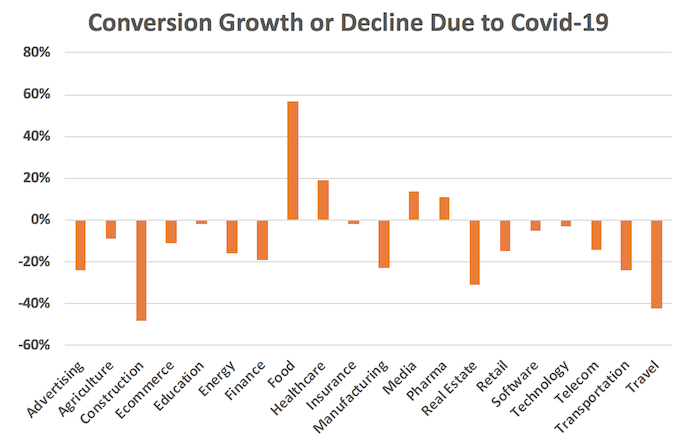
For many industries, conversion rates are down. Here’s a quick snapshot of what it looked like right after the first big week in the United States.

Since then, things have changed. For some industries, it has gotten better, but for others like travel, it’s still terrible and will be for a while. Delta Airlines is currently burning $60 million a day.

But we found a solution that has boosted conversion rates by 12% on average.

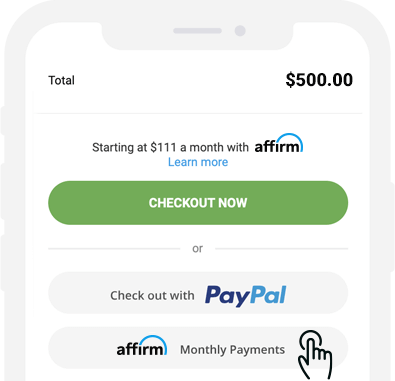
If you are a store selling something online, consider offering payment plans through services like Affirm.

Payment plans reduce the financial burden your customers will face in the short run.

And you don’t have to be an e-commerce company to leverage payment plans. If you are selling consulting services, you can accept money over a period of a year.

If you are selling ebooks or digital courses, you can also have a monthly installment plan.

When I sold digital products on NeilPatel.com, I found that roughly 19% of people opted in for my payment plan.

It’s an easy way to boost your conversion rates, especially in a time where many people are looking to reduce their cash spend in the short term.

Opportunity #4: Offer educational based training

If you are looking for a good opportunity, consider selling your audience educational based courses.

With unemployment numbers reaching all-time highs, more people than ever are looking for new opportunities.

Many of these opportunities are in fields like high-tech that not everyone has experience in.

And, of course, going back to school can be expensive and is time-consuming. Plus, let’s face it… you can probably learn more applicable knowledge on YouTube than sitting in a college class for 4 years (at least for most professions).

So, where do people go to learn? Any online education website offering very specific, niche advice and courses.

Whether that is Udemy or you are selling your own courses, people are looking for help.

If you don’t know how to sell online courses in mass quantity, follow this. I break it down step by step and even give you the templates you need to be successful. It’s the same ones I used to reach over $381,722 a month in sales.

Opportunity #5: Geography diversification

COVID-19 is a global issue. But it is affecting some countries worse than others.

For example, South Korea has had better luck controlling the spread of the virus compared to many other countries.

And countries like the United States and Italy have exploded in daily cases.

With over 84,000 new cases a day and growing quickly, the spread of the virus or the slowdown of the virus can affect your traffic drastically.

For that reason, you should consider diversifying the regions you get your traffic from.

Through international SEO, you can quickly gain more traffic and be less reliant on one country’s economy.

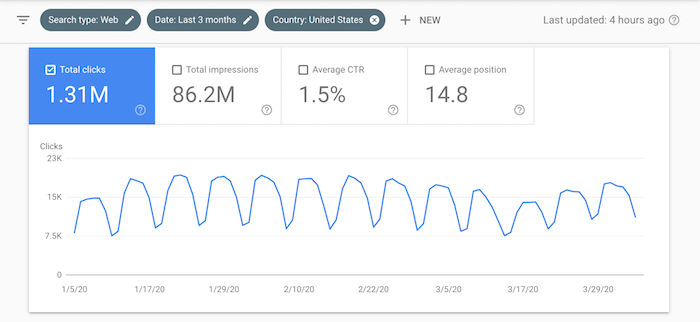
For example, here is my traffic swing for my SEO traffic in the United States over the last few months.

The US traffic is slowly starting to climb back. It’s still not back to where it was during my all-time highs, but it’s not as low as when the Coronavirus first hit the United States.

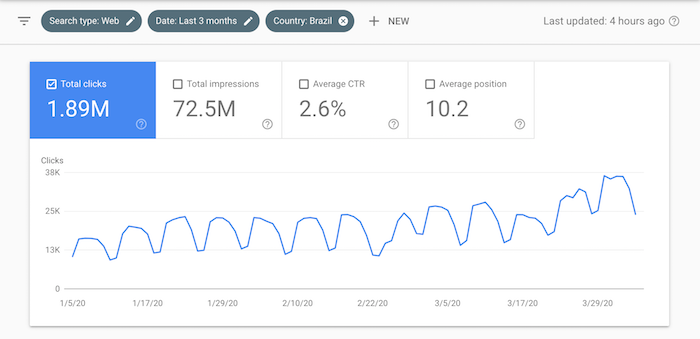
On the flip side, our traffic in Brazil has been going through the roof.

We haven’t changed our strategy, it’s not algorithm related… we haven’t produced more content than usual… we’ve just seen an increase.

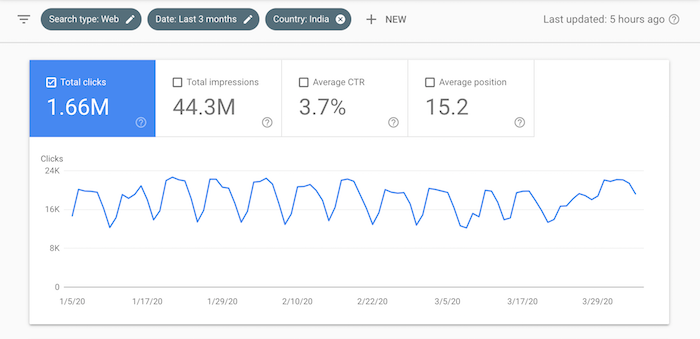
We are also starting to see a nice increase in India.

By translating your content for other regions and leveraging international SEO, you can quickly grow your traffic.


Sure, it may take 6 months to a year to start seeing results in the United States, but that isn’t the case with regions like Brazil where there isn’t as much competition.

If you want to achieve similar results to me, follow my global SEO strategy. It works well… just look at the images above.

Conclusion

Sadly, the next few months are going to get worse. The daily count of new Coronavirus victims is growing.

From a personal standpoint, all you can do is stay indoors and practice social distancing.

But from a marketing, business, and career perspective, you can make a change.

You should have more time now (sadly), so use it to your advantage. Put in the effort so you can grow, that way you’ll come out of the Coronavirus stronger.

So which one of the above opportunities are you going to implement first?

The post How to Adapt Your Marketing During the Coronavirus (COVID-19) appeared first on Neil Patel.


from Blog – Neil Patel https://ift.tt/2RjRzRx

Tuesday, 31 March 2020

The New Way to Chat With Your Visitors

Marketing has evolved into an omnichannel approach. This means you can no longer just go after one channel to succeed.

Back in the day, companies like Facebook grew into billion-dollar businesses through one channel.

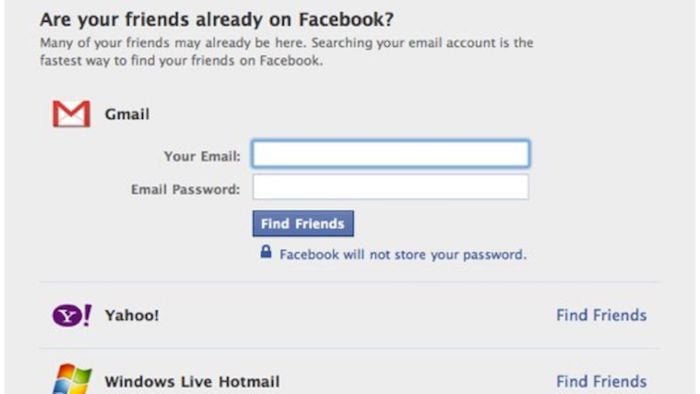
Facebook used email to grow and they did it by having you invite all your contacts to join Facebook.

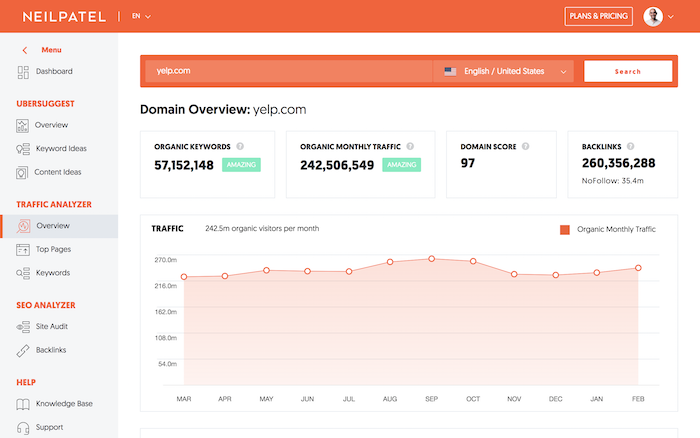
Yelp was also similar. They grew into a multi-million dollar business through one channel… SEO.

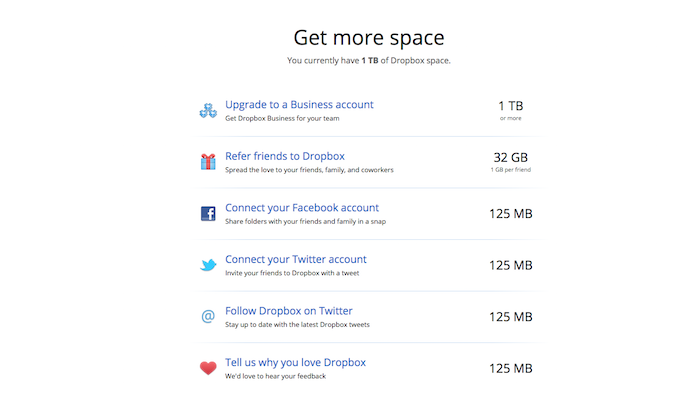
Dropbox grew through social media. If you tweeted about Dropbox, they would give you more space.

These marketing approaches worked well for all of these well-known companies, but what’s wrong with them?

The law of shitty click-throughs

What worked for Facebook, Yelp, and Dropbox were all great strategies, but over time, all good marketing channels got saturated and stopped working like they used to.

As Andrew Chen puts it, first it works and then it doesn’t.

It really is that simple. Sure, those channels can still drive traffic and always will, but as people get used to them, they won’t work as well.

Just check out this image below.

Can you guess what that is?

That was the first banner ad. AT&T created that banner ad and placed it on HotWired.com in 1994. And here’s what’s really crazy… out of all the people who saw it, a whopping 44% clicked on it.

Just think about that… that banner ad had a 44% click-through rate.

We can all agree it’s not an amazing banner ad or design, it just so happens that it was new and novel at the time, so it generated massive amounts of clicks.

Just like how SEO was more effective earlier on, or paid ads were more affordable and produced a higher ROI, or referral marketing was much more effective. There are a lot of single-channel case studies that worked in the past.

Again, it doesn’t mean any of these channels don’t work, it just means that they don’t work as well as they used to work.

So how do you survive in a competitive market?

You take an omnichannel approach. You don’t have a choice other than to use all of the marketing channels out there.

Yes, they will be competitive and saturated, but they still work.

It’s a game of papercuts… papercuts are small and don’t do much damage, but if you have tons of these small papercuts, they will add up and can do some damage.

The same goes with your marketing. If you add up all of these channels that produce a small amount of ROI, it will add up to a big number at the end. But when you look at each channel individually, the results aren’t that sexy. But when you combine them, it looks great.

Start with chat

What do you check more, your text messages or your email inbox?

I bet you are going to say text messages because you look at your phone more often than logging into your email inbox.

But here is an interesting stat for you… did you know that over 6 billion SMS messages are sent daily?

Now can you guess how many emails are sent daily?

269 billion!

That’s a big difference.

And do you know how many people visit Facebook each day?

1.62 billion.

Now the point of me sharing those stats isn’t to try and tell you that email is better than text. Or that Facebook isn’t as valuable as text messaging.

It’s more so to show you that they are all massive channels that people are using each and every day.

So why wouldn’t you try and leverage all of them?

And you can easily do so through free chat marketing tools like Manychat that allow you to communicate to your visitors using text messaging, email marketing, and Facebook Messenger.

Once you have created your Manychat account, go here to watch how to set it up. They have tons of very helpful videos that teach you how to do things like setting up Facebook Messenger bots and connecting your Facebook page so you can start sending out messages.

Now that you are all set up, I want you to use the following templates for your business as I know they convert…

Templates that convert

My team and I have tested out tons of different messaging for all channels, such as email, messenger and text messaging.

Here are the ones that have worked the best for us…

Text messaging templates

My favorite text message to send someone is:

[first name]?

When someone sends you a text with just your first name and a “?” what do you do? Chances are you respond with… “who is this?”.

Once someone responds with who is this, our sales reps typically respond with…

This is John from Neil Patel’s team. I just wanted to follow up to see if you have any questions or if we can help you with anything.

It’s simple and it works well and it has boosted our sales by 4.69%.

Another one that works well is a “flash sales” text message…

Flash Sale: All product on [yoursite] are [x]% off for the next 24 hours. [insert URL]

This one works really well during holidays or anytime you want to run a promotion. Depending on the size of the business you run and how big your list is, you will usually see an additional 2 to 3% in revenue for that month.

And my favorite text campaign is…

Check out this new blog post, [subject of the blog post] [URL]

An example would be… “Check out this new blog post on doubling your SEO traffic [URL]”

When I send out text message alerts for new posts, it usually increases the traffic to that blog post by another 4%.

Email templates

You’re probably familiar with this email template as you get it from me every week. 😉

Subject: How to Generate Leads When You Have Little to No Traffic

If you have a ton of traffic, it’s easy to generate leads.

But what if you have a new website or one with little to no traffic?

What if you don’t have any money to spend on paid ads?

What should you do?

Well, there is a solution. Here’s how you generate leads when you have no traffic.

Cheers,

Neil Patel

I send out an email every Tuesday and Saturday that looks something like that.

It’s a simple text-based email where the subject line is the title of your blog post and the text of the email states a problem and solution, with the solution being a link to the blog post.

To give you a rough idea, that email format has been getting me 29% to 33% open rates and 4% to 7% click-through rates.

And if you are selling info products through webinars, there are 8 types of emails I use to generate sales (check out that post if you want to learn how to make good money selling info products):

  1. Invite sequence – these are a series of emails that invite people to watch your webinar. (here are my invite emails)
  2. Indoctrination – you need to build a connection with people. People are more likely to convert if they know more about you and trust you. (here are my indoctrination emails)
  3. No shows – just because someone signs up to watch your webinar, it doesn’t mean they will attend. For everyone who doesn’t attend, you’ll want to email them and get them to watch the replay. (here are my no show emails)
  4. Encore – not everyone will watch your whole webinar. If they don’t stick to the end they won’t see your offer. You’ll want a few emails that push the replay. (here are my encore emails)
  5. Objection handler – there are a handful of reasons someone may not buy. You’ll want to answer each of those objections through email. (here are my objection handler emails)
  6. Countdown sequence – you’ll want to close off your course. Letting people know that they only have a few days left to buy is a really effective way to generate sales. These emails will roughly make up 1/3 to half of your sales. (here are my countdown emails)
  7. Last chance email – on the last day you’ll want to send a few emails letting people know it is about to close. (here are my last chance emails)
  8. Free trial offer – the majority of people won’t buy from you. Offering the last chance free trial offer is a great way to roughly get 15% more sales. (here are my free trial emails)

If you are selling products, there are 3 main emails that I’ve found to work well. The first 2 are for cart abandonment.

Subject: Did you forget something?

We noticed that you left something behind. Don’t worry though, we saved the items in your cart so you can easily complete your purchase.

[insert picture of products]

CTA button: Return to cart

This simple abandonment email typically increases sales by 1.73%. I know it’s not a lot, but it’s all about the papercuts as I mentioned above. 😉

Subject: Still thinking about it?

If you can’t decide on whether [insert product name] is right for you, here are some of the benefits:

[insert benefit 1]

[insert benefit 2]

[insert benefit 3]

[insert benefit 4]

[insert benefit 5]

[insert benefit 6]

So, what are you waiting for? You have nothing to lose with our 30 day no questions asked money back guarantee.

CTA: Complete my purchase

On average this email has provided our customers an increase of 1.44% in sales.

Subject: Who doesn’t love 15% off?

Explore new [type of products you sell] that will help you with [insert benefit].

Sale ends at [insert date and time].

CTA: Claim my discount

Now with the discount/coupon code email, we’ve found the results to vary a lot. The bigger the discount, the more sales you will typically receive. The biggest gains are when companies offer over 30% or greater discount.

Facebook Messenger templates

Unlike email and text, you can’t just easily just message people on Facebook Messenger and do whatever you want. There are rules

  • You can message a subscriber within the last 24 hours of your last interaction.
  • Within that 24-hour time period, you can send promotional material.
  • After the 24 hour period, messages must contain one of these 4 tags: confirmed event update, post-purchase update, account update, or a human agent.
  • For users who opt-in to receive messages after 24 hours, you can, of course, message them.

As for templates that work, because Facebook is continually changing Messenger rules, follow these templates over at Manychat as they constantly change based on real-time data of what is working or what isn’t.

Conclusion

You have no choice but to take an omnichannel approach with your marketing.

Sure, all good channels eventually get crowded and click-throughs will decrease over time, but if you go after all of the main channels the marginal gains will add up.

And the easiest way to start with going omnichannel is with chat. I know you are probably using email, but I bet you aren’t using text messaging or even Facebook Messenger bots. And I bet you aren’t using push notifications either.

So, how many marketing channels are you using?

The post The New Way to Chat With Your Visitors appeared first on Neil Patel.


from Blog – Neil Patel https://ift.tt/3dBBmAK

Tuesday, 24 March 2020

Ubersuggest is Now More Free

Please read the whole post as I have a few surprises for everyone and it affects all member types.

A month or so ago, I blogged about the future of Ubersuggest and how there will still be free plans along with paid ones.

But as you probably noticed, the free plan wasn’t as generous as you were hoping for.

And with Coronavirus growing at a rapid pace and affecting so many people and businesses, I thought I would do my part and help small businesses out.

Because if I help you grow a bit more without spending money, hopefully, you won’t have to lay off any people and, ideally, you will even be able to hire a few more people.

So today, I have made Ubersuggest “more free” and over the next week, it will become even more free.

What does that mean? Let me break it down for you…

You’ll have full access to historical data

First off, anytime you want to view graphs on historical data, you no longer have to pay.

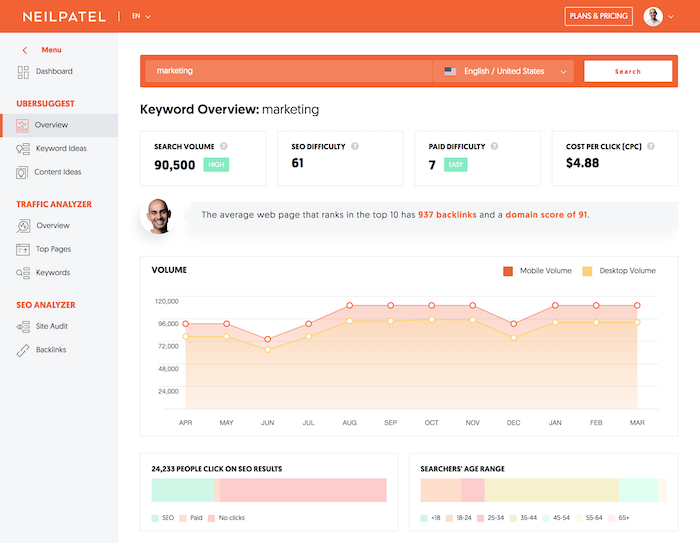
For example, if you want to see how popular a keyword was over the last 12 months, all you have to do is type it in and you’ll see the data.

If you aren’t logged in, you only see 3 months’ worth of data (this is to help stop scrapers and reduce server expenses), but once you log in, which again is free, you’ll see historical data.

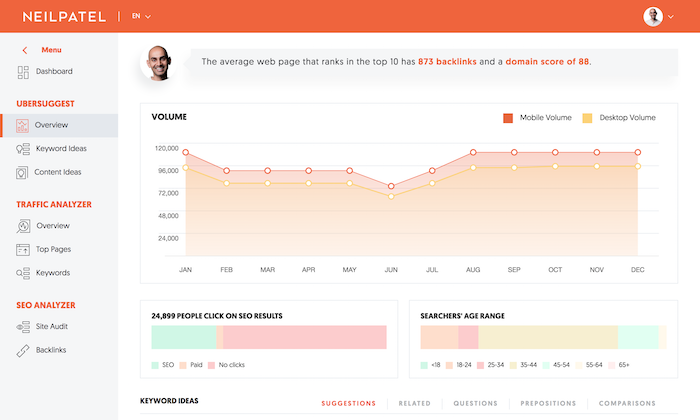
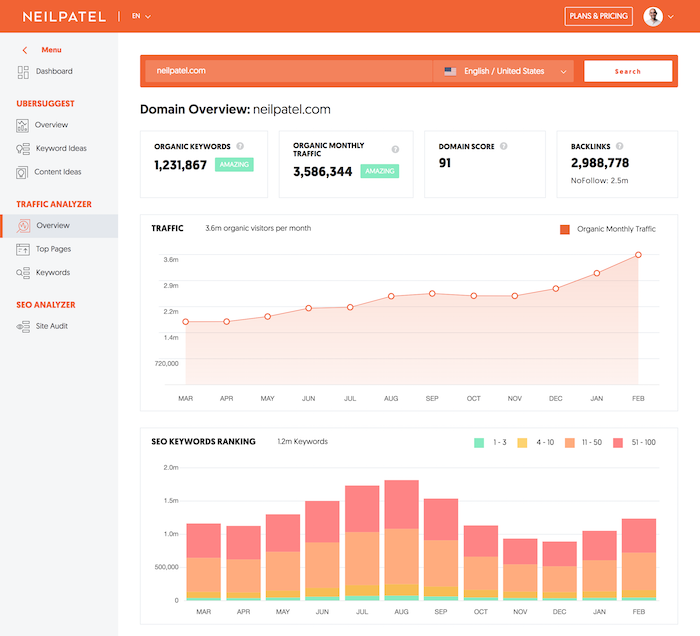
The same goes for traffic estimates. Anytime you look up a competitor, you’ll be able to see their search traffic over the last 12 months as well as how many keywords each site is ranking for during that time period.

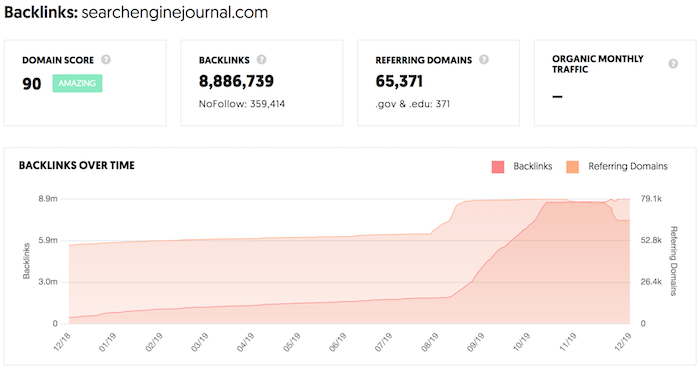
As for backlinks, there is a historical link graph and a new and lost link graph.

Currently, it is blocked off for only paid members, but in the next 7 days I WILL BE OPENING IT UP FOR FREE.

Sorry for the delay, but it takes my developers a bit of time to make this change.

So, within the next week, this will also be available for free.

You also have access to more keywords

Have you performed keyword research recently?

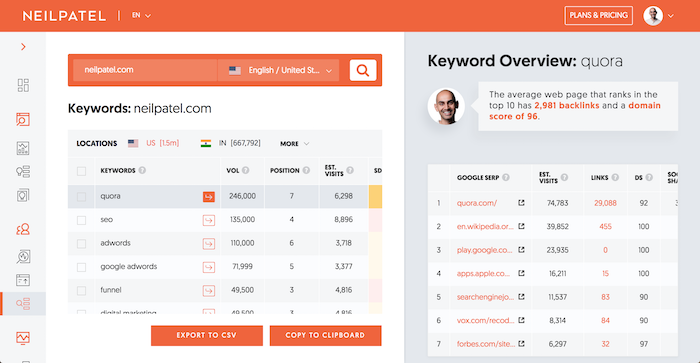
If you haven’t tried, look up a domain and go to the “keywords” navigation item…

Once you land on that report, you will see a really long list of keywords. 🙂

If you aren’t logged in, you’ll be asked to do so, and this is also free. The reason being is this helps stops scrapers and reduces server costs.

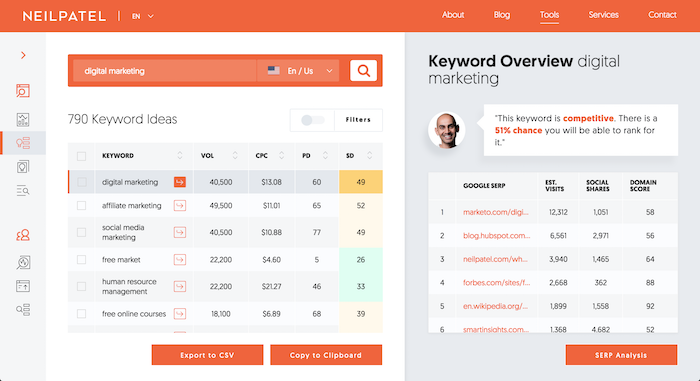
The same goes for the keyword ideas report. This report gives you more keyword suggestions once you enter in a keyword.

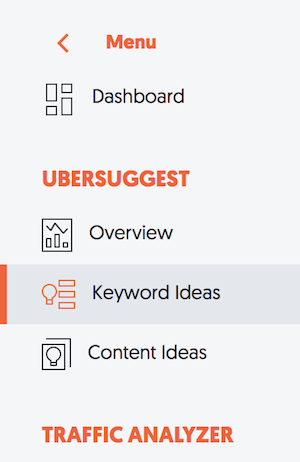
In the navigation menu bar, click on “keyword ideas.”

Enter in a keyword and you’ll be given a list of other related terms.

Again, you may be asked to log in, which is free, but that is to reduce scrapers on our end to save on server costs.

More content ideas and top pages

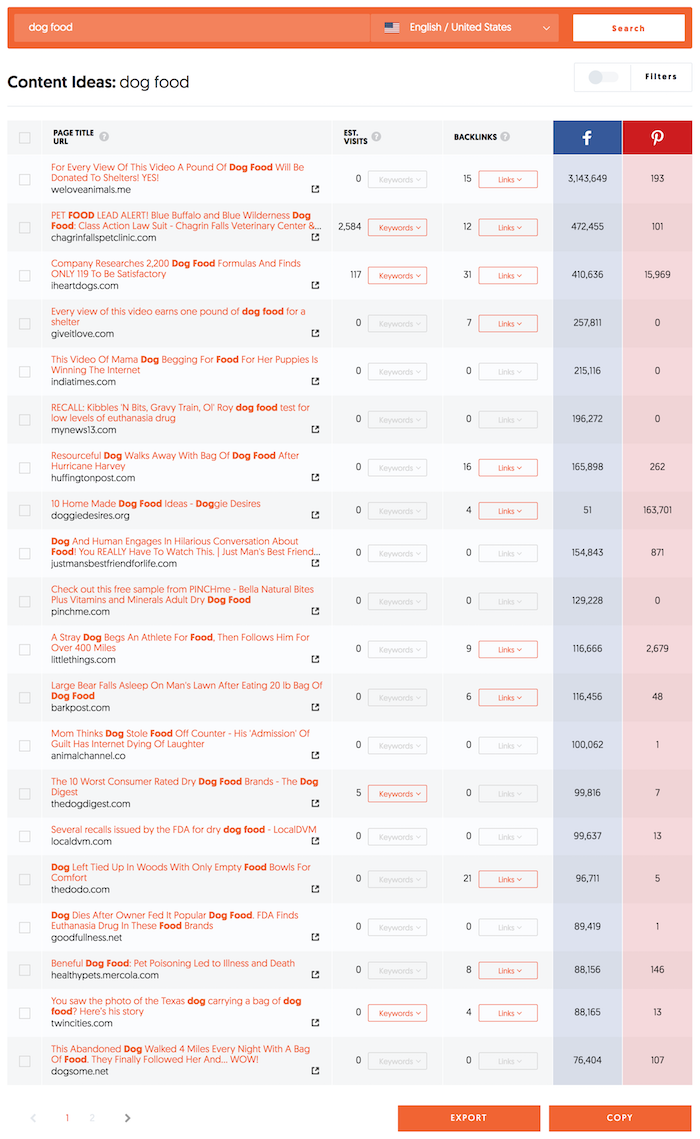
Over the next 7 days, we are also going to make the content ideas report and the top pages a bit more generous.

We will probably provide four times more results for free on these two reports.

So when you are looking for ideas for your next blog post, you’ll see more recommendations.

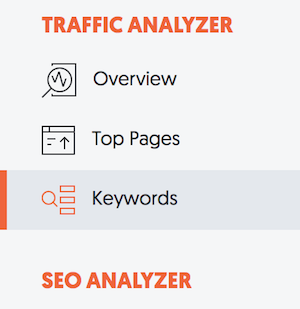
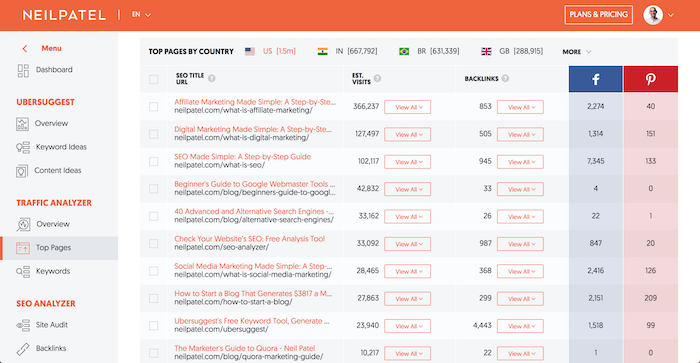
Or if you are looking up a competitor to see which pages drive them the most traffic, you’ll want to go to the “top pages” report. In the navigation, click on “top pages.”

At the moment, you can see some for free, but again in the next week, you will be able to see roughly four times more without having to pay for it.

The changes with the content ideas report and the top pages may be rolled out sooner but by next Tuesday at the latest, they will be ready.

There’s also more good news

My goal with Ubersuggest isn’t to make money. It is honestly to break even as my costs are so high. It’s well over $200,000 a month. 🙁

These changes will probably make it take 12 months for me to break even instead of 6 months… but hey, that’s life. It’s the least I can do with all of the businesses out there struggling due to the Coronavirus and all of the people getting sick.

As paid members, you will still get access to more data, be able to create more projects, and crawl more pages to find SEO errors.

But I am going to sweeten the deal for you over the next 30 days as I am adding some stuff that is going to really help you grow your traffic.

Here’s what I am thinking:

  1. Bi-weekly training – every month, my team and I will be holding 2 group calls to help you grow your traffic. The first call will go over an SEO tactic that you need to implement and I will break down how you can do so. The second monthly call will be a QA where anyone can ask me and my team questions and we will answer them. And if you are wondering if I am going to be on the calls, I will. With my busy schedule, I probably will miss some, but I will be on many of the calls training you myself.
  2. Weekly action plan – I’m currently working on an SEO action plan. As a paid member, I will be giving you 12 things to implement (one each week for 12 weeks) to grow your SEO traffic. If you implement them, you’ll get more traffic. I know many of you are busy business owners, so I am trying to make things easy and help you get the most traffic with the least amount of work.
  3. On-demand help and support – we are adding live chat to Ubersuggest and the NeilPatel.com site. That way you can talk with my team of SEO experts, ask any questions related to your site or marketing, and we will help you. That way you can get customized one-on-one advice. This is what you’ll really need to grow.
  4. Ultimate SEO course – I’m working on an SEO course that teaches you everything about SEO. It’s looking like it will be over 20 hours of video training material as well as worksheets, cheat sheets, and templates for you to use to make it easier for you to get results.
  5. Private Facebook group – we have a pretty decent size community, so why not leverage it to help each other grow? We will be creating a private Facebook group or Slack group (not sure which one), were we all help each other grow our traffic.

You’ll start seeing this stuff rolled out within 30 days as well as the Chrome extension which is in the final round of testing.

I also have some cool new features that we are close to adding that I know you will be excited for. 😉

Conclusion

Over the next 30 days, if you are a paid member, you’ll be getting even more.

And if you are strapped for cash, no worries. I am making the free plan even more generous, as you can see above. Just give Ubersuggest a try and you’ll see it is already “more free.”

My goal has never been to make money with this tool. It’s to help small and medium business owners succeed.

I know times are tough right now but try to stay safe by staying indoors more often and practicing social distancing.

So, what do you think about the new Ubersuggest Free plan?

The post Ubersuggest is Now More Free appeared first on Neil Patel.


from Blog – Neil Patel https://ift.tt/2xkWpH8