FREE TRAFFIC TO YOUR SITE

FREE TRAFFIC TO YOUR SITE
free youtube traffic

Saturday, 10 December 2022

How to Get More YouTube Views: 8 Steps with Examples

Graphic saying How to Get More YouTube Views: 8 Steps with Examples

Marketers who use YouTube are usually keen to reach the widest audience possible. After all, the more YouTube views you get, the more exposure.

While they’re not the only metric that determines the success of your YouTube marketing, generating a decent number of views for your videos is something that you should definitely try to achieve. After all, there’s no point uploading a video if nobody is going to watch it, especially your target audience, right?

Perhaps you’ve got doubts about YouTube, and I understand that. I mean, who wants another platform to master creating content for? However, it makes absolute sense for your business to get on YouTube if you haven’t already.

YouTube attracts 2.6 billion global monthly users. Now, I can’t guarantee your success, but with such a vast audience from all walks of life, it’s likely that some of your target market will visit the platform. You might as well meet them there.

If you need some more convincing, what about this research? Google found that 40 percent of consumers bought a product they found on YouTube.

However, just posting content isn’t enough; if you’re not getting YouTube views, you’re wasting your time. Without views, you’re missing fresh opportunities to engage with your audience (incidentally, this article has some tips if you want some quick wins to increase engagement).

In this post, we’re going to take a look at tactics that you can use to get more views on YouTube.

We’ll cover some of the fundamentals to help you over the long term and some unique tactics that you can implement to generate quicker results with your target audience.

By the end of this post, you’ll have a high level of confidence in knowing what needs to be done to generate more YouTube views.

What Counts as YouTube Views?

Before moving on, there’s something I must clarify: what counts as a YouTube view?

Here’s what you need to know: YouTube views depend on someone watching a video for at least 30 seconds.

Another key note is that the viewer needs to have intentionally initiated the video viewing. For example, they’ve clicked through to it.

Rewatching a video also counts towards YouTube views, provided the video is watched for 30 seconds.

Now that you’re clear on that, let’s move on to some tips to start attracting viewers.

Great Video Content Gets More YouTube Views

It’s the golden rule on any platform, and applies here too. If you want more YouTube views, then you must publish great content.

Sure, you could just upload a video that doesn’t offer any major takeaways and press ‘publish’. That would get your content out there, but it wouldn’t be share-worthy, so why bother?

What makes excellent content?

  • First, you need engaging and exciting visuals, like high-quality footage or creative animations. Whatever you choose, make sure it’s eye-catching and holds viewers’ attention. For help with creating professional-looking videos, there are plenty of tools available, like InVideo.
  • Second, consider your audio quality. No one wants to listen to a video with muffled or distorted sound. Make sure your voice is clear and easy to understand and that any background noise is kept to a minimum.
  • Finally, think about the overall story you’re trying to tell with your video. Is it informative? Entertaining? Inspiring? What do you want to convey? Whatever it is, make sure your video is well-organized and flows smoothly from beginning to end.

If you can do that, generating more views for your videos becomes a heck of a lot easier. For one thing, the better your videos are, the more likely people are to share your videos on social media.

Since I don’t know your business or your audience, I can’t tell you precisely what you should be doing to create amazing videos, and I can’t promise you thousands of YouTube views.

I can tell you this: awesome content provides exceptional levels of value.

It’s important that you don’t get caught up in the wrong things when looking to create great content to get more YouTube views.

People often worry about content length and production quality.

Sure, the content length might matter to a certain extent. However, are you really going to stop watching a 1-hour video if it’s providing immense value? Probably not.

In fact, it’s worth remembering that the average length of a YouTube session of 29 minutes and 37 seconds.

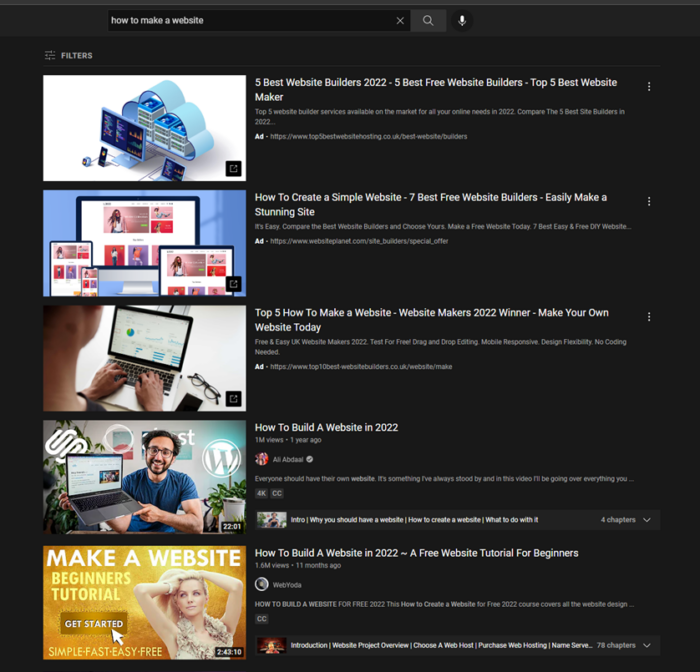
Value trumps everything for search results, especially high production quality, and if you offer quality, people keep watching. Here’s an example:

The video below ranks near the top in YouTube search results for ‘how to build a website,’ runs for over two hours and has attracted 2.5 million views and counting.
Screenshot of YouTube's search page.

So remember, content length isn’t something that you should obsess over on this social network.

Step 1: YouTube Views Don’t Depend on Video Production

An increasing number of companies are investing in YouTube. Often, these businesses create highly produced, glossy videos, but you don’t necessarily have to take the approach.

You see, if you’re publishing quality content, YouTube is generally pretty forgiving: your videos don’t need to be perfect. When your videos start to get some traction, that’s the time to think about investing in fancy production and camera equipment to help you get more YouTube views.

However, to begin with, just make sure that you cover the basics. For example, if you’re creating a:

  • ‘talking head’ video, ensure everything is well-lit and the audio is clear.
  • screen capture video, ensure that the resolution is high and the audio is easy to hear.
  • slideshow, create something simple and visually engaging. Use strong images and minimal text on your slides. You can use a tool, like Haiku Deck, for this. A custom thumbnail also helps people remember your brand.

Step 2: For More YouTube Views, Focus on Value Above All Else

Remember, providing value should be your guiding principle when it comes to getting YouTube views.

If you want to learn how to provide value, you have to learn more about your audience and, more specifically, what they like. You may be wondering how you find the type of content that appeals to your target market. It’s simple: Just look at content in your niche.

There are a few approaches you can take.

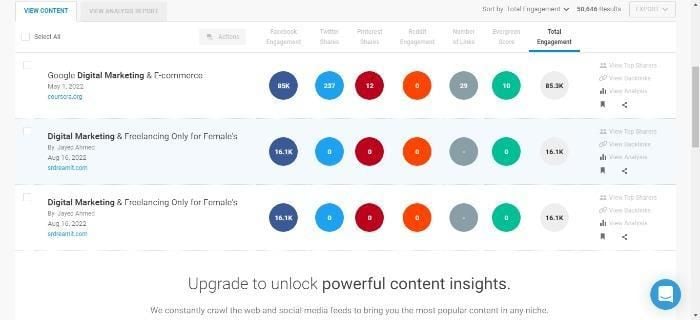
The first is to take a look at blog posts that have done well in your niche. Then, create incredibly informative videos based on those blog post topics.

You can find such blog posts using Buzzsumo. Just enter your keyword, press search, and you’ll get a wealth of ideas.
Screenshot of Buzzsumo's webpage.

Alternatively, you can look at other YouTube videos that have done well in your niche and create better videos. If your competitors have a YouTube channel, look at the type and frequency of content they are putting out.

If you’re an expert in your niche, then it shouldn’t be hard to create high-quality videos when using other videos as inspiration.

However, if you find yourself struggling, take a moment to assess what could have been done to improve the other video. For example:

  • Did it ignore something that was actually important?
  • Did the video fail to explain certain sections fully?
  • Did the video fail to provide actual results/case study information?
  • Was the pace too slow or too fast?
  • Was there too much information on the screen, or not enough?
  • Could diagrams have been used to illustrate a point better?
  • Maybe you could’ve included some data?

Check out the comments section, too. Other viewers’ opinions are often extremely revealing, and they’ll say if they felt the video was lacking something and could have been better in some way.

Finally, why not use the YouTube Search engine to help you come up with content ideas?

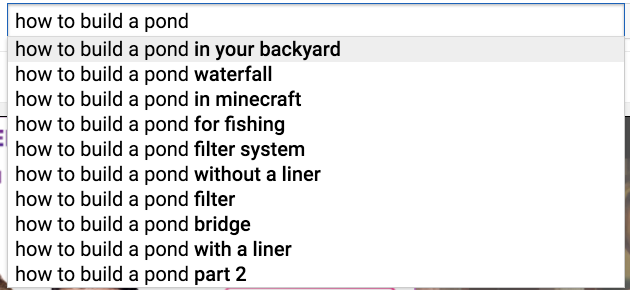
Say I’m in the business of teaching people ‘how to build a pond’ or building it for them, and I’m looking to do some content marketing.

I can just type ‘how to build a pond’ into the ‘YouTube Search box,’ and let the YouTube algorithm and Autosuggest do the rest.
A screenshot of YouTube's search engine with "how to build a pond" typed in.

Not all of the ideas are relevant, so I might select the first option and see what else comes up as a result of ‘Autosuggest.’

If I go with the option of ‘how to build a pond in your backyard,’ I’m presented with some helpful ideas.
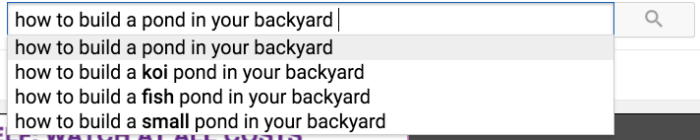
A screenshot of YouTube's search engine with "how to build a pond in your backyard" typed in.

I can then repeat that process, using other keywords, if I want to come up with even more video ideas.

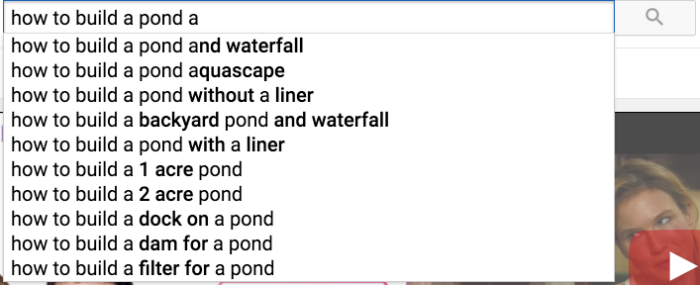
It might also be a good idea to cycle through the alphabet after having chosen a ‘base’ keyword.

This time, I type in ‘how to build a pond a

A screenshot of YouTube's search engine with "how to build a pond a" typed in.

As you can see, plenty of video ideas here look relevant. I can use those to create super niche video content that resonates with a certain demographic in the social media platform.

If you have an existing audience on YouTube, consider asking your audience what they’d like you to cover next.

More often than not, your audience provides you with ideas that you can use.

The great thing about these video ideas is that by acting on them, you can be sure that there is an audience for them.

If you have done a good job of creating great content that meets people’s needs, you’ll find that organic views will be easier to come by. This is because a recent change to YouTube’s algorithm means authoritative content, viewer satisfaction, personalization, and the video’s performance are all important ranking signals.

Therefore if your videos produce a great user experience, there’s a good chance that they perform better in the rankings, too.

Step 3: Optimize Your Videos to Get More YouTube Views

Optimizing your video can help ensure it appears when and where it should; this includes the search listings and the ‘related video’ suggestions.

If you want to optimize your video, there are four things that you must take care of.

  • Title
  • Tags
  • Description
  • Thumbnail

It’s easy to over-complicate this and over-analyze everything, but keep it simple and focus on the four areas above.

Step 4: Write Better YouTube Titles

For the title, it’s essential that you don’t use clickbait-style headings. Inevitably, if the content of the video doesn’t reflect the title, you’ll get a ton of disappointed viewers.

If you’ve created your video around a keyword, ensure that your title clearly explains that your video covers the subject in question.

For example, if I created a video based on the key phrase ‘how to bake a chocolate cake for beginners,’ my title might be…

How to Bake a Chocolate Cake for Beginners – Spent $5 and 5 Minutes cleanup

Note: If you want to write great titles, you might want to work out what your audience doesn’t like or its fears about the topic.

In the example above, people might worry that it costs a lot to bake a cake and that cleaning up is a pain. The video becomes much more enticing if I address that in the title.

Step 5: Use YouTube Tags

For the tags, provide some keywords related to your video’s topic. If we continue with the ‘chocolate cake’ example above, our YouTube tags might look something like this:
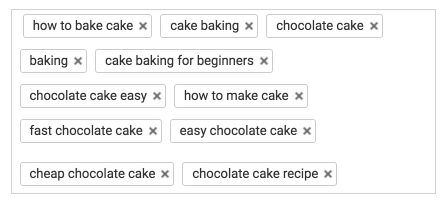
Screenshot of YouTube tags.

Try not to use more than 10-12 tags per video. You’ll lose your target audience and dilute search results data.

Picking the right tags helps your video appear in the ‘suggested videos’ section when someone is watching a related video.

Now, let’s take a look at the description.

Step 6: Create an Accurate, Optimized YouTube Description

When writing the description, it’s vital that you don’t try to ‘outsmart’ Google. In other words, don’t stuff keywords, and don’t rely on any ‘tricks,’ that you might come across.

You could end up over-optimizing your video, which can have the opposite effect.

Your aim with the description is to clearly detail what the video is about and what people learn from watching it.

If you look at the top results returned for a YouTube video search, you can see that there is a wide variation in terms of what the descriptions look like.

That’s because, as mentioned above, user experience also plays a big role in ranking the video; While your description is important, don’t get too stressed out about getting it ‘right.’

That being said, key areas to focus on include putting your link at the top of the video, getting a keyword in the first 25 words, including it 3-4 times, and trying to stick to that 250 word count range.

Here’s what an example description looks like.
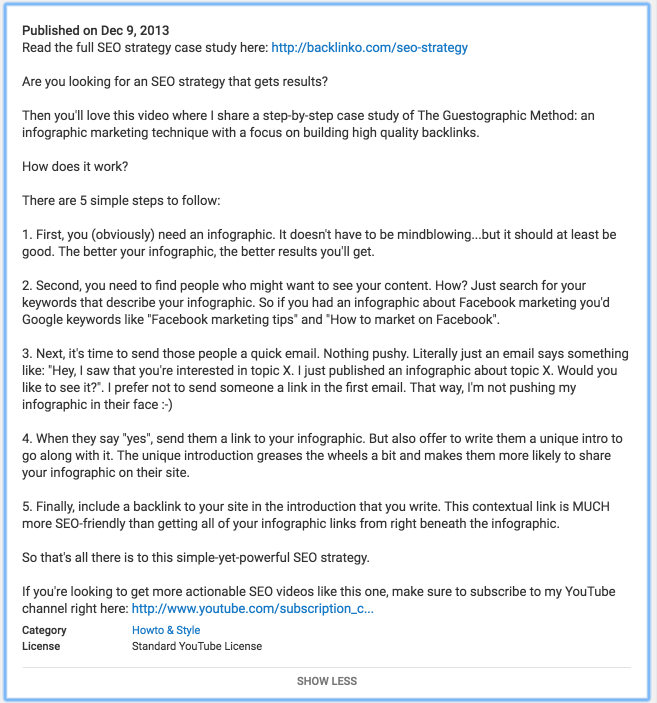
Screenshot of a YouTube description example to grow YouTube views.

However, as I said, the top-ranking videos all tend to have varying styles that they use for their description. You don’t necessarily have to follow what is above.

Just provide the story behind your video, what it covers, and what people will learn as a result of watching.

Note: If you want to do something that will improve user experience, consider providing ‘timestamps’ in your description so that people can quickly get to interesting sections of a video.

Step 7: YouTube Thumbnail Optimization

For the thumbnail, there are a number of approaches that you can take. I’ve covered how you can create engaging YouTube thumbnails in this post. A custom thumbnail becomes part of your media platform branding.

For the most part, you can experiment with the following.

  1. Use images of people in your custom thumbnail
  2. Edit your thumbnail to include text overlay using a keyword based on the topic your video covers
  3. Include an image that reveals an interesting section of the video – for example, the end result of a ‘how-to video.’

You will tend to find that you’re able to generate the best results when you combine some of the above.

Here’s an example of how you can use an interesting image and relevant text overlay.

Screenshot of an image with text overlay to increase youtube views.

As you can see, the custom thumbnail isn’t overly dramatic. It includes some text, related to the video keyword and an image of an interesting section of the video.

Here’s an example of using the image of a person, with text overlay and even possibly the ‘end result’ that is to be achieved, too.

Screenshot of an image with a person and text to increase youtube views.

You’ll want to experiment here, of course. But those two examples and the tips provided should be enough to let you know what tends to work well.

Step 8: Experiment With Ads to Drive YouTube Views

Ads might sound like a little bit of a cop-out here. I get it; you might not want to pay to play the YouTube views game.

However, running YouTube Ads is one of the best ways to generate the right views for your videos.

YouTube Ads let you target your ideal audience and make sure they find out about your video.

It takes a lot of the guesswork out of the whole process on this social media platform.

Running ads allows you to get real-time feedback on how good your video is, speeding the process of working out whether or not you have an engaging video on your hands.

If you find that people are watching your video to the end and sharing it a lot, then you know you’re on the right track in terms of the strategy that you’re using to actually create videos.

Where to begin?

Note: I’ve covered, in detail here, how you can create YouTube Ads.

When it comes to YouTube, there are essentially two kinds of ads that you can run.

  1. Ads that appear before or while people are watching YouTube videos, or ’Instream Ads.’
  2. Ads that appear in the YouTube Search listings or Search Listing Ads.

I recommend that you experiment with both.

Using YouTube Search, find videos in your niche that are related to your specific video topic and jot down their URLs.

Then, target those videos using the placements option.

Let’s say that I was starting a business that taught people how to bake, and I’ve just created a video based on ‘how to bake a cake.’

I head over to YouTube and type in ‘how to bake a cake.’
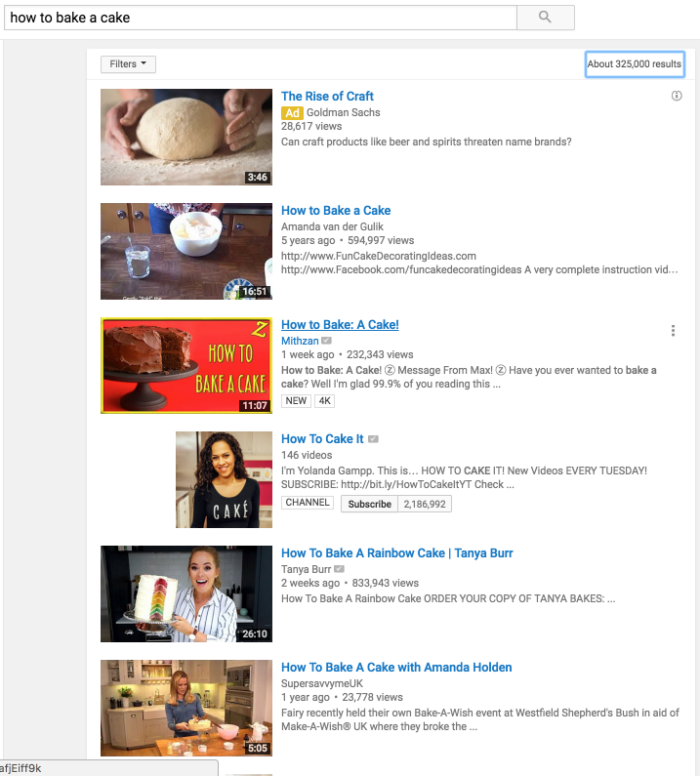
Screenshot of a YouTube search that says, "how to bake a cake" in the search box.

I then note down the URLs of these videos in a Google doc.

I then enter these URLs when setting up the targeting for my ads.

Of course, not all of the videos listed have ‘monetization’ enabled, meaning that you can’t show ads on all of them.

However, if you start with a list of 10-15 videos, you should have good delivery to your target audience.

If you want to target within the YouTube Search listings, then you obviously need some keywords to target.

To find relevant keywords, use the YouTube search box, then:

  • Enter a keyword that explains what your video covers. Then, write down other relevant keywords that are provided by ‘autosuggest.’
  • As you can see below, if I enter ‘how to bake a cake,’ I’m presented with relevant keywords worth targeting.

I’ve highlighted some that are potentially worth my while.
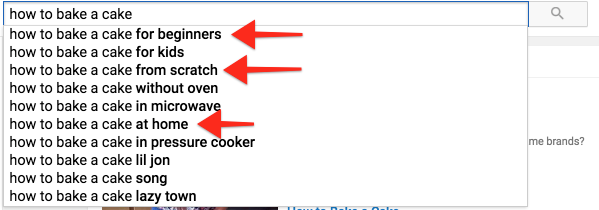
"how to bake a cake" typed into YouTube's search box with red arrows pointing to "beginners," "scratch," and "home" in the suggestion box.

Note: The assumption here is that I’m teaching people how to bake a simple cake. That is why I’ve chosen those somewhat basic keywords.

If I want even more relevant keywords to target, I just select one of the ideal keywords and then press the ‘spacebar.’
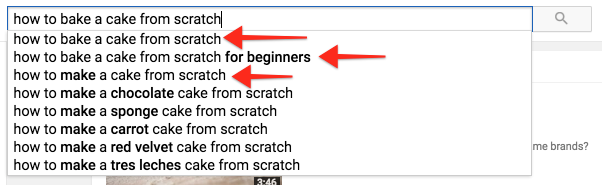
"how to bake a cake" typed into YouTube's search box with red arrows pointing to "beginners" and "scratch" twice in the suggestion box.

And I’m presented with even more keywords to target.

As I mentioned above, you can also cycle through the alphabet to find other relevant keywords.

Then, I just need to note these keywords in a Google Doc and input them when setting up my ad targeting.

Step 9: Promote Your YouTube Video Everywhere

Just because you’ve created a YouTube video doesn’t mean that you can now only promote it on YouTube.

Post links for your YouTube content to your other digital assets, including your email list, your Facebook page, and other social media sites.

If you know of some influencers who might find your video useful, you may even want to let them know via email that you’ve created something they might enjoy.

Consider posting a link or snippet in your Instagram stories.

Don’t be afraid to let the world know that you’ve got something new to offer.

Step 10: Increase YouTube Views By Building a Subscriber Base

You’ll also want to focus on building a subscriber base to get more YouTube views on future content.

If you can get subscribers, your videos will automatically get a good chunk of views as soon as you post them. If these views represent a good user experience, your video might also do a better job at ranking, too.

Here, I’ve covered how you can get more YouTube subscribers.

Aside from creating good content, there are some key steps that you can take to get more subscribers.

At the beginning and end of your video, mention that subscribing helps get the video out to more people in your social network.

By actually saying it, people may be more inclined to take action.

You can also make an effort to create content consistently.

Creating more videos will ensure there are more ways for your content to be found. This, of course, can help improve your subscriber count.

It also gives people a reason to become subscribers, as they’ll want to know when you publish new content.

Note: If you can create ‘Evergreen content,’ then the content you create will pay dividends for a long time, as it will still be relevant for people in the future.

This means that the video will drive YouTube views and subscribers, long after its creation.

FAQs

How Can I Get More Views on My YouTube videos?

The most essential parts are promoting your videos, building a subscriber list, and creating high-quality content. What makes high-quality content varies from niche to niche, so you need to know your audience needs before getting started on YouTube.

Can I Optimize My YouTube Videos?

Yes, and you absolutely should! To begin optimizing your videos, use descriptive and keyword-rich titles, include tags, optimize your thumbnail image and create transcripts of your videos.

What is YouTube SEO?

YouTube SEO is the process of optimizing your videos so that they rank higher in YouTube’s search results. Just like traditional SEO, several factors contribute to your ranking, like adding keywords to your titles and descriptions.

Conclusion

For many, getting more YouTube views sounds complex and obscure.

Hopefully, you now have a better sense of how to get more viewers to your videos.

There are many avenues that you can go down. The most important step is to create good quality content about topics important to your viewers.

If you can take care of that, everything else you do to get more YouTube views will be much more effective.

Do you have any tips when it comes to generating more YouTube views? Share what works for you in the comments section.

How do you promote your channel to get more YouTube views?


from Neil Patel https://ift.tt/IM3SYB8

Friday, 9 December 2022

What Marketing Automation Campaigns You Need to Start Doing ASAP

Graphic saying: What Marketing Automations You Need To Start Doing ASAP

There are only so many hours in a day.

24, to be exact.

And if you’re like me, you have a list of seemingly never-ending tasks to fill those hours.

Social media posts, blog posts, SEO, PPC, financials, processes – you name it.

But when you’re scaling and growing your small business, you need to start cutting time from as many tedious tasks as possible.

You don’t have time to run the business and still email every single customer after they purchase your product.

You don’t have time to nurture prospects and leads with personalized messaging.

The thing is, it still needs to be done if you want your business to survive (and you do).

Thankfully, to continue nurturing your relationships with your customers and maintain your business, there’s marketing automation.

Instead of wasting time on menial processes, you can automate digital marketing tasks and save loads of hours and frustration.

And you won’t be alone.

In fact, more than 50% of companies are using marketing automation.

Almost half of B2B companies are planning to adopt it.

67% of the industry leaders in marketing are using automation to improve and grow their companies.

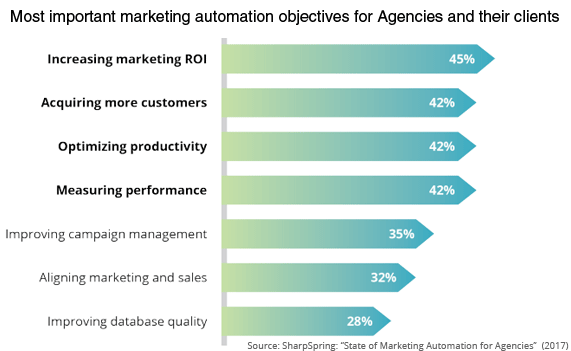
And they use marketing automation for a variety of objectives, from increasing ROI to getting more customers.

A table highlighting the most important marketing automation objectives for agencies and their clients

This means that the top marketers in the business are using this innovative technology to save time.

So, if you want to make your business more efficient, you need to be running these marketing-automation campaigns, too. 

But, first, let’s jump into exactly what marketing automation is.

What Is Marketing Automation?

So, what exactly is marketing automation?

Here’s my definition:

Automating marketing processes that otherwise are tedious and take up too much time.

Yes, it’s simple, because it’s sort of a simple concept.

It’s pretty much exactly what it sounds like, but I know most people love specific definitions.

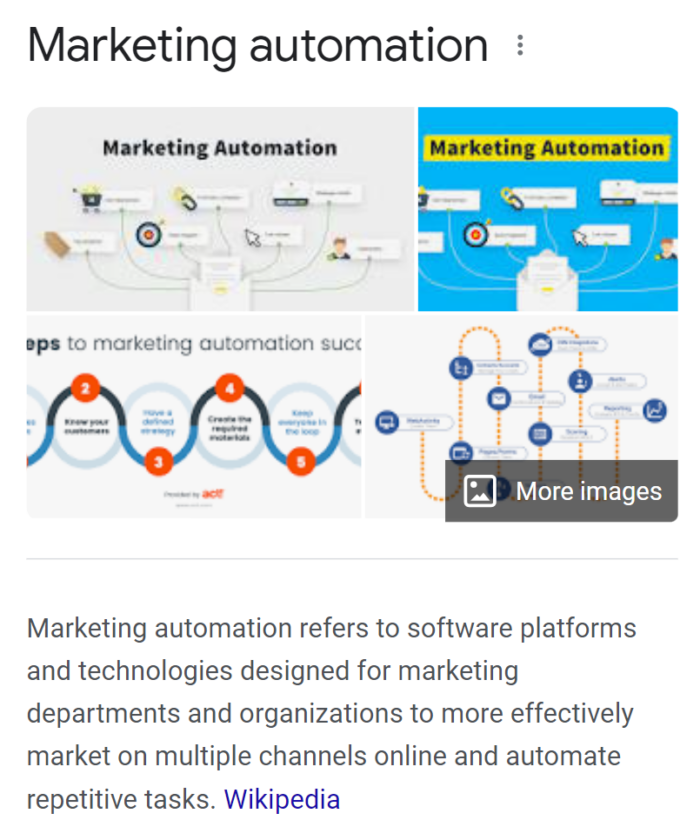
So, here is Google’s take on it:

The google definition of marketing automation

The last part is crucial here: automating repetitive tasks.

The goal of marketing automation is to cut down on time, improve efficiency, and run processes automatically that would otherwise suck your time and kill efficiency.

HubSpot defines marketing automation like this:

Marketing automation uses software to automate monotonous marketing work. Marketing departments can automate repetitive tasks such as email marketing, social media posting, and even ad campaigns. 

They further describe it as taking repetitive tasks like email and social media and automating them to save time and money. It’s more than efficiency – it’s about a more personalized experience as a customer.

The point is to automate tedious digital marketing tasks that take you away from other things that need your attention.

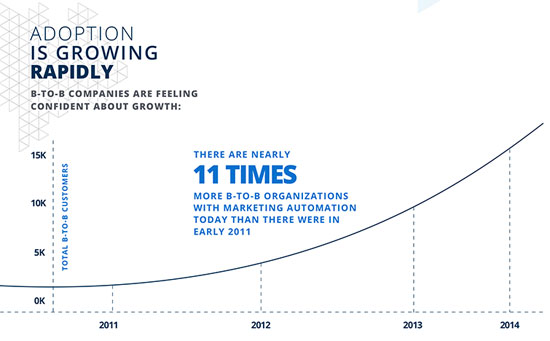
And it’s safe to say that the adoption of marketing automation is growing fast.

A graphic highlighting the adoption of marketing automation campaigns, which shows that there are nearly 11 times more B2B organizations with marketing automation today compared to 2011.

Heavy adoption of marketing automation started in 2014, and the growth since then has been trending upwards.

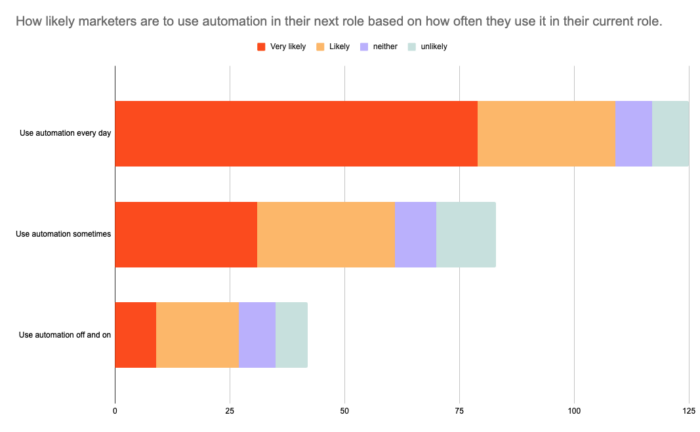
The majority of marketers believe that marketing automation is worth the cost and setup:

A stacked bar chart showing how likely marketers will use automation in their next role, based on how often they use it currently. From top to bottom: 87% of marketers who use automation daily are likely to use it in their next job; 73% of marketers who use automation less frequently will continue using it; 64% of marketers who use automation on-and-off will use it in their next job.

Meaning that most marketers are benefiting from the implementation and seeing positive ROIs.

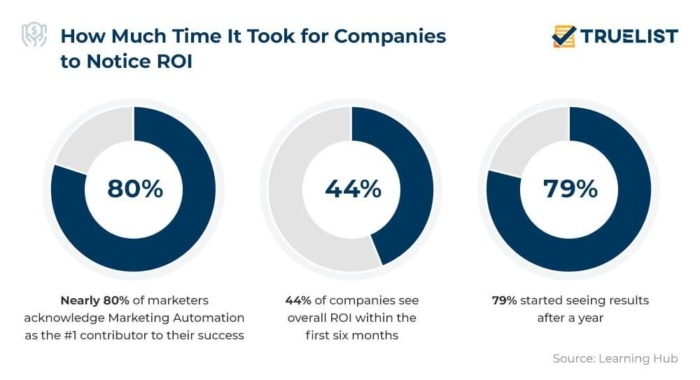
On top of that, most marketers believe that they are successful at achieving important objectives through the use of marketing automation techniques.

A graphic highlighting how long it took for companies to notice ROI.

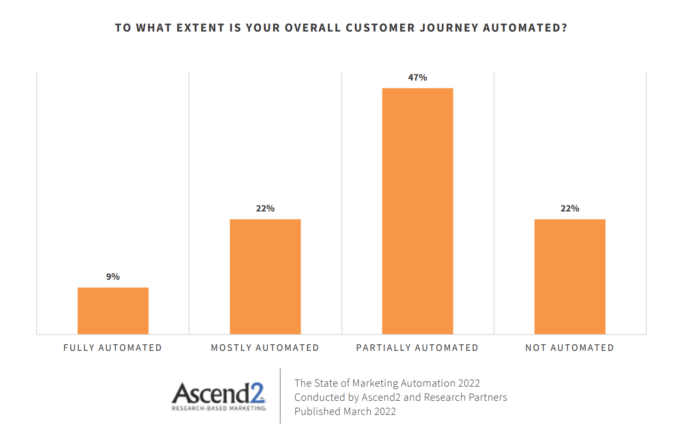
But, tons of marketers still don’t have integrated systems and aren’t taking advantage of marketing automation.

A bar chart showing the extent to which the overall customer journey is automated. From the responses, 9% is fully automated, 22% is mostly automated, 47% is partially automated, and 22% is not automated.

And they should be.

I use tons of marketing automation techniques every day.

From scheduling social posts to automated emails and nurturing tactics, the options are nearly limitless.

I can even set up automations based on traffic or new leads.

Marketing automation has saved me countless hours that I would have spent on email and social media.

And today, I’m going to share some of my favorite marketing automation campaigns that you need to implement ASAP.

Let’s get started.

Add Facebook Leads Into CRM or Email and Welcome Them to Your List

One of my favorite tools for collecting leads is using Meta(formerly Facebook) Lead Ads.

These lead ads are one of the best ways to collect leads and build your email list.

Why? Because they integrate so well into Facebook and are one of the least-boring lead forms I’ve ever used.

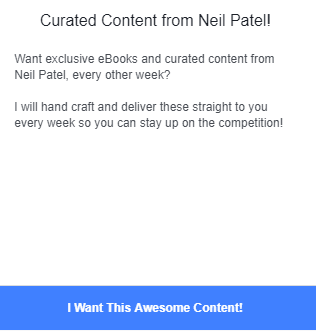
Here’s an example of what they look like. The first step in this multi-level form is:

An example of a lead tool that asks if the reader would like to receive curated content from Neil Patel.

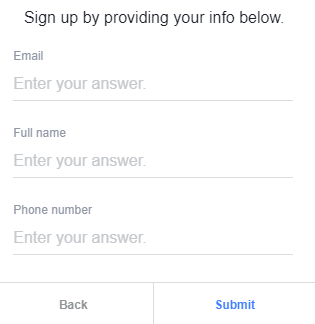
And once they hit your CTA, they have a basic information screen to fill out:

A graphic of the sign up process to opt-in to the curated content highlighted by the lead tool.

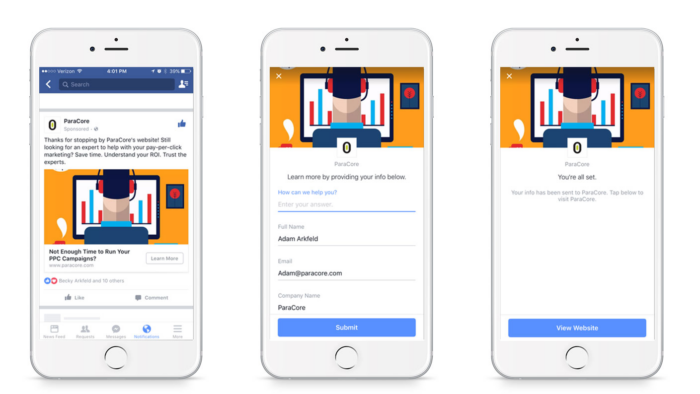
Here’s a better, full example of the entire process that Facebook users will see when they click on and fill out your lead-generation forms:

An example of what the lead tool funnel process looks like on a mobile device from start to finish.

With that said, where do the leads go once someone fills out the form?

That’s one of my main concerns (and many marketers I’ve worked with) with Facebook Lead Ads.

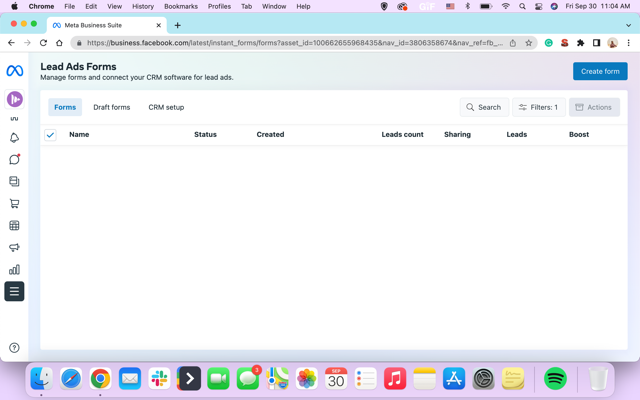
It turns out that the leads simply go to Facebook’s own Forms Library on your Business Manager account:

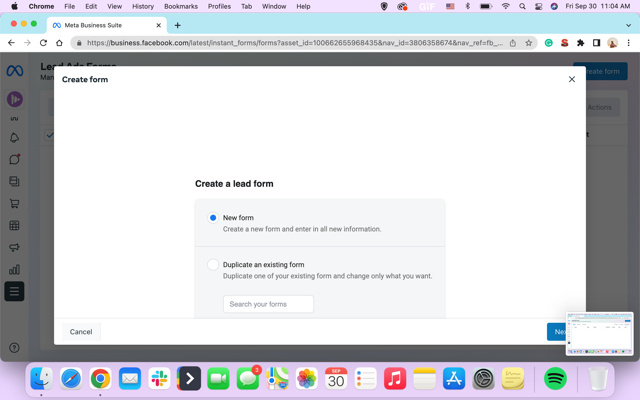
A display of Facebook's Lead Ads Form
Creating a lead form on Facebook's Lead Ads Form page.

Personally, I don’t want to waste my time going to the forms library and sorting the data myself.

And isn’t the point of automation all about saving time?

After you check out the new leads, you have to tediously upload them to your CRM or email management software to start running campaigns.

Again, I don’t have time for that.

Then, you have to take your newly-uploaded email list and start setting up campaigns.

What if you could automatically do that, though?

What if you could just set up your Lead Ads and have someone a lead imported into your CRM or email platform once they submit the form?

Then they’ll be automatically placed into an email campaign.

Luckily, this is a possibility.

Simply fire up tools for marketing automation like Zapier to get started.

The Zapier home page.

Zapier is probably my favorite tool to use for developing incredibly fast, easy integrations and automations.

It connects to hundreds (if not thousands) of applications that you likely are using.

For example, you can connect your calendar to Slack, your social media to a workflow, or even import your Lead Ads data into your favorite email program.

The options are nearly limitless, and the ease of use blows other products away.

For this automation campaign, we obviously want to import our Facebook Lead Ads data into a CRM or email platform to save time and automate digital marketing for the process of new campaigns.

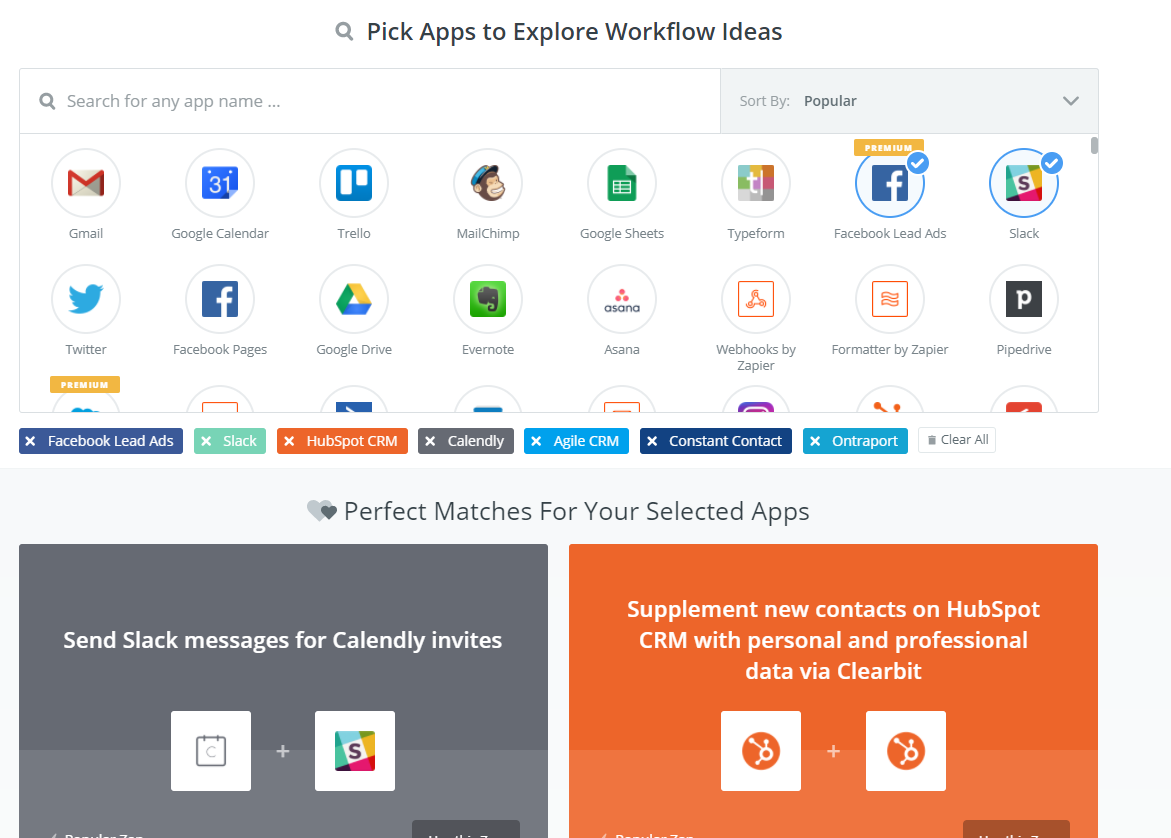
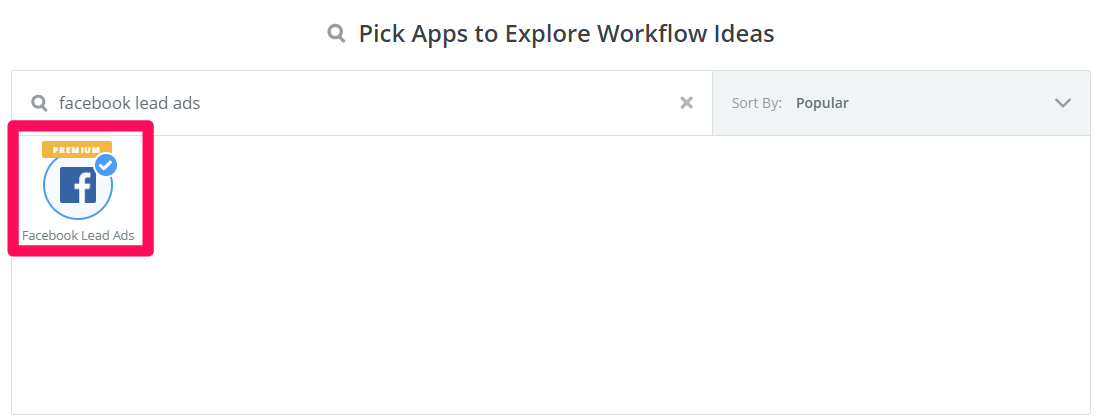
To get started, select Facebook Lead Ads from the “Workflow Ideas” section:

The Workflow ideas section of Zapier.

Next, click “Make A Zap!” to get started:

The Make a zap button

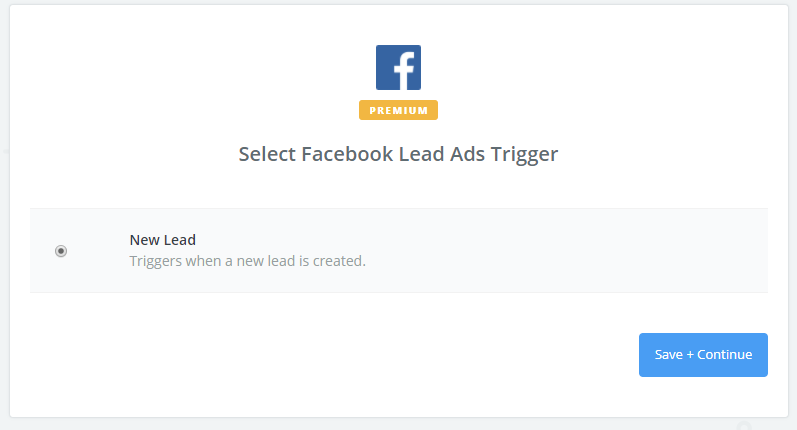
Now your selection of Facebook Lead Ads should show up as a “Trigger” on your new Zap:

The select Facebook lead ads trigger on Zapier

A trigger is simple:

It basically means that when someone fills out your lead form, it will trigger the following actions that you set.

It’s the spark or catalyst to your automation campaign.

Whenever an action happens on your lead form, the reaction you set will occur.

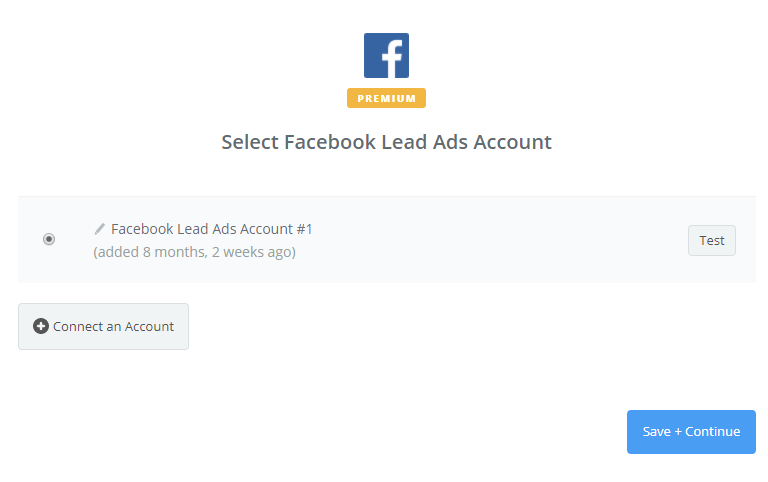
Next, be sure to connect your Facebook account information to get started:

The select Facebook Lead Ads account function on Zapier.

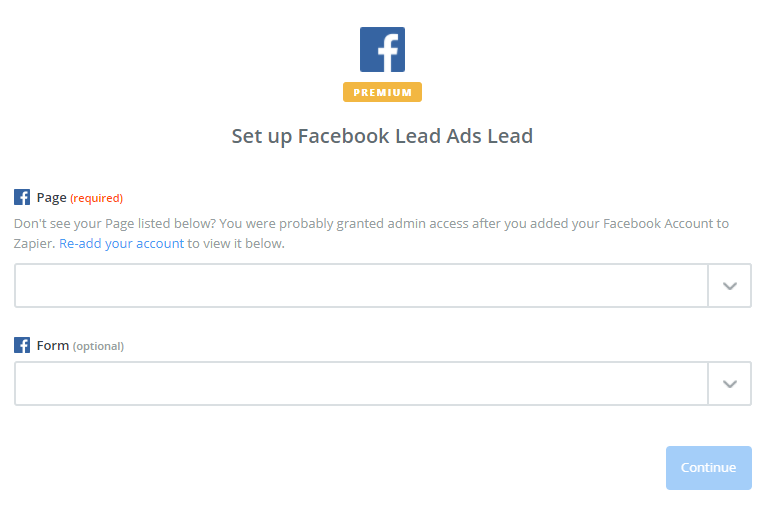
Then you’re going to want to select the specific Facebook Page that you will be using for advertising.

On top of that, you need to select the specific form that you want to use for this automation campaign:

The set up Facebook Ads form on Zapier.

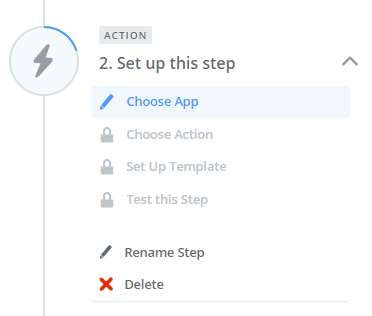
Next, you need to move on to the action step:

The step setup function on Zapier.

This is where you will determine what happens with the lead-form data from your Facebook Ads.

For example, you can select your favorite CRM like HubSpot or Salesforce.

Or, select an email-management software like MailChimp or ConstantContact.

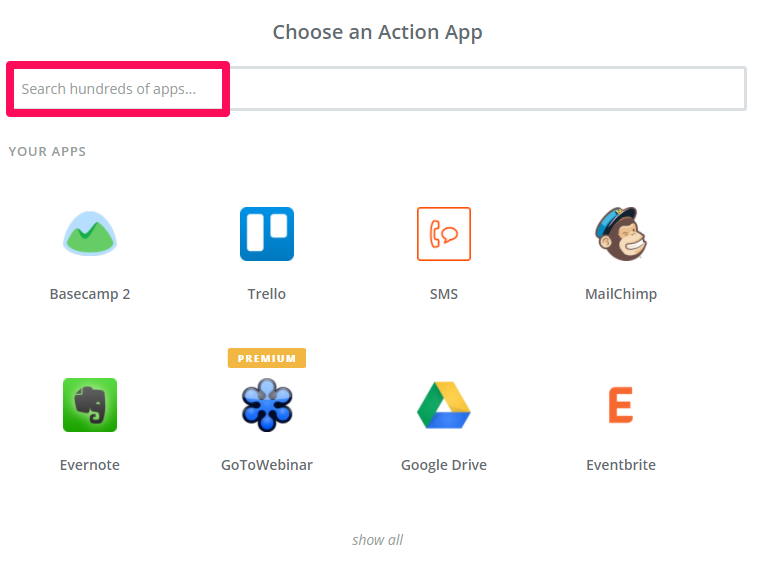
Simply use the search bar to find the application you want to use:

A list of apps on Zapier.

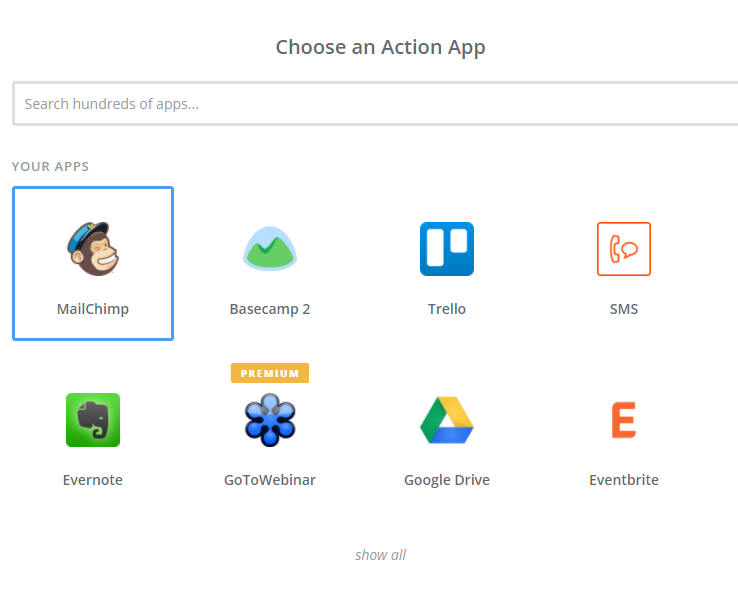
For this example, we can use MailChimp since it’s likely to be the most common platform for emailing and nurturing leads.

Selecting Mailchimp as an app on Zapier.

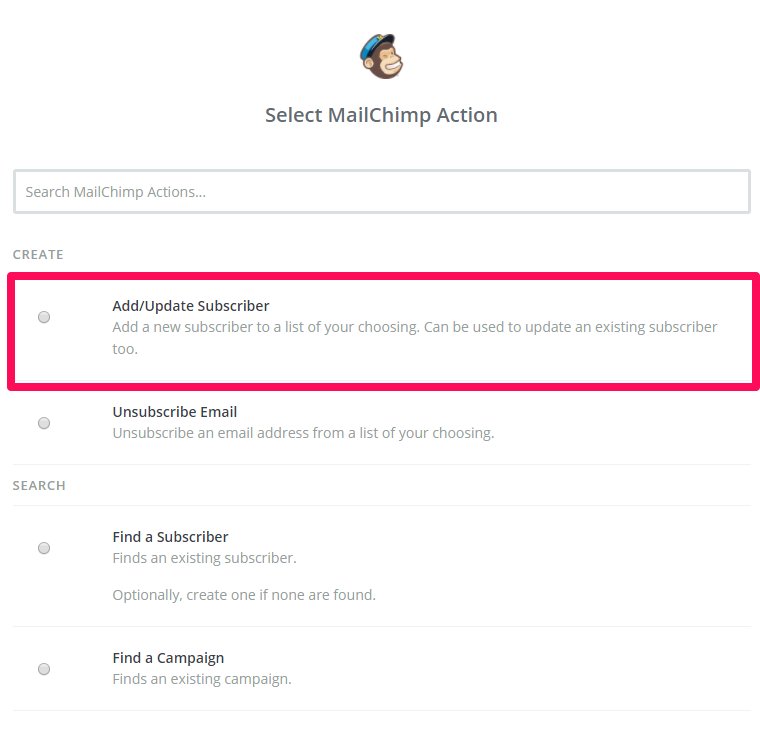
Next, you need to select the action that will be triggered by the Facebook Lead Forms:

Choosing a Mailchimp action on Zapier to link with Facebook Ads activity.

For this example, we want to select “Add/Update Subscriber” because this will automatically populate leads from Facebook into a new list.

You’re pretty much done after this, but you can further customize some of your options.

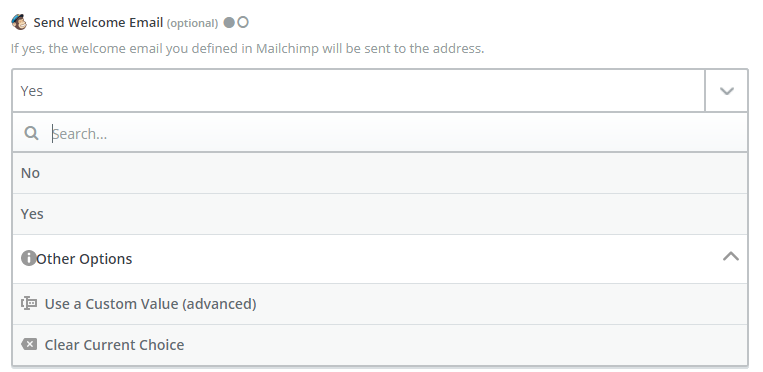
For example, I recommend using the “Send Welcome Email” option for new leads:

Setting up a send welcome email function for Mailchimp through Zapier.

This will send your new leads an instant welcome email, automating the whole process even more.

Now instead of setting up Facebook Lead Ads, reviewing them in Facebook, downloading them, and uploading them into your platform to set up for a new campaign, you’ve automated it.

Your next step is to simply sit back and watch the leads come in and receive your emails without lifting a finger!

If you want to do this for your CRM (like Zoho, HubSpot, etc.), simply repeat the process but choose your own CRM instead of MailChimp as the “Action” step.

And if you want to use this for non-Facebook leads, you can set it up for tons of form applications on your website like Gravity Forms and more!

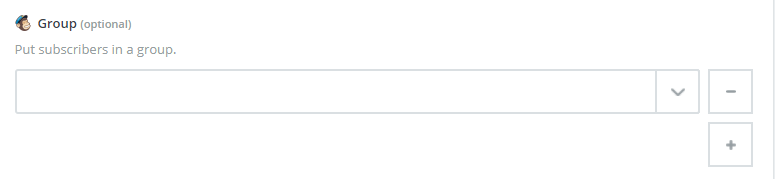
Pro tip: I also recommend putting these new leads into their own group. Make multiple automated processes on Zapier for each individual Facebook Lead Ad.

Creating a lead group in Zapier for Mailchimp.

Automatically Share Curated Content on Social Media

Another one of my favorite unconventional marketing automation campaigns is to automate social media marketing for the process of sharing content.

Social media can quickly eat up your time throughout the week.

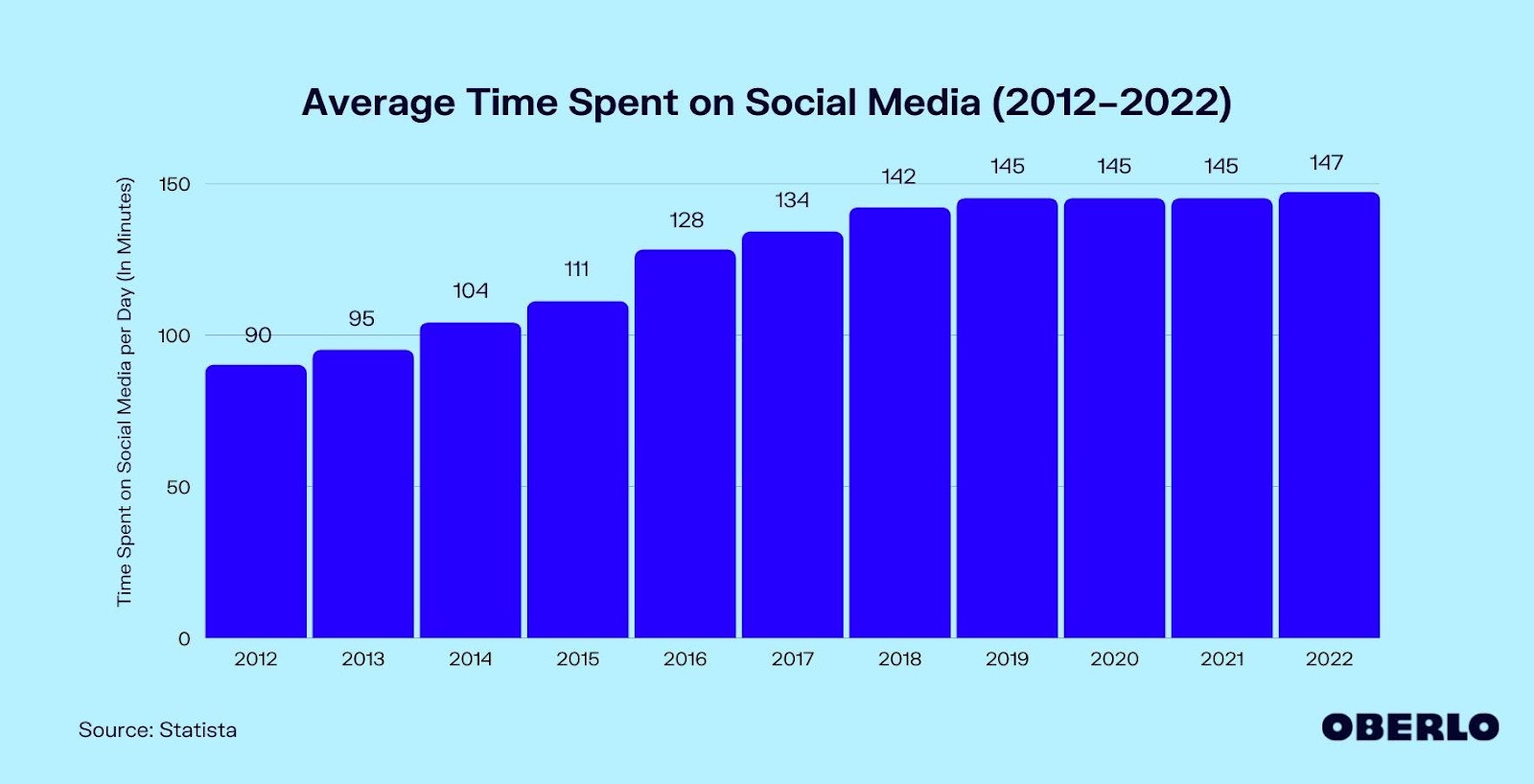
And most people spend way too much time on social media every single day:

Chart of the average time spent on social media

And it’s not just your everyday social media user that can’t seem to put their favorite platforms down, either.

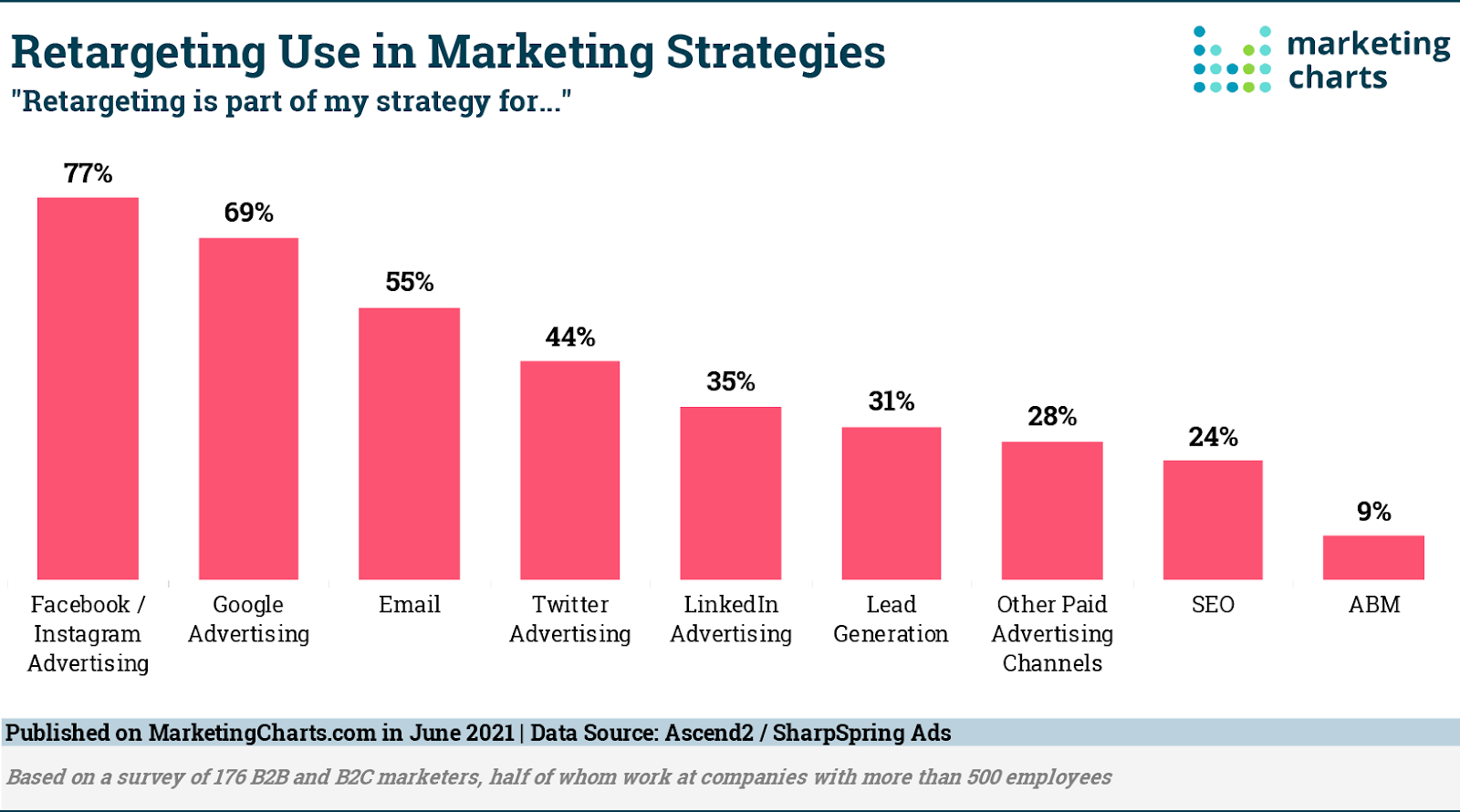
Marketers, on average, spend many hours every week on their social platforms of choice. If you want to know what’s getting done during these periods, they’re retargeting ads most of the time:

Bar chart showing social media statistics on retargeting ads in marketing strategies..

And if we’ve learned anything about social media from direct usage, it’s probably how utterly time-consuming and distracting it can be.

Be honest with me: how often do you get caught up on Twitter or Facebook and look at the clock to see that 25 or 30 minutes have gone by?

It happens to me more than I’d like to admit.

And that’s why I use this marketing automation tactic.

I used to spend way too much time on social media. It was taking me away from the business aspects that really needed my attention.

Now, instead of wasting my time on social, I’ve automated the process and can spend more time with clients, where real ROI is produced.

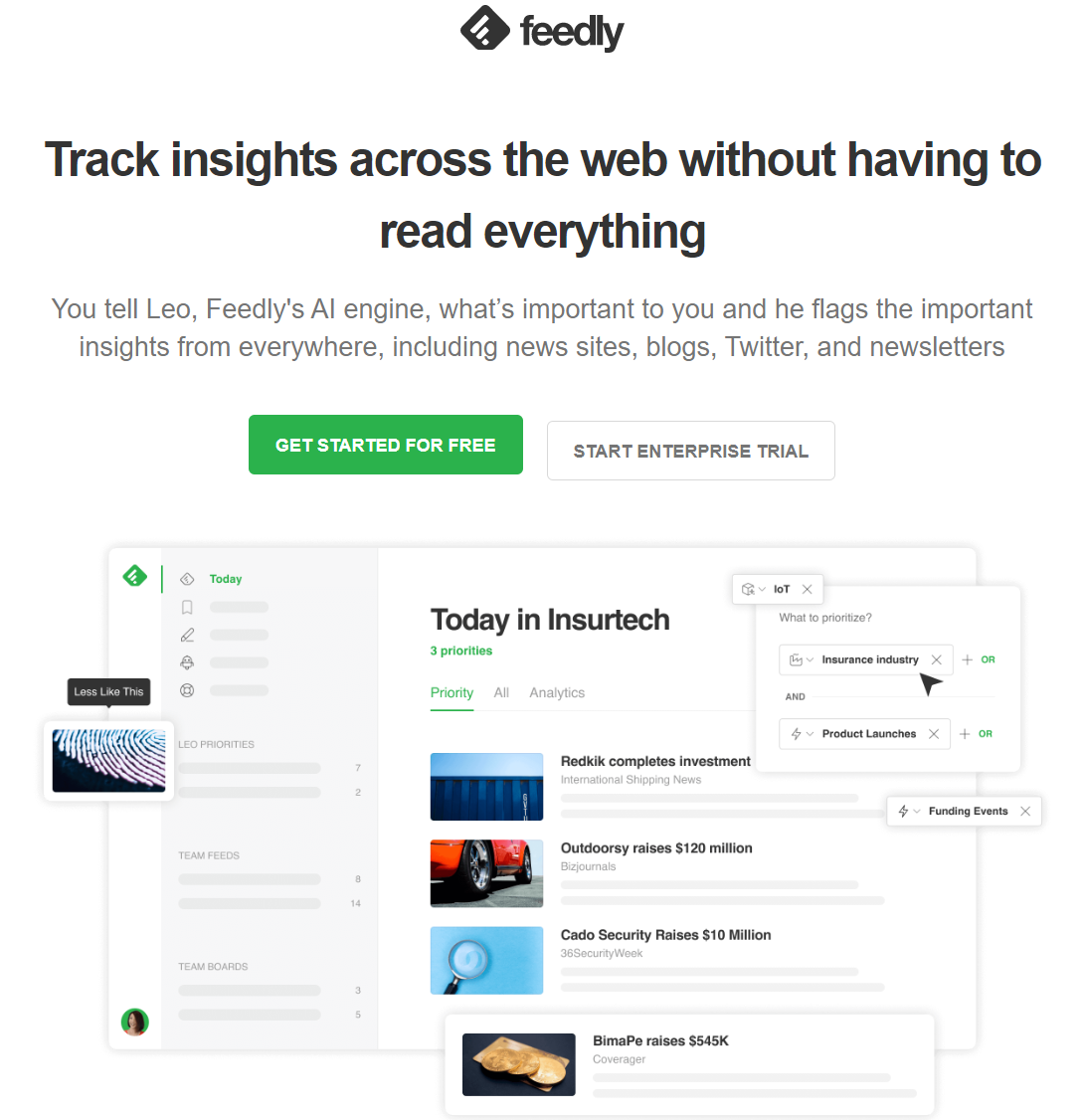
To do this for yourself, you’ll need to make a Feedly account.

The Feedly interface.

Feedly is a great tool for curating content from your favorite industry blogs and thought leaders.

I use it every day to find the latest trending content!

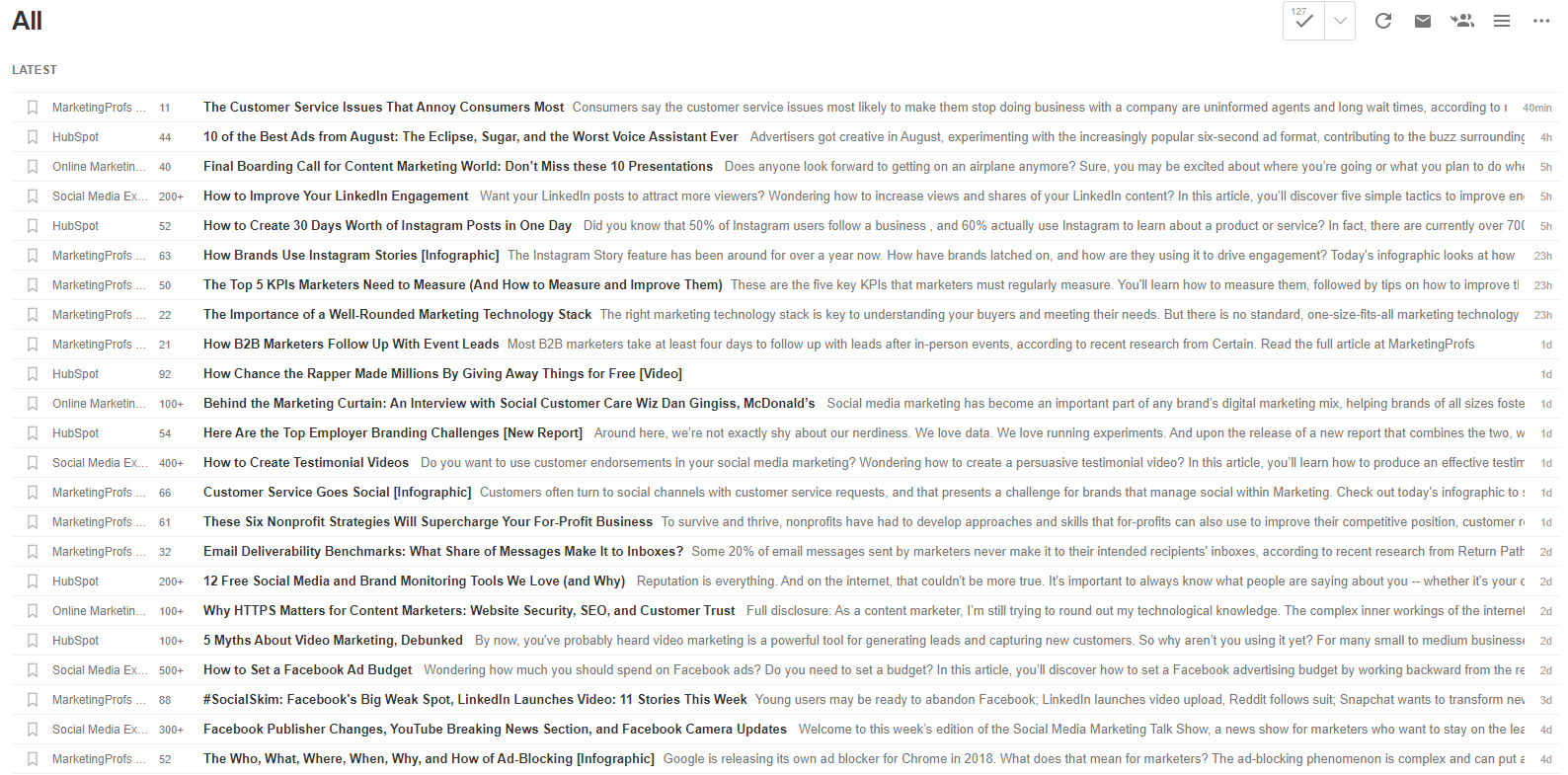
I follow industry experts and get their content delivered via email daily:

A Gmail inbox.

And, like Zapier from before, you can automatically send that curated content to your social platforms.

So, instead of wasting time reading through the curated content and crafting a tweet, you can automatically do it.

And curated content needs to be a part of your social strategy.

Simply posting every new blog post on your Facebook won’t develop your status as a topic expert.

Sharing other topically-relevant pieces from experts will.

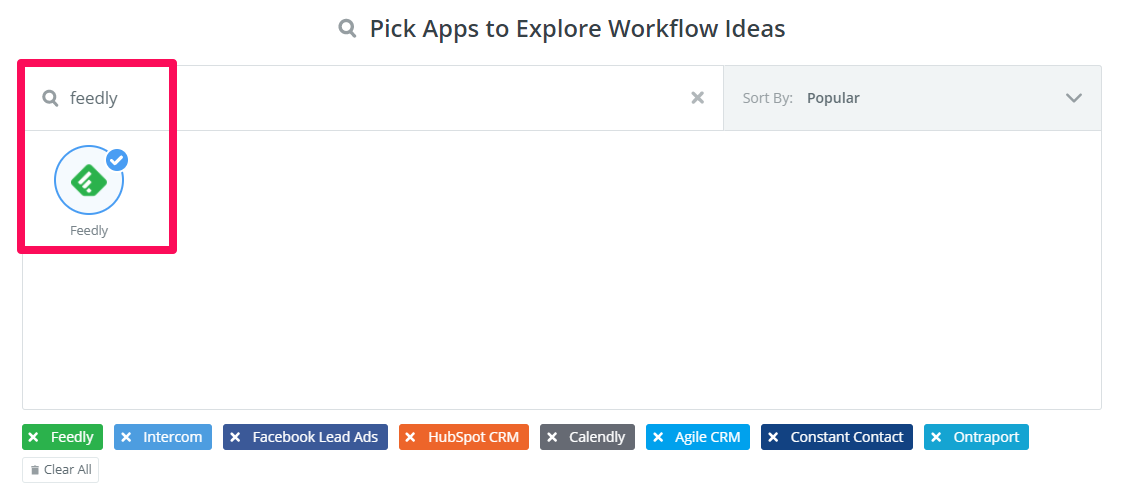
To get started, open up Zapier and search for the Feedly integration:

Adding Feedly to Buffer.

Next, select the Buffer integration that will show up below the “Explore Workflow Ideas” section:

Selecting the Buffer integration for Feedly.

If you’re not familiar with Buffer, you should get familiar with it.

It’s a tool that will allow you to schedule tons of social media posts in advance for every social platform you have.

Can you imagine not having to go to each platform and share the post individually?

I can, and it’s amazing.

Instead, Buffer will share the same post to all of your channels at the times you provide.

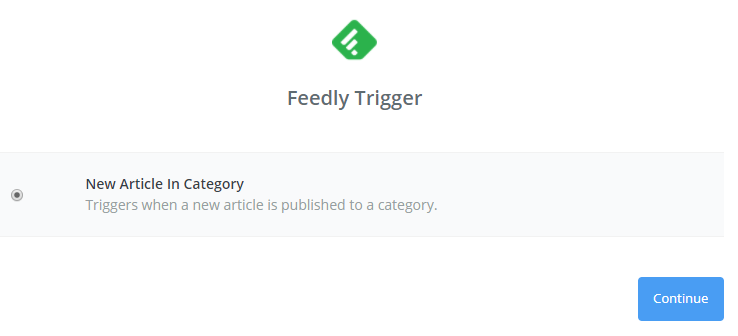
Next, make sure Feedly is selected as your “Trigger:”

Selecting a Feedly trigger.

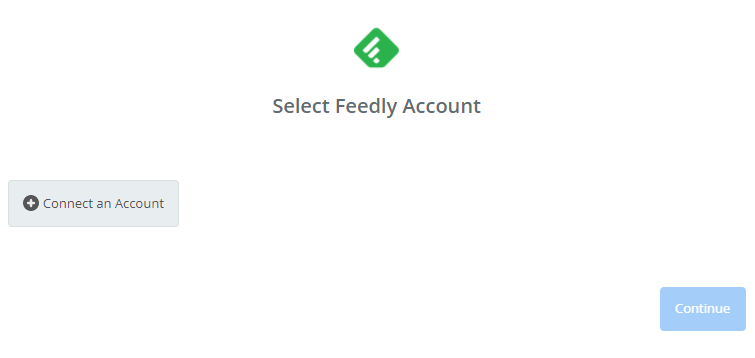
Now, simply connect your Feedly account to get started:

Connecting Feedly to a Zapier account.

(Disclaimer: you need a Feedly Pro account to use this integration. Thankfully, it’s only $7 a month or $62 for an entire year)

And remember, sometimes you have to spend money to make money.

Look at the opportunity cost:

The average marketer spends five to six hours a week on social media.

That means you’re spending 260 hours a year on social media.

Multiply that by your current wage/salary, and that’s how much money you are spending on social media marketing (and that’s without even counting ad spend!).

Now, does $62 seem like a bargain? I bet it does.

Plus, it saves you from having to spend hundreds of hours.

Now that you’re convinced, let’s go back to the setup process.

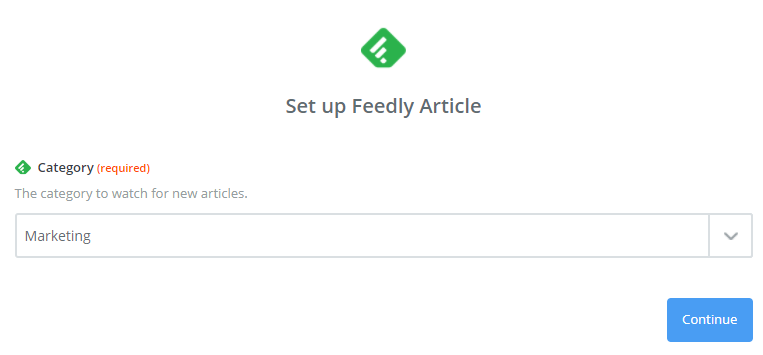
Select the category from Feedly that you want to share content from.

Setting up a Feedly article category in Zapier.

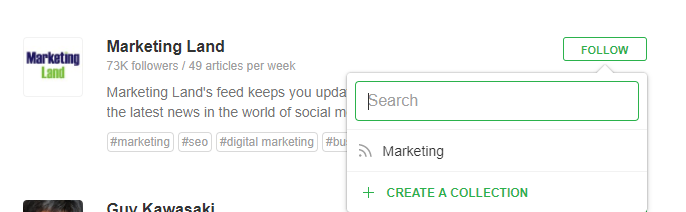
To set up categories on Feedly, simply search for an industry publication to follow, then click “Create A Collection.”

Folllowing an industry publication in Zapier.

This will create a new “category” for you to pull posts from for this automation.

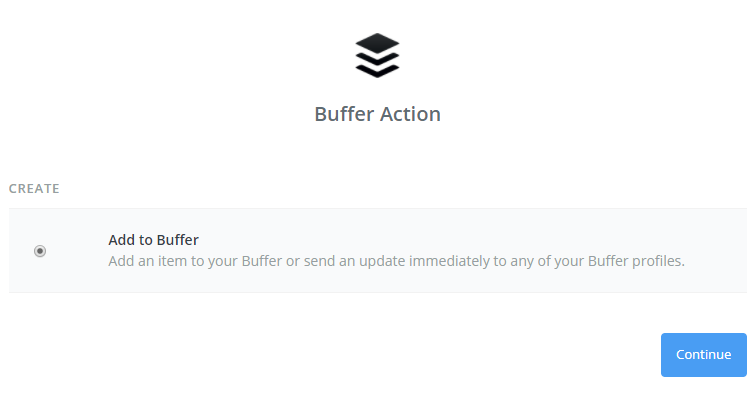
Next, simply select “Add to Buffer” as your action!

Adding to Buffer as an action in Zapier.

And that’s it.

Now you don’t have to curate a single thing on your own. Feedly will automatically pull in new content based on your selected categories and who you follow.

Then, it will send those articles into Buffer and add them to your queue.

Just kick back and let the posts share themselves.

Shopping Cart Abandonment Emails Automation

Shopping cart abandonment emails should be the bread and butter of your marketing automation.

Want to drive more sales and close those deals that were left open?

You need to use cart-abandonment emails!

 Almost 70% of e-commerce carts will be abandoned with products left in them.

That’s nearly 70% of your sales that you risk losing out on without automating for e-commerce via emails.

Someone took the time to peruse your product and place it in their cart. There is definite interest there.

Don’t let the sale slip away.

With simple Shopify settings, you can easily send cart-abandonment emails.

To get started, log in to your Shopify account and head to the admin section.

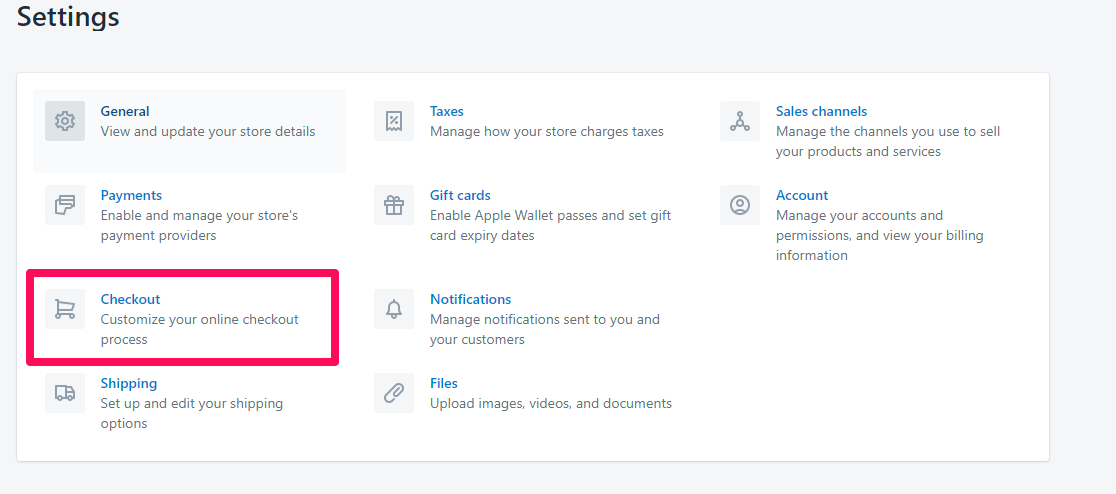
Click on your settings tab.

Then, click on “Checkout:”

Choosing Checkout settnings in Shopify.

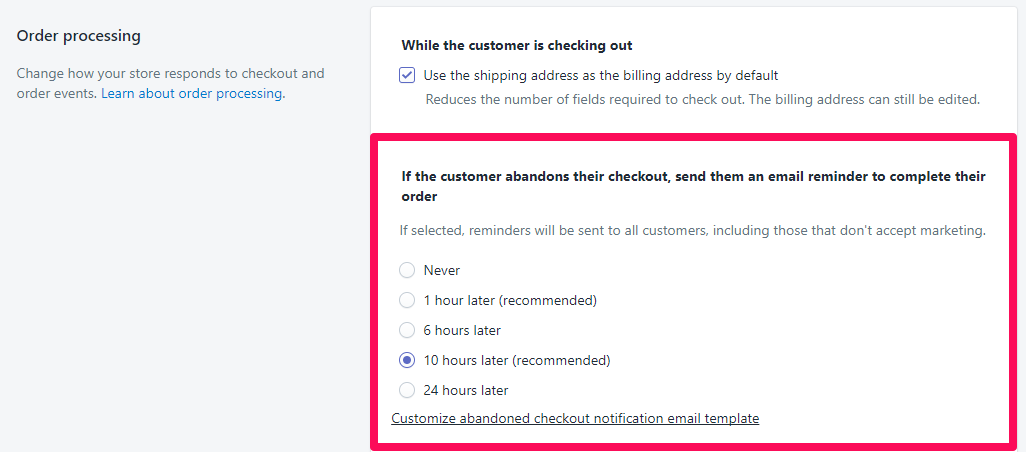
Scroll down to the “Order processing” section and make sure to select the following option:

The order processing section of Shopifly.

It’s that simple! Now you can automatically send these people emails that will directly take them back to their abandoned carts to hopefully get that conversion the second time around.

I love this one from Black Milk Clothing.

Who can resist a plea from a cute dog?

An example of abandoned cart emails.

Frequently Asked Questions

How do I find the best automation tool?

When you’re looking for automation tools, be sure to take your time and do your due diligence. Try to get reviews and impressions both from sources in your own network as well as industry experts you trust. If there’s an opportunity to take advantage of a trial, feel free to do so. However, in order to have the most success here, you need a clear picture of how you plan to use automation and what your tools are. This will help you find the best fit to manage your needs.

In marketing, what should I automate first?

This question is ultimately dependent on what marketing channels your company uses and what goals they have. If your goal is to try and use automation to scale your operations, you may want to start with one of your largest marketing areas, like email. If your goal is more about freeing up time for a limited marketing staff to work on essential tasks, choosing a smaller area of your marketing, like social media, may make more sense.

The difference between marketing automation and campaign management?

Marketing automation is the use of technology to streamline processes that are tedious or take up time to reach desired results. This is different from campaign management that focuses on the process of designing, tracking, executing, and analyzing marketing campaigns.

Why should small business owners should automate digital marketing?

Not only can you reach more prospects effectively, you can automate tasks like email marketing, social media, and website updates to focus on other business tasks and new ideas.

Conclusion

As marketers, we’re constantly stretched for time.

We’ve got things to do, people to see, and customers to convert.

There’s not always enough time in the day to complete everything on your list.

Rather, there’s not enough time in the day to complete everything on your list without a little help.

And that’s where marketing automation comes into play.

You just don’t have time to nurture prospects on your own, like you did in the startup stages.

But, you still need personalization and well-timed messaging.

You need to have a guide to marketing automation as a launchpad if you want to scale efficiently.

Start by automating your lead flows. When a form is completed, send those new leads into your CRM or email platform to automatically start new campaigns.

Then, automate your social media marketing strategy. Stop wasting precious hours on social media and start automating your sharing process with tools like Feedly and Buffer.

And remember, always use shopping cart abandonment emails to have a second shot at converting customers.

Finally, make sure to block out a few minutes in your schedule to pat yourself on the back for saving so much time.

Feels good, doesn’t it?

What marketing automation campaigns have you found success with? 


from Neil Patel https://ift.tt/RpVTd6l