FREE TRAFFIC TO YOUR SITE

FREE TRAFFIC TO YOUR SITE
free youtube traffic
Showing posts with label Neil Patel's Digital Marketing Blog. Show all posts

Thursday, 20 October 2022

What is Integrated Marketing Communication (IMC)?

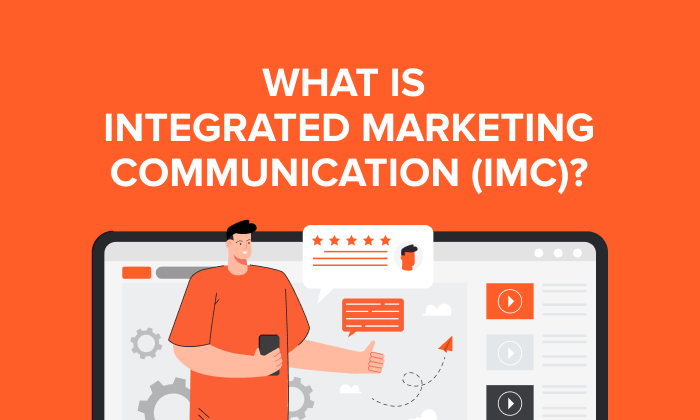
A graphic depicting Integrated Marketing Communication.

Do you ever recognize a brand’s advertisement without having to look for its logo? Could you mimic a brand’s tone of voice even if you aren’t a copywriter?

That’s the power of integrated marketing communications (or IMC for short)

The idea behind IMC is that customers should have a cohesive and seamless experience whether they interact with your brand on your website, social media channels, or in person.

From brand voice to visual identity, everything should be aligned with your company’s mission, values, and goals.

This marketing strategy is more important than ever. Especially when you consider the fact that consumers interact with brands on a combination of around 20 different channels before making a purchase. You need to deliver a seamless experience across them all.

If you want to improve your brand’s integrated marketing communication, this is the blog post for you. I’ll explain exactly what integrated marketing communications is, why it’s important, and how you can create your own IMC campaign. I’ll even throw in some examples of IMC campaigns from leading brands. Ready? Then let’s dive in.

What Are Integrated Marketing Communications?

First, let’s define what integrated marketing communications means.

The term was introduced in the 1980s, and refers to the process of aligning and unifying each of your marketing channels to deliver a consistent experience.

IMC applies to every channel. From online marketing channels like social media and your website, to offline channels like TV and print. Ultimately, it doesn’t matter how consumers interact with your brand; they get the same experience.

Sidenote: You might be thinking that IMC sounds a lot like multi-channel marketing, and you’d be right. It’s similar, but it’s not the same. Multi-channel marketing simply refers to running campaigns on more than one channel. Integrated marketing communication is about delivering the same experience across all those different channels.

Let’s look at this in practice. Take Apple, for example.

You know an Apple advert when you see it, right? The tone, imagery, and messaging are exactly the same whether you see an ad on the subway, on TV, or are browsing the company’s website. Even the in-store experience is the same.

Every marketing message is completely integrated, and you know exactly what you’re going to get.

Compare that to a brand that doesn’t create integrated marketing communications.

Let’s say you see an advert on Facebook for an eCommerce store. The product image catches your eye, and you like the sales message, so you click through to the website. But the website doesn’t look the same. The brand colors are different. The messaging has changed.

You’re confused and you probably leave the website disappointed, right? Such jarring experience like this is conducive to making a purchase.

That’s why you need to create an integrated marketing communications campaign.

What Is the Goal of Integrated Marketing Communications?

The goal of integrated marketing communications is to create a consistent message and brand identity that customers will recognize across all channels.

This requires a coordinated effort that includes all aspects of marketing, from advertising and public relations to sales and customer service.

For example, if a customer sees an ad for your product on TV, hears about it on the radio, and then visits your website, they should have the same experience.

Your message should be consistent across all channels, and each channel should work together to support the others.

Why is this important?

Well, in a world where an overwhelming number of consumers combine offline and online touchpoints before making a purchase and the order rate is 494 percent higher on omnichannel vs. single-channel shopping, you need to make sure your message is getting through, loud and clear.

An integrated marketing communications plan will help you do just that by bringing all of your marketing efforts together into one cohesive strategy.
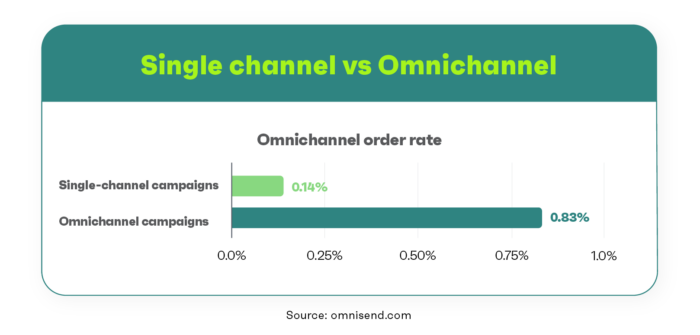
A graphic showcasing the single channel vs omnichannel approach in integrated marketing communications.

Why Integrated Marketing Campaigns Work

Integrated marketing communications campaigns work because they provide a consistent message across all channels that are reinforced with each interaction.

This type of marketing allows you to control the conversation about your brand and ensure your target audience is seeing the same message no matter where they encounter your brand—–whether it’s through paid advertising, social media, or even in person.

Plus, integrated marketing communications campaigns are often more cost-effective than single-channel campaigns because you can leverage existing content and assets across multiple channels.

Key benefits of an integrated marketing communications plan:

  • Reach a wider audience than single-channel experiences
  • Keep your brand top of mind across all channels
  • Build audience trust with consistent messaging and campaigns
  • Save budget by reusing content and assets

If that’s not enough, then consider the fact that omnichannel shoppers spend more. Research by Symphony RetailAI found omnichannel grocery consumers shop more frequently and spend 20 percent more than consumers who only shop in store.

Further research from the Harvard Business Review found that customers who use omnichannel shopping spend 10 percent more online and 4 percent more in-store than single-channel customers.

Integrated Marketing Communications Examples

Most integrated marketing communications strategies take the form of campaigns. If you’re looking for your next great marketing campaign, then check out these examples for inspiration.

Spotify Wrapped

Any campaign that takes the attention away from Santa in December is worthy of recognition. But Spotify’s Wrapped campaign takes integrated marketing communications to a new level.

The annual event, which was first launched in 2015 under the name “Your Year in Music” and was renamed in 2017, sees Spotify unveil listener data to individual users and the wider public through a fantastic integrated campaign.

There are two major parts to the campaign. The first is an individual montage, which takes users on a journey through their streaming history. The second is funny billboards and ads that grace cities across the world.

But that’s not all. Spotify also rolls out the campaign to social media. Artists and bands get custom graphics, and listeners are encouraged to share their own wrapped statistics.
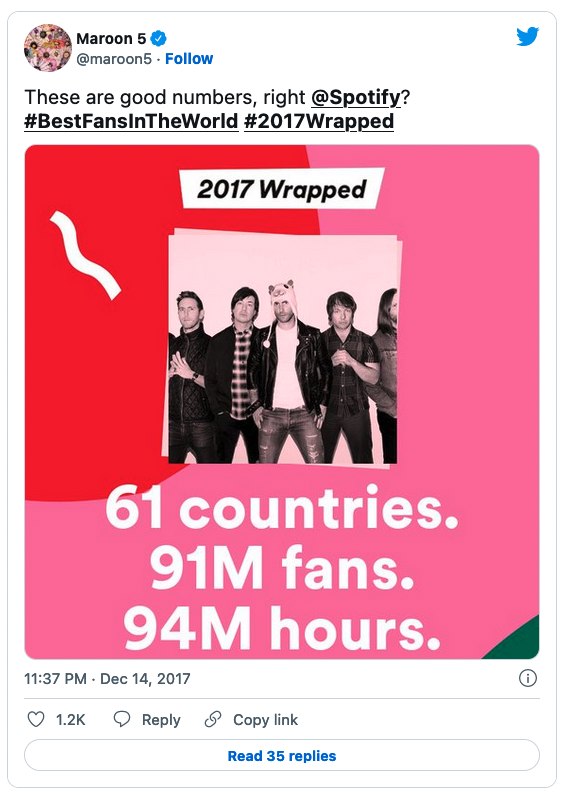
A screenshot of Maroon 5's Twitter post and example of integrated marketing communications by Spotify.

The campaign’s impact is huge. According to Twitter, the campaign was mentioned in more than 1.2 million posts. The 2020 campaign increased app downloads by 21% in the first week of December alone.

Domino’s “AnyWare” Campaign

Another integrated marketing communications campaign example success story comes from Domino’s Pizza.

In order to increase digital orders, Domino’s created AnyWare, which allows customers to order pizza through various platforms such as a tweet, text, Ford Sync, Smart TVs, and smartwatches.

Each new way to order was introduced with its own press release and driven to the DominosAnyWare.com website.

In 2015, Dominos also launched a national TV ad campaign featuring celebrities arguing that their way of ordering was the best.

To date, the AnyWare campaign has generated 2 billion earned media impressions including spots on The Ellen Show, Jimmy Fallon, and The Today Show. The TV campaigns generated 10.5 percent year-over-year growth for the brand.
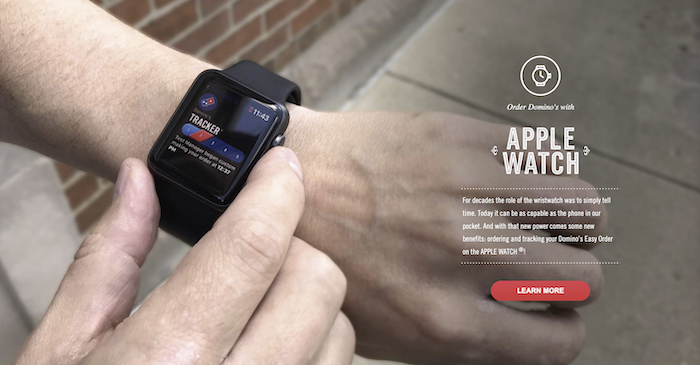
Dominoes using an ad with Apple Watch for integrated marketing communications.

The Martian Movie

To promote the theater release of 20th Century Fox and Ridley Scott’s “The Martian” in 2015, a prologue campaign was created to increase awareness and excitement.

The goal of the “The Martian” prologue campaign was to build box office hype around the new film.

An integrated marketing communications strategy was built to be consumed on a variety of channels including, but not limited to: social media, video, celebrity endorsements, and traditional PR and marketing efforts.

The campaigns included a mock episode of Neil deGrasse Tyson’s StarTalk from the year 2035, an Under Armour campaign showing “The Martian”‘s main character, Mark Watney, as a superathlete of the future, and mock-declassified NASA footage showing each character going through psychological testing before heading out into space.

The Martian opened number one at the box offices and had the second-highest fall opening of all time. It was also the number one movie in the U.S. for four weeks.

The Martian Movie using a movie poster for internal marketing communications.

How to Create an Integrated Marketing Communications Plan

If you want to create an integrated marketing communications plan that highlights the best of your brand, here are a few key steps you need to take.

1. Get to Know Your Audience

Before you start developing your communications plan, you must take the time to get to know your audience.

Take demographic factors like education level, income, age, race, gender, and geographic location into consideration. Don’t forget about psychological and behavioral traits like values, hobbies, and interests.

Creating a customer profile that is specifically tailored to your ideal customer will help you make better decisions about your marketing campaign.

Sometimes, you may have multiple customer profiles for one campaign. In that case, it’s important to segment your audience so that you can tailor your message to each group.

For example, if you’re marketing a new line of environmentally-friendly cleaning products, you might have one customer profile that is interested in saving money and another that is interested in saving the planet.

Tailoring your message to each group will help you create an integrated marketing communications plan that highlights the best of your brand to every audience.

6. Set Your Targets and Goals

The next thing you need to do is to set targets and goals. There are plenty of reasons to launch an integrated marketing communication. These include:

  • Launching a new product or service
  • Rebranding the company
  • Launching a product in a new market
  • Promoting a new sales message or initiative
  • Improving your brand reputation

Whatever your goals, make sure to make them SMART. That’s specific, measurable, achievable, relevant, and time-based.

When it comes to making your goal measurable, try to attach numbers to your objectives. For example, if one of your goals is to increase brand awareness, you could measure this by tracking the number of mentions your brand receives online.

Or, if you’re looking to improve customer satisfaction, you could survey your customers after they’ve made a purchase.

2. Set a Budget

Let’s face it; you might not be in a position to hire Neil deGrasse Tyson, NASA, and Under Armour in your first integrated marketing communications campaign.

But that doesn’t mean you can’t create a strong, compelling message. The key is to set a realistic budget and then allocate your resources accordingly.

If you have a limited budget, focus on creating high-quality content that can be distributed across multiple channels.

If you have a larger budget, look for high-profile partnerships, influencer marketing, and other paid media opportunities.

In either case, make sure you have a clear plan for how you will spend your money and what your limits are.

3. Outline Your Unique Selling Proposition (USP)

One of the most important parts of creating an integrated marketing communications plan is understanding what makes your brand unique.

  • What do you offer that no one else does?
  • What can you do better than anyone else?

Answering these questions will help you develop a strong unique selling proposition (USP), which will be a key component of your communications strategy.

Once you have your USP, make sure it is front and center in all of your marketing materials.

It should be the through-line that ties together your various communications channels and provides a consistent message to your target audience.

For example, if you are a luxury car brand like Audi, your USP might be “Luxurious and comfortable cars delivering excellent engine performance.”

Make sure this message is clear in your advertising, social media posts, website content, and any other marketing collateral.

If you’re selling running shoes like Nike, your USP might be “The best shoes for athletes and fitness.”

Again, this should be a consistent message across all of your communications channels.

Your USP will be the foundation of your integrated marketing communications strategy, so take the time to develop it thoughtfully.
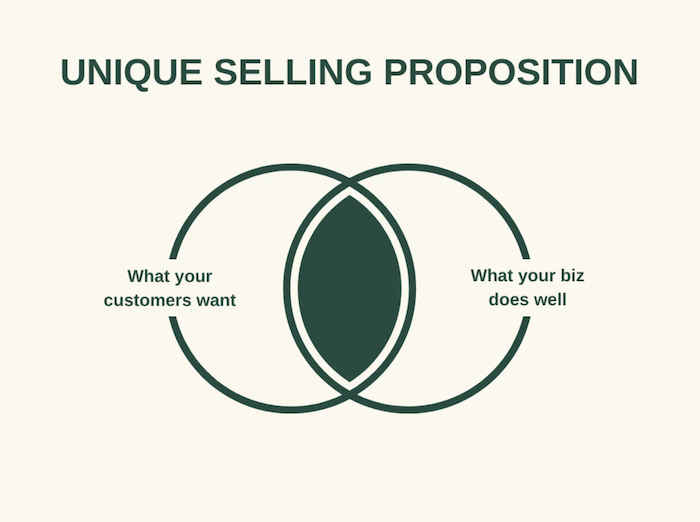
A venn diagram depicting the difference between what your customers want and what your business does well.

4. Decide Which Channels You’ll Use

Once you know why you’re launching an integrated marketing communications plan, who you’re speaking to and what you want to say, you need to decide which channels you’ll use to reach your target audience.

This will be different for every business, but some common options include:

  • Email marketing
  • Social media platforms (Facebook, Twitter, Instagram, LinkedIn)
  • Advertising (digital and traditional)
  • Content marketing (blog posts, infographics, eBooks)
  • Events and tradeshows
  • PR and media relations

The channels you use will usually depend on your goals. For instance, if you’re looking to promote a time-restricted sale, content marketing may not be the best medium.

Once you decide on overarching channels, you’ll also need to determine which specific tactics you’ll use on each platform.

For example, if you’re using Facebook to reach your target audience, will you primarily rely on organic posts or paid ads? If you’re using email marketing, what sort of content will you include in your newsletters?

Asking yourself these types of questions will help you create a more comprehensive and effective IMC strategy.

5. Create Your Assets

It’s time to create the assets for your integrated marketing communication campaign. Perhaps the most important thing when creating an ICM campaign is to make sure you create assets that you can use across different channels.

That doesn’t mean every asset has to be exactly the same, however. While your brand voice needs to be consistent across all channels, the way you actually communicate with your audience will vary depending on the platform you’re using.

For example, the messaging you use in a Facebook ad will be different from the messaging you use in an email newsletter.

Your tone might also change depending on whether you’re trying to build awareness, generate leads or drive sales.

Keep this in mind as you create your content calendar and start to populate it with messaging that’s in line with your brand voice and the goals of each individual piece.

7. Track and Optimize

Once your integrated marketing communications campaign is up and running, it’s important to track progress and optimize along the way.

Analytics are key in understanding what’s working and what’s not.

Be sure to keep an eye on your campaign goals and KPIs, and adjust as necessary. If you’re not seeing the results you want, don’t be afraid to change things up.

For example, let’s imagine you’re running an email campaign as part of your integrated marketing communications plan.

You might want to track metrics such as:

  • Open rates
  • Click-through rates
  • Unsubscribe rates

If your open or click-through rates are low, you might want to consider changing up your subject lines or email content.

Or, if you’re seeing higher than average unsubscribe rates, that could be an indication that your content is not relevant to your audience.

It’s important to constantly test and measure the performance of your campaigns so that you can make necessary adjustments to ensure success. By doing so, you’ll be able to create an integrated marketing communications plan that highlights the best of your brand.

Frequently Asked Questions: Integrated Marketing Communication Plans

What does integrated marketing communication mean?

Integrated marketing communication is a strategy where your campaigns and channels are aligned to deliver a unified and consistent experience.

What are the benefits of using an integrated marketing communications plan?

Integrated marketing communications enable brands to grow brand awareness, keep brand messages top of mind and deliver a consistent experience to customers. As a result, brands should grow their bottom lines.

What are the five forms of integrated marketing communications?

There are five strategies you can use to promote your brand. They are advertising, internet marketing, direct marketing, sales and public relations. All of them can be used together to create an integrated marketing communications campaign.

Do integrated marketing communication plans help drive ROI?

Absolutely. Integrated marketing communication plans drive ROI by growing brand awareness and hitting consumers with a consistent message across multiple channels.

Final Thoughts on Integrated Marketing Communications Plans

An integrated marketing communications plan is the key to success for any company.

By creating a plan that outlines the main ways to market your company and product, you can ensure that all of your marketing efforts are working together to deliver a consistent message.

This can result in increased brand awareness and customer loyalty, which can lead to increased sales and profits.

The end result? A more successful company that is better able to compete in today’s marketplace.

How have you found success with integrated marketing communications?


from Neil Patel's Digital Marketing Blog https://ift.tt/GvTMyQV

Wednesday, 19 October 2022

What Are Soft 404s and How to Fix Them

Graphic that says, "What are soft 404s and how to fix them."

Have you ever landed on a webpage only to see a big error message serving as a dead end to your reading? As a user, you’re left with little direction and close the tab. As the website owner, that has bad news written all over it. While these pages serve a purpose, they can be harmful to your website if misused.

An example of a “page not found” error used in the wrong context is a soft 404 error. These can wreak havoc on your search engine rankings, website traffic, and even credibility.

Below, I’ll define what a soft 404 error is and cover the difference between regular (or hard) 404 errors. Then I’ll explain how to find these errors and resolve them.

What Are Soft 404 Errors?

Soft 404 errors are pages that return a “not found” error code (404), but the content on the page is not actually missing. The page may be empty, or it may contain partial content from other pages on the site. Soft 404s can be caused by misspellings in URLs, by outdated links, or by problems with the server.

When it’s a soft 404 error, the error is conveyed to website visitors but not to Google crawl bots. This means the pages continue to be crawled and indexed on Search Engine Results Pages (SERPs.)

A soft 404 is not an official status; rather, it is one Google creates to alert you. This means Google and other search engines continue to crawl these web pages until you take action.

What Is the Difference Between (Hard) 404 and Soft 404 Errors?

The difference between hard 404 errors and soft 404 errors is the status they display to search engines.

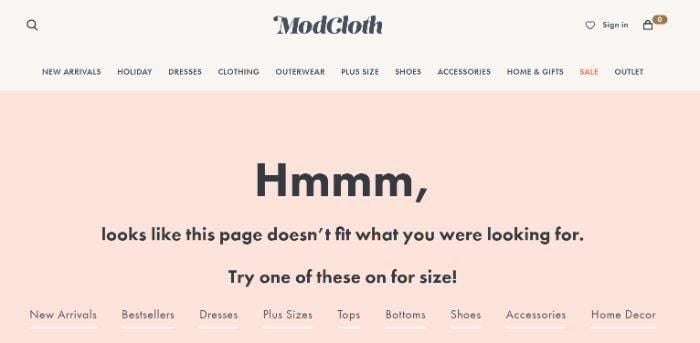
With a hard 404 error, the 404 error code is returned to both page visitors and search engines. This tells both that the page doesn’t exist. Here’s an example of a hard 404 error from the clothing site ModCloth:

Screenshot of Modcloth's 404 page for soft 404 errors.

With a soft 404 error, the 404 error code is displayed to visitors but not search engines.

Instead, they’ll see a 200 OK status which gives them the green light to crawl. So if you’re seeing soft 404 errors in your Google Search Console, it means that there are pages on your site that may be returning 404 errors even though they actually exist.

Can Soft 404 Errors Impact My Site Ranking?

The short answer is yes; soft 404 errors can impact your website’s ranking on SERPs. To understand why, you need to understand how Google crawls a website.

To prevent strain on a website’s server and reduce the workload for the crawl bots, Google uses something called a crawl budget to determine how much and how often to crawl a site. A crawl budget is the number of pages that Googlebot will crawl on your site during each visit. The crawl budget is composed of crawl rate and crawl demand.

According to Google, the definitions are as follows:

  • Crawl Rate is the number of requests per second Googlebot makes to your site when it is crawling it.
  • Crawl Demand is how much Google wants to crawl your site based on popularity, how long it’s been since it crawled, etc.

When you have a large number of soft 404 errors on your website, you’re using a considerable amount of your crawl budget. This means fewer of your existing pages are crawled, leading to fewer and poorer rankings in SERPs.

Think of it this way: If your site has 100 pages, but Google determines your crawl budget is 70, then Google will only crawl 70 percent of your pages. If 10 pages are soft 404 errors, there’s a risk that some or all of those pages will fall into the crawl budget of 70. Thus, you lose out on the search engines crawling valuable pages.

What Problems Can Soft 404s Cause?

Aside from lower rankings in SERPs, other problems are associated with soft 404 errors on your website.

For example, if Googlebot crawls a page with a soft 404 error and finds that the content on the page is not actually missing, it may assume that your site is serving up fake 404 errors. This could lead to your site being penalized by Google.

One of the biggest problems is a poor user experience. Since soft 404 URLs still appear in search results, users may be directed to non-existent pages.

If a user clicks on a link to a page that returns a soft 404 error, they may assume that the page doesn’t exist and leave your site. This can hurt your site’s bounce rate and cause users to spend less time on your site.

There can also be implications for the website’s performance and operations.

While 404 error pages don’t take up as much server space as pages with content, they do still take up bandwidth. If Google and other search engines direct traffic to a non-existent page, you’re still taking hits, which can slow website speed and performance.

How to Find (and Fix) Soft 404 Errors

Since soft 404 errors aren’t an official status, they aren’t as obvious to website owners.

This is where a tool like Google Search Console comes in. According to Google, Search Console “help[s] you measure your site’s Search traffic and performance, fix issues, and make your site shine in Google Search results.”

One issue Search Console can help you to resolve is soft 404 errors.

1. Find Soft 404 Errors in Google Search Console

To use Google Search Console, sign up for an account and connect your domain. It’s a simple process that takes only a few minutes to complete.

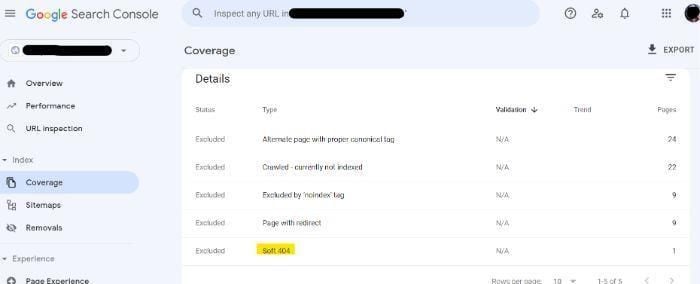
Once connected and Search Console has had time to collect information, you’ll find soft 404 errors in Google Search Console under Coverage:

A screenshot of how to find soft 404 errors in Google Search Console.

It can show in one of two ways: as an error or as excluded (as shown above).

The soft 404s that appear with an error status in Google Search Console are what you want to target first. Those with an excluded status should still be addressed, but Google has stopped crawling those pages for one reason or another.

If you don’t see any soft 404 errors in Google Search Console, you can also use a crawler like Screaming Frog to crawl your site and look for pages that return 404 errors. Just go to the “Response Codes” tab and look for any pages that are returning 404 errors.

2. If the Page Doesn’t Exist: Set Up a Proper 404 or 410 Error

If the soft 404 error you received is real, set up a proper 404 (not found) or 410 (content deleted) error on the server. This ensures website visitors and crawl bots see the correct error.

Is there a difference between the 404 and 410 error codes when it comes to search engines?

According to Google’s John Mueller, not really. Both of these error codes tell Google to stop indexing the URL, which is the outcome you want in either case.

Most Content Management Systems (CMSs) have built-in 404 and 410 error pages. To make the most out of your 404 pages, I recommend adding a few related blog posts or providing a search feature or tool.

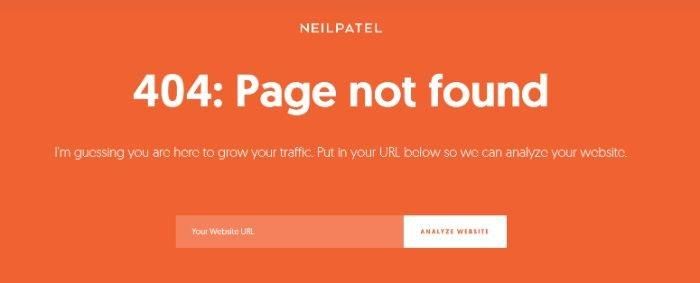
On my site, for example, users can analyze their website SEO from my 404 page:

Screenshot of a 404 error page on Neil Patel's webpage.

If your CMS doesn’t offer one, you’ll need to configure your server and design the page yourself or with the help of a website developer.

While a personalized 404 error page can take time and money, it’s also a great branding opportunity.

3. If the Page Does Exist: Improve the Content and Reindex

Google is good at finding soft 404 errors, but it’s not perfect. It may incorrectly report a page as a soft 404, even if content exists on the page.

This generally occurs when the content is short or irrelevant.

Assuming the page is necessary, you’ll want to bulk up the content to ensure it’s not mistaken for a soft 404. That doesn’t mean using fluff or filler, but relevant and engaging content that improves the quality of your website.

If your webpage needs bulking, consider adding images, charts and diagrams, and data-driven content you can back up with outside references. These lend credibility to your website, which is especially important if the page was returning a soft 404 error. Finding 404 errors can be beneficial for both the backend and front-facing sides of your website and user experience.

4. If the Page Was Moved: Set Up a 301 Redirect

When combining content pages or moving content around, it’s important to set up a redirect as soon as possible. Otherwise, your website visitors may be directed to a 404 page.

If this results in soft 404 errors, then you’ll be happy to know the fix is simple. You just need to set up a permanent 301 redirect to the newer page on your website.

The majority of CMSs have a built-in redirect tool. Simply enter the old URL and the new one, and the traffic is redirected automatically. This guide walks you through setting up redirects on WordPress.

Once set up, the redirect is communicated to search engine crawlers so they crawl the correct pages.

FAQs

What are soft 404 errors?

Soft 404 errors are “page not found” errors that weren’t properly communicated to search engine crawl bots. The error shows correctly to website visitors but not to crawl bots, which means they continue to crawl those pages, wasting time and resources.

What causes a soft 404?

There are a few different things that can cause a soft 404 error. The most common reason is that the page has been moved to a new location and a redirect hasn’t been set up. Other common causes include poor content on the page and pages that return 404 errors even though they actually exist.

Will fixing soft 404 errors increase my website traffic?

When soft 404 errors are resolved, the crawl bots can focus on a larger percentage of your active content pages. As a result, more content appears in SERPs. In theory, this can increase website traffic.

What is the difference between regular 404 and soft 404 errors?

The difference between a regular 404 and a soft 404 error is what is communicated to search engine crawl bots. With a regular 404, the website server delivers the 404 error to the crawl bot. With a soft 404, the website server delivers a 200 OK status, which means the bots continue to crawl the page.

Will Google penalize me for soft 404 errors?

There’s no official penalty for soft 404 errors, though there are natural consequences if the errors aren’t resolved. These include lower visibility on search engine results pages and a poor user experience.

Does having 404s affect SEO?

404 errors can hurt your site’s ranking if they’re not properly handled. If Googlebot crawls a page with a 404 error, it may assume that the page doesn’t exist and stop crawling your site. As a result, your most important pages may not be getting crawled as often as they should, which can hurt your site’s ranking.

Additionally, if users click on a link to a page that returns a 404 error, they may assume that the page doesn’t exist and leave your site. This can hurt your site’s bounce rate and cause users to spend less time on your site, both of which can negatively impact your site’s ranking.

To avoid these problems, be sure to set up a proper 404 or 410 error if a page doesn’t exist, and be sure to set up a 301 redirect if a page has been moved.

Additionally, make sure that all of your pages have good content that is relevant to what users are looking for. You can perform technical SEO audits throughout the year to ensure your pages are up to par. By taking these steps, you can help ensure that your site’s ranking isn’t hurt by soft 404 errors.

How do I fix soft 404 errors?

If the page doesn’t actually exist, creating a customized 404 page or 410 error will help. A 404 error tells users that the page they’re looking for doesn’t exist, while a 410 error tells users that the page has been permanently removed.

To set up a 404 or 410 error, you’ll need to add a “404.html” or “410.html” file to your site.

If the page does exist but is returning a soft 404 error, you’ll need to improve the content on the page and then reindex it. This can be done by adding more relevant content to the page or by improving the page’s title and meta tags.

If the page was moved to a new location, you’ll need to set up a 301 redirect. A 301 redirect tells users that the page has been permanently moved to a new location. To set up a 301 redirect, you’ll need to add a “301.html” file to your site.

Conclusion

When a page is removed from your website, there are proper ways to signal this removal to both website visitors and search engine crawl bots.

The most common method is setting up a 404 error page. If not configured properly, though, the 404 error may not be communicated to crawl bots. Thus, a soft 404 error occurs.

While a soft 404 error can cause issues with search engine rankings as well as user experience, they are easy to find and resolve.

Depending on the circumstances, you might set up a permanent 404, set up a 301 redirect, or improve the page content and reindex it. These fixes take just a few minutes but can significantly impact website performance.

When was the last time you checked for soft 404 errors?


from Neil Patel's Digital Marketing Blog https://ift.tt/MmF89fU

Tuesday, 18 October 2022

Save Time with Ubersuggest’s AI Writing Tool

Graphic that says, "Save time with Ubersuggest's AI writing tool."

You’ve heard about AI, but have you ever used it?

Just think of it this way, what if you can use artificial intelligence (AI) to create content for you so you wouldn’t even have to write?

Well, believe it or not, this blog post that you are reading now was written by an AI content writer.

To be fair, no AI tool is perfect, as technology isn’t there yet.

And to give you perspective, the AI wrote this post, and then I had to modify it and add specific sections and steps.

When I looked back and did an analysis, AI wrote roughly 25% of this post.

That’s not too bad. Sure, I had to write 75%, but the hardest part about writing isn’t putting words on a paper, it’s coming up with the ideas and the overall format.

So today, I am going to show you how to write a blog post using AI…keep in mind, over time it will get better as technology improves.

But first, here’s something you should know…

Duplicates and AI Content Writing

Google doesn’t penalize for duplicate content, and even if they did, this AI tool makes 100% unique content for you.

So, you won’t have duplicative or plagiarism issues.

It’s not just mixing words around. It is trying to understand what you are trying to write your article on, do research, and come up with words that encompass everything you are trying to get across.

If you are looking to get more insight about your audience, AI for PPC ad writing could help you personalize the ad copy and SEO to determine their habits and motivations.

Search pros are using AI-powered SEO solutions today to accomplish more and give them an edge, pushing their efficiency beyond their competitors.

According to McKinsey analysts, AI may generate between $1.4 and $2.6 trillion in value in marketing and sales for global businesses alone because of its ability to supplement and advance marketing use AI for SEO.

With that being said, let’s get you started with using an AI content generator for your benefit.

Getting Started With Your AI Content Generator

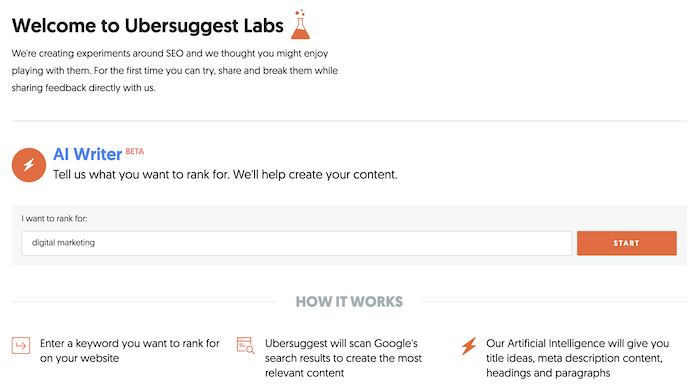
First off, go to Ubersuggest’s AI Writer.

Screenshot of Ubersuggest's AI content generator.

First, enter in the keyword you want an article on. For this example, I chose the term “digital marketing” as my blog is on digital marketing.

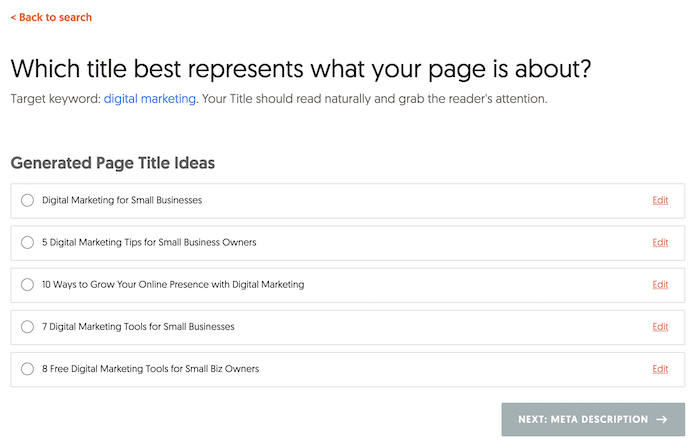
Then you will want to select a title from the list provided. You don’t always have to use it at the very end, but a lot of the titles are based on what people are searching for.

Screenshot of Ubersuggest's AI content generator.

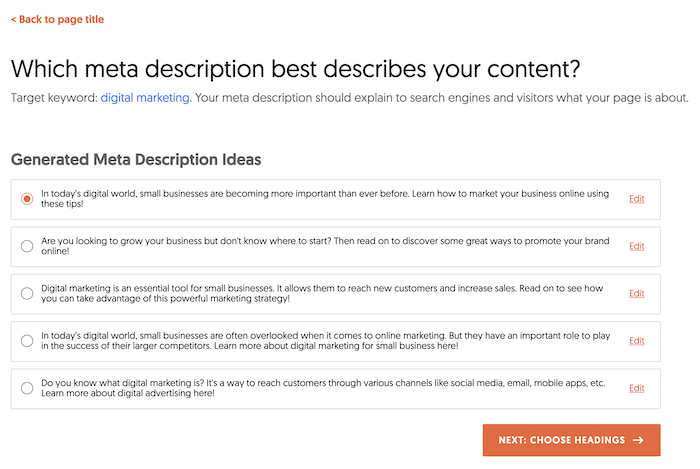
Next, you will want to choose a meta description.

Similar to the above, meta description is also based on keywords that are popular from a traffic perspective.

Screenshot of Ubersuggest's AI content generator.

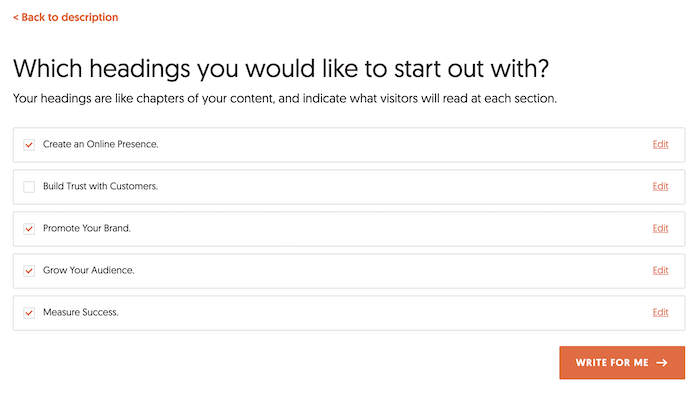
After you select your meta description, you will want to select a few headings.

Keep in mind headings are like book chapters. Pick the ones that work the best, and again, keep in mind you can always adjust the text later on.

Screenshot of Ubersuggest's AI content generator.

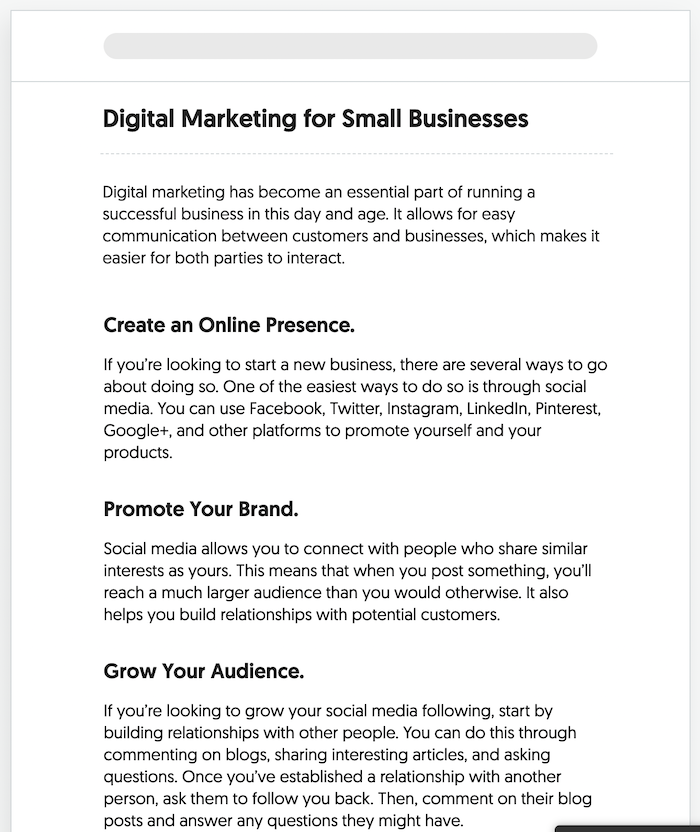
The last step is that Ubersuggest will take all of the data and spit out content for you.

Screenshot of Ubbersuggest's AI content generator.

By no means is the content perfect, and I wouldn’t recommend publishing it as is or any AI content written by any tool for that matter.

Instead, use it as a starting ground.

How you modify articles will give you a unique voice to better connect with your audience.

Modifying Articles With The Ubersuggest AI Writer

While the AI tool won’t always be contextually accurate, most of the time, it is.

More so, the way you make the AI piece amazing is by getting more detailed.

I like to say it’s how you humanize AI content.

So, for example, in the digital marketing article above, in the “create an online presence” section, I would go in-depth on Facebook, Twitter, LinkedIn, and Pinterest on how you can use them for marketing.

As for Google+, it no longer exists, so I would delete that part and expand the other platforms and give step-by-step instructions on how to leverage them.

I would also include screenshots, so each step is clear.

Under the “promote your brand” section, I would discuss ads and other ways to promote your brand, such as running promotions, sales during holidays, or even doing webinars.

I would give examples of other successful ones that businesses have run and give examples of failed campaigns that have been run and break down what you can learn from them.

The “grow your audience” section already talks about what to do if you have no followers. They are all good tips that the AI tool wrote, but the tips are too surface-level. I would dive deep into each one. Get granular in your approach to growing your audience through engaging with other accounts and potential customers online. Email pitches can even help behind the scenes when convincing brands to collaborate with you to promote your brand.[

And the measuring success section was cut off from the above screenshot, but it mentions Google Analytics. I would go more in-depth on how to set up goals in Google Analytics and tie in revenue. Remember, GA4 is going to be the only game in town in 2023, so you want to make a mention of that and possibly go into how to do so there.

Frequently Asked Questions

What is AI-generated content?

To keep it simple, AI-generated content is created by artificial intelligence, performing writing tasks and research faster than humans. The majority of AI systems are capable of carrying out tasks that often call for human intelligence, decision-making, reasoning, or learning. Through “natural language generation (NLG),” AI is able to produce written narratives as part of the content marketing process. With this power, it may create business reports, forecast consumer behavior, plan content, and provide individualized product recommendations.

How do you use Ubersuggest to create AI content?

Once you open the AI tool, follow these steps:

1. Enter the keyword you want an article on.

2. Choose a meta description.

3. Select the headings that will flow best for the article.

4. Wait for the AI content generator to populate the content.

Is all AI content created equal?

AI content is comparable to human capabilities, but there are still holes to fill. Even if you aren’t looking for an entire article to be written via AI, the paragraph rewriting functionality of AI tools is often offered for free, but there are paid plans. Depending on the tool you use (paid or free), you’ll have varying features like text predictions, blog outlines, and more.

What kind of copy can AI create?

AI content writing is seeing advancement with easily generated, high-quality copy. Many tools offer at least blog, marketing, and sales copy. If you’re putting together a website, you can have your landing page written in seconds. These features mainly depend on your preference input, and it outputs suggestions, giving you extra writing assistance.

Do AI content generators check for plagiarism?

It takes deep learning to produce results with accuracy, and plagiarism detection in AI content generators is still evolving. The fact that AI-generated material isn’t entirely original is a major disadvantage from a content marketing standpoint. The copy may pass a plagiarism checker but lack original research, insights, or facts on the topic.

Conclusion

The Ubersuggest AI tool isn’t meant to replace humans or for it to perfectly write your content for you.

It’s meant to give you a start.

You have experienced writer’s block, and we all hate it. The tool solves that part plus it gives you a head start.

It not only gives you title and meta description ideas, but it writes some of the content for you as well as gives you popular headings based on keyword search volume.

All you have to do is adjust and fill in the rest.

So, make sure you give it a try.


from Neil Patel's Digital Marketing Blog https://ift.tt/0KGHCgP

Monday, 17 October 2022

Examples of E-commerce SEO Done Right (and Mistakes To Avoid)

Graphic that says "Examples of E-commerce SEO Done Right (and Mistakes to Avoid)"

We all know the foundation of e-commerce SEO is keyword research.

Over half of shoppers surveyed in a global retail study say they use Google to research purchases they plan to make online.

This is why SEO is your golden ticket to increasing organic visibility.

How?

Think about it: Before you create your site’s content, you need to know what terms your audience is using to search for products like yours.

How will you solve their problems without knowing the keywords behind their search intent?

You have to build your content with search engines and your users in mind.

The sooner you understand how SEO is changing and adapt your strategies, the sooner you’ll see ROI from e-commerce SEO.

Isn’t it impressive how far SEO has progressed?

Jump on the SEO train with me and I’ll show you why it’s important.

Why Is E-commerce SEO So Important?

You’re trying to get new customers to have all eyes on you.

You can’t win their attention if search engines can’t easily find you.

Your site is basically the secret menu at Starbucks if you don’t invest in keyword research.

That’s why it should be the critical first step in your e-commerce SEO campaign.

One of two things will happen if you don’t get SEO for e-commerce right:

  1. You won’t rank on page one—or near the top—because your target keywords are too difficult.
  2. The keywords you choose won’t drive in the traffic you’re aiming for or align with customers’ search intent.

However, getting your potential customers’ attention can be expensive.

For example, the average cost per click for the apparel industry is about 89 cents. The average cost per action is right below $10 when you break down WordStream’s results. Cost per action is a pricing model where payment is contingent on a qualified specific action, like a sale or submitted form.

While cost per click generates fast, profitable sales, you could spend thousands reeling in new customers.

By using SEO for e-commerce, you’re gaining free organic traffic by getting your site to show up in the SERPs.

But there are some missteps you should avoid if you want to see success.

Common E-commerce SEO Mistakes

What are the user’s needs?

If you keep this question top of mind, you should have a solid e-commerce SEO campaign.

Here is a list of at least three e-commerce SEO mistakes I don’t want you to make:

Screenshot of an ecommerce page with a vague product description.
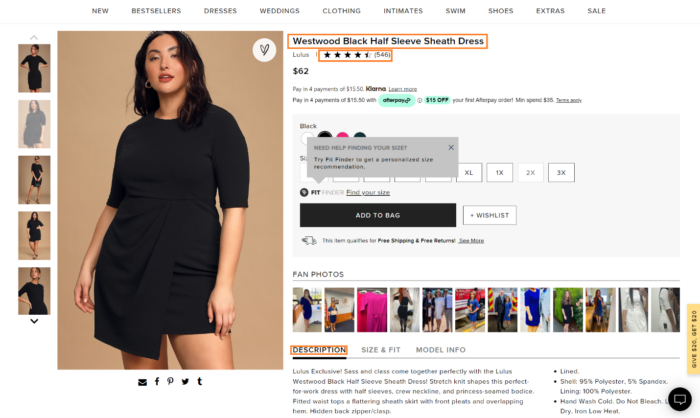
  1. Vague Product Descriptions: This is a place to fit in keywords that make sense for your product. Write a product description so your customer knows what to expect. Even when you’re naming the product, think about a user’s potential search queries. Optimizing your product pages gives them a great chance at a top ranking for items. Product descriptions provide clarity and answer important questions that encourage users to follow through with their cart.
  2. Display of Product Reviews: The beautiful thing about product reviews is they’re customer generated. It’s basically on-screen user-generated content. Reviews share customers’ unique experiences with your product. The page is like a living update, bringing more people to your site. Take advantage of the SEO benefits reviews bring to your e-commerce site. For added benefits, make sure you implement product review schema so your reviews will be even more prominent in Google SERPs.
  3. Non-Interactive Title Tags: Titles are not only a matter of SEO. They should line up with your users’ search intent. Focus on unique phrasing. The formula I like is this: Brand + Model + Item Type = Interactive Title Tag. If you want to see if the titles for your products are unique, use Ubersuggest to double-check.

There are many more benefits to SEO for e-commerce—and mistakes to avoid. I’ve got some examples of e-commerce SEO in action to serve as inspiration for you.

E-commerce SEO Sites That Are Crushing It

Some people say SEO is dead.

Well, I say they’re wrong.

No matter which side of the fence you’re on, you can’t deny the benefits SEO has on e-commerce.

Especially now with social e-commerce, there is big money to be made. Researchers see a trend in e-sales that will go beyond $1.3 trillion by 2025.

SEO for e-commerce done right drives relevant traffic to your social channels and website without spending big on paid ads.

Once you see those qualified leads come in, make sure your strategy is in place to convert them.

We chose these three examples to focus on because:

I’d like to show and tell you who’s crushing e-commerce SEO right now. We chose these three examples because:

  • They are large name brand stores
  • They are implementing technically sound SEO
  • They are using creative copy on the product pages
  • They have schema mark-up on the pages which helps create a more enticing SERP result
  • They have built strong, natural looking backlink profiles

All of these factors are extremely important to help with boosting rankings. Our research shows that show when sites implement SEO strategy and optimized copy, they see a larger keyword universe and higher domain authority. Combine these together and you get high organic traffic numbers.

Let’s take a closer look.

Etsy: Strong E-Commerce SEO Strategy

Etsy is a global online marketplace where brands can buy, sell, trade, and collect one-of-a-kind products. It’s a marketplace where you’ll likely find your new favorite handcrafted items from independent artists and designers.

This is a great environment for a brand to win at e-commerce SEO.

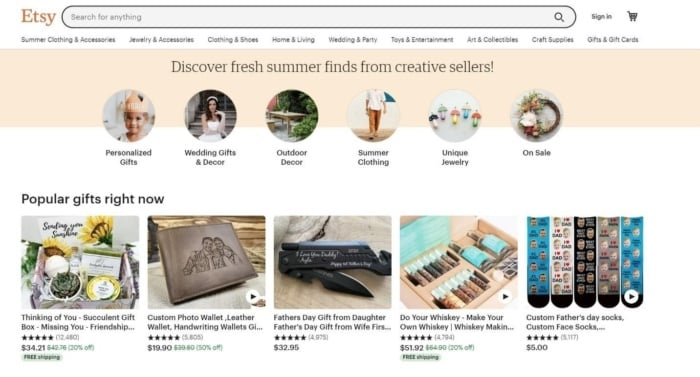
A screenshot of Etsy's webpage.

Etsy is making strong strides in SEO marketing right now.

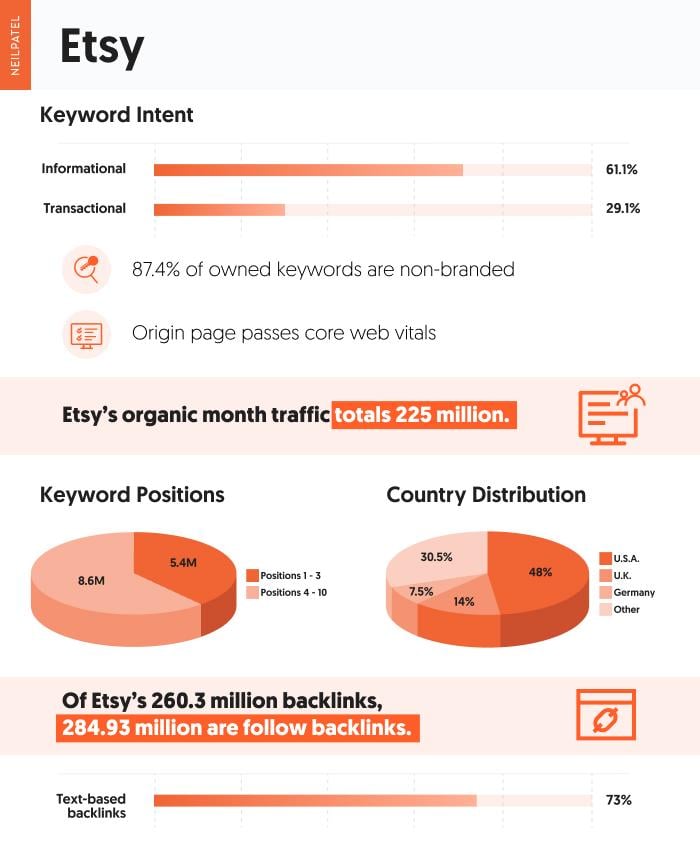
In May 2022, Etsy ranked for over 14 million keywords in position one through ten, including nearly 5.5 million of those in the top three positions.


Etsy’s main navigation is intuitive and easy to use. There’s a banner with season-specific, popular items for the summer as well as popular gifts people are purchasing.

Businesses gain brand visibility thanks to how content is laid out over the site. There’s a strong emphasis on discovery. Etsy leans a lot on “keywords by intent,” especially via blog mentions. Their most trafficked blog article features the best Etsy shops, which nets 1,061 visitors and $462 in revenue.

Overall, 61.1% of Etsy’s keywords are informational and 29.9% are transactional. A whopping 87.4% of keywords owned are non-branded. This shows us what users want to know about the brands within Etsy. How they’re educated as an audience matters during their buyer’s journey.

I’d also like to mention a lot of Etsy’s success comes from stellar Core Web Vitals. This is a huge ranking factor in this mobile-first index ranking world. The faster people see their shopping interests during their user experience, the better.

Etsy gets this right all while supporting the shops that rely on them for a degree of brand visibility.

A graphic of Etsy's core web page vitals.

Overstock: A Great Core Web Vitals Example

Overstock is an online retailer that sells home goods at low prices.

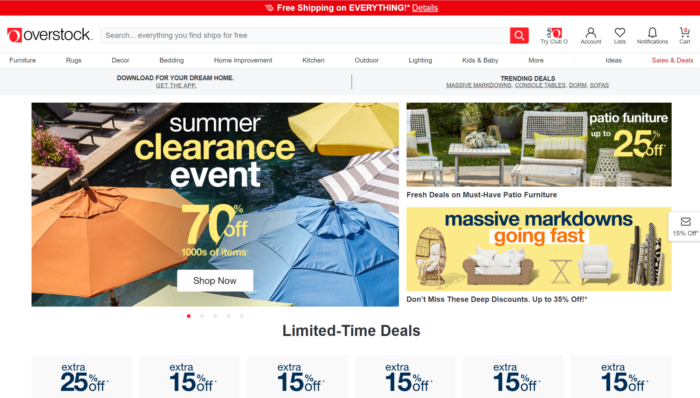
A screenshot of Overstock.com's homepage.

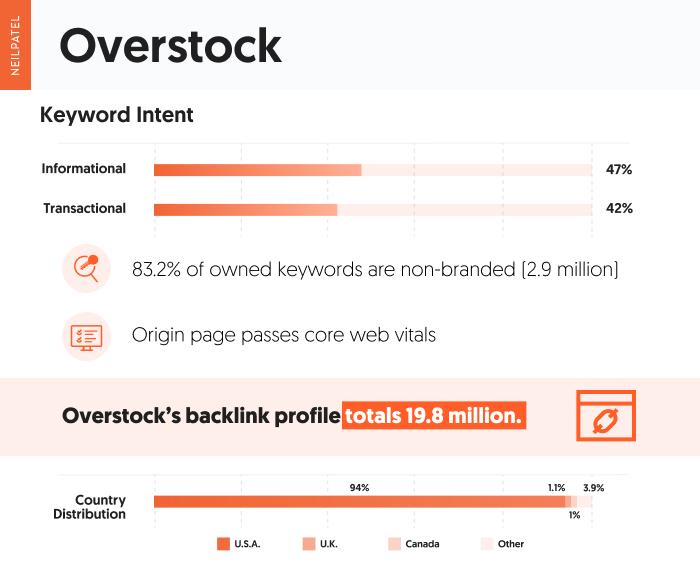
Like Etsy, Overstock has great Core Web Vitals, so user experience with their online database is sharp. They are a tech-driven company, so that’s to be expected.

Based on what users are looking for, they win a lot of traffic for non-branded keywords (83.2%) vs. branded keywords (16.8%). Overstock is capturing users searching for queries that are not associated with their brand. Meaning, they are catching a lot of users looking for a solution their site can solve.

It makes sense why much of the site’s keyword intent funnels in through informational search queries (47% in May 2022). The data shows customers want to be informed before they make their purchases.

Transactional searches are almost equally as high (42% in May 2022). Think of a popular search like “patio furniture.” The products Overstock offers are essentially what users are searching for.

SEO for e-commerce serves Overstock well by targeting keywords users are looking for, even if it’s not branded. They have mastered aligning keywords with users’ search intent, allowing them to see results with strong performing non-branded terms.

A graphic of Overstock.com's core web vitals.

Lulus: How SEO for Ecommerce Helps A Brand

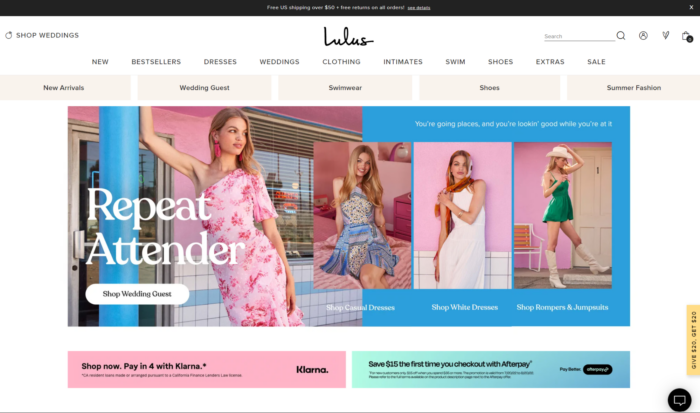
Lulus is a fashion brand with an affordable luxury feel.

A screenshot of Lulu's webpage.

They recently upped their Core Web Vitals, helping them rank higher and garner more organic on-page sessions. That’s just one of the ways they’ve upped their game.

Let’s look at how they’re crushing SEO for e-commerce to get these results.

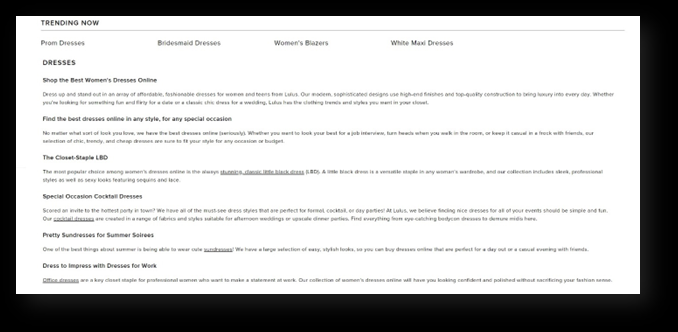
One thing I noticed on this Lulus dresses page is the copy.

Well, what makes their copy stand out?

The high-priority keywords.

A screenshot of Lulu's high priority keywords to enhance their ecommerce seo.

I know it sounds simple, but if you’re searching for a cocktail dress for a company Christmas party, Lulus points you in the right direction on their site.

You’ve got the keywords and directions for your users. Now, they’re bound to trust you and follow through with their cart.

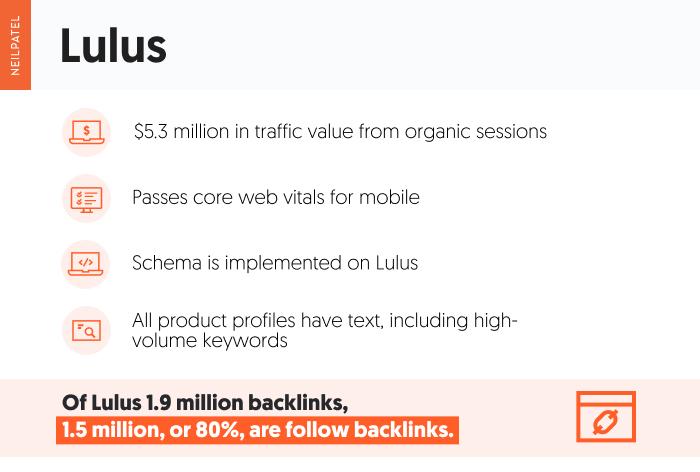
It goes the same way with backlinks. Lulus’ backlinks profile speaks for itself, with well over 19 million referring domains.

Follow links make up 80% of Lulus’ backlinks, signaling to search engines that the site is trustworthy.

Selling amazing products is one thing. Having outside sources vouch for your brand online makes you look even more credible. Think of the SERPs as one big popularity contest, and having other people vouch for you is a big help.

The traffic will come to you as potential leads to convert. They will make secure purchases knowing you have what they need, and they’ll come back to shop for other items they need in the future.

Whether they’re from fashion blogs or influencers, backlinks are e-commerce SEO gold.

This is how Lulus did it.

That’s what SEO for e-commerce does for a brand. It shows your customers you are their solution.

A graphic showcasing Lulus ecommerce SEO impact.

What We Can Learn From E-commerce SEO Done Right?

SEO for e-commerce is a game changer, so spend some time on it.

To play the game right means appearing high on the first page of search engines like Google, Bing, and Yahoo for terms your potential consumers use.

If you know how your audience makes decisions, you can create content that guides them through their purchasing journey.

Yes, having high-quality content and copy matters. It won’t convert to users if your keywords don’t have high-quality search intent, though.

Strategic internal linking—linking to other URLs on the same site—and optimizing product and category pages are some of the hardest parts of e-commerce SEO. However, they’re definitely on my list of e-commerce SEO best practices.

That’s why I’m here. To give you SEO tips that work for you.

Conclusion

Search engines like Google mostly focus on providing users with a valuable experience.

Your website needs to make usability its top priority.

That’s my golden rule for SEO.

If your user experience is convenient and intuitive, your customers will respect and trust you.

It’s like what’s good for your users is good for Google—so satisfying both go hand in hand.

If users spend more time on your site and don’t navigate back to previous search results, Google takes this as a badge of honor.

Links are what propel you to the top of the search results page, so people who like your website and what it offers are far more likely to link to it.

Put e-commerce SEO at the forefront of your marketing campaign and see how catering to your audience’s needs leads to increased traffic.

Have you found mistakes with your e-commerce SEO strategy? How could you tell you were underperforming? Let me know and I can help you fix it.


from Neil Patel's Digital Marketing Blog https://ift.tt/RH10CG9

Saturday, 15 October 2022

What the New Google Search Essentials Tells Us About SEO

Are you familiar with Google’s Webmaster Guidelines?

It has been around for years (until now), and it broke the dos and don’ts of SEO.

But it was outdated. So, Google replaced it with Search Essentials which gives you a whole new set of requirements if you want to do well with SEO.

They go much more in-depth with what they like and don’t approve of. A lot of it is vague, similar to the old Webmaster Guidelines but they do provide some specifics that will help you out when it comes to SEO.

Here’s what you need to know:

Automated content

They spend a lot of time covering automated content. And it makes sense because there are a lot of tools that provide AI-generated copy.

Heck, we even offer AI content as part of our Ubersuggest tool, and to give you an idea over 20,000 people use it daily.

But I’ve been one of the biggest critics of AI content because no matter what tool you decide to use none of them are good enough to replace a human.

Instead, you can use them to give you a head start, but you need a human to help modify the content to help make it better as well as to add creativity to the piece.

Here’s what Google shared what they don’t like when it comes to AI written content (keep in mind Google also put this in the spam section of Google Essentials):

  • Text that makes no sense to the reader but contains search keywords
  • Text translated by an automated tool without human review or curation before publishing
  • Text generated through automated processes without regard for quality or user experience
  • Text generated using automated synonymizing, paraphrasing, or obfuscation techniques
  • Text generated from scraping feeds or search results
  • Stitching or combining content from different web pages without adding sufficient value

The big takeaway for you here is that Google isn’t saying that you can’t use AI-created content. They have an issue with the quality of AI content.

Just think of it this way if you create AI-written content on a mass scale and don’t have humans editing it, people won’t find it valuable, they will bounce away, and the user metrics won’t be great… which all just means it won’t rank well.

With your content marketing efforts if you want to rank well you really only have a few good options:

  1. Write content yourself
  2. Pay someone to create your content
  3. Use an AI tool to create content, and then use a human to HEAVILY modify it.

If you choose option 3 and still want to rank well, when I say you need someone to “heavily” modify it you’ll have to do a few things:

  1. Expand upon the length – most AI-based content is too short and barely covers the topic. Adding more words will provide more value to the reader.
  2. Add in personal experiences – people love storytelling and reading about personal experiences. It’s how we learn. It’s too hard for an AI writer to add in “personal experiences”. So you will want a human to add that part in.
  3. Make your content fresh – what’s old is old and has probably already been read before. AI writers are pulling from the web and using what’s been written on before to create something that is “new”. But in all honesty, it really isn’t new, it is just regurgitated content. So, you’ll need someone to add in new stats, data, information… anything that makes it stand out from the competition.
  4. Add a dash of personality – in the future AI writers should be able to add personality to the content they create, but I haven’t seen it yet. I’ve literally paid for most if not all the AI writers and tested them out. I’ve yet to see one that adds personality. People connect with humans, not robots, so show your personality through your content.

To even place more emphasis on quality content, Google also recently released the helpful content update, which pretty much breaks downs that you should focus on writing content for users and not Google.

Content types

Reading is becoming less and less popular, especially among the younger generation. According to the American Phycological Association, less than 20% of teens read a book, magazine or newspaper daily. Yet more than 80% say they use social media daily.

And can you guess what type of content social media prefers?

It’s video.

To make things a bit more scary for Google, Gen Z is now starting to use TikTok for search over Google.

Google senior vice president Prabhakar Raghavan told Fortune:

Something like almost 40% of young people when they’re looking for a place for lunch, they don’t go to Google Maps or Search, they go to TikTok or Instagram.

So how is Google adapting? They of course index all forms of content… from videos to podcasts. Plus they released shorts on YouTube which now has over 1.5 billion viewers.

On top of that have been testing making these short-form videos part of their search results.

When you are creating different types of content on your website you need to make sure Google can easily classify and index it.

Within Search Essentials, they break down how you can help Google understand the type of content you are creating. This is nothing new, but for them to emphasize this it shows that they understand that the future of SEO isn’t just text-based content and they of course need websites to help them out by using things like schema markup.

Depending on the content type you are using, follow these code guidelines for images and these for videos.

This will help ensure that you get the SEO traffic you deserve no matter how Google adjusts its results in the future.

Local SEO

Google mentions a few things that also affect local SEO.

They didn’t really specify that it is for local SEO, but partly is. They don’t want you to keyword stuff and here are some examples of what they don’t want:

  • Lists of phone numbers without substantial added value
  • Blocks of text that list cities and regions that a web page is trying to rank for
  • Repeating the same words or phrases so often that it sounds unnatural.

A lot of companies have multiple locations. Or if they just have one physical location they tend to create pages for each city/region that is close to their location. That way they can get more SEO traffic.

And what happens is they tend to use similar blocks of text with the same keywords on each of those pages, but they just adjust it slightly by adding a new city or region-based content.

Those pages don’t really add value. They are just for search engines so you can capture traffic from a user searching for local results.

I bet you will see Google cracking down more on that in the future.

If you want to create multiple pages for each city that your company serves you need to add more value.

For example, if I were a solar panel installation and service company that serviced Los Angeles, CA I would want to create city-based pages. Because within Los Angeles you have sub-sections such as Hollywood or Beverly Hills.

I would customize each city page and make it very specific. For example, in Beverly Hills, you can’t place solar panels on the roof that are visible to people on the street or your neighbors. And you can’t place Tesla solar roof tiles that just look like normal “roof tiles” as the Beverly Hills design board won’t approve it.

I would even go as far as showing an image of the Tesla solar roof, like the one below so people know what won’t be approved.

Or I could discuss how long it takes to get city approval and what the process is for Beverly Hills as it is different than Hollywood.

There are many more ways to customize your local city pages, but the above are just two simple ways I would make them valuable to both users and Google.

If you want to create multiple city pages think about what value you can provide. Sure you want the traffic and rankings, but to get that put the user first and make sure they are getting more value from you than the competition.

Conclusion

There are a lot of things Google covers in Search Essentials, but most of it is old or nothing that you already didn’t know.

The bigger things are:

  1. They want humans to adjust AI-written content and not just publish it as is because it doesn’t provide much value.
  2. Make sure you help Google understand the content types that you are using. SEO is mainly about text-based content today, but that is going to change as many users (especially the younger audience) prefer image and video-based content.
  3. Google wants to crack down on local SEO spam of users just creating duplicate pages that don’t change much other than they are targeting specific cities or regions.

So what do you think about the Google Search Essentials?


from Neil Patel's Digital Marketing Blog https://ift.tt/Tar41Qt