Internal linking is one of the most effective aspects of search engine optimization.
It is also one of the most neglected aspects that is often under-done or dome wrong.
Jim Boykin, CEO of Internet Marketing Ninjas, and Ann Smarty, IMN’s analyst, are discussing how to create an effective interlinking strategy to make sure all the important parts and sections of your site are accessible by Google.
The majority of websites have a lot of pages that are never going to rank. Those pages that don’t rank are usually those pages that are buried deep down within a website.
The first step in deciding what to do with those pages is to make your site flatter.
Step 1: Sitewide strategies to improve internal linking structure:
More (specific) categories: Come up with subcategories (price ranges, by use, etc.) to surface more products (and capture some long-tail opportunities as well)
Breadcrumbs
More products on one page (to make it fewer pages). Mind your load time when experimenting with those.
Step 2: Tie in different parts of your site
Most sites have several sections, and many of those sections become islands. For example, a blog is usually something that exists on its own, with few or no internal links tying it to the main site.
This is where linking blog posts to related product and category pages is so important because Google will see this as a cluster containing everything that can satisfy any type of search intent, from informational to commercial.
This thematic interlinking allows link equity to flow within one cluster and help each page within it to rank higher. This is how Google starts thinking of your site as “an ultimate” answer to the whole set of relevant search queries.
Contact ninjas for us to help you create an effective internal linking that will surface your important pages and turn your site into the niche authority.
As my enterprise-level agency, NP Digital, has grown, we’ve been able to expand across the globe. We’ve opened agencies in Brazil, the UK, Australia, India, and now: Canada! That’s right: we have opened a full-service digital marketing agency in Canada.
And to kick things off with a bang, I’ll be heading to Canada to present at the Collision Conference. I’m so excited to talk about what I’ve learned you can do to ace your digital strategy in the years to come.
It’s not just me who will be there: Ronnie Malewski, managing director of NPD Canada, as well as Ryan Douglas, VP of Strategy & Performance, will also be teaching a master class on CRO called “What Optimizing 500+ Sites Has Taught Us.”
Why Did We Choose Canada as Our New NPD International Location?
Well, this year, for the first time, digital ad spending will be more than double traditional ad spending, accounting for 68.3% of the total ad market in Canada–and that number is expected to reach 15.4 billion by 2024.
Since Canada is expected to become one of the world’s fastest growing markets this year in terms of ad spending, it only made sense for us to bring our expertise there meet the demands of the market.
Our team excels in delivering across the full spectrum of earned media specializing in:
Technical SEO
On-Site Optimization
Content ideation
Content creation
Link Building
Digital PR
Implementation
Paid Media:
Our team of specialists can help take your performance media strategy to the next level across a wide array of channels
Search (Google ads, Microsoft Ads)
Social (Meta, LinkedIn, TikTok, Snap, Pinterest, Etc)
Programmatic Display & Video
Ecommerce (Google Shopping, Amazon, Marketplaces)
Tools and Tech:
We have access to the latest tools and technologies that give us the data and UX features you need to grow your brand.
Client Services:
Our client services ensure the cross-channel collaboration you need to drive customer success.
Why Choose NPD Canada?
So, why should you choose to work with us?
First, we are bringing serious talent to the table.
Ronnie Malewski, Managing Director, has more than 16 years of experience in digital marketing. In that time, he’s helped both SMB and enterprise brands grow their businesses. He’s worked with major brands like Adidas, Loblaws, and Microsoft. We’re lucky Ronnie is able to bring his years of proven success in the digital marketing space to provide strategic oversight to the clients of NPD Canada.
Other key players include:
Ryan Douglas, VP of Strategy and Performance: Ryan has over a decade of experience driving strategy and media activation for SMB and enterprise brands. He is a subject matter expert in SEM, SEO, display, video, social media, and email. Ryan brings years of experience driving holistic media strategies proven to deliver meaningful business results.
Nikki Lamb, SEO Director: Nikki has years of experience in SEO analytics and has excelled in working across channels to ensure consistency, drive innovation, and maintain operational excellence.
D Doan, Director of Data Analytics: D’s team develops advanced analytics strategies for some of the world’s most recognizable brands.
Our talent isn’t the only reason to choose NPD Canada for your digital marketing partner.
In a matter of three months we’ve already onboarded seven clients and are growing so quickly we’re hiring at a rapid pace.
A few other things that make NPD Canada great:
We’re minority founded and minority owned.
We’re supported by NPD U.S., meaning we have access to even more of the brightest minds in digital marketing across multiple service areas.
Our agencies have won over ten awards, we have 500 clients globally, and over 600 employees worldwide.
Are you ready to take your business to the next level by partnering with NPD Canada? Let’s talk.
from Neil Patel's Digital Marketing Blog https://ift.tt/hMG23sq
In a world of increasing competition, understanding your target market is vital.
Conducting thorough research of past, current, and prospective customers helps you uncover insights to improve your product or create more effective marketing messages.
Those insights don’t have to be hard-won, either. Thanks to new tools and data sources, businesses no longer have to rely on traditional methods like surveys and focus groups.
Ready to learn what your audience really wants? These are the 15 best market research tools to use.
Benefits of Leveraging Marketing Research
There’s a reason the global revenue of the market research industry has more than doubled since 2008 and is now valued in excess of $76.5 billion. It comes with a heap of benefits. Any business wanting to improve their product or launch a new marketing campaign will be at a significant disadvantage without it.
Market research keeps your target audience at the center of every decision. By understanding their needs and desires, you can tailor everything from your product to your marketing to your customer. In doing so, you’ll reduce the number of bad customer experiences—one or two of which are enough to make 66 percent of customers switch to a competitor.
Market research tools can also help you discover new business opportunities and threats. New markets become obvious when speaking to customers and understanding their behavior. So, too, do competitors and external threats that could threaten your business if you don’t act.
Ultimately, using market research will give you a huge competitive advantage. That’s because of the benefits above and because less than 40 percent of marketers are using consumer research to drive decisions.
How to Use Marketing Research Data in Your Marketing
You can leverage market research data in several ways, but using it to inform and optimize your marketing strategy, from campaign creation to execution, is one of the most powerful.
For instance, market research can ensure your new product launch goes off without a hitch. Almost half of all product launches are delayed, and 20 percent fail to meet targets. By understanding exactly what customers want, a successful product launch simply becomes a case of delivering it.
Market research can also help you focus your marketing efforts on areas where you have a competitive advantage. By understanding what customers are really searching for, you could identify untapped markets with very little competition in terms of paid ads or SEO. Focusing your efforts here, rather than on saturated verticals, will send your ROI soaring.
Finally, you can use market research data to optimize your marketing efforts after launch. Analyzing social media and other types of user engagement data can highlight how effective each message is so you can do more of what works and less of what doesn’t.
5 Best Free Marketing Research Tools
You don’t have to spend a dime to get the benefits of marketing research. There are plenty of free market research tools out there. I’ve highlighted five of my favorites below.
1. Google Trends
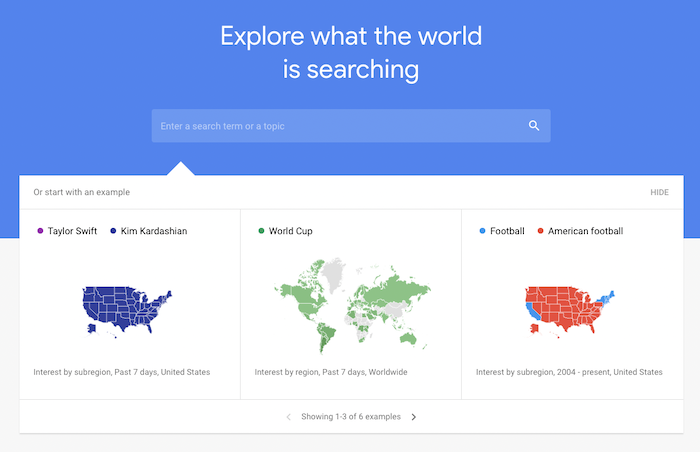
Google Trends shows you what people are searching for on Google. It was introduced in 2006 and tracks the popularity of topics over time by location. You can see exactly how popular searches are for Taylor Swift in the U.S. this year. Or how searches for Brexit have declined in the U.K. since 2019.
At the time of writing, Google processes 102,000 searches every second. That’s 88 billion searches every day, making it the largest and most valuable search data source in existence. Google Trends gives you access to that data in a categorized and aggregated way.
Enter a trend and Google will show you how trendy that term is with a line graph and give you a score out of 100. You can also compare different terms.
Pros
easy to use
visually appealing
huge amount of data
Cons
doesn’t show the exact search volume
related topics aren’t always relevant
Price
Free.
2. Facebook Page Insights
Facebook Page Insights is a fantastic and free market research if you use Facebook to market your business. If you don’t use Facebook for marketing yet, you probably should. With 2.9 billion monthly active users, it’s one of the best social media platforms for marketing.
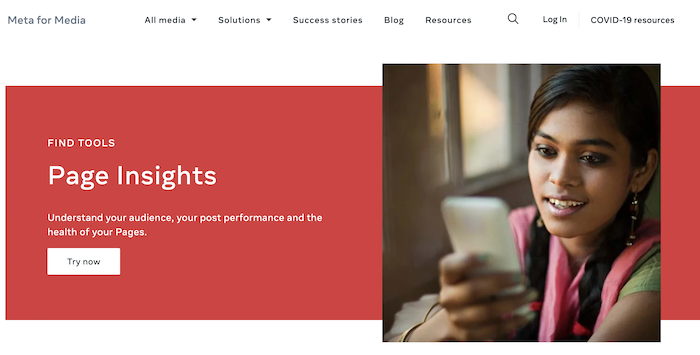
The tool provides insights into your audience, post performance, and the health of your pages. You can use the tool to see who likes your page and why, which posts get the most engagement, and learn how to increase the reach of your content.
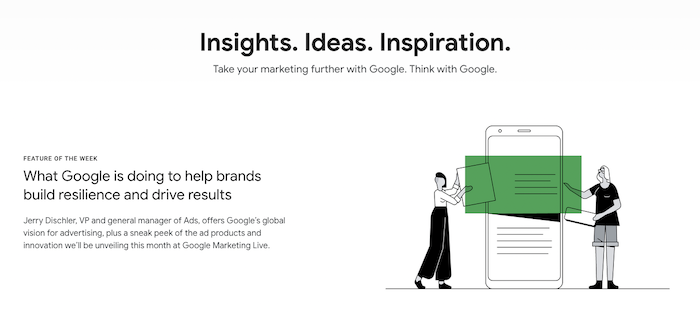
Think With Google is one of the search giant’s lesser-known tools, but that doesn’t make it any less powerful. It’s a free-to-use resource library of facts and figures based on Google’s own data and other research that can supercharge your marketing efforts.
If you want a broad understanding of what’s going on in the world, Think With Google is a great starting point. Search the platform, and you can uncover marketing trends, understand the latest consumer behavior and find the insights you need to drive your marketing strategy.
The site is split into four areas (Consumer Insights, Marketing Strategies, Future of Marketing, and Tools) which you can use to find the insights you’re looking for.
Pros
huge resource of statistics and studies
easy to use
great for marketing research
Cons
limited to marketing studies
Price
Free.
4. Living Facts
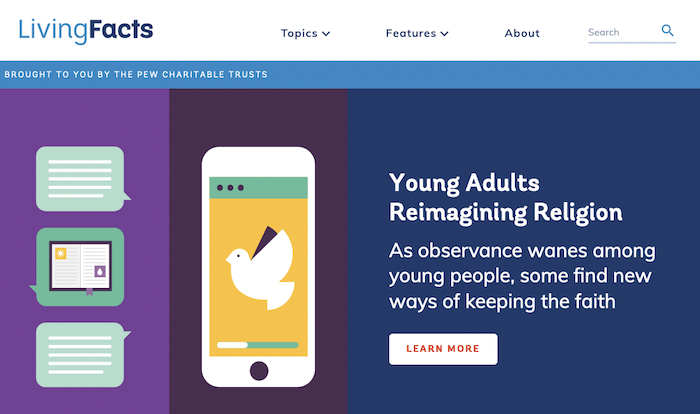
As part of the Pew Research Center, LivingFacts provides a free overview of how Americans live today. It’s bursting with research, statistics, infographics, and videos that can help you understand the opinions of your U.S. customers on everything from religion and work to health and family.
The site gets its data from several sources, including the Pew Research Center’s American Trends Panel, the U.S. Census Bureau, and other reputable organizations. If that wasn’t reassuring enough, you should know the Pew Research Center has over 160 staff members and 11 different research teams. In other words, you can trust the data on LivingFacts.
Pros
great for understanding U.S. demographics
huge amount of free information
understand your target audience across multiple topics
Cons
limited to the U.S.
research can be too basic for some
Price
Free.
5. U.S. Census Bureau
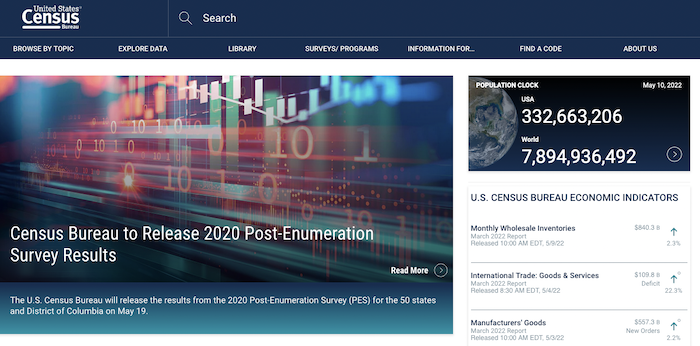
The U.S. Census Bureau website lets you search U.S. census data for free. The Bureau of the Census conducts over 130 surveys a year (which are used to allocate billions of dollars in federal funds), making it an in-depth source of reliable data.
You can filter by several variables, including age, location, and income. It also provides visualization of some data sets. One interesting way to use this data set is to filter the results using your business’ NAICS code to see where and with whom your industry is most popular. This is a great way to discover new target markets.
Pros
one of the biggest demographic resources online
easy to search through reports
Cons
limited to the U.S.
older census reports can become outdated quickly
Price
Free.
10 Best Paid Marketing Research Tools
Free market research tools are a great way to dip your toes into the industry. However, there will always be limitations when you don’t pay for the data. If you’re serious about market research, you’re going to want to pay for premium access. These are the best paid market research tools to use.
1. SurveyMonkey
So far, we’ve only discussed secondary data sources. If you want to collect your own market research data, polls and surveys are one of the best methods. SurveyMonkey is one of the best and most popular tools to use, with over 20 million questions answered using the platform each day.
The company’s enterprise-grade platform makes it easy to create, send out, and analyze surveys. Surveys can be sent via a link, email, social media, or embedded into a web page. You can browse through individual responses or use the tool’s custom reports and charts to visualize data.
Pros
easy to use
good template selection
great free plan
Cons
analytics could be improved
lack of customer support
Price
Basic plan is free. Standard plan costs $99 per month.
2. Statista
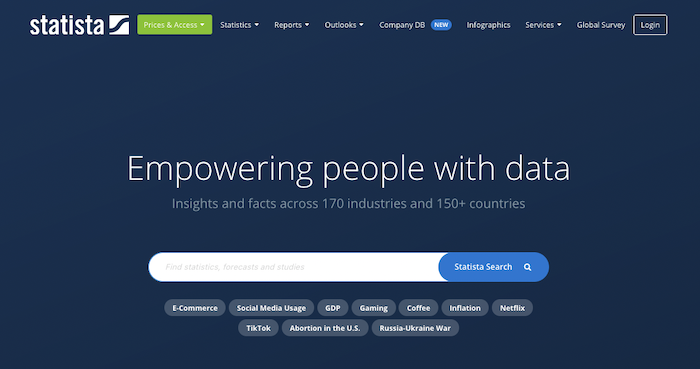
Statista is a hub of visual data, market research reports, and statistics. It collates data from several reputable sources, turning most of them into graphs and charts that are easy to digest. Because Statista’s data is continually updated, you can keep coming back to the same chart year after year to see how trends are changing.
The site has data on almost any topic you can imagine, making it a great way to discover consumer behavior and market trends, no matter your business.
Getting started with Statista is as easy as searching for a particular topic. The site’s search functionality is excellent and will return hundreds of reports and dashboards that you can use to influence or support your marketing efforts.
Pros
one of the best statistical resources online
great UX
easy to search for data
Cons
free plan is limited
visuals aren’t the best
Price
Basic account is free. Premium account costs $59 per month.
3. Typeform
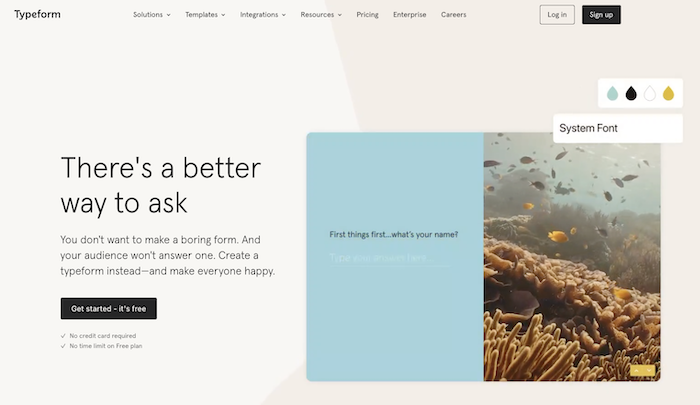
Typeform is another survey-based market research tool and an alternative to SurveyMonkey. It benefits from a more user-friendly design with a bunch of pre-made templates, making it easy to create forms and online surveys that you can send to customers. Typeform drives more than 500 million digital interactions every year and integrates with hundreds of other apps.
You can format questions in multiple ways, including multiple-choice, scale ratings, and open-ended answers—perfect for collecting quantitative and qualitative data. You can even use conditional logic to change the structure of your survey based on a respondent’s answers.
The respondent experience is also different. Unlike other survey tools, respondents are only shown a single question at a time. This makes for a more user-friendly and less intimidating experience that can increase the number of responses.
Pros
easy to use
respondent-friendly
strong data visualization
mobile-optimized
Cons
lack of customer support
data reporting isn’t amazing
Price
Limited free plan available. Premium plans start from $25 per month billed annually.
4. Buzzsumo
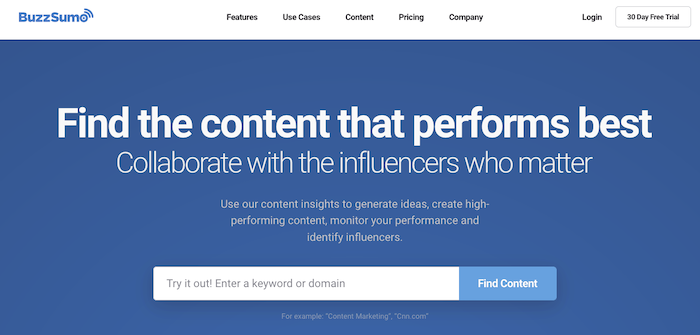
Think of Buzzsumo as the content marketing and social media market research tool. It analyzes over 8 billion articles and 300 trillion social engagements, so you can see which topics or types of content receive the most engagement, what’s getting shared on social media, and find influencers who can help increase the reach of your content.
This makes Buzzsumo an incredibly effective market research tool for any marketer looking to put together a content marketing strategy. There’s no need to second guess what’s going to rank well and receive engagement when you can use Buzzsumo to see what’s getting traction at the moment.
There are several ways you can use Buzzsumo. The easiest way is to use the tool’s Content Analyzer to search for a topic and see which articles have the most engagement. You can also set up alerts to monitor mentions of a particular optic or keywords.
Pros
accurate social share counts
great for competitor research
Cons
doesn’t include every social media channel
filtering could be better
Price
Free plan available. Premium plans start from $99 per month.
5. Qualtrics
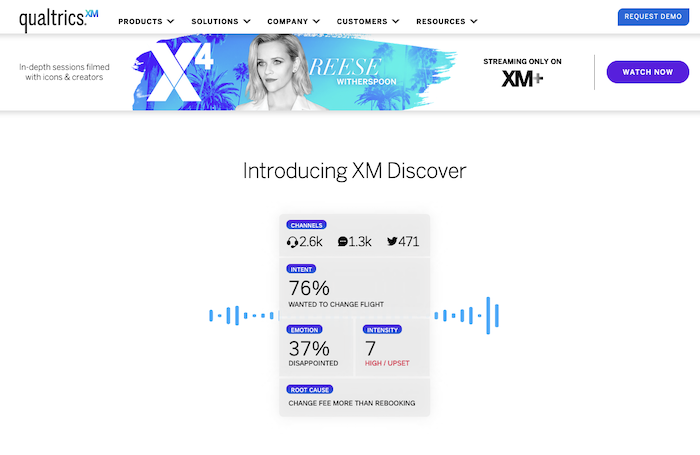
Qualtrics is an all-in-one market research tool. From creating advanced surveys to segmenting markets and analyzing data, Qualtrics does it all. Create your own survey to gather data or upload an existing data set and Qualtrics will run statistical tests and apply visualizations to help you gather insights.
There’s no need to spend time finding respondents for your surveys, either. You can use the platform to find a representative sample of your target audience and have them fill in your survey.
There’s even on-demand training to help you get the most from the platform.
Pros
easy to build surveys
excellent data reporting
Cons
software has a steep learning curve
limited customization of surveys
Price
Plans start from $1500 per annum.
6. Qualaroo
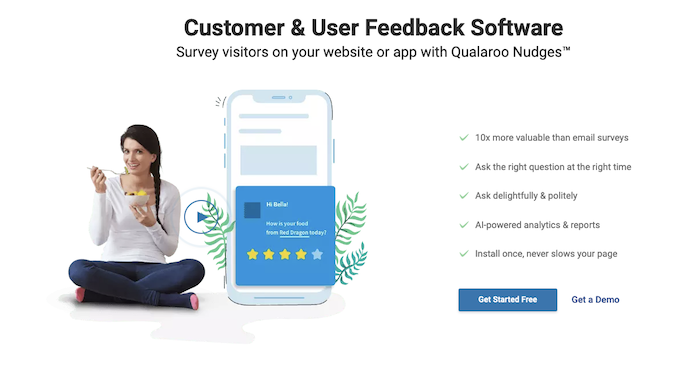
Qualaroo is an advanced customer survey tool that helps you ask the right questions at the right times. What separates Qualaroo from other survey tools is that you can embed surveys into your site, allowing you to catch users in real-time, with context. That makes their responses significantly more valuable and insightful.
Creating surveys is easy thanks to a wide range of templates and customization options. Analyzing and reporting results is also a breeze thanks to the platform’s AI-powered analytics tool. There are also tons of other features like dozens of answer types, branching questions, and automatic language translation.
Pros
easy to create and deploy surveys
analytics reduces reporting time
easy to learn
Cons
pre-built templates can be generic
dashboards could be improved
Price
Plans start from $80 per month.
7. BrandMentions
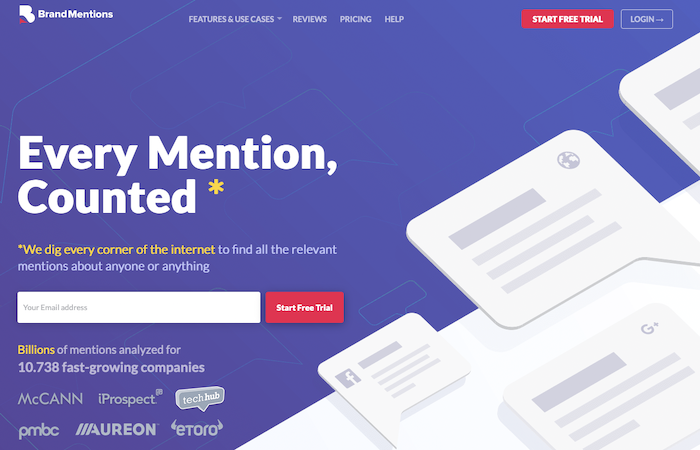
BrandMentions is another social media monitoring platform similar to Buzzsumo but with a greater emphasis on social media. It estimates it currently analyzes billions of social media mentions for over 10,000 companies.
You can use the tool to quickly understand social media users’ opinions on practically any topic. Simply search for a keyword, and BrandMentions will display the most recent social posts as well as the context in which it was used. So not only do you see what people are saying, you understand the broader sentiment around the topic.
The tool also shows a range of other metrics, including how many people view the topic each day, how many people engage with the topic, and which days the topic trends on.
Pros
great for social media research
can also be used for brand monitoring
intuitive UX
Cons
can be time-consuming to automate reports
only analyzes social media data
Price
Plans start from $99 per month.
8. Gartner
Global research and advisory firm Gartner is a heavyweight when it comes to market research. The company has three core services (trusted insights, strategic advice, and practical tools). We’re only going to focus on its trusted insights offering here.
Trusted insights offer an incredible amount of detailed, verified, and peer-driven research. It’s a fantastic way to identify trends in your industry, spot gaps in the market, and discover other insights to power your business.
These reports are at another level compared to other research teams. Gartner boasts over 2,000 research experts and several proprietary research methodologies to deliver objective and unmatched insights.
Pros
unmatched insights
unbiased data
Cons
very expensive
Price
Plans start at $30,000.
9. Tableau
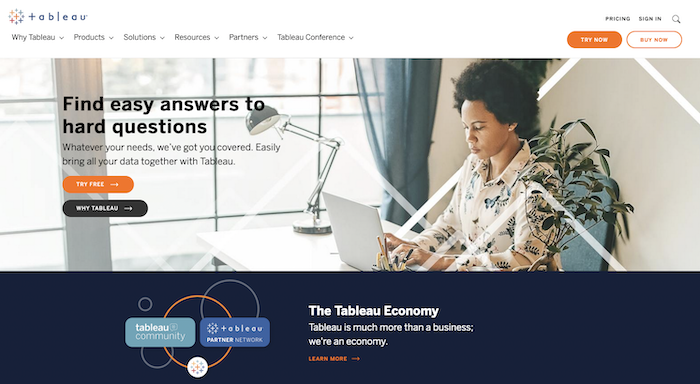
Tableau is a business intelligence suite centered around data visualization. You can connect to almost any data source and Tableau will transform that data into beautiful visual reports that make it easy to analyze and share with stakeholders.
You don’t need to know any code to use Tableau, and the tool makes it easy to be as broad or granular as you like with data analysis. Import data from tons of different data sources, like PDFs, spreadsheets, and Google Analytics.
Tableau is a trusted market research tool for some of the country’s biggest companies, including Verizon, Lenovo, and Charles Schwab.
Pros
best visual data reporting tool
acts as a central repository for data
analyzing data is easy
Cons
can be slow to upload large data sources
requires you to source your own data
Price
Tableau Explorer starts at $42.
10. Ubersuggest
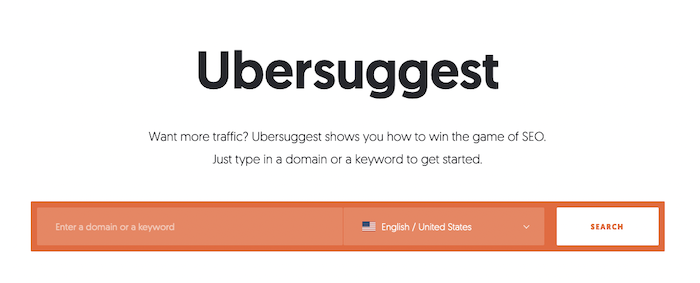
Ubersuggest is one of the best tools for doing SEO and PPC-focused market research. Put a phrase into the search bar and it will provide you with a list of other relevant keywords people are searching for, along with search volume and a difficulty score. You can also enter your own domain or that of a competitor to identify areas for improvement.
It’s a great tool for identifying the size of a potential market, how competitive that market is and what chance you have of ranking in it. You can also use it to get the low-down on a competitor and find out which audiences they’re targeting.
Pros
great UX
one of the best market research tools for digital marketing
wide range of affordable plans
Cons
limited to SEO and PPC data
Price
Plans start at $29 per month or $290 for lifetime access.
Market Research Tools Frequently Asked Questions
What are the primary market research techniques?
There are five main techniques for conducting primary research: surveys, one-on-one interviews, observational studies, focus groups, and field trials.
The best insight from market research is the discovery of a relevant and actionable insight about your target market you can use to improve your offering or influence your marketing efforts.
Are market research tools worth the cost?
If you are on a budget, there are plenty of free market research tools available. However, the best market research tools cost money and provide access to more data and additional capabilities that can increase the effectiveness of your market research.
Why is it important to do market research?
Market research uncovers important information about your business and target market that can highlight opportunities for your business that would otherwise be missed.
Conclusion: Market Research Tools
Market research tools are an invaluable way to find out exactly what your target audience is thinking. Whether you use free market research tools or paid market research tools, you can uncover plenty of insights that can have a transformative effect on your business.
In fact, 89 percent of worldwide consumers say they read online reviews before buying products, and 49 percent report trusting those reviews as much as a personal recommendation.
Good reviews can help you attract new customers, while bad reviews can deter potential customers from doing business with you.
That’s why it’s crucial to learn everything you can about Google reviews and how to use them to your advantage.
In this blog post, we’ll show you everything you need to know about Google reviews and ratings, including how to get more reviews, how to respond to negative reviews, and how to use Google My Business to your advantage.
What Are Google Reviews?
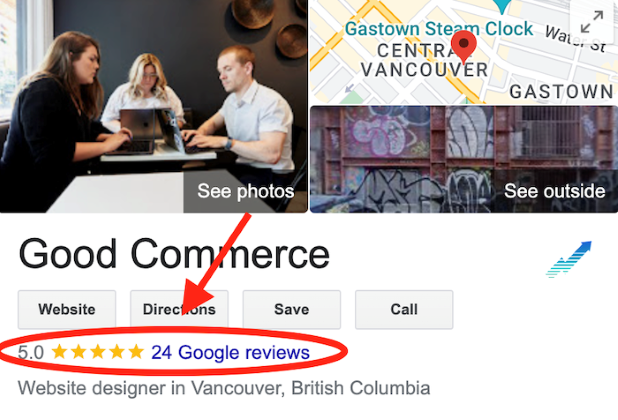
Google reviews are public comments and ratings left by customers about your business.
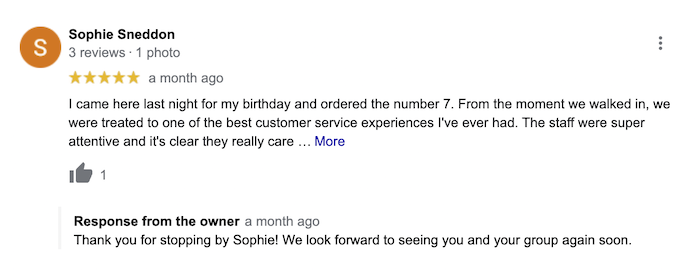
Customers can review businesses on Google Search, Maps, and Local Finder. These reviews are essential because they help potential customers learn more about your business before they decide to patronize it.
Google reviews can be up to 4,000 characters and include a small writeup and rating from 1 star (lowest) to 5 stars (highest).
A higher CTR means that more people see and click your listing in search results, leading to more customers.
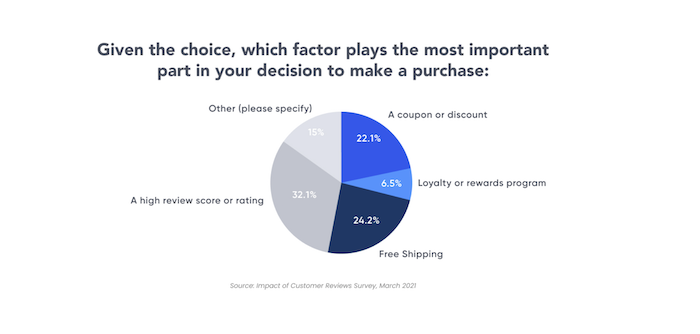
In addition, Google reviews and ratings act as social proof. They show potential customers that other people have had positive experiences with your business, making them more likely to shop with you.
Google reviews for business are also one of the many factors that search engines consider when determining local SEO rankings.
This means that if you can get more positive Google reviews, you may be able to improve your position in local search results. In other words, Google reviews have the potential to bring you more customers and help you grow your business.
Asking for Google Reviews: How to Get Customers to Leave Google Reviews and Ratings
According to BrightLocal, 67 percent of consumers are willing to leave a review for a positive experience, and 40 percent consider leaving a review for a negative experience.
However, just because a customer is willing to leave a review doesn’t mean they will. If you want to increase the number of Google reviews left for your business, you need to make it easy and convenient for customers to leave them.
The best way to do this is by asking your customers directly. Consider including your Google My Business review link in:
email signatures
post-purchase confirmation emails
physical receipts
thank-you cards or notes
When asking customers to leave a review, make sure to:
Personalize the request: Address them by name and mention their recent purchase or experience.
Keep it short and sweet: Customers are more likely to leave a review if the request is simple and to the point.
Send a prompt: Try sending a short prompt for the review you’d like them to leave. This gives reviewers a starting point and can make sending the review a little easier. For example, “My favorite thing about <company> is….”
NOTE: Most review sites, including Google, do not permit businesses to offer something in exchange for a review. Instead, focus on making it as easy as possible for them to leave their review.
Remember, the best Google reviewers have had a recent, positive experience with your business and are likely to leave a detailed review.
By following these tips, you can get more Google reviews for business and start building your online credibility.
Tips for Responding to Google Reviews
Responding to Google reviews is just as important as getting them in the first place.
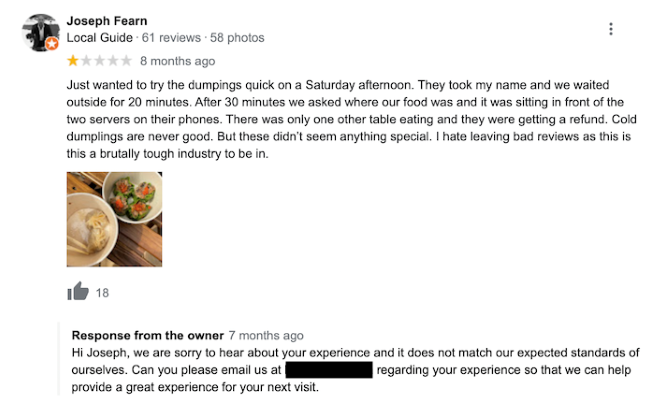
When you take the time to respond, you show potential customers that you value their feedback—good or bad. You also have a chance to give your side of the story if a customer leaves a negative review.
Once you start gathering reviews, take the time to respond to positive and negative feedback.
While positive reviews are great for boosting morale, responding to negative reviews is essential for maintaining your business’s reputation.
ReviewTrackers found that more than half of customers expect a business to respond to negative reviews within a week. Yet, 63 percent reported never hearing back from a company about their review!
In addition, research from BrightLocal found that 89 percent of consumers would continue to frequent a business that responds to all of its online reviews.
Tips for Responding to Negative Google Reviews
Follow these steps to help turn a negative review into a positive interaction:
Thank the customer for their feedback and apologize for their poor experience.
Acknowledge the issue they raised and offer a solution.
If appropriate, invite the customer to reach out to you directly so you can resolve the issue offline.
Once they reach out, consider offering them a discount or coupon to incentivize them to return (and hopefully leave a nicer review.)
Tips for Responding to Positive Google Reviews
Here’s how you can reply to a positive Google review to create a lifetime customer:
Thank the customer for their feedback and let them know you appreciate their support.
If appropriate, invite the customer to reach out to you directly so you can thank them personally
Personalize your response so they feel seen by your business.
The most important thing to remember when responding to Google reviews is to be responsive, professional, and courteous. By doing so, you’ll show other potential customers that you care about your business and are committed to providing the best experience possible.
How to Leverage Google Reviews for Your Business
Google reviews for business are more than a way to get feedback from customers—they’re also a powerful marketing tool.
Here are five tips for leveraging Google reviews to improve your business.
1. Showcase Reviews on Your Website
Once you have a collection of Google reviews for business on your Google My Business page, you can showcase them on your website using a widget. This gives potential customers an easy way to see what others think of your business before they decide to make a purchase.
Different widgets are available depending on the content management system (CMS) you’re using. Be sure to choose one that’s compatible with your website platform and fits the style of your site.
If you’re not sure how to add a widget to your website, most providers offer instructions or customer support that can help you.
Some popular Google reviews for business widgets include:
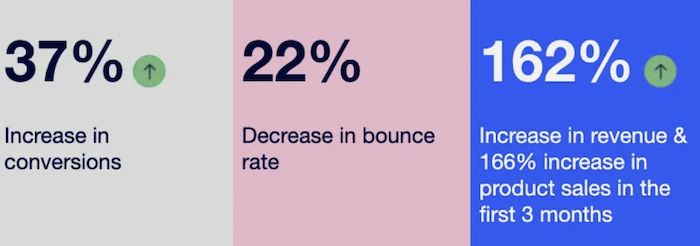
If customers see that other people have had a positive experience with your brand, they’re more likely to complete a purchase.
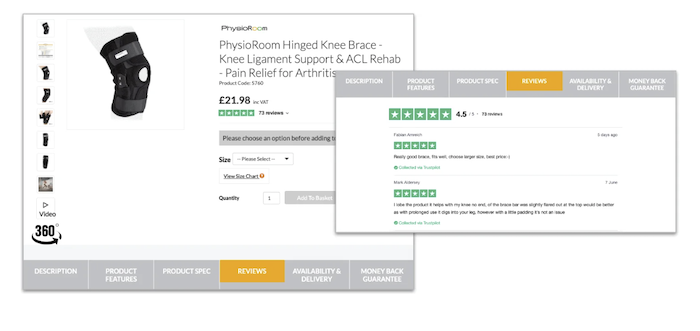
One of the easiest ways to increase customer confidence is by adding testimonials and product reviews to your checkout process.
A detailed review can help you reduce abandoned carts by:
helping customers with specific problems
building trust, which is important for potential buyers
reducing any friction during the checkout process
When adding reviews to product pages or checkout flows, make sure they’re specific and highlight the features that are most important to your customers.
For example, if you sell headphones, a customer might be looking for reviews that address sound quality, battery life, or comfort.
If you’re not sure which reviews to showcase, start with your most recent ones or those from customers who have made similar purchases in the past.
You can also use Google reviews and ratings to collect feedback about your business, product, or service. Use this valuable customer feedback to improve your business.
For example, if you see that customers are mentioning a problem with your checkout process, you can take steps to fix that pain point.
3. Update Reviews Regularly
Not only do customers want to see that you have reviews, but they also want to see that you’re actively collecting them. Would you rather shop at a company that hasn’t gotten a review in the past six months, or one that gets them regularly?
If it’s been a few months since your last review, reach out to some of your recent customers and ask them for feedback. You can always offer an incentive for leaving a review, like a discount on their next purchase.
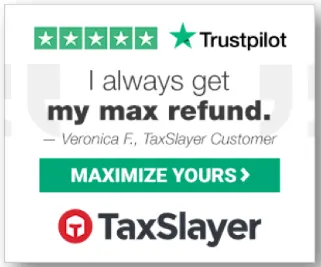
One way to make your retargeted ads even more effective is to include customer reviews. This social proof will remind potential customers why they were interested in your product or service in the first place– and it could be the push they need to convert.
For example, if you’re selling a new type of toothbrush that’s gentle on sensitive gums, you could include a review in your retargeted ad that says, “I learned to love brushing my teeth again!” or, “I don’t have to dread going to the dentist anymore.”
Similarly, if you’re an accountant, you could include a review that says, “I have so much more time to dedicate to running my business now.”
Including customer reviews in your retargeted ads is an easy way to show social proof and improve your click-through rate. When done right, can be a powerful way to increase conversions.
Take the time to read through your reviews and find the ones that would be most impactful for your target audience. Then, start testing different review placements in your ads until you find what works best for your business.
5. Choose Reviews That Elicit Emotion
Think about some of the recent reviews you’ve read online. What really stood out to you?
It likely wasn’t the two-line review about the product working as expected. Instead, it was probably the review that made you feel something. Maybe it was funny, maybe it was weird, but whatever it was, it made an impression.
The same principle applies when choosing which reviews to showcase in your marketing strategy. Look for ones that evoke an emotional response from your target audience. For example, if you’re focusing on new parents, look for reviews that mention how your product has made their lives easier.
On the other hand, if you’re targeting millennials, you might look for reviews that are funny or quirky.
No matter who your target audience is, make sure you’re choosing reviews that will resonate with them on an emotional level. The bigger the impact you can make, the more likely you are to convert prospects into customers.
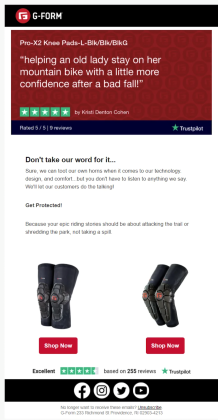
Here’s an example from G-Form, an athletic equipment company that isn’t afraid to flex its funny bone.
Google Reviews for Business Frequently Asked Questions
Are Google reviews fake?
Generally no. Google states it has a zero-tolerance policy for fake reviews. However, BrightLocal found that 62 percent of consumers believe they have seen a fake review in the last year. If you’re unsure about the legitimacy of a review, check the username and avatar of the reviewer to see if anything is suspicious. You can also look at previous reviews the reviewer has made.
Pay attention to the date, time, and location of past reviews. If you see a reviewer has left reviews in cities across the world in a matter of days, that’s a red flag. If the reviewer has never left another review, that’s also something to take note of. If you believe a review is fake and in violation of Google’s policies, you can request a removal from Google.
Can Google reviews be removed?
In some cases, yes. Google has a request removal system. However, the company is very clear that decisions to remove (or not remove) a review is final. In most cases, Google will only remove reviews that are in violation of their policies. These include reviews that contain profanity or sexually explicit language, reviews that promote illegal activity, reviews that are off-topic, and spam.
Should I respond to negative Google reviews?
Yes, responding to Google reviews is a critical part of managing your online reputation. By responding to negative reviews, you can turn a bad situation into a positive one. When responding to negative reviews, always be professional and courteous. Never leave a response that is derogatory or inflammatory.
How many Google reviews should I try to get?
As many legitimate reviews as possible. Generally, the more Google reviews for a business you have, the better. Having more reviews will protect your Google My Business rating if you do get a negative review. A good rule of thumb is to try to get at least 50 Google reviews.
Reviews show customers that your business is reputable. They can also highlight your company’s best assets and show your customer service commitment.
By following Google’s review policies, you can build a strong list of reviews that will benefit your business. Plus, by responding to negative reviews in a professional manner, you can turn a bad situation into a positive one.
Do you feel Google reviews have an impact on your business?
from Neil Patel's Digital Marketing Blog https://ift.tt/QPpydDY
There are four main reasons why some content fails to spread:
Wrong content: Whatever you are creating is not the right thing to create.
Failure to target “amplifiers”: This content is great but it doesn’t resonate with people who have an ability to amplify it. When creating content, ask yourself an important question: Who would share or link to this? What would be their motivation behind amplifying this content?
Serendipity and timing: Oftentimes the timing is wrong for whatever reason. The same content may spread at a different time, so keep promoting it or keep trying. Ross Simmonds from Foundation Inc. says that if you produced content in the past and you think it has the potential to reach a lot of people and be useful to them, you should be promoting it regularly. Don’t just sit on it.
Quality: This content is just not good enough to go viral.
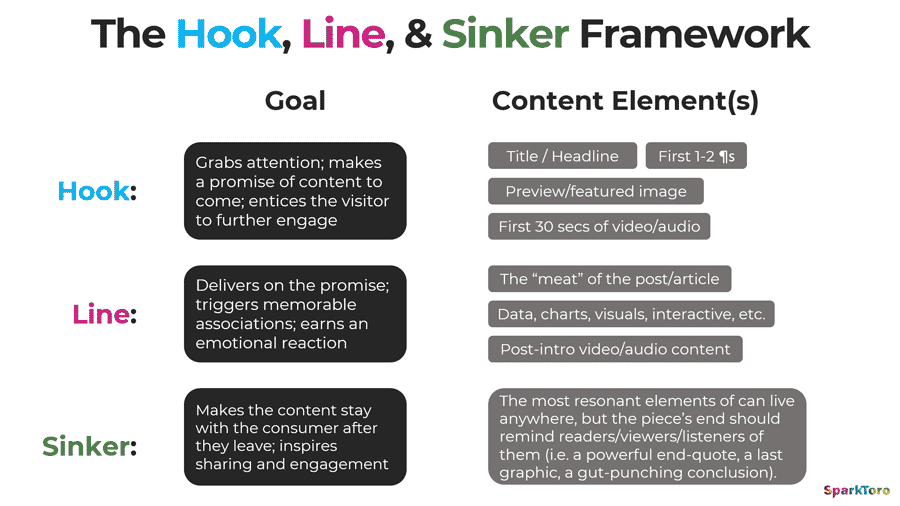
Your title should create a hook: “Oh, I am really curious about this”
The sinker, i.e. the opening paragraph (or first 30 seconds of a video or a podcast) should grab your attention and deliver on the promise from the hook.
The hook makes a promise, and the sinker delivers it.
When sharing your content on social media, use your hook to entice people to get curious and click.
Contact ninjas for us to create viral content for your site!