Jim Boykin, Founder and CEO of Internet Marketing Ninjas, and Ann Smarty, IMN’s analyst, are joined by Barry Schwartz to talk about Google’s updates and penalties, and how to recover your site once you’ve been effected.
These days it is hard – if possible at all – to identify exactly why site lost rankings. You need to work on everything to improve content, usability, focus, backlinks, expertise, etc.
Everything has to be worked on.
These days, if a site seems to have been impacted, it’s never a single fix. You need to improve everything.
It is not possible to identify a common patterns behind an update any more.
It is hard to tell clients, “You may have done nothing wrong” but you still need to work on your site to improve it.
After each updates there is often collateral damage, but the good news is Google often fixes those mistakes within the following update.
Disclosure: This content is reader-supported, which means if you click on some of our links that we may earn a commission.
What would you do with an extra $1,500 a day?
With a bit of work and the right ecommerce platform, you can create an online store that generates that kind of revenue (and more).
Shilpi Yadav is an excellent example. She quit her job to start an online clothing store based around her Indian heritage.
Despite all the risks, the brand now makes more than half a million dollars a year (averaging around $1,500 per day).
She built her online store using Shopify, one of the best ecommerce platforms on the market. However, there are a ton of different options to choose from depending on what you need.
And the most significant thing standing in the way of your own $500k success story is deciding which ecommerce platform is right for your new store.
In this post, I’ll break down the major aspects to consider in choosing the right platform for your current situation. Then we’ll take a close look at seven of top options available today.
#1 – Zyro Review — The Best for Setting Up Your Web Store in Minutes
There are plenty of good ecommerce platforms for launching your web store. Most of those work best with plenty of careful, gradual planning and site building.
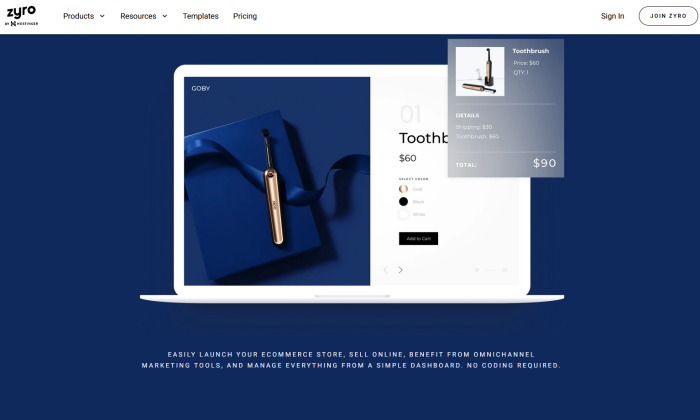
But, with Zyro, you can get a solid online store up and running in no time.
Whether you’re starting with a simple ecommerce site before growing into a larger operation or your company needed a web store yesterday, Zyro is the fastest path to an online store you can be proud of.
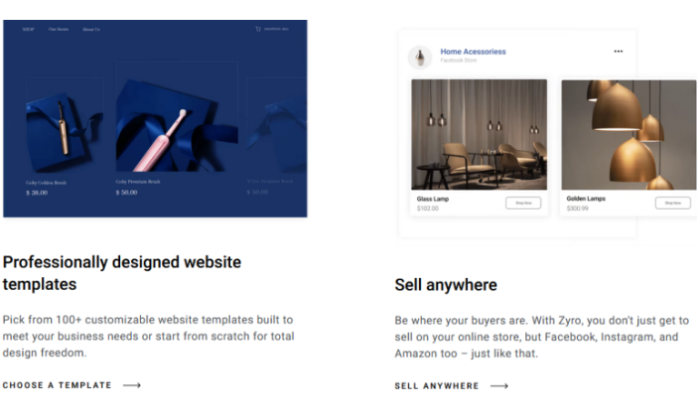
Start with one of Zyro’s templates—30 of the over 160 options are already optimized for building an online store—then add your products, make little tweaks to fit your brand style, and then publish your site.
It’s that simple and even the least tech-savvy person can get a solid ecommerce site live in an hour or less.
All the other details are taken care of for you. Zyro includes a free domain for one year and three months of custom email tied to that domain on any of their paid plans. And, since Zyro is a part of Hostinger, you’re getting rock-solid web hosting included for no extra charge.
And that’s not all. What if you’re totally starting from scratch or you’re just building a web store for your side hustle or hobby? Zyro offers a bunch of free tools to help you fill in any gaps quickly.
For example, the refund policy generator will do exactly that—create simple, easy-to-read refund policy for your store and its customers. Or, use the AI writer to generate blog or product copy that you can tweak to meet your needs.
That all makes it a breeze to get started. But what about the long haul?
Zyro isn’t just a solution for simple web stores that want to stay small.
First, you can keep iterating on the ecommerce site you begin with. Zyro’s site builder is easy to use, but holds a lot of customization capability. Expand your inventory, add custom landing pages, completely rebrand the colors and look of your site—there’s plenty of potential for building something incredible over time.
Plus, Zyro offers an array of more ambitious ecommerce features on some of their plans. Need to offer more than 100 products on your digital storefront? Upgrade to the Advanced Store plan and you’re allotted up to 2,500.
That same Advanced Store plan can really kick your ecommerce operations into overdrive. In addition to more products, you can set your web store up to be multilingual for your international customers, sell subscription-based services, send out automated marketing emails, and even easily list your ecommerce inventory on other channels to let you easily sell on eBay, Amazon, Facebook, and Instagram.
That’s really just the broad strokes. There’s a lot you can do on Zyro’s most souped-up plan. So, let’s get into the price now.
Zyro Business (100 products): starting at $4.90 per month
Zyro Online Store (100 products): starting at $8.90 per month
Zyro Advanced Store (2,500 products): starting at $15.90 per month.
For basic ecommerce or someone just wanting to set up a web store to build upon, the Business plan can do the trick. That supports over 20 payment methods and provides order and inventory management.
The next step up, Online Store, delivers the ability to send discounts and coupons to customers which they can use on your web store, plus support for gift cards, shipping and tax management, and cross-selling to Facebook and Instagram stores.
But if you want a lot of the features we covered, plus even more tools for optimization and growing sales, go with Zyro’s Advanced Store package. At under $16 per month, that’s a better deal than some of the entry-level plans of other options on this list.
#2 – Wix Review — The Best for Flexibility and Customization
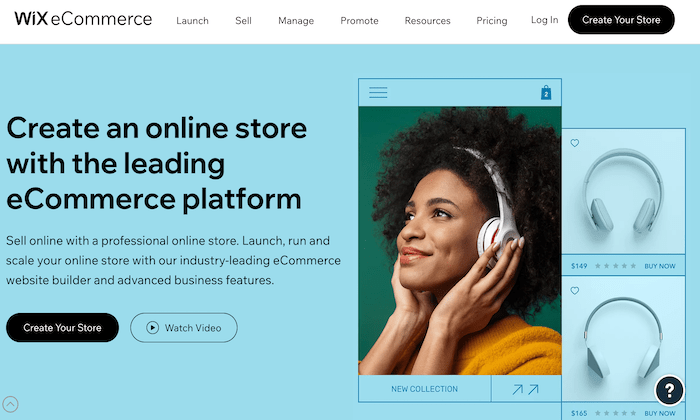
Wix is one of the most popular and reputable website builders on the planet. They also offer business plans with ecommerce capabilities, making it one of the easiest ways to create an online store without writing a single line of code.
You can start with one of 500+ templates that are optimized for selling out of the box. Then simply customize your pages with an intuitive drag-and-drop interface.
This provides you with exceptional design flexibility at virtually no learning curve.
You can design up a custom online store from scratch in less than an hour, and your customers won’t be able to tell the difference between your site and industry leaders. Wix gives you a professional appearance without the hassle and headaches.
I love the Wix mobile app. This makes it easy to edit your site from anywhere, with just a few clicks from your pocket.
Some of the top ecommerce package benefits include:
Support of 90+ languages and local currencies
250+ apps for added functionality
No extra transaction fees
Fully customized product pages
Global shipping and taxes
Discounts and coupons
Custom product collections
Recurring payments
Advanced sorting and filters
Custom checkout
You’ll also have access to marketing features like email accounts and social media from your Wix dashboard.
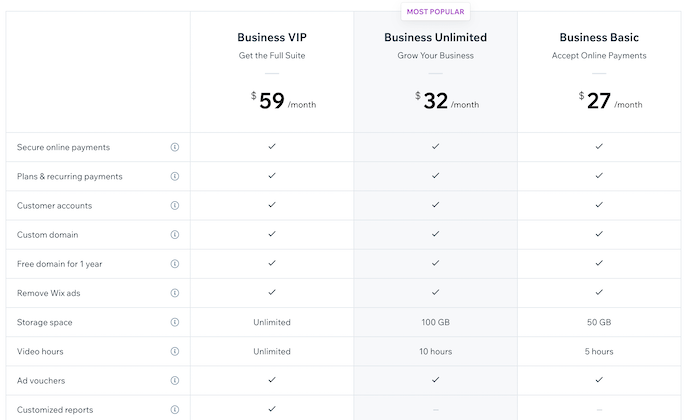
To access ecommerce functionality, you need to sign up for a Wix business package:
Wix also offers custom solutions and pricing options for enterprise sellers.
With that said, high-volume ecommerce shops with extensive product catalogs would likely be better off using Shopify or BigCommerce. Wix is better for smaller ecommerce businesses.
#3 – Squarespace Review — The Best Ecommerce Platform for Creatives
Squarespace is well-known as a free website builder, but they also have a trio of attractive ecommerce packages.
You’re getting the same high quality of templates that Squarespace is famous for, with plenty of customization potential to create a unique shopping experience for your customers.
Some of the other easy-to-use platforms are a little limited with what you can do. Squarespace gives you a lot more artistic freedom.
Install and customize multiple templates at a time to see which one you like best. And switching between templates takes just a few clicks.
Aside from beautiful templates, Squarespace’s web store plans include:
Subscriptions, digital products, and in-person compatibility
Built-in tax tools for automatic tax calculations
Discount codes and gift cards
Abandoned cart recovery
Mobile-optimized checkout
Mobile store management
Rich product listings
Quick view capability
Inventory management
Real-time shipping estimates
Furthermore, Squarespace integrates with most of the popular email marketing and social media platforms so you can sell and market your products like a pro.
And they have fantastic 24/7/365 customer support ready to answer your questions and help you get things set up the way you want to.
Squarespace offers three ecommerce plans:
Business — $18 per month + 3% transaction fees
Basic Commerce — $26 per month + 0% transaction fees
Advanced Commerce — $40 per month + 0% transaction fees
As you scan their pricing options, you’ll see a Personal plan for $12 per month. This is great if you want to build a website, but it doesn’t come with any ecommerce features, so it’s not going to work if you want to set up an online store.
They also have an enterprise plan with a dedicated account manager, SEO consultations, and prioritized technical support.
And while the Business plan offers ecommerce capabilities, I highly recommend choosing Basic Commerce to start. It’s the cheapest plan with no transaction fees, plus it includes other essential features like, customer accounts and ecommerce analytics.
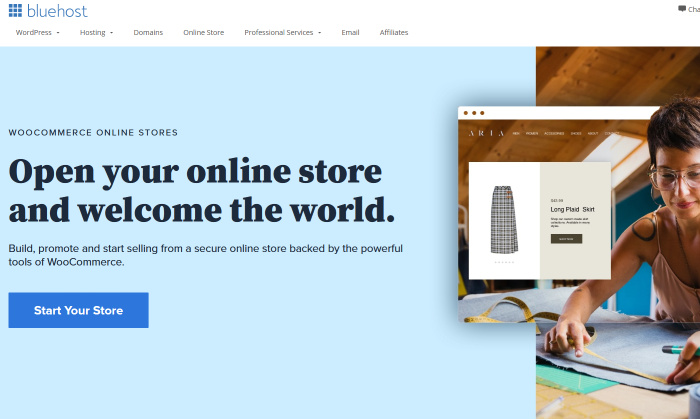
#4 – Bluehost Review — The Best for Hands-Off WooCommerce Store Setup
I really like WooCommerce. And, fortunately, I’m comfortable enough with WordPress to install, customize, and manage the WooCommerce plugin and the additional plugins that really make it shine on my own WordPress sites.
But I know many folks who would rather not have that responsibility, whether because of a lack of familiarity with WordPress plugins or just a lack of time to self-manage WooCommerce.
Bluehost gets that, too—that’s why they’ve rolled out an easy, turnkey solution to getting a WooCommerce store up and running in no time, for anyone.
With Bluehost’s package for ecommerce powered by WooCommerce, you get a handy guided store creator, plus:
Built-in SSL and Jetpack for security
Unlimited product listings
Payment processing
Customer reviews
Coupon codes
Manual order creation
One year free of CodeGuard Backup Basic, for daily site backups
And that’s all in the Standard Plan. The built-in SSL certificate is really helpful because it encrypts information customers enter on your website (like credit card numbers or login credentials), and protects everyone from hackers. All you have to do is click a button and your set with Bluehost–this can be much more challenging if the host doesn’t manage SSL certificates for you.
What I think is most convenient, though, is that Bluehost has preselected the top 20 store plugins that your WooCommerce store will need. Not only does that save you the headache of researching and installing plugins on your own, they’re included at no extra charge.
That’s huge. Some of these plugins cost around $200 a pop to install.
Take it one step higher to the Premium plan and you’ll also get:
Online appointment scheduling
Subscription-based ecommerce
Advanced product customization
Local tax management
Free domain privacy
CodeGuard Backup Basic, included for free
Pricing is based on your initial term commitment. Choose from month-to-month billing, a one-year contract, or a three-year contract.
The Standard plan starts at $12.95/month for a three-year commitment, while Premium starts at $24.95/month for the same.
Both plans renew at the standard month-to-month rate after the term is completed—$29.95/month for Standard and $49.95/month for Premium.
So, if you want to get a WooCommerce store up in no time with no hassle on your end at all, head over to Bluehost today.
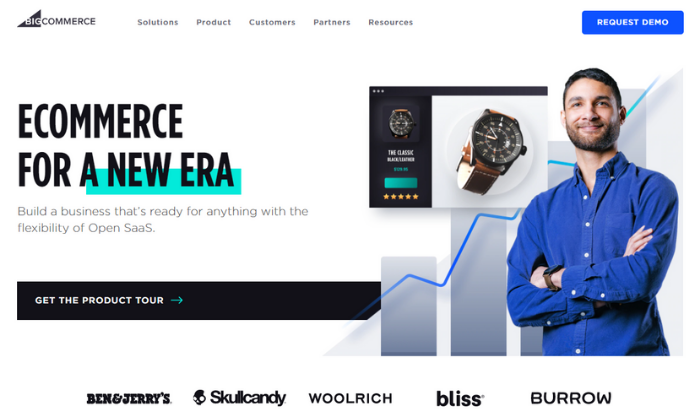
#5 – BigCommerce Review — The Best for Medium to Large Stores
BigCommerce is an all-in-one ecommerce website builder specifically for large online stores. It includes more advanced ecommerce features suitable for managing high volumes and a large number of products.
With a customer base of 100,000+ stores, including some big names like Ben & Jerry’s and SkullCandy, they’re a smaller player in the industry.
But that doesn’t make the platform any less powerful.
BigCommerce plans include access to powerful, industry-leading features, including:
Customer accounts for faster checkouts
Mobile-optimized checkout
Abandoned cart recovery
Google AMP and Akamai
Advanced product filters
Coupons and discount codes
Advanced inventory management
Customer groups for personalized shopping
65+ payment gateways with no extra transaction fees
Built-in shipping management
Plus, all of their plans include unlimited products, file storage, bandwidth, and staff accounts.
And you can choose between 12 free mobile-responsive design templates or opt for a paid template to make your online store stand out from the crowd without touching a single line of code.
BigCommerce offers four paid plans (with a 15-day free trial), including:
Standard — $29.95/month with a $50,000 annual sales limit
Plus — $79.95/month with a $180,000 annual sales limit
Pro — $299.95/month with a $400,000 annual sales limit
Enterprise — custom pricing
If you’re just getting started, BigCommerce is overkill for your online store. However, if you’re an established business or plan to sell high volumes, it’s an excellent choice.
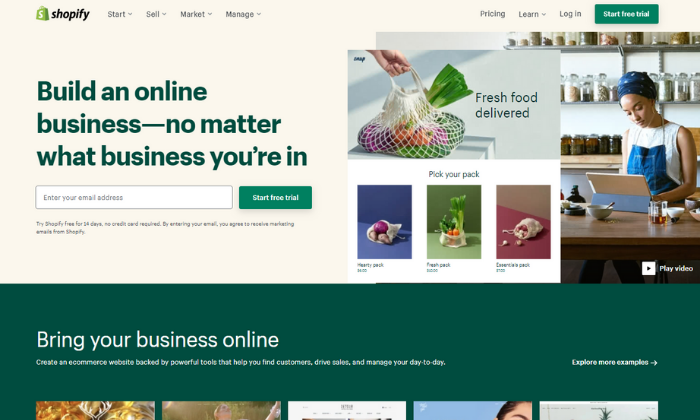
#6 – Shopify Review — The Best All-In-One Ecommerce Platform
Shopify is an all-in-one ecommerce website builder that powers more than one million online stores, making it one of the most popular choices on this list.
However, it’s not as customizable as Wix. But it offers more advanced ecommerce features because it’s built specifically to host online stores. Plus, it’s easy to use with just the right level of flexibility.
It’s also incredibly versatile, powering micro to large stores, and everything in between. Shopify plans include access to an incredible suite of ecommerce features, including:
Point of Sale for brick and mortar shops
Real-time carrier shipping rates
Abandoned checkout recovery
100 different payment gateways
Automatic tax calculations
Customer accounts and profiles
Fulfillment centers
Advanced inventory management
Unlimited products
In-depth analytics
Plus, with 70+ professional themes (nine of which are free) and 4,100+ apps, you can create a beautiful and highly functional ecommerce store without having to start from scratch. Or write a single line of code.
Combine that with award-winning 24/7/365 customer support and you have an excellent ecommerce platform.
Shopify offers five plans for businesses of all sizes, including:
Shopify Lite — $9 per month
Basic Shopify — $29 per month
Shopify — $79 per month
Advanced Shopify — $299 per month
Shopify Plus — custom pricing
Shopify Lite is a great option if you want to embed products and “buy” buttons onto an existing website. However, it doesn’t come with the all-inclusive website builder.
Keep in mind that Shopify has its own payment processor. They charge 2.4% – 2.9% + $0.30 depending on the plan you choose. They also charge additional fees (0.5% – 2%) if you use a separate payment processor like PayPal or Square.
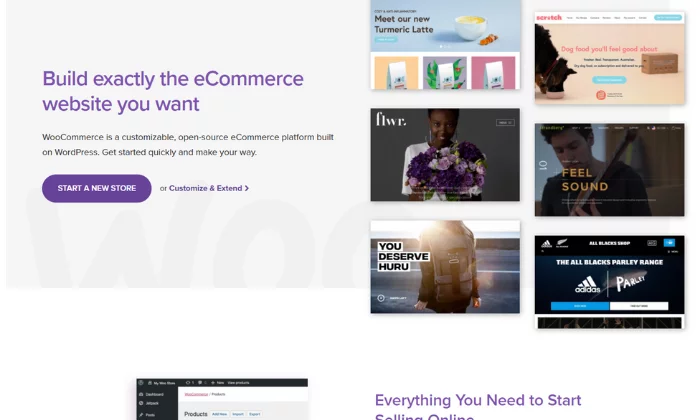
#7 – WooCommerce Review — The Best for WordPress Websites
You don’t need to settle for a cookie-cutter website builder to run your ecommerce store. If you’re serious about selling online (and you’re using or planning to use a WordPress site to do it), you should opt for WooCommerce, one of the most powerful tools out there.
This lightweight WordPress plugin adds ecommerce capabilities like accepting online payments, configurable shipping options, and product listings to your site. But that’s just the start.
WooCommerce is wildly extendible and able to be integrated with other business tools. Customize it through extensions in categories ranging from inventory, shipping, and fulfillment to marketing, customer loyalty programs, live chat support, and much more.
The platform, like many good WordPress tools, is developer-friendly. Use REST API to tweak and tailor WooCommerce to your needs with custom coding and modules.
Not sold yet? Here’s a taste of some of the other built-in features you get:
140 region-specific payment gateways
Support of subscriptions and deposits
Automated tax calculations
Real-time shipping rates
iOS and Android mobile apps
Physical and digital product capability
Endless product variations
Extensive tutorials and documentation
Public support forum
And the best part? It’s free to download, install, and use. Forever.
However, some of the extensions aren’t free, so watch out for that if you start digging into those.
With the power of WordPress behind it, your customization options are only limited to what you can imagine. So, the sky is legitimately the limit with WooCommerce.
But with that said, it’s not the easiest or most intuitive ecommerce platform. So, I don’t recommend it if you aren’t already using WordPress and 100% comfortable with it.
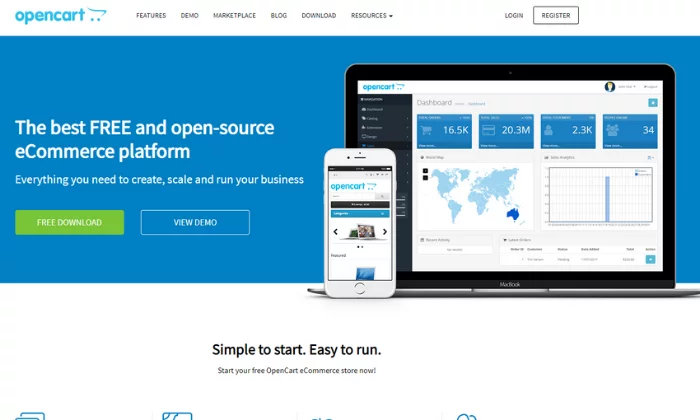
#8 – OpenCart Review — The Best for Selling Digital Products
OpenCart is another open source ecommerce platform, much like WooCommerce. However, it’s not limited to WordPress websites. But you do need to have an existing website to use it.
Over 300,000 online stores use OpenCart to confidently sell products of all shapes and sizes online. Plus, most web hosting companies offer one-click installation or will install it for free, so it’s incredibly easy to set up.
Note: I only recommend going this route if you already have a website up and running.
While you can sell products of any kind, the no-fluff interface (and free price tag) makes it an excellent option for selling digital products to make more money with your online business.
All without adding an extra monthly expense because it’s 100% free forever.
OpenCart offers a powerful set of ecommerce features, including:
Simple and centralized admin dashboard
Advanced user roles and access controls
Manage multiple stores from a single dashboard
Limitless product variables and variations
Built-in affiliate management and rewards system
Discounts and coupons
Unlimited products
One-click digital downloads
Product reviews and ratings
36 built-in payment methods
Recurring payments
Plus, with 13,000 modules and themes in the marketplace, you can add any functionality you can imagine including service integrations, conversion modules, email marketing, and more.
Keep in mind that not all of OpenCart’s extensions are free. You may have to pay for more advanced capabilities.
And they don’t currently offer support for free, either.
If you can’t find what you’re looking for on their community forum, you have to pay for dedicated help. Dedicated support starts at $99 per site per month or $99 for a one-time fix.
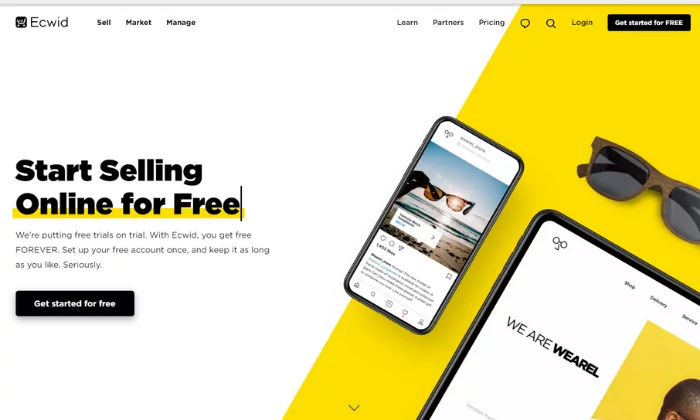
#9 – Ecwid Review — The Best for Integrating With Your Current Platform
Like OpenCart and WooCommerce, Ecwid is an ecommerce platform you can use to integrate with your current platform, regardless of what you’re already using.
It integrates with platforms like Weebly, Wix, WordPress, Squarespace, and more. So, if you already have a website set up and want to add ecommerce functionality, Ecwid is an excellent choice.
With that said, they also offer an all-in-one ecommerce website builder if you want to start from scratch. However, there are better website builders to use.
So, I only recommend Ecwid if you want to integrate ecommerce into your existing website.
This ecommerce platform includes a wide range of features, like:
Integrated email marketing and advertising features
Centralized inventory and order management
No transaction fees
Fully responsive designs
Built-in POS integrations
Customer accounts for easy checkout
Real-time shipping rate calculator
Poduct variations
Digital product capabilities
40 payment options
The biggest downside is that you can’t manage your store from inside your website account dashboard. You have to log in to Ecwid instead. So, you need to manage two separate accounts.
But the good news is that you can start on the limited free forever plan to try it out before making any investments.
The free plan only allows up to ten products, so you have to upgrade if you need more. Ecwid also offers three paid plans, including:
Venture — $15/month (up to 100 products)
Business — $35/month (up to 2,500 products)
Unlimited — $99/month (unlimited products)
This is the price if you pay month to month. If you are willing to sign a contract for a year, the price is a little lower.
As a stand-alone store builder you might be better off with other options (like Wix and Shopify).
But if you already have a website and want to add an ecommerce store, Ecwid is a great alternative to WooCommerce and OpenCart.
What I Looked at to Find the Best Ecommerce Platform
The best ecommerce platform for your business depends on several factors like your experience level, your customization requirements, and the type of products you want to sell.
But choosing the right platform can feel overwhelming because there are countless options to choose from.
It may help to start with a list of requirements and the features you need. From there, you can narrow down your choices based on the following criteria.
Physical vs Digital Products
Digital products are a booming market. Online courses, music, art, and podcasts are just some of the digital products netting new businesses tons of cash.
But selling and delivering digital products isn’t the same as delivering a physical product to someone’s doorstep.
If you want to sell digital products, Shopify is a really great option, but some ecommerce may not support digital products at all. So it’s important to understand which type you plan to sell before you make a decision.
Deployment Options
What do you need to do to get your ecommerce platform up and running?
There are a few different ways to deploy your platform depending on where you are starting from and where you want to go.
If you already have a website, the best option is integrating an online store rather than creating a brand new website on a new platform. This way, you build on what you’ve already done. OpenCart is ideal for this use-case.
For people with WordPress sites, you can add ecommerce functionality via a plugin like WooCommerce. This is super simple to set up and easy to manage.
If you’re starting from scratch, you’ll want a website builder and other tools to help you design your platform.
In this case, going with solutions like Wix and Squarespace makes a lot of sense. They bundle everything you need to get started at a really affordable price.
Day-to-Day Management
Order management, product creation, tracking orders, and dashboard navigation are important factors of day-to-day ecommerce management.
Choose a platform that’s easy to use and manage on a daily basis. It shouldn’t feel like a struggle to create new products, check the status of an order, or update the pages of your website.
It’s all about finding the right balance of flexibility, customization, and ease of use. The more a platform can do, the harder it is to manage.
You can simplify your workload by choosing a platform that offers just enough flexibility without going overboard for your specific needs.
Design Capabilities
Some ecommerce website builders (like Wix) are truly drag and drop, meaning the customization options are endless. If you can imagine it, you can build it. But, that freedom also makes the platform more difficult to use.
Other platforms integrate into your current site, taking the look and feel of your existing website with very few customization options. For some users, this is perfect.
But others may want more control.
If you’re just starting out, simple designs and ease of use are more important than design flexibility.
However, if you already own a physical store or an established brand, design is more important so you can create a cohesive aesthetic from one touch point to the next.
Advanced Ecommerce Features
Do you want to be able to offer discounts or accept payments through different payment processors? Maybe you want to send visitors a reminder email when they exit your website with something in their cart.
Perhaps you’re interested in creating customer profiles and analyzing advanced analytics.
Other advanced ecommerce features include:
Email marketing integrations
Memberships and recurring payments
Gift cards and discount codes
Partial payments or payment plans
Shipping and fulfillment management
Product variations
Product categories
Think carefully about what you need and what would be nice to have. Then, you can use your list of requirements to narrow down your list of choices.
Summary
Finding an ecommerce platform does what you need is a breath of fresh air. After using dozens of different options over the years, I’m confident with my selection of the top options available:
Zyro – Best for setting up your web store in minutes
Ecwid – Best for integrating with your current platform
My #1 recommendation for most users is Zyro, because it’s the fastest route to a new web store and it’s super affordable. Wix is also great for users of all experience levels. But if Wix or Zyro are too customizable for you, Squarespace is a fantastic alternative.
However, if you already have a website, WooCommerce, OpenCart, and Ecwid are excellent choices depending on what you need.
If you have a WordPress site and want an easier way to set up your WooCommerce store on it, you can’t go wrong with Bluehost’s WooCommerce Online Stores.
from Neil Patel's Digital Marketing Blog https://ift.tt/thzQ8me
Disclosure: This content is reader-supported, which means if you click on some of our links that we may earn a commission.
The best customer relationship management (CRM) software helps you provide better service and captures valuable insight about what your clients really want.
It simplifies everyday tasks for employees. They always know which customer they are speaking to, for one thing, and automatically store all information in the same account. Everything your team needs is at their fingertips–no more confusion or tracking down info.
Good CRM software can do a lot more than that, the idea is simple: you are positioning your employees to deliver a five-star experience, every time.
There are a boatload of CRM software options to choose from. They each have strengths that play better for different types of companies. Which one is actually going to help your teams?
To sort things out, I reviewed the best CRM software available and put together a brief buyer’s guide to help you make an informed final decision.
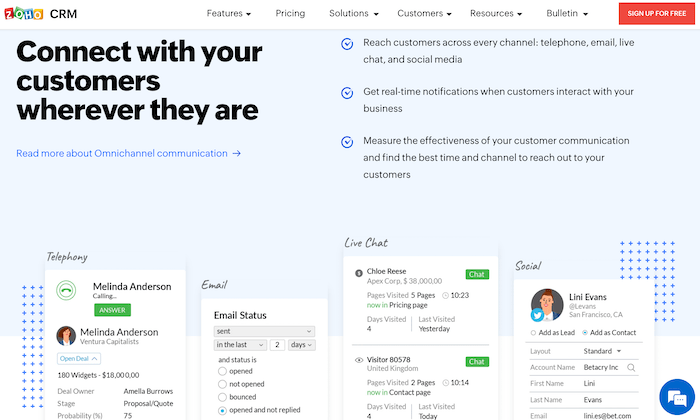
#1 – Zoho CRM Review — The Best “All-in-One” Solution
Zoho CRM is a comprehensive solution for customer relationship management.
Unlike other CRMs on the market, you won’t have to install add-ons or extra modules for each department. It’s ready to go out of the box, and it’s an ideal solution for small to midsize organizations.
All of your employees can use this CRM, allowing you to get the most out of the software. There’s not much of a learning curve, so your staff can start leveraging the robust features and functionality on day one.
Zoho CRM is really flexible and accommodates different needs. It’s easy to create custom dashboards and multiple pipelines for unique customer journeys.
Want actionable and insightful reporting information? That’s just a click or two away.
Other top features of Zoho CRM include:
Real-time sales insights
Prospect scoring
Mass email capabilities
Inventory management
AI assistance
Advanced customizations
Online and offline blueprint business management
For such a powerful tool, Zoho CRM is surprisingly affordable. Plans start at just $14 per user per month. If you want more features and functions, upgrade to one of the higher-tier plans, starting at $23, $40, and $52 per user.
Best of all, Zoho CRM has a free forever edition that supports small businesses with up to three users.
You can also check out Bigin—Zoho CRM’s newly launched sales-centric platform, designed specifically for small businesses. Bigin starts at just $7 per month.
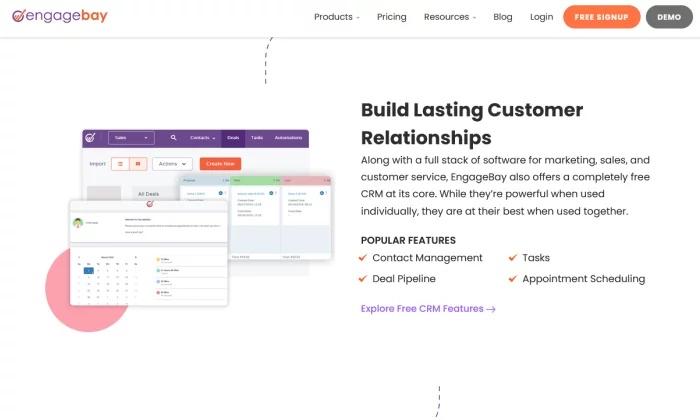
#2 – EngageBay Review — The Best CRM for Continuing Client Support
A lot of CRMs do the same things. They collect and organize your contact data, have some automation tools for sending emails and posting to social, and overall make your sales team’s lives easier.
But not all of them cater to all three core departments—sales, marketing, and service. If you need an all-encompassing tool to boost all three, EngageBay might be the best solution for you.
You get a lot of the key features you need for customer relationship management. Set tasks, build a pipeline, and place automations for email sends, SMS messages, rep hand-offs, and more.
This all happens in an easy-to-grasp interface that lets you view your funnel, social media interactions and messages, email campaigns, and everything else in one place.
Plus, EngageBay syncs up with Gmail, Outlook, and Office with no pain or stress.
But what I really love is its suitability for organizations that value post-sale relationships as much as gathering, warming, and converting leads.
There’s a whole service bay module of features and tools in EngageBay that makes your support reps’ jobs a cinch.
On EngageBay’s lowest-tier plans, you get a way to manage tickets and contacts together that carries over all the information you’ve gathered during each customer’s sales journey. That way, no one’s going in blind and your support team can really turn customers into lifelong loyalists.
But with an upgrade from EngageBay’s free plan, you also unlock macros and canned responses.
I recommend their Growth plan, though, most of all. For $29.99 per user per month, you can apply the same robust automation capability—setting triggers and events that streamline workflows—that the marketing and sales teams get to customer service.
What’s great about this is that email sequences can come back into play after a service interaction.
I can see this being a boon for SaaS and many B2B operations. Not only is ongoing support vital in those fields to building long-term clients, but you can use a new drip campaign after successful service interactions to warm an existing customer up for an upgrade or add-on.
There’s a lot of potential to unlock in all three departments with a tool like EngageBay.
Get started on their free plan to get a feel for the platform and, when you’re ready, move on up to the Growth plan to really have your sales, marketing, and service firing on all cylinders.
If you’re in the sales or marketing industry, you’ve probably read HubSpot’s blog or taken one of their free certification courses. However, they also offer a robust and free CRM software to streamline your customer relationship management process.
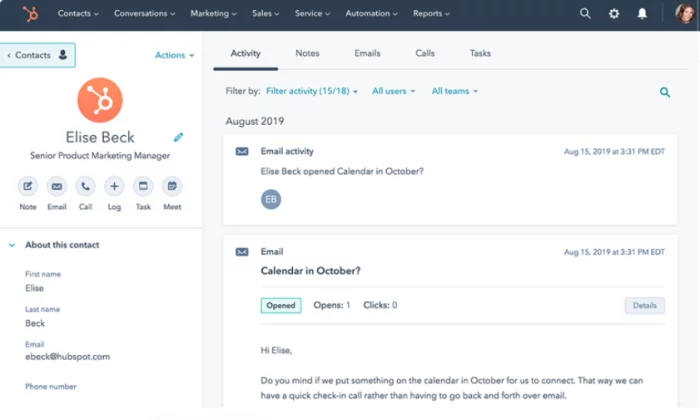
With HubSpot, you can gain unprecedented insight into how your audience behaves.
Need to monitor when contacts open your emails so you can optimize your open rates? No problem. Maybe you want to see how a contact behaves on your website. With HubSpot, it’s easy.
Furthermore, they offer a wide variety of solutions, depending on your role within your company.
These position-specific solutions include sales, marketing, customer service, operations, and owners.
The free plan includes a robust set of features. You get all the essentials of contact management, deal tracking, and reporting that you need from a CRM.
Combined, that gives you an incredible level of insight into your sales pipeline. And HubSpot allows you to organize and utilize that insight into creating your next great strategy or campaign.
That’s just the tip of the iceberg. HubSpot’s free CRM also includes:
Scheduled emails
1:1 live chat
Meeting scheduler
Website activity tracking
Task management
Document sharing
These features are hard to beat on any other free plans on this list. However, HubSpot’s paid plans are well worth their price as well.
The Starter Plan starts at $40 per month, paid annually. However, if you want to bundle all of HubSpot’s CRM software, you can get starter access to all four for $50 per month if you commit to a 12-month contract.
So, for $10 extra dollars a month, you also get software specialized for marketing, sales, and customer service.
However, keep in mind these prices are based on 1,000 contacts. The price increases for every additional 1,000 contacts you have.
#4 – Salesflare Review – Best Lead Management Tools for Small Business
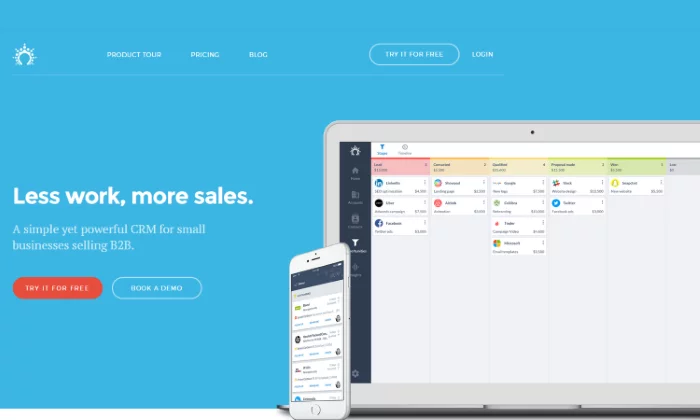
Any CRM worth its salt should definitively answer one question—how does this help teams sell better?
As you see on this list, different platforms have come up with different answers to this question. Salesflare stands out for pushing lead management tools to the forefront without being bogged down with superfluous features.
If your team could use some help guiding opportunities from lead to win—and, honestly, what team doesn’t—Salesflare could be just the ticket.
It starts with the software’s intelligent information gathering. Salesflare pulls contact info, company role, and much more detail automatically from emails, social profiles, and other sources. This information is stored both in a dedicated section for each account you’re selling to and a universal contact book accessible by your whole team.
Salesflare automatically logs actions by your team—such as meetings, calls, and other touch points—and by the prospects and customers themselves, whether they open an email you sent, click a link, or visit a landing page.
In this way, Salesflare is very flexible for how your team approaches the buyer’s journey. Whether you prefer one member of your team to guide opportunities from start to finish or if you have hand-offs at various points, the information is all there.
Anyone can step in and have the latest information plus the current state of the lead based on recent actions.
When you add in the platform’s notifications for when prospects take an action or any other triggering event, your team will get really good at moving quickly on warm leads or prospects who have signaled their readiness to purchase.
The combination of simplicity and power inherent to Salesflare makes it a great tool for smaller B2B sales outfits.
Not only do you get useful automation and the tools to help really nail follow ups (and, thus, really encourage leads along the path to purchase), you get key features like:
Team-wide timeline view for tracking opportunities from lead to win
Insights dashboard that can be segmented by team member, pipeline, or date range
That’s all included at the base Growth plan for $29/user per month.
One step up from there is the Pro plan, for $49/user per month. With that you’ll also get:
Custom email workflow builder for multiple simultaneous campaigns
User permissions, including view-only access
Custom dashboards
There is also an Enterprise plan for $99/user per month. The main benefits of that are the additional support you get, such as a dedicated account representative and custom-made training modules for your team.
Salesflare really shines for smaller B2B businesses and the lower two pricing tiers are quite palatable for that purpose. You can give it a try with Salesflare’s free trial or request a demo today.
#5 – Freshworks CRM Review — The Best CRM for Sales Teams
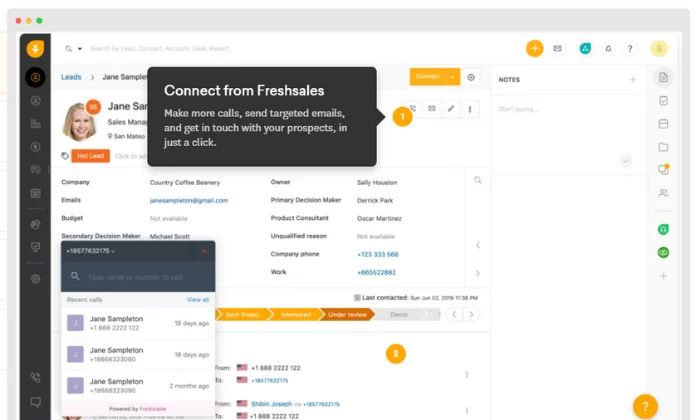
Freshworks CRM is specifically built for sales teams and lead management. From cold leads to customers, Freshworks helps you make better relationships while saving time with automation.
Furthermore, this CRM helps you find the best leads, get in touch with them via their preferred method, and close the sale.
And Freshworks includes a built-in email and phone system to help simplify the process.
They have a customer base of over 40,000 businesses, including some big names like Dyson and Best Western. So, despite being newer to the industry, they’re not inexperienced by any means.
With this platform, you get:
Lead, contact, account, and deal management
Tasks and appointment management
Website visitor tracking
iOS and Android mobile apps
Organizations of any size can leverage Freshworks CRM’s detailed lead scoring and sales pipelines, allowing for better clarity and efficiency in your workflows.
It’s especially potent as a single dashboard for wrangling all your sales conversations. Team inboxes and email forwarding make sure that messages are always directed to the right people and teams can see track every interaction without them getting buried in a bunch of irrelevant emails.
Plus, Freshworks allows you to schedule emails, utilize many email templates, and set up alerts. That way you can whip up fresh messages in a snap and always be able to respond or adjust on the fly.
Aside from an impressive set of features, they also offer industry-specific solutions for 15 different industries, including retail, ecommerce, manufacturing, logistics, healthcare, and more.
Their free forever plan includes access for an unlimited number of users with limited features. However, it’s a great way to try it out before investing.
Freshworks’ paid plans are more robust, yet still affordable for businesses of all sizes. Their premium plans include:
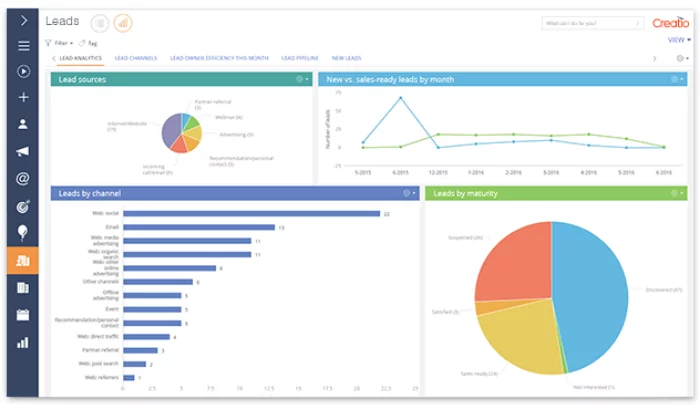
#6 – Creatio Review — The Best Enterprise-Grade CRM Software
While some of the other CRM software on this list includes an enterprise plan, you may find them limiting if you’re managing a large operation. However, Creatio is an enterprise-grade CRM software built with businesses like yours in mind.
They offer specific CRM solutions for sales, marketing, and customer service teams.
Marketing Creatio gives enterprise businesses everything they need to streamline their multichannel marketing campaigns and manage incoming leads. It includes features like:
Visual campaign designer
Website behavior tracking and segmentation
Advanced trigger campaigns
Personalized email marketing
Event tracking and response management
Pricing depends on the number of contacts and the number of emails per contact.
Sales Creatio is perfect for large sales teams taking over after marketing hands them over. It’s an end-to-end sales management platform built to simplify the process and save you time.
It includes a wide range of features, including:
Opportunity management
Customer profiles and buying behavior insight
Field sales management
Performance and operations
Pricing starts at $30 per user per month.
Lastly, Service Creatio is for customer service teams interested in streamlining their processes and creating excellent customer experiences from start to finish. It includes features, like:
Account and contact management
Case and knowledge management
Omnichannel communications
Service catalog
Contact center
Pricing starts at $45 per user per month.
You can bundle all three CRM solutions if you need to. And you can use their online pricing calculator to estimate the total cost.
#7 – Salesforce Review — The Best CRM Software for Versatility
Whether you’re a small business owner or a sales, marketing, IT, or customer support team, Salesforce has the perfect CRM solution. Known for its versatility, they offer specialized software that adapts to meet your needs.
More than 150,000 businesses, including T Mobile, Adidas, and Yeti, rely on Salesforce to help them build strong relationships with their customers.
They also offer specialized solutions for 14 different industries, including:
Financial services
Healthcare
Manufacturing
Consumer goods
Energy
Communications
Nonprofits
The system is so versatile because you can pick and choose which apps you need to build a complete CRM solution customized to match your business.
From marketing automation and ecommerce sales to call-center software and self-service portals, Salesforce is dedicated to providing everything you need for unprecedented customer relationships.
Their business plans include:
Essentials — $25/user per month (basic sales and support)
Sales Professional — $75/user per month (complete sales solution)
Support Professional — $75/user per month (complete service solution)
Pardot Growth — $1,250 per month for up to 10,000 contacts (marketing automation)
However, you can add additional features and applications depending on what you need. They also offer other plans for sales, customer service, commerce, and marketing CRM packages with varying features.
With so many options and types to choose from, finding the best CRM software for your business can feel like looking for a four-leaf clover.
Start with this. All of these products have been built to respond to problems that businesses face every day.
Yes, there are a lot of parts to CRM software, but each has a purpose.
You know the problems you face. And by reaching out to your customer service agents, sales reps, IT team, and anyone who will be using the CRM software, you can get a rich picture of their daily challenges.
There is CRM software that will help everyone at your organization make the most out of every customer relationship.
Finding it is a matter of understanding where your company is, and where it wants to go.
Business Size
The size of your business plays a role in which CRM software is best for you. If you have separate departments for marketing, sales, IT, and customer service, you need more advanced functions than a business with five employees.
Furthermore, you need to consider who’s going to manage the software. Choosing and paying for software isn’t the same as using it to its full potential.
You have to set it up and take advantage of its features for the investment to be worth it.
For small teams, it may be a collaborative effort of everyone pitching in. However, large teams may have dedicated employees to set everything up and maintain the software moving forward.
The size of your business also plays a role in how much the software is going to cost. The more user seats you need, the more expensive the software.
Your Challenges
What’s not working? What could be working better?
Consider what systems you want to streamline and improve. It may help to think about current inefficiencies and how a CRM can help.
Typically, CRM software helps with sales, marketing, IT, and customer service. Which of those do you want to improve, and do you have the capacity to set everything up and maintain it?
There are specific CRM solutions for particular industries.
These tend to be more expensive, but if they are the right fit for your situation, it’s worth it. Teams will have to spend less time configuring such purpose-built CRM software, which is an ongoing savings.
Basic CRM Features
Most CRMs include a basic set of standard features. The CRM you choose should include them as well.
While the specifics of each feature vary from software to software, there should be a system in place to help you handle things like:
Contact and lead management
Document sharing and storage
Workflow automation
Interaction tracking
Mobile access
Look for these core CRM features before making any final decisions. It’s probably also a good idea to watch some videos of how these users manage these features.
Something like contact management is handled differently in each platform. Which one fits best with the way your teams work?
Advanced CRM Features
It’s also important to consider advanced CRM features that can have a big impact on your business.
The ability to automate routine workflows, process payments, and send invoices can save countless hours from every employee’s day.
Really rich automation capabilities are only available with high-tier plans. There’s definitely an added cost, but what about the benefit?
In the end, having advanced features for marketing automation and lead scoring can really drive revenue. Is the juice worth the squeeze?
Also, note that these advanced features are not distributed the same way by vendors. One may offer the high-end tools you need as part of a mid-level plan.
Third-Party Integrations
To really streamline and automate your business processes, your CRM tool needs to play well with the tools you’re already using to run your business.
Make a list of the tools you use and double-check to make sure your CRM integrates with them. I’m talking about:
Email platforms
Social media tools
Internal communication software
Customer service tools
Calling/video chat software
Shopping cart (for ecommerce)
Contract/proposal software
Connectors (i.e., Zapier)
Analytics tools
Calendar
Once you have your list, you can use it to narrow down your choices to the right CRM software. You can also use it when speaking with a sales team to make sure they offer everything you need.
Summary
Having the right CRM software can make a huge difference very quickly. It makes staying organized easier and keeps customers happy. To recap my top picks:
Zoho CRM, HubSpot and Salesflare are my top recommendations for most businesses. Each one offers a wide range of features suitable for teams from all departments, including sales, marketing, and customer service.
Furthermore, they’re all affordable, easy to set up, and easy to use.
However, the best CRM software for you depends on your business’s size and the features you need. So, use the criteria we talked about above as you go through the process of making your final decision.
Which CRM software do you use?
from Neil Patel's Digital Marketing Blog https://ift.tt/GlBpEy2
Disclosure: This content is reader-supported, which means if you click on some of our links that we may earn a commission.
WordPress powers more than 43% of all websites on the internet.
With an excellent reputation and loyal user base, It’s arguably the most reliable way to start and run a website. I use WordPress for my business, and I think it makes sense for most people to build a website on this platform.
Fortunately for you, creating a WordPress website is easy. I’ll teach you how to build a WordPress site in less than an hour.
Your Two-Minute Cheat Sheet
Don’t have enough time to go through the whole article? Here’s your quick cheat sheet.
This is just the barebones guide. You can find complete detail on every step below.
While you have several web hosting provider options available, I recommend starting your WordPress website journey with Hostinger. It’s super dependable, offers fast loading times, and is good for your budget.
Just click here to head over to Hostinger, select the WordPress Starter package, and then Hostinger’s setup wizard will take care of much of the rest.
Towards the end of the guided setup process, you’ll be able to secure your free domain name (included with your Hostinger WordPress Starter plan). Just make sure to opt for WHOIS privacy when you’re given the option after selecting your domain.
Normally you’d have to install WordPress next, but Hostinger has already done that for you. Familiarize yourself with how everything is set up and pick a theme for your website that suits your brand.
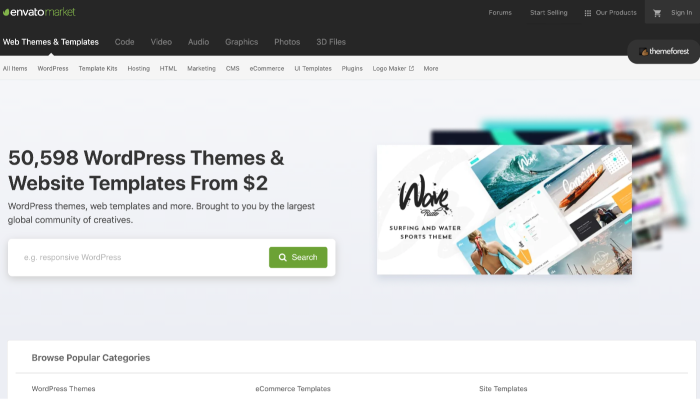
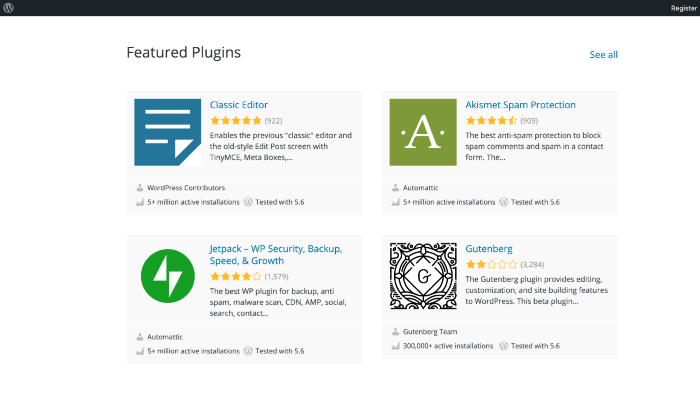
My favorite is place for new and striking themes is ThemeForest, but you can also stick to WordPress’s official directory.
Make sure you set your permalink structure to make your links more readable and optimized for the SERPs. This is super important, so please don’t skip it. You can also install plugins to extend your website’s abilities, but it’s strictly optional.
Finally, all that’s left to do is create fantastic content that makes visitors flock to your website.
Voila! You now have a WordPress website that looks beautiful, has amazing content, and is ready to handle the traffic.
Let’s now see how the whole thing works in more detail. Feel free to jump ahead if you’ve already gotten some of the early steps done!
Your domain name is your identity on the internet. It’s how your audience will find you and identify your brand. Precisely why you should choose something that reflects your brand and is easier for people to type into their browser and find you.
You have complete freedom to choose your domain name, though. You can choose any name you want—provided it is available and not registered by other companies.
Here are a few tips for selecting a great domain name for your website:
Make it brandable and unique-sounding
Make sure it’s memorable
Keep it short
Keep it easy to spell, pronounce, and type
Include niche-related words. For instance, if you plan on selling pizza, it would make sense to add pizza somewhere in the domain.
Think about it: Doesn’t www.pizzahut.com sound better than pizzasellingplace.com? Exactly.
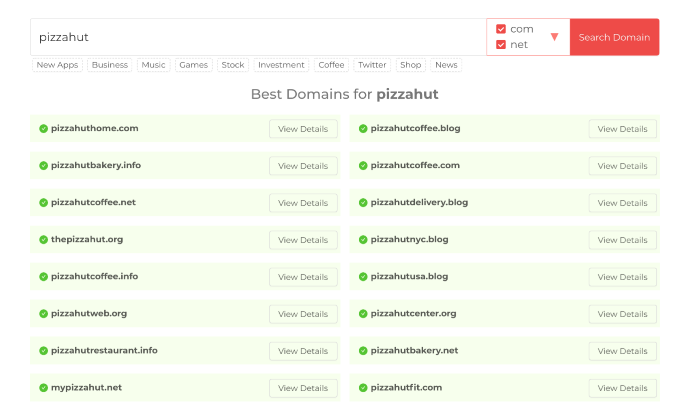
You can use Domain Wheel, a free website name generator, to develop more ideas if you’re looking for some inspiration. Simply put in a keyword related to your niche, and the tool will give you tons of suggestions to inspire you.
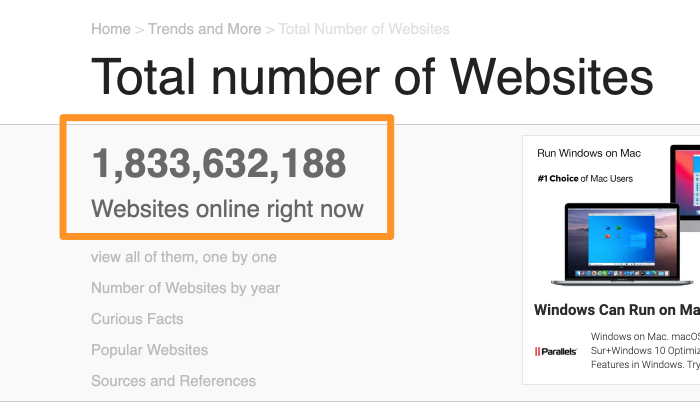
Now that you have a prospective domain name, you have to check for its availability. Considering there are about 1.8 billion websites online, staying original can be a little challenging, but it’s definitely worth the effort.
Since we all love free things, you can register your domain free of cost when subscribing to a web hosting service.
Speaking of domain registration…
Step 2: Select a Web Hosting Provider and Register a Domain Name for Free
There are hundreds of companies that sell web hosting services and tons of companies that allow you to register a new domain name. But wouldn’t it be more convenient to choose a company that offers you both services?
This web hosting provider is reliable, beginner-friendly, cheap, AND gives you a domain name for free—take it from someone who has created many websites for his clients in his career.
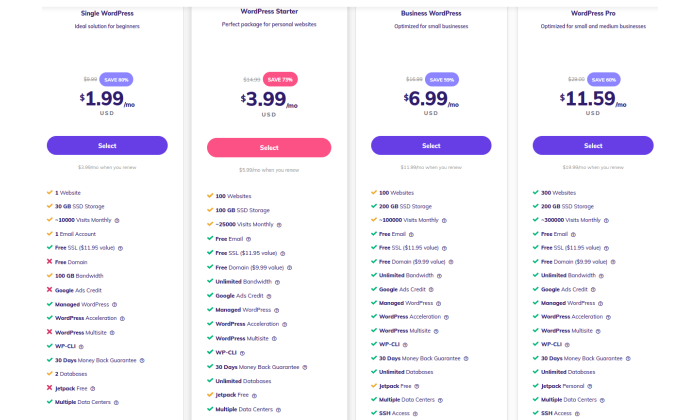
Just head to the Hostinger website using this link, click Start Now, and then click Select under the WordPress Starter plan. That’s the most affordable hosting package that includes a free domain.
On the checkout screen that follows, make sure you select the four-year term to get the best monthly rate for this plan.
After you create your Hostinger account and submit your payment information, Hostinger’s guided setup wizard takes over.
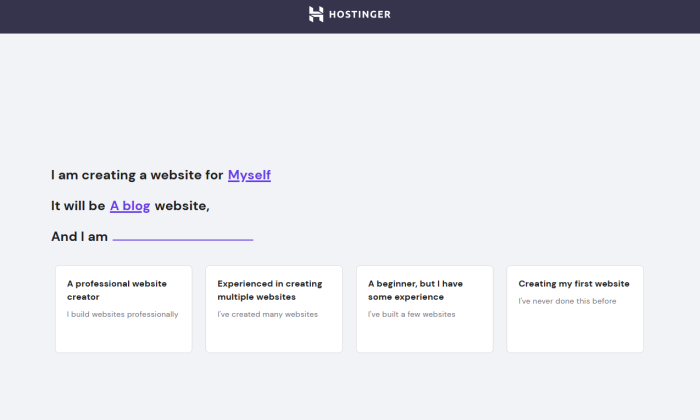
It will ask you a few quick questions about the purpose of your website and your comfort level with building one.
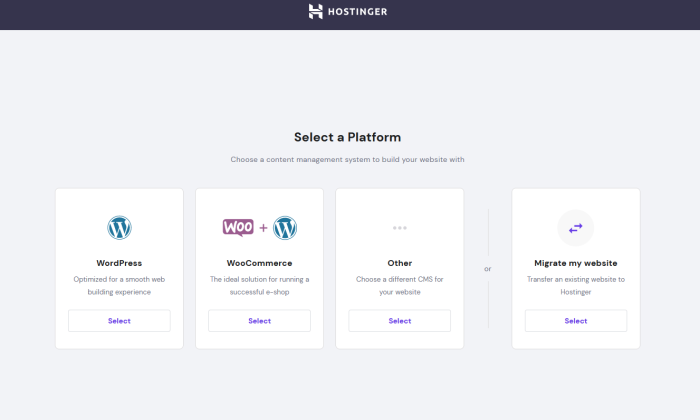
After that, select WordPress as your platform of choice. Hostinger will take care of installing it for you.
Hostinger will even let you pick a theme at this point, but you can just skip that step since we’ll find a good theme later on in this guide.
You’re almost done now! The last step is securing your free domain.
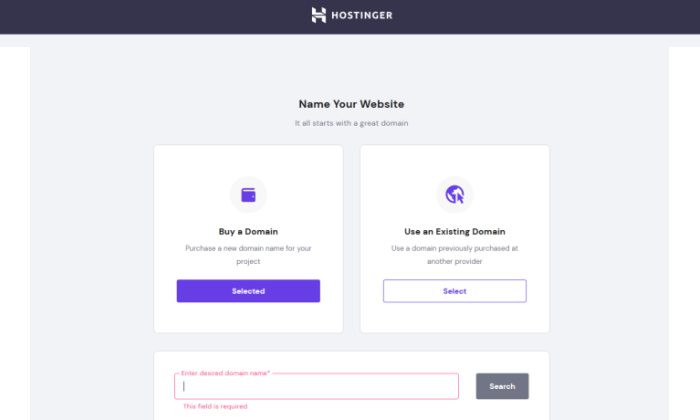
The next screen will give you the choice to get a new domain or use an existing one that you already own. Click the option on the left and a little box will appear that allows you to search for you domain name.
Since we did all the legwork in Step 1 of finding an available domain, just enter it into the box and select it when it appears.
There’s one important thing to keep in mind here. I highly recommend opting for WHOIS Privacy for $10/year. It conceals personal information like name, email, and phone number from appearing in public databases. After all, spending a few extra cents is nothing when it comes to security.
The option to add it on will be right below your selected domain. Just finish checkout there and you’re all done!
Hostinger will take a few minutes to finish the WordPress installation and set up your site.
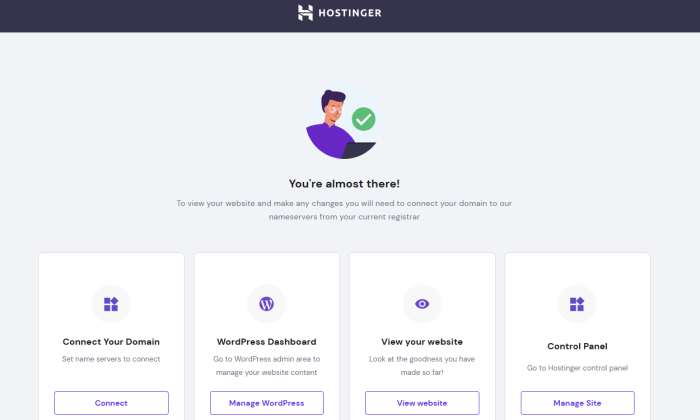
Once that’s done, Hostinger will take you to your dashboard. You’ll be greeted by this screen the first time you visit it after initial setup:
Click Manage WordPress and you’ll be whisked away to the WordPress dashboard.
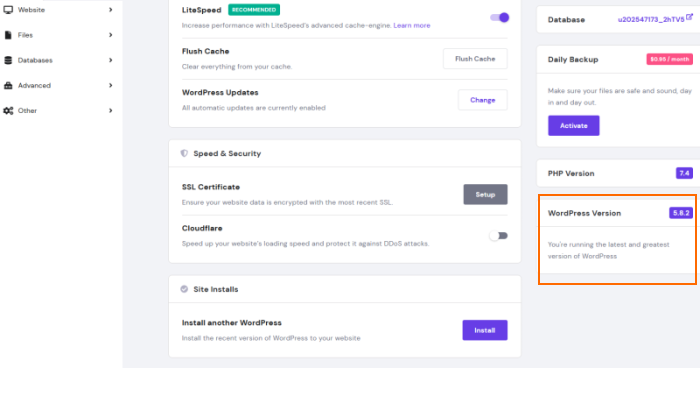
There, you can see what WordPress version has been installed.
You can even do a fresh installation of WordPress in the same area.
So, you’ve got your hosting and domain secured and a WordPress site ready to go! Now it’s time to make it your own.
Step 3: Use a Theme or Design for Your Website
One of the biggest USPs of WordPress is it supports themes.
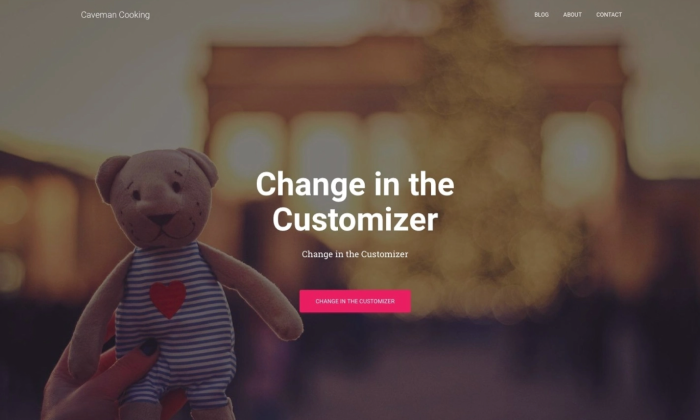
Themes are interchangeable designs that allow you to change how your WordPress website looks at the touch of a button. For example, this is what your website will look like by default:
You can change your website’s appearance by choosing another popular free theme (I chose Hestia). It’ll now look like this:
See why theme compatibility is WordPress’s biggest USP?
Choose a Theme You Like
There are hundreds—if not thousands—of WordPress themes out there.
You can start by looking at the official directory at WordPress.org. But other than that, there are several other theme stores and marketplaces, such as ThemeForest. These are third-party sites that offer free and premium themes to alter the website’s presentation without changing the contents.
You can go through all the different sites and select a theme that you like best.
Install Your Chosen Theme
If you select a theme from the official directory at WordPress.org, all you have to do is hit Install right away. Here’s how to go about it:
Go to Appearance, followed by Themes, and then click on Add New. Enter the name of the theme you want to install in the search bar, and then click on the Install button under your desired theme.
After the installation, click on Activate to enable the thing on your website.
If you want to use a theme bought from a trusted third-party, the steps will differ slightly.
Here’s how you can install a premium theme on your site:
Start by downloading the .zip file of the new theme.
Log in to your WordPress dashboard, and go to Appearance, and then Themes.
Click on the Add New option. You’ll then be directed to the WordPress theme dashboard.
Select the blue button at the top of the screen that says Upload Theme. Choose the .zip file from your computer after the prompt.
You’ll see a link to activate your team after a success message. That’s it!
While some themes are free, premium themes vary in price. There are options starting at $10 and ones going all the way up to $200. You can choose an option that fits your budget and preferences best.
Step 4: Install Plugins (Optional)
You can consider installing plugins to boost the functionality of your website. Think of them as applications for your mobile phone.
You can refer to our best WordPress plugins guide to zero down options, but you have free reign to choose the ones that appeal to you most. From optimization to website traffic analysis to security, you’ll find tons of options for every category.
That said, don’t go overboard when installing plugins. It ends up slowing down your website, which, in turn, might result in traffic loss.
As they say, there is too much of a good thing.
Step 5: Configure Important Site Settings
Setting up permalinks is very, very important! Precisely why you should do this immediately after starting your WordPress website.
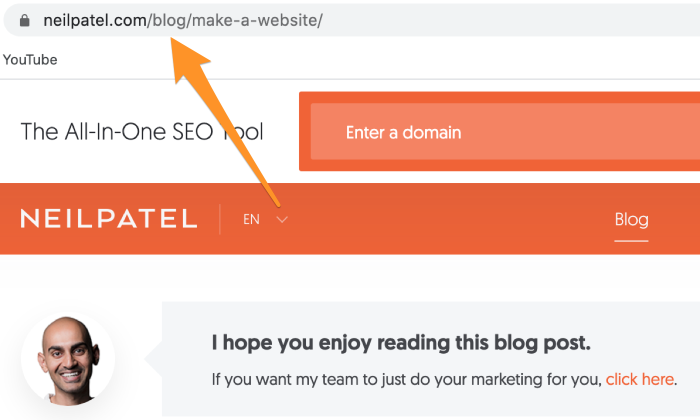
Permalink structure decides how your website links look. Think of it as a representation of your site structure. For NeilPatel.com, it looks something like this:
A good permalink structure tells your visitor exactly where they are on your website (in our example, they are in our blog section), while a bad structure does the opposite. Getting the permalink structure right is also crucial for boosting your SEO ranking.
There are many ways to do it wrong, which is why I’ve compiled a three-step guide to help you get it right:
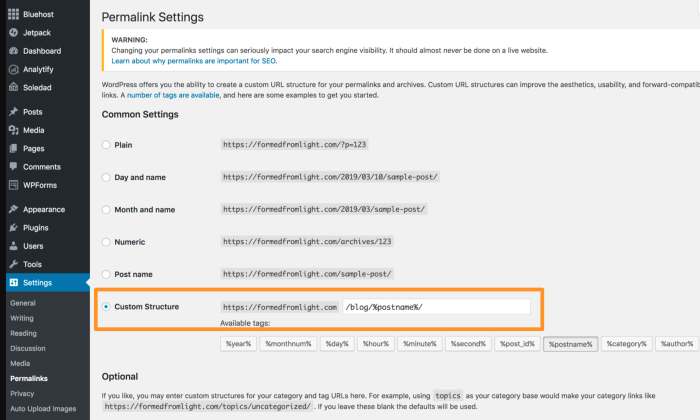
In your WordPress dashboard, click on Settings from the side menu and go to Permalinks.
Under the Common Settings field, click on Custom Structure.
It makes zero sense to go for Numeric as it’ll only confuse your visitor. Plus, it doesn’t serve much for SEO purposes.
Enter the tag string “/blog/%postname%/“
Once you’re done, click on Save to save the changes.
Step 6: Set up Important Webpages and Promote Your Site
With your website ready, you can now focus on creating high-quality content that helps you boost your traffic and conversions. Start by creating essential webpages like About, Contact Form, Privacy Policy, Portfolio, and Store (if applicable).
I really cannot emphasize enough the importance of having optimized content on your website that is relevant to your niche. So make sure you do thorough research to get all the nitty-gritty right.
Conclusion
That’s it! The six steps above are all it takes to launch a WordPress site.
At the end of the day, it all starts with a domain, CMS, and a reliable web hosting provider like Hostinger to launch your website. Continue experimenting and making changes to your site, and you’ll quickly establish a loyal audience that continues coming back for more.
Have you launched your WordPress site yet? If yes, what web hosting provider are you using?
from Neil Patel's Digital Marketing Blog https://ift.tt/DJhCPbc